
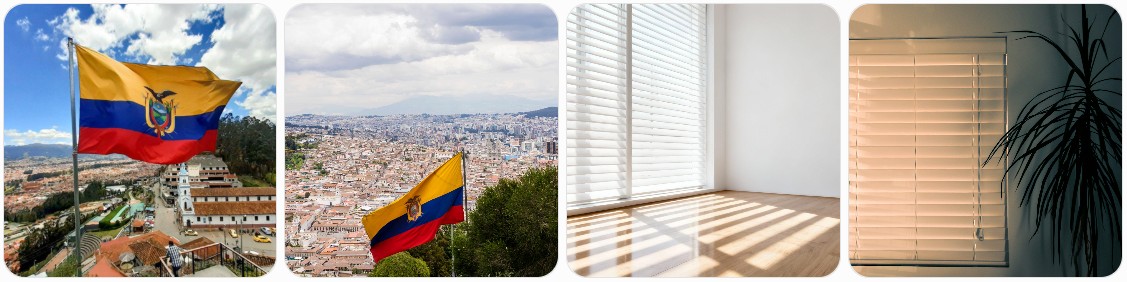
Window blinds are widely available in Ecuador through specialist manufacturers, home-decoration stores, online sellers, and made-to-measure installers in Quito, Guayaquil, Cuenca, and other major cities. Buyers can choose from roller, blackout, zebra, Venetian, vertical, Roman, cellular, and motorized blinds. Prices commonly begin around $15 to $35 for basic ready-made blinds and can exceed $300 for large custom or automated systems. Use this guide to compare where to buy window blinds, local installation services, repair options, and Ecuador-specific buying considerations.
Types of Window Blinds Available in Ecuador & Average Cost
Ecuador has a broad market for both ready-made and custom window blinds. In Quito and other cooler Andean locations, buyers often choose blackout, cellular, or lined blinds for bedrooms and temperature control. In Guayaquil and other hot, humid coastal areas, solar-screen, PVC, aluminum, and moisture-resistant roller blinds are common because they can reduce glare and handle humidity more effectively.
The prices below are approximate retail or installed-price ranges in U.S. dollars, Ecuador’s official currency. Actual quotations vary according to the window dimensions, fabric, hardware, operating system, installation location, frame material, motorization, and whether the blind is made locally or uses imported components.
- Roller blinds: Roller blinds are widely sold by Ecuadorian blind manufacturers and installers for apartments, offices, shops, clinics, and houses. Translucent models commonly cost about $25 to $70 per window, while larger custom roller blinds may cost $70 to $160+. They are popular in both Quito and Guayaquil because they are compact, modern, and available in many solar-control fabrics.
- Blackout roller blinds: Blackout blinds are frequently installed in bedrooms, home theaters, hotels, clinics, and offices where stronger light control is needed. In Ecuador, expect approximately $35 to $100 per standard window, with large, cassette-framed, side-guided, or motorized versions costing $120 to $300+.
- Solar-screen blinds: Screen fabrics are well suited to Ecuador’s strong sunlight, particularly for west-facing windows in Guayaquil, Manta, Salinas, and other coastal areas. They reduce glare and ultraviolet exposure while preserving some daytime outward visibility. Typical prices range from about $40 to $120 per window, depending on fabric openness and size.
- Zebra or day-and-night blinds: Zebra blinds use alternating sheer and opaque fabric bands to adjust privacy and daylight. They are common in modern Ecuadorian apartments, offices, reception areas, and living rooms. Standard custom sizes may cost around $45 to $130, while wide or motorized models can cost $150 to $350+.
- Venetian Blind: Horizontal aluminum, PVC, faux-wood, and wood-look blinds allow the slats to tilt for precise light control. Basic aluminum blinds may cost about $20 to $60, while faux-wood or custom horizontal blinds may cost $60 to $180+. Moisture-resistant aluminum or PVC is usually more suitable than natural wood for humid coastal properties.
- Vertical blinds: Vertical blinds remain common in Ecuadorian offices, medical facilities, schools, and homes with large sliding windows or patio doors. PVC and fabric vertical blinds usually cost around $35 to $120 for a standard opening, while extra-wide installations may cost $150 to $300+.
- Roman blinds: Roman blinds provide a softer decorative finish and are used in bedrooms, dining rooms, living rooms, hotels, and boutique spaces. Made-to-measure Roman blinds in Ecuador commonly cost around $60 to $180, with premium fabrics, blackout lining, and motorization increasing the price.
- Cellular or honeycomb blinds: Cellular blinds trap air within honeycomb-shaped fabric pockets and can help moderate heat transfer. They may be useful in cooler highland cities such as Quito, Cuenca, Riobamba, and Loja. Prices generally range from approximately $70 to $200 per window, depending on cell size, fabric, and control system.
- Panel-track blinds: Panel-track systems are used for floor-to-ceiling glazing, sliding doors, office partitions, and large modern windows. Ecuadorian custom installations can cost around $120 to $350+, depending on the number of panels, track width, and fabric.
- Motorized and smart blinds: Motorized blinds are available from specialist companies in Quito, Guayaquil, and other large cities. A motorized roller or zebra blind may cost about $150 to $450+ per opening. Large systems, rechargeable motors, remote controls, smart-home integration, and difficult electrical installations can increase the total considerably.
- Outdoor roller shades: Exterior shades are used on terraces, pergolas, balconies, restaurants, and exposed windows. Weather-resistant manual systems may start around $120 to $300, while guided or motorized exterior shades can cost $300 to $800+.
- Ready-made imported blinds: Ready-made blinds sold through marketplaces and home stores may begin around $15 to $50. They are cheaper than custom blinds but may require trimming, leave larger light gaps, or be difficult to match to nonstandard Ecuadorian window dimensions.
Before ordering locally, you can compare related items such as window blinds on Amazon, blackout roller blinds, solar-screen roller shades, and window blind repair parts. When importing, calculate international shipping, Ecuadorian customs charges, courier fees, warranty limitations, and the risk of ordering the wrong size.
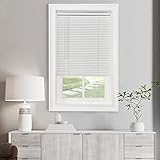
Cordless Light Filtering Mini Blinds for Indoor, 34 x 64 in, Pearl White | Cordless Lift and Light-Filtering Control: Slat-Based Blind Construction with Adjustable Light Control.

LOTUS & WINDOWARE Cordless Faux Wood Blinds, 35" Wide x 60" Long, Smooth, Snow White, 2 Inch Horizontal Blinds – for Living Room, Bedroom, Interior Door Windows
Where to Buy Window Blinds in Ecuador (Online Stores and Local Shops)
Specialist Ecuadorian blind stores are usually the best option for made-to-measure blinds because they can measure the window, recommend suitable fabrics, manufacture the blind, and install it. The following businesses advertise blinds, curtains, solar-control products, or related services in Ecuador. Contact each company before visiting to confirm current hours, service coverage, product availability, installation fees, and showroom appointments.
- CORTVISA
- Showroom: Av. Gaspar de Villarroel E9-130, between Av. de los Shyris and Av. 6 de Diciembre, Quito, Ecuador. Website: Visit CORTVISA
- Contact: 096 999 9084 or 099 414 2644; factory contact 099 850 9854; ;
- Hours: Contact the showroom to confirm current opening hours and whether an appointment is required.
- Kortikasa
- Av. de los Shyris N42-66 and Marsella, diagonal to Hipermercado El Coral, Quito, Ecuador. Website: Visit Kortikasa
- Contact: 098 700 2901 or 098 396 9696;
- Hours: Monday-Saturday, 9:00 a.m.-6:00 p.m.; verify holiday hours before visiting.
- Novakortinas
- Showroom: Av. de la Prensa N53-11 and José Herboso, Quito, Ecuador. Website: Visit Novakortinas
- Contact: (02) 518-1198; 098 002 0966; 099 343 7483; 098 605 9943
- Hours: Current public hours were not clearly posted; call before traveling to the showroom.
- Hunter Douglas Ecuador
- Products and dealer information for Quito, Guayaquil, and other Ecuador locations: Visit Hunter Douglas Ecuador
- Contact: Guayaquil 098 117 4108; Quito 099 774 9714;
- Hours: Dealer and showroom hours vary by location; contact the company for the nearest authorized seller and current schedule.
- Sumincogar
- Quito showroom: Av. de la Prensa N48-28 and Río Topo, La Concepción, Quito. Guayaquil branch: Calle C 206 and Sexta, Ciudadela Adace, near Av. Juan Tanca Marengo. Website: Visit Sumincogar
- Contact: Quito (593 2) 2242-130, (593 2) 2261-626 or 099 244 5205; Guayaquil (593 4) 2395-955, (593 4) 6001-900 or 097 922 8761;
- Hours: Quito Monday-Friday, 8:00 a.m.-5:00 p.m.; Guayaquil Monday-Friday, 8:00 a.m.-5:00 p.m., and Saturday, 9:00 a.m.-12:00 p.m. Confirm before visiting.
- Decokasa Ecuador
- Online store and branches in several Ecuadorian cities: Visit Decokasa Ecuador
- Contact: Call center +593 99 029 6957
- Hours: Monday-Friday, 8:30 a.m.-5:30 p.m.; Saturday, 8:30 a.m.-4:00 p.m. Product selection can vary by branch, so confirm that blinds or shades are available before visiting.
When comparing sellers, request an itemized written quotation showing the blind type, dimensions, fabric code, hardware color, chain or motor location, installation charge, delivery period, warranty, and applicable taxes. A low initial quotation may exclude measuring, transport, high-access work, old-blind removal, electrical work, or replacement brackets.
Window Blinds Installation & Repair Services in Ecuador
Many custom blind companies in Ecuador provide measuring and installation as part of the sale. Repair availability is more variable. Some companies repair their own blinds only, while others handle restringing, chain replacement, roller mechanisms, brackets, tracks, motors, cleaning, and maintenance for blinds from other manufacturers.
Before booking a repair, send photographs, the approximate width and height, the blind type, and a description of the failure. Ask whether the visit has a diagnostic fee, whether parts are stocked locally, and whether the repair includes a written warranty.
- Kortikasa
- Av. de los Shyris N42-66 and Marsella, Quito, Ecuador
- Contact: 098 700 2901 or 098 396 9696;
- Hours: Monday-Saturday, 9:00 a.m.-6:00 p.m. The company advertises installation, maintenance, cleaning, and repair of curtains and blinds.
- CORTVISA
- Av. Gaspar de Villarroel E9-130, between Av. de los Shyris and Av. 6 de Diciembre, Quito, Ecuador
- Contact: 096 999 9084 or 099 414 2644; ;
- Hours: Contact directly to arrange a technical visit. The company advertises measuring, manufacturing, installation, motorization, and nationwide service.
- CortInside Ecuador
- Quito, Ecuador; request the current workshop or showroom address when booking
- Contact: (02) 330-1040 or 097 906 5093;
- Hours: Contact directly for current hours. The company advertises installation, maintenance, repair, automation, and accessories for blinds and curtains.
- Hunter Douglas Ecuador Customer Service
- Service coverage through the company and its dealer network in Quito, Guayaquil, and other locations
- Contact: Guayaquil 098 117 4108; Quito 099 774 9714;
- Hours: Service schedules vary. Have the product model, purchase date, dealer name, photographs, and warranty information available when requesting support.
- Novakortinas
- Av. de la Prensa N53-11 and José Herboso, Quito, Ecuador
- Contact: (02) 518-1198; 098 002 0966; 099 343 7483; 098 605 9943
- Hours: Call to confirm. Ask specifically whether the company can repair an existing blind or provides service only for products it manufactured or installed.
For simple repairs, parts such as roller-blind clutch replacements, vertical-blind repair parts, blind chain connectors, and blind mounting brackets may be available online. Confirm the tube diameter, clutch shape, bracket style, chain size, track model, and weight rating before importing parts into Ecuador.
Window Blinds in Ecuador Near Me Finder
For the best local results, search Google Maps in Spanish using terms such as “persianas cerca de mí,” “cortinas y persianas,” “persianas enrollables,” “cortinas blackout,” “reparación de persianas,” or “instalación de cortinas”. Add your city or neighborhood, such as Quito Norte, Cumbayá, Tumbaco, Valle de los Chillos, Guayaquil, Samborondón, Daule, Cuenca, Manta, Loja, Ambato, or Machala.
In Quito, many blind and curtain businesses are concentrated around northern commercial corridors such as Av. de los Shyris, Av. Gaspar de Villarroel, Av. de la Prensa, and nearby sectors. In Guayaquil, search around Av. Juan Tanca Marengo, Kennedy, Urdesa, Alborada, Samborondón, and other commercial zones. Outside Quito and Guayaquil, ask whether the supplier provides provincial delivery, remote quotation, or traveling installation teams.
Before selecting a nearby company, compare recent customer reviews, project photographs, warranty terms, measurement service, and whether the address is a real showroom, workshop, or appointment-only location. Call first because small Ecuadorian workshops may operate by appointment, travel to installation jobs during the day, or change their hours without immediately updating online listings.
Ecuador Buying Guide & Installation/Repair Tips
- Choose the blind for Ecuador’s local climate: Coastal cities such as Guayaquil, Manta, Salinas, and Esmeraldas are hot and humid, so consider solar-screen, PVC, aluminum, synthetic roller, or moisture-resistant blinds. In cooler Andean cities such as Quito, Cuenca, Loja, and Riobamba, blackout or cellular blinds may provide better nighttime comfort and insulation.
- Prioritize solar protection on west-facing windows: Ecuador receives strong equatorial sunlight, and west-facing rooms can become uncomfortable in the afternoon. Ask for screen fabrics with documented solar-control or ultraviolet-filtering performance rather than selecting only by color.
- Request fabric openness information: Solar-screen fabrics are commonly offered with different openness percentages. Lower openness generally provides more glare control and privacy but a less open exterior view. Ask the seller to demonstrate samples against a bright window before ordering.
- Use blackout carefully in hot rooms: A dark-colored blackout blind positioned very close to sun-exposed glass may absorb substantial heat. Ask whether the chosen fabric has a light or reflective street-facing backing and whether the glazing manufacturer permits that installation.
- Measure every window separately: Ecuadorian homes and older buildings may have window openings that are not perfectly square. Measure the top, middle, and bottom widths and the left, center, and right heights. Do not assume matching windows have identical dimensions.
- Decide between inside and outside mounting: An inside mount looks clean but requires enough recess depth and a square opening. An outside mount can reduce side light gaps, cover uneven frames, and provide better blackout performance for bedrooms.
- Check concrete and masonry before DIY installation: Many Ecuadorian buildings use concrete, block, brick, or plastered masonry rather than timber framing. Installation may require a masonry drill bit, suitable wall plugs, and screws matched to the substrate. Avoid relying on light-duty drywall anchors in solid masonry.
- Ask about hidden electrical, water, or air-conditioning lines: Before drilling into walls, columns, or window surrounds, confirm that the proposed mounting points are clear of electrical conduits, plumbing, security-system wires, and air-conditioning lines.
- Use corrosion-resistant hardware near the coast: Salt air and humidity in coastal areas can corrode low-quality steel brackets and chains. Ask for aluminum, stainless-steel, coated, or corrosion-resistant components when installing blinds close to the ocean.
- Choose moisture-resistant materials for bathrooms and kitchens: Avoid untreated natural wood or absorbent fabrics where condensation, cooking steam, or frequent cleaning is expected. PVC vertical blinds, aluminum horizontals, and suitable synthetic roller fabrics are generally easier to maintain.
- Ask whether the quotation is per square meter or per finished blind: Ecuadorian suppliers may quote by square meter but apply minimum charges, hardware surcharges, or separate installation fees. Request the final price for each completed window rather than comparing only the advertised square-meter rate.
- Confirm whether IVA is included: Ask whether the written price includes applicable Ecuadorian value-added tax, transport, measuring, installation, motor programming, and old-blind removal.
- Compare local manufacture with imported systems: Locally assembled blinds may offer faster parts availability and easier repairs. Imported branded systems may provide better hardware or specialized fabrics but can take longer to repair if a proprietary component is unavailable in Ecuador.
- Inspect fabric samples in the actual room: Ecuador’s daylight can make colors appear different from showroom lighting. Request samples and inspect them in morning, afternoon, and artificial light before approving a large order.
- Specify chain and control positions: Tell the seller whether the control should be on the left or right. Keep chains away from furniture, window handles, children’s beds, cribs, and frequently used doorways.
- Ask for child-safe controls: For homes with children, request cordless blinds, motorized systems, tensioned chains, compliant safety devices, or properly secured cord cleats. Do not leave looped cords hanging freely.
- Check air-conditioner and fan airflow: Lightweight vertical or aluminum blinds can rattle near ceiling fans, open windows, or air-conditioning vents. A tensioned roller system or heavier bottom rail may work better in drafty areas.
- Use separate blinds on very wide windows: A single oversized roller blind can become heavy and may cause tube deflection. Two or three aligned blinds can be easier to operate and repair, although there will be small gaps between them.
- Ask about motor voltage and replacement support: For motorized blinds, confirm compatibility with Ecuador’s electrical supply, whether the motor is wired or rechargeable, what remote is included, and whether replacement motors and controls are stocked locally.
- Plan for power outages: If reliable operation is important, consider rechargeable battery motors, manual override systems, or blinds that can still be operated without mains power.
- Get the warranty in writing: Ask how long the warranty covers the fabric, tube, clutch, chain, track, slats, installation, and motor. Confirm who pays for technician travel outside the main city.
- Photograph the completed installation: Keep photographs of bracket positions, motor labels, fabric codes, and the finished blind. These records can make future repairs and replacement orders easier.
- Clean according to the local environment: Quito properties may accumulate fine dust, while coastal properties may develop salt or humidity residue. Use a microfiber cloth or vacuum brush and follow the fabric manufacturer’s cleaning instructions. Do not soak mechanisms or motors.
- Repair before the damage spreads: Stop operating a blind if the chain skips, the fabric rolls unevenly, the tube drops, the track jams, or slats drag. Continued use can damage the clutch, fabric edge, carriers, brackets, or motor.
- Compare repair cost with replacement cost: Replacing a chain, clutch, carrier, bracket, or cord is often economical. Replacement may make more sense when the fabric is sun-damaged, several components are broken, or proprietary parts are no longer available in Ecuador.
FAQ About Window Blinds in Ecuador
Where can I buy window blinds in Ecuador?
You can buy blinds from specialist companies such as CORTVISA, Kortikasa, Novakortinas, Hunter Douglas dealers, Sumincogar, and other local manufacturers. Quito and Guayaquil have the widest selection, while many suppliers also provide delivery or installation in other provinces.
How much do window blinds cost in Ecuador?
Basic ready-made blinds may start around $15 to $35. Standard custom roller, blackout, Venetian, zebra, or vertical blinds often cost about $35 to $150 per window. Large, premium, cellular, exterior, or motorized systems can cost $150 to $800 or more.
What are the best blinds for Ecuador’s hot coastal climate?
Solar-screen roller blinds, PVC vertical blinds, aluminum Venetian blinds, synthetic blackout blinds, and exterior solar shades are practical choices for hot coastal areas. Look for moisture-resistant hardware and fabrics with documented solar-control performance.
What blinds are best for Quito and Ecuador’s highlands?
Roller, blackout, zebra, Roman, and cellular blinds all work well in highland cities. Cellular blinds and lined blackout fabrics may provide additional comfort during cool nights, while solar-screen blinds help control intense daytime glare.
Are blackout blinds available in Ecuador?
Yes. Blackout roller, Roman, cellular, and zebra-related systems are available from many Ecuadorian blind companies. For stronger room darkening, use an outside mount, cassette, side channels, or curtains to reduce light gaps.
Can I buy custom-made blinds in Ecuador?
Yes. Many specialist companies measure, manufacture, and install made-to-measure blinds. Custom service is often preferable because Ecuadorian windows can vary considerably in size, depth, and frame construction.
Do Ecuadorian blind stores provide free measuring?
Some companies advertise complimentary measuring or technical visits within their main service areas, while others charge a visit fee that may be credited toward the purchase. Confirm the policy, travel zone, and cancellation terms before booking.
How much does blind installation cost in Ecuador?
Installation may be included with a custom order or charged separately. A straightforward installation may add approximately $10 to $40 per blind, while high windows, concrete drilling, oversized systems, travel outside the city, electrical work, or motorization can cost more.
Can I install window blinds myself in Ecuador?
Yes, particularly for small ready-made blinds. However, many Ecuadorian walls are concrete, brick, or block, so you may need suitable masonry bits, plugs, screws, and careful checks for concealed wiring or plumbing.
Where can I repair blinds in Quito?
Kortikasa, CortInside, CORTVISA, Novakortinas, Hunter Douglas service contacts, and independent blind technicians may provide repairs or maintenance. Confirm whether they service products from other brands before arranging a visit.
Are blind repair services available in Guayaquil?
Yes. Guayaquil has blind retailers, installers, manufacturer representatives, and independent technicians. Search for “reparación de persianas Guayaquil” and ask whether the technician handles your specific roller, vertical, Venetian, zebra, or motorized system.
What blind problems can usually be repaired?
Common repairable problems include broken chains, worn roller clutches, loose brackets, jammed vertical tracks, damaged carriers, missing slats, uneven rolling, broken cords, and certain motor or remote-control faults.
Should I repair or replace an old blind?
Repair is often worthwhile when the fabric and main structure remain in good condition. Replacement may be better when the fabric is badly faded, moldy, torn, warped, or when several proprietary components are broken or unavailable locally.
Are motorized blinds available in Ecuador?
Yes. Several specialist suppliers offer remote-controlled, rechargeable, wired, and smart-home-compatible blinds. Verify local technical support, motor warranty, replacement-part availability, control compatibility, and electrical requirements.
Can blinds be connected to Alexa or Google Home in Ecuador?
Some motorized systems can connect through a compatible hub, Wi-Fi motor, or home-automation controller. Confirm the exact ecosystem before ordering because a basic remote-controlled motor may not include smart-home connectivity.
Are imported Amazon blinds a good option for Ecuador?
They can work for standard windows and replacement parts, but calculate international shipping, customs processing, courier fees, warranty limitations, and return costs. Custom local blinds are often easier to measure, install, and repair.
Does Amazon ship window blinds directly to Ecuador?
Shipping eligibility varies by product and seller. Check the delivery address on the Amazon listing. For products without direct delivery, buyers may use an international courier or freight-forwarding address, but total landed cost can be substantially higher.
What is the best blind for strong sunlight in Ecuador?
Solar-screen roller blinds are a strong choice because they reduce glare and ultraviolet exposure while preserving some daytime visibility. Blackout blinds provide stronger light blocking, while exterior shades can stop more solar heat before it reaches the glass.
What blinds are suitable for humid bathrooms in Ecuador?
Choose PVC vertical blinds, aluminum Venetian blinds, faux-wood blinds rated for moisture, or suitable synthetic roller fabrics. Avoid untreated natural wood and fabrics that absorb moisture easily.
How long does a custom blind order take in Ecuador?
Simple locally assembled blinds may be completed within several days, while specialty fabrics, large projects, imported components, or motorized systems can require several weeks. Get the estimated manufacturing and installation date in writing.
Do blind prices in Ecuador include IVA and installation?
Not always. Ask whether the quotation includes applicable IVA, measuring, delivery, installation, brackets, programming, transport outside the city, and removal of old blinds.
How can I find a window blind store near me in Ecuador?
Search Google Maps for “persianas cerca de mí,” “cortinas y persianas,” or “reparación de persianas,” followed by your city or neighborhood. Compare recent reviews, call to confirm the address, and ask whether the business provides measuring and installation in your area.
Are window blinds available outside Quito and Guayaquil?
Yes. Blind stores and installers also operate in Cuenca, Manta, Loja, Ambato, Machala, Riobamba, Santo Domingo, and other cities. Some Quito and Guayaquil manufacturers also ship nationwide or send installation teams for larger projects.
What information should I send when requesting a blind quotation?
Send the city, approximate width and height of each window, photographs, preferred blind type, fabric or color preference, mounting location, number of windows, and whether you need measuring, installation, motorization, or removal of existing blinds.
Summary
Window blinds are readily available throughout Ecuador, with the largest selection of custom manufacturers, showrooms, installers, and repair services in Quito and Guayaquil. Common choices include roller, blackout, solar-screen, zebra, Venetian, vertical, Roman, cellular, panel-track, and motorized blinds. Basic ready-made products may start around $15 to $35, while custom blinds generally cost about $35 to $150 per window. Premium, oversized, outdoor, or automated installations can cost several hundred dollars.
For Ecuador’s hot coastal areas, prioritize solar protection, moisture-resistant materials, and corrosion-resistant hardware. In Quito, Cuenca, and other highland cities, blackout or cellular blinds may provide useful nighttime insulation as well as privacy. Always measure each window separately, request an itemized quotation, confirm whether IVA and installation are included, and obtain written warranty terms.
Local made-to-measure companies are usually the easiest option when you need measuring, professional fitting, or dependable repair support. Amazon can be useful for comparing standard blinds, installation hardware, and repair parts, but imported products should be evaluated carefully for dimensions, shipping costs, customs fees, and limited local warranty coverage. Store addresses, contact details, and hours can change, so call or message the business before visiting or placing an order.

60 PCS Vertical Blind Repair Tabs Kit Clear Fixer Verticle Blinds Snap in Replacement Slats Parts Panels

Vertical Blind Repair Vane Savers, 16PCS Metal Vertical Blind Repair Tabs, Vertical Blinds Repair Kit for Vertical Blinds Replacement Slats
