
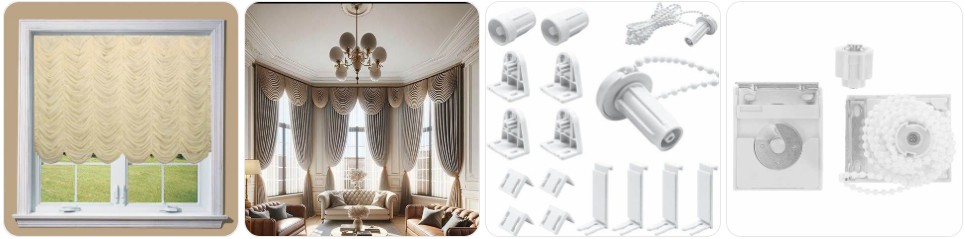
Austrian Blinds are soft fabric blinds that gather into decorative scalloped swags when raised, so repairs usually involve cords, rings, tape, cord locks, pulleys, headrail fittings, and bottom bar support rather than rigid slats or roller hardware. The quick answer is that a broken Austrian blind can often be repaired without replacing the full blind if the fabric is still in good condition and the problem is limited to the lifting mechanism or stitched support parts. In many cases, the right fix is restringing the blind, replacing worn rings, repairing the cord lock, securing loose tape, or renewing a damaged headrail fitting before the fabric shape becomes distorted. If you want to compare likely parts while troubleshooting, it helps to browse Austrian blind repair kit options, Roman shade repair kits, and shade cord lock replacements.
Fix Common Austrian Blind Problems & Repair Cost
Austrian blind will not raise or lower smoothly: This usually points to worn lift cords, a damaged cord lock, frayed guide tape, or pulley friction in the headrail. Austrian blinds depend on several cords lifting the fabric evenly to create their soft swags, so even one weak section can make the whole blind feel heavy or uneven. In many cases, replacing cords or a worn lock is enough to solve the issue, and the parts are often relatively affordable. Comparing shade cord lock replacements and shade string replacement supplies can help if the fabric is still in good shape. Minor cord and lock repairs often cost much less than a full replacement, while more involved headrail repairs can cost more if several parts have worn together.
The swags look uneven or one side hangs lower: On an Austrian blind, this usually means one lift cord has stretched, slipped, or broken, or one line of rings is no longer guiding the fabric evenly. Because Austrian blinds are decorative by design, even small lifting differences are very noticeable. Restringing, adjusting the cord path, or replacing a damaged ring line is often the right repair. If ignored for too long, the fabric can start to lose its intended shape.
Fabric rings or guide loops have torn away: Austrian blinds rely on sewn rings or loops to guide the lift cords through the fabric. If these pull loose, the blind can stop lifting evenly and may gather in the wrong places. This repair is often quite manageable if the fabric is not badly torn, and it may only require new shade rings, matching thread, and careful restitching.
The cord lock slips and the blind will not stay up: A blind that rises but slides back down usually has a worn cord lock or badly worn lift cords. On Austrian blinds, that can flatten the soft gathered look because the blind will not hold its raised shape properly. Replacing the lock is often a simple and cost-effective fix compared with replacing the entire blind.
The bottom edge looks distorted or the fabric no longer gathers cleanly: This can mean the bottom bar support has shifted, the tapes are pulling unevenly, or the fabric has been strained by repeated use. If the fabric is still otherwise sound, restoring the support parts and lift alignment can often bring the blind back into shape.
Austrian Blind Repair Kit
An Austrian blind repair kit is most useful when the problem is in the lifting system or stitched guide hardware rather than the decorative fabric itself. Because Austrian blinds are fabric-based and rely on several lift points working together, the most helpful kits are the ones that include or support items such as lift cord, cord locks, rings, pulleys, tape-related parts, and small headrail fittings. In practice, many people use Roman-shade-style repair supplies for Austrian blinds because the lift mechanisms are often quite similar even though the finished blind style looks very different.
It is worth checking the included parts carefully before buying because some repair kits are aimed at standard Roman shades and may not include everything needed for the fuller, more gathered Austrian style. If your blind only has one obvious issue, buying the exact part may be cheaper. But if the cords are worn, a few guide rings have pulled off, and the blind no longer holds its raised position, a broader Austrian blind repair kit or Roman shade repair kit can save time and make the repair more consistent. For Austrian blinds, keeping the lift points balanced matters as much as replacing the broken part itself.

60 PCS Vertical Blind Repair Tabs Kit Clear Fixer Verticle Blinds Snap in Replacement Slats Parts Panels

joytrace RV Pleated Shade Repair Kit, RV Window Shade Restringing Kit, Repair and Maintain of Day Night Pleated Shade (White)

Vertical Blind Repair Carrier with Stem and Gear, Vertical Blinds Repair Kit Used for Headrail Vertical Blinds Curtain Accessories(12 PCS)
Signs Your Austrian Blind Need Repair
- One side of the blind lifts higher than the other: This is often the clearest sign that one lift cord has stretched, slipped, or broken. On Austrian blinds, uneven lift height quickly affects the decorative scalloped look.
- The blind will not stay raised: A worn cord lock is a common cause. Looking at shade cord lock replacements is a smart first step when the blind keeps sliding down.
- The fabric rings or loops have come loose: Austrian blinds depend on those stitched guide points to shape the lift. Once they start tearing away, the blind usually gathers badly and lifts unevenly.
- The swags no longer form neatly: If the fabric looks flat, twisted, or pulled more on one side, the issue is often in the cords, guide rings, or tape alignment rather than in the fabric alone.
- The blind feels heavier or rougher when you pull it: That can mean frayed cords, pulley friction, or headrail hardware wear. Austrian blinds should feel controlled, not jerky, when raised.
- The bottom edge hangs oddly: If the lower edge no longer curves or gathers evenly, the bottom support or lift balance may need attention.
- The cords look worn or frayed near the lock or rings: Fraying is an early sign that restringing may be needed before the blind fails completely.
- The blind still looks attractive, but the mechanism is clearly weak: This is usually the best time to compare repair kits rather than replacing the whole blind.
Tools You May Need to Repair Austrian Blind
- Needle and strong thread: Austrian blinds often need stitched ring or loop repairs, so having a needle and strong thread set is useful when reattaching rings or reinforcing guide points.
- Replacement lift cord: If the blind lifts unevenly or slips down, matching shade string replacement cord is often one of the most important repair items to have.
- Cord lock replacement: A worn lock is a common cause of Austrian blinds that will not hold position. Compare shade cord lock replacements if the blind keeps sliding down.
- Replacement rings or guide loops: Torn guide points are one of the most common Austrian blind issues. Searching shade rings can help if the cords are no longer guided properly through the fabric.
- Small screwdriver set: A precision screwdriver set is useful for opening the headrail, replacing a lock, or adjusting small support fittings.
- Needle-nose pliers: A pair of needle-nose pliers helps when pulling cords through tight headrail openings or repositioning small hardware parts.
- Fabric-safe measuring tape: A measuring tape helps you match cord lengths, ring spacing, and blind drop before restringing or rebalancing the blind.
- Seam ripper or embroidery scissors: A seam ripper can be useful if you need to remove damaged rings or tidy old stitches before repairing an Austrian blind properly.
Should You Repair or Replace Your Broken Austrian Blind?
Repairing a broken Austrian blind usually makes sense when the fabric is still attractive and the problem is limited to cords, rings, lock hardware, or the headrail mechanism. Because Austrian blinds are often chosen for their soft decorative look and custom-sewn appearance, replacing the whole blind can be much more expensive than replacing a few lifting components. If the swags still suit the room and the fabric is not badly faded, torn, or stained, repairing the mechanism is often the better value. In many cases, a repair kit plus some careful rethreading is enough to restore the blind.
Replacement becomes the better option when the fabric is badly damaged, multiple stitched guide points have torn out across the blind, the lining has failed, or the blind has lost its decorative shape beyond a simple mechanical fix. It can also make sense to replace the blind if the fabric has weakened so much that new rings and cords will not hold securely. A quick comparison between Austrian blind options and the parts you need can help you decide. In many cases, though, Austrian blinds are very repairable when the issue is mechanical rather than fabric-related.
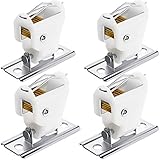
4 Pieces White Roman Shade Cord Lock Dual Brass Wheels Stainless Bracket

Y-Axis Roll of 60 Yards 2.0mm Light Brown (Bronze) Braided Nylon Lift Shade Cord with 6 Pack Brown Wood Cord Knobs + Soft Tape
Tips to Make Your Austrian Blind Last Longer
- Raise and lower the blind gently: Austrian blinds rely on multiple cords lifting soft gathered fabric evenly, so sudden pulling can throw the lift points out of balance more quickly than on simpler blinds.
- Keep the cords from rubbing sharply: If you notice friction near the lock or guide points, deal with it early. Frayed cords are much cheaper to fix with replacement cord than a fully failed lift system.
- Check stitched rings and loops regularly: Because Austrian blinds depend on sewn guide points, catching loose stitching early can prevent a larger fabric repair later.
- Do not force a blind that is lifting unevenly: If one side starts lagging, inspect the cords and rings first. Pulling harder can tear more rings away from the fabric.
- Support the fabric during cleaning: Austrian blinds are decorative fabric blinds, so rough handling during dusting or cleaning can distort the swags or stress the stitched guide points.
- Keep the headrail hardware clean: Dust buildup around the pulleys or lock can add friction and make the blind harder to operate over time.
- Replace small worn parts before they fail completely: A worn ring, weak lock, or frayed cord is much easier to deal with than a blind that suddenly drops or gathers badly.
- Store removed blinds carefully: If the blind is taken down for redecorating or repair, keep the fabric folded or rolled safely and avoid crushing the gathered sections so the decorative shape is easier to restore later.
Austrian Blind Repairs FAQ
What usually breaks on an Austrian blind?
The parts that fail most often are lift cords, cord locks, sewn rings, guide loops, pulleys, and some headrail fittings. On Austrian blinds, these parts do most of the work that creates the gathered raised shape.
Can I repair an Austrian blind without replacing the whole blind?
Yes, in many cases. If the fabric still looks good and the issue is mainly with the cords, rings, or headrail hardware, a repair is often far more practical than replacing the full blind.
Why does my Austrian blind lift unevenly?
This usually means one lift cord has stretched, slipped, or broken, or one line of stitched rings is no longer guiding the fabric correctly. Uneven lifting is especially noticeable on Austrian blinds because of their decorative swags.
Is an Austrian blind repair kit worth buying?
It can be, especially when the blind has more than one small lifting-system problem. An Austrian blind repair kit or similar Roman-shade repair kit is often easier than sourcing every small part separately.
Can I replace torn rings on an Austrian blind?
Yes, if the surrounding fabric is still strong enough to hold new stitching. Reattaching or replacing rings is a common repair when the rest of the blind is still in good condition.
How much does it usually cost to repair an Austrian blind?
Minor repairs such as replacing cords, rings, or a cord lock are often relatively affordable, especially compared with the cost of replacing a decorative fabric blind. Larger repairs can cost more if multiple guide points, fabric reinforcements, and headrail parts are involved.
Should I repair or replace an Austrian blind with damaged fabric?
If the damage is limited and the fabric is still strong, repair can still make sense. If the fabric is badly torn, weakened, faded, or can no longer support new rings and cords, replacement is usually the better choice.
Can Austrian blind parts be hard to match?
Sometimes, yes. Many useful repair parts are sold under Roman-shade hardware terms rather than Austrian-blind terms, so it helps to compare your existing parts carefully before ordering replacements.
60 PCS Vertical Blind Repair Tabs Kit Clear Fixer Verticle Blinds Snap in Replacement Slats Parts Panels

Vertical Blinds Replacement Stem and Gear Used for Headrail, Carrier Stem Vertical Blinds Curtain Accessories(12 Sets)
