
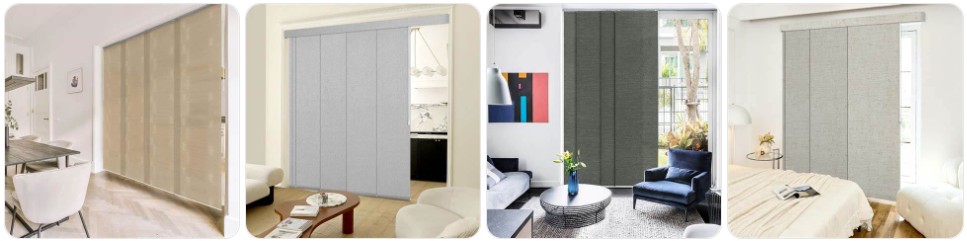
If you need to remove panel blinds without bending the track hardware or creasing the wide fabric panels, the safest approach is to detach the fabric panels first, support the headrail properly, and then release the track from its brackets one section at a time. Panel blinds are different from standard window blinds because they use large sliding fabric panels that hang from carriers inside a track, so taking them down carelessly can damage the panel hangers, lead carrier, or overlapping panel edges. This guide walks through the safest way to remove and take down panel blinds while protecting the fabric, track, and operating parts. If you think the blind may need parts after removal, it helps to review panel blind parts before you start.
What You Need Before Removing Panel Blind
- A stable step stool or ladder: Panel blind tracks are often mounted above patio doors or wide windows, so safe overhead access matters more here than with many smaller blinds.
- A screwdriver set: Many panel blind systems use bracket covers, fixing screws, or end stops that are easier to remove with a screwdriver set, especially if the track needs to come down fully.
- Needle-nose pliers: A pair of needle-nose pliers is useful for handling small clips, panel hangers, and tight retaining pieces without pulling directly on the fabric.
- A clean floor area or large flat surface: Panel blind fabric sections are wide and can crease if dropped over furniture or dirty floors. It helps to prepare a clean place to lay them down first.
- Soft ties or fabric straps: Once the panels are removed, soft ties help keep them together neatly for storage or transport. Do not fold the panels sharply if you can avoid it, especially on textured or blackout fabrics.
- A small container for screws and clips: Panel blind tracks often have small end stops, bracket screws, and clip-on parts that are very easy to lose once the headrail comes down.
- Optional replacement hardware on hand: If the blind is already sticking or stacking badly, compare panel blind parts, panel track blind carriers, and panel blind wand replacements before you remove the blind.
Panel Blind Removal Guide
Panel blind removal is easiest when you separate the fabric panels from the track before taking the headrail down. That reduces weight, makes the system easier to handle, and lowers the chance of bending carriers or tearing the panel tops. The main thing to avoid is pulling the track down while the panels are still hanging from it, because the extra weight can crack the carriers, distort the brackets, or crease the panel fabric badly.
- Slide the panels to an easy working position: Move the blind so the panels are stacked where you can access the leading edge and the top attachment points safely. This gives you better reach when detaching each panel.
- Inspect how the panels attach to the track: Panel blinds may use hook-and-loop fastening, clip-on hangers, or fabric hangers fitted into panel carriers. Check the top of one panel first before trying to pull anything free.
- Remove the fabric panels one at a time: Detach each panel carefully from the carrier or top strip and lay it flat on a clean surface. If the blind uses hook-and-loop fastening, peel the panel away slowly rather than pulling down suddenly.
- Secure the loose panels for storage: Once removed, stack the panels neatly and use soft ties if needed so the edges stay straight and the fabric does not drag or crease while you work on the track.
- Check for end stops or track covers: Many panel blind systems have end stops, fascia covers, or small locking pieces that need to come off before the headrail can be released fully.
- Support the track with one hand before releasing any bracket: Panel blind tracks can be longer and heavier than they first appear, especially over patio doors. Always support the rail before undoing the first fixing point.
- Release the first bracket or remove the fixing screws: Use a screwdriver if the track is screw-fixed, or open the bracket clip if it uses snap-in fittings. Keep the rail level while doing this.
- Move across the track one bracket at a time: Do not let one end drop suddenly. Work from one support point to the next while keeping the rail balanced, especially if there is a center bracket on a wide installation.
- Lower the full track evenly: Once all brackets are free, bring the track down in a smooth, level motion. Do not twist the headrail, because that can damage the carriers, lead mechanism, or internal gliders.
- Inspect the hardware after removal: With the blind down, check the carriers, lead carrier, wand connection, end stops, and brackets for wear. If anything looks worn, compare panel track blind carriers, master carriers, and panel blind wand replacements.

60 PCS Vertical Blind Repair Tabs Kit Clear Fixer Verticle Blinds Snap in Replacement Slats Parts Panels

Leinuosen 12 Pieces Vertical Blind Clips Stems Replacement Parts

AUXBC 24PCS 25mmx7.5mm Cabinet Door Repair Pins, Black Plastic Spring Loaded Damper Replacement Pins, Furniture Fittings Connector for Telescopic Door Panel Blinds Parts
Common Problems When Taking Down Panel Blind
- The panel tops will not detach cleanly: Some panel blinds use strong hook-and-loop strips, while others use hanger clips. If a panel feels stuck, check the attachment type first instead of pulling harder and risking damage to the panel edge.
- The track feels heavier than expected: Wide panel blinds can be awkward to handle, especially if they cover sliding doors. A long headrail may have a center support bracket that needs releasing before the track will come down cleanly.
- The carriers start sliding or bunching inside the rail: This often happens if the track is tilted during removal. Keeping the rail level helps protect the lead carrier and keeps the internal parts from jamming together.
- A fascia or front cover will not come off: Some panel blinds have decorative front covers that clip on differently from the main brackets. Removing the wrong piece first can make the system seem stuck when the real issue is just the cover design.
- The fabric panels crease while being removed: Panel blind fabrics are wide, and they can crease quickly if allowed to drape over furniture or the floor. Removing them one by one and laying them flat helps prevent this.
- The wand or control piece catches during removal: If the wand is attached to the lead carrier, be careful not to twist it while lowering the track. If it already looks weak, compare panel blind wand replacements before reinstalling.
- An end stop or small clip gets lost: This is very common once the rail is down, which is why keeping all small fittings in one container makes reinstalling or repairing the blind much easier later.
What to Do After Removing Panel Blind
- Lay the panels flat and keep them clean: Panel fabrics should be stored flat or hung carefully, not scrunched into a corner where the edges can crease or bend.
- Check the panel tops for wear: Look closely at the hook-and-loop strips, top hangers, or attachment edges before reinstalling. If they are worn, compare panel blind hanger replacements or hook-and-loop tape for blinds.
- Inspect the carriers and lead mechanism: This is the best time to see whether a sticking panel blind was really caused by worn runners, a damaged master carrier, or a weak wand connection.
- Clean the track before reinstallation: Dust and grit inside the rail can make the blind feel faulty. A light clean can help the carriers move more smoothly before the track goes back up.
- Bundle the hardware together: Keep the brackets, screws, end stops, and cover pieces together in one clearly marked bag or container so nothing gets mixed up.
- Decide whether to repair or replace: If removal reveals cracked carriers, loose brackets, or damaged control parts, compare panel blind parts with current panel blind options before reinstalling the same system.
- Label the panels if you removed more than one blind: On larger homes or commercial spaces, it helps to keep each set of panels matched to its original track and window opening.

TIDEWE Duck Hunting Blind, Portable Duck Panel Blind, Next Evos Camo

Ameristep outdoors Mossy Oak Hunting Blinds Treestands Blinds, Mossy Oak Obsession, 21.0X4.33X4.33 US

Tingjoo One Way See Through Duck Hunting Blinds 3 Panel 95" x 29"
Panel Blind Removal FAQ
Should I remove the fabric panels before taking down the track?
Yes, in most cases. Removing the panels first makes the track much lighter and reduces the chance of bending the rail or damaging the carriers during removal.
Why will my panel blind not come down from the brackets?
The most common reasons are hidden end stops, a fascia cover that is still in place, or a center bracket that has not been released yet. Check the full track before pulling harder.
Can I take down a panel blind without damaging the fabric?
Yes, as long as you detach the panels one at a time, lay them flat on a clean surface, and avoid folding or dragging the fabric while removing the track.
Do panel blind tracks usually have a center support?
Many wider panel blind tracks do, especially over sliding doors or large openings. That extra support is easy to miss, and it is a common reason the rail feels stuck during removal.
What if a carrier breaks while I am taking the blind down?
That usually means the carrier was already brittle or under strain. Once the track is down, it is often a good idea to compare replacement carriers before reinstalling the same blind.
Can I reinstall the same panel blind after taking it down?
Yes, if the panels, carriers, brackets, and track are still in good condition. Removal is also a good opportunity to clean the rail and replace any worn hardware first.
Should I remove the wand before taking down the track?
Not always, but if it is getting in the way or looks fragile, removing it first can make the track easier to handle and reduce the chance of snapping the control connection.
Are panel blind parts easy to find after removal?
Many common parts are available online, especially carriers, lead mechanisms, wand fittings, hanger strips, and brackets. It helps to inspect the removed track carefully so you can match the correct part before ordering.
Summary
Removing panel blinds safely is mostly about taking the fabric panels down first, supporting the headrail properly, and keeping the long track level while releasing each bracket. Once the blind is off the window, you can inspect the carriers, wand connection, brackets, and panel attachment points much more easily, which often reveals whether the blind simply needs cleaning, a few new parts, or a more complete repair. If the removal project turns into a repair job, it also helps to review repair panel blinds before reinstalling or replacing the system.
60 PCS Vertical Blind Repair Tabs Kit Clear Fixer Verticle Blinds Snap in Replacement Slats Parts Panels

Vertical Blinds Replacement Stem and Gear Used for Headrail, Carrier Stem Vertical Blinds Curtain Accessories(12 Sets)
