
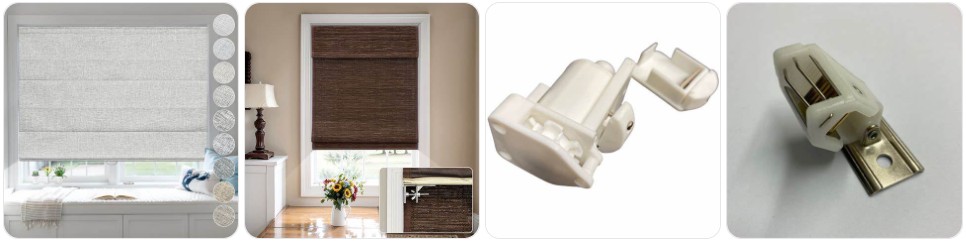
Roman Blinds use a fabric panel that folds into neat horizontal pleats as it lifts, so the most common replacement parts are usually hidden inside the headrail or sewn into the operating system rather than being obvious from the front of the blind. The quick answer is that many Roman blind problems come from worn cord locks, broken cord guides, damaged rings, frayed lift cords, failed chain mechanisms, or missing mounting hardware, and those parts can often be replaced without remaking the entire blind. If the fabric is still attractive and the folds are still worth saving, replacing the right hardware is usually much cheaper than replacing the full blind. To compare likely matches, it helps to browse Roman blind parts, Roman shade repair kits, and Roman shade cord locks before taking the blind apart.
Buy Roman Blind Parts Online
The cord lock is one of the most important Roman blind parts because it holds the blind at the chosen height. When it wears out, the blind may slip, refuse to stay up, or feel rough during lifting. » find on amazon / find on ebay
Roman blinds depend on lift cords running through rings or guides to raise the fabric evenly. If the cords fray, snap, or drag, the blind can hang unevenly or stop lifting smoothly. » find on amazon / find on ebay
Small plastic or metal rings sewn to the back of the blind guide the lift cords and help keep the pleats rising evenly. Missing or cracked rings are a common reason Roman blinds start lifting crookedly. » find on amazon / find on ebay
Some modern Roman blinds use a sidewinder chain clutch instead of a traditional cord lock system. When this mechanism slips or jams, the blind may lower unevenly or stop holding position. » find on amazon / find on ebay
Roman blind brackets hold the headrail securely in place and keep the blind level. Bent or missing brackets can make the blind sag, sit unevenly, or become difficult to lift and lower safely. » find on amazon / find on ebay
A repair kit is a smart choice when more than one small part has failed, especially if the blind has cord wear, damaged rings, and worn hardware at the same time. » find on amazon / find on ebay
Signs You Need Replacement Parts for Your Roman Blind
- The blind slips down after you raise it: This is often a sign that the cord lock is worn out and no longer gripping properly. At that point, it is worth comparing Roman shade cord locks before assuming the whole blind is beyond repair.
- The fabric lifts unevenly on one side: Roman blinds rely on cords and rings working together, so uneven lifting usually points to a broken ring, a stretched cord, or a guide that is no longer pulling evenly.
- The blind bunches badly instead of folding into neat pleats: If the folds start stacking awkwardly or one section rises faster than another, the support system at the back of the blind may need replacement parts rather than a full new blind.
- You can see frayed or worn cords: Lift cords do a lot of work on a Roman blind, and once they start fraying, failure can happen suddenly. Replacing them early is safer than waiting for the blind to drop unexpectedly.
- The side chain slips or skips: On chain-operated Roman blinds, a worn clutch or damaged chain loop can make the blind feel rough, unstable, or impossible to stop at the right height.
- The blind no longer sits level in the window: Bent brackets or missing mounting hardware can make the headrail tilt, which then affects how the fabric folds and how the cords travel through the system.
- Small rings or guides on the back have broken away: These parts are easy to overlook, but they are critical to smooth Roman blind operation. A few missing rings can be enough to make the whole blind raise crookedly.
- The blind is still attractive but the hardware clearly is not: This is one of the best reasons to replace parts instead of the full blind, especially if the fabric is a good match for the room and the problem is obviously mechanical.

AHANDMAKER 4 Set Cord Lock Mechanism, 3 Line Idler Pulley Swivel Type Blinds Lock Replacement Brackets Roman Shade Hardware Kit for Roman Woven Wood Shades and Bamboo Window Covering

Boao 100 Pcs Roman Blind Curtain Rings, Plastic O-Rings, Transparent | 100 Clear O-Rings, 13mm Curtain Ring for Roman Shades, Shade Ring Cord Loop, Transparent Plastic, Easy Thread
How to Identify the Right Roman Blind Replacement Part
- Identify whether your Roman blind is cord-operated or chain-operated first: Traditional Roman blinds often use lift cords and a cord lock, while newer systems may use a sidewinder chain clutch. The right replacement part depends on which lifting system your blind actually uses.
- Inspect the back of the blind before ordering anything: Many Roman blind parts such as rings, cord guides, and support points are sewn or attached on the rear. A quick back inspection often tells you more than the front view ever will.
- Match the headrail style carefully: Some Roman blinds use a fabric-covered headrail, while others use a visible cassette or simple metal rail. That affects which brackets, cord locks, or clutch parts will fit correctly.
- Measure the cord and ring size if you are replacing them: Small differences in ring diameter or cord thickness can affect how smoothly the blind lifts. It is safer to compare the original part before buying from Roman shade ring listings or lift cord replacements.
- Check whether the problem is in the fabric structure or just the hardware: If the blind folds badly because the rods, rings, or guides are damaged, a parts repair often makes sense. If the fabric itself is ripped or heavily distorted, the issue may go beyond replacement hardware.
- Compare bracket shape and mounting method: Roman blind brackets are not always interchangeable. Look at whether yours is face-fix, top-fix, or snap-in, and compare the shape before ordering a replacement.
- Buy a repair kit when more than one small part has failed: If you have frayed cords, missing rings, and worn hardware all at once, a Roman blind repair kit is usually a smarter purchase than hunting each part individually.
- Take photos before removing old parts: Roman blind systems can look more complicated once cords are detached. A few clear photos of the cord path, ring layout, and headrail fittings can make matching and reinstalling the new parts much easier.
Should You Repair or Replace the Whole Roman Blind?
Repairing a Roman blind usually makes sense when the fabric still looks good and the main problem is limited to the lifting system, the brackets, or the rear support hardware. Roman blinds often cost more than basic ready-made blinds because the fabric and soft-furnishing look are part of their appeal, so replacing a cord lock, new lift cords, fresh rings, or a clutch mechanism is often much better value than throwing the whole blind away. This is especially true when the fabric suits the room perfectly and only the hidden hardware has worn out.
Replacement becomes the better option when the fabric is badly faded, stained, torn, or distorted, or when several structure-related issues make the blind unreliable even after new parts. If the blind needs multiple hidden repairs and the fabric is no longer worth saving, a full replacement may be the easier path. But when the problem is clearly mechanical, comparing a Roman blind repair kit or Roman blind parts against the price of a new blind often makes repair look like the smarter choice.

ARLO BLINDS Bamboo Roman Shades w/Valance 34" W x 60" H, Tuscan | Semi-Sheer Cordless Bamboo Blinds for Interior Windows, Light Filtering - Real Natural Bamboo Material and Bottom Rail

Madison Park Roman Shade, Blackout Blinds Thermal Insulated, 35x64 Linen | Cordless Roman Shades for Indoor Windows, Privacy Linen Textured Window Treatment for Living Room, Inside/Outside Mount

LazBlinds No Drill Bamboo Roman Shades, 20" W x 48" H, Star-Brown | Light Filtering Blinds, Real Natural Bamboo Material, Easy to install
How to Prevent Parts Damage to Roman Blind
- Raise and lower the blind evenly: Roman blinds work best when the lift system is operated smoothly. Pulling too quickly or at an awkward angle can put extra strain on the cords, rings, and lock mechanism.
- Do not force the blind if one side catches: Uneven movement usually means a ring, guide, or cord is already starting to fail. Forcing it can turn a small repair into a complete re-stringing job.
- Check the back rings and cords during cleaning: Roman blind problems often start at the back where the cords run, not at the front where the fabric is visible. Spotting wear early can prevent sudden failure.
- Replace fraying cords before they snap: A worn cord is much cheaper to deal with than a blind that drops suddenly and twists the entire lift system out of alignment.
- Keep the blind dry in damp rooms unless the material is suitable: Excess moisture can affect both the fabric and the sewn support points that hold Roman blind rings and guides in place.
- Support the blind properly when removing it: A Roman blind should be handled by the headrail and structure, not by pulling on the fabric folds. Poor handling can damage brackets and sewn hardware attachments.
- Use matching replacement parts instead of approximate substitutes: Roman blind systems rely on small parts working together, so using a near match instead of the correct cord lock, ring, or clutch can create more wear over time.
- Inspect chain-operated models regularly: If your Roman blind uses a chain drive, replacing a worn chain or clutch early with Roman shade clutch parts can prevent larger operating problems later.
Roman Blind Parts FAQ
What parts fail most often on a Roman blind?
The parts that fail most often are lift cords, cord locks, rings, chain clutches, brackets, and small rear guide components. Roman blinds tend to look fine from the front even when the hidden lifting system is starting to wear out.
Can I repair a Roman blind without replacing the whole fabric blind?
Yes, in many cases. If the fabric is still in good condition, replacing the cords, rings, brackets, or lifting mechanism is often enough to bring the blind back into proper working order.
How do I know if I need a cord lock or a full repair kit?
If the blind slips but everything else looks intact, a cord lock may be the only part you need. If the blind also has frayed cords, broken rings, or more than one worn component, a Roman blind repair kit is often the better choice.
Are Roman blind parts the same as regular roller blind parts?
Not usually. Some chain-operated Roman blinds may share a few roller-style hardware concepts, but Roman blinds have their own fabric-folding lift systems, rings, and rear support parts that are very different from a simple roller tube setup.
Why does my Roman blind lift unevenly?
Uneven lifting is usually caused by a frayed or stretched lift cord, missing rings, a damaged rear guide, or a blind that is no longer level because of bracket problems. Roman blinds depend on balanced lift points, so even one failed part can affect the whole blind.
Is it worth repairing an older Roman blind?
Yes, if the fabric still looks good and the blind suits the room. Because Roman blinds often use decorative fabric, replacing hidden hardware can be much cheaper than replacing the full blind with something new that may not match as well.
Can I buy Roman blind parts online easily?
Yes, many common parts such as cord locks, lift cords, rings, brackets, and full kits are available online. Searching Roman blind parts is usually the easiest place to start if you already know what failed.
What should I check before ordering a Roman blind replacement part?
Check whether the blind uses cords or a chain mechanism, inspect the back of the blind, compare bracket style, measure the cord or ring size if needed, and take photos of the original setup so you can match the new part accurately.

60 PCS Vertical Blind Repair Tabs Kit Clear Fixer Verticle Blinds Snap in Replacement Slats Parts Panels

Vertical Blinds Replacement Stem and Gear Used for Headrail, Carrier Stem Vertical Blinds Curtain Accessories(12 Sets)
