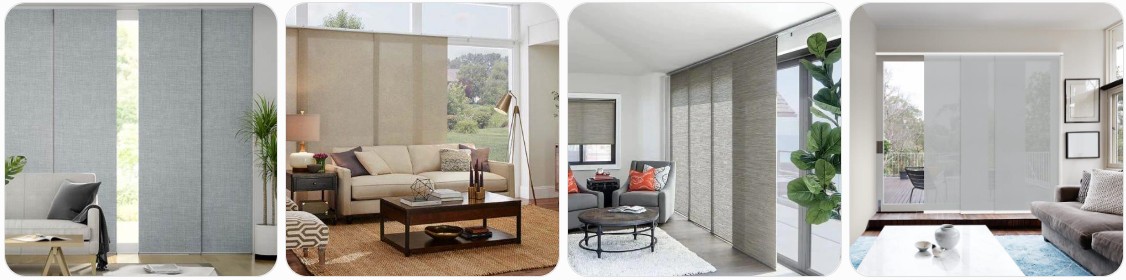
Panel blinds are a smart choice for wide windows, patio doors, sliding glass doors, room dividers, and modern open-plan spaces. This buying guide explains what panel blinds are, how they work, their pros and cons, expected cost, where to buy them online, how to find local stores, what to check before ordering, and whether DIY or professional installation makes more sense.
- Table of Contents:
- Panel Blinds At a Glance
- What Are Panel Blinds? How Panel Blinds Work?
- Panel Blinds Pros and Cons
- Panel Blinds Cost
- Where to Buy Panel Blinds Online
- How to Find Panel Blinds Stores Near You
- What to Check Before Buying Panel Blinds
- Panel Blinds Installation Options
- FAQ About Panel Blinds
Panel Blinds At a Glance
- Best for: Sliding patio doors, wide windows, large glass walls, balcony doors, closet openings, and room dividers.
- Style: Clean, modern, flat fabric panels that slide side-to-side on a track.
- Operation: Panels glide across a multi-channel headrail and stack to one side, both sides, or behind one another.
- Light control: Depends on the fabric. Options include light-filtering, solar, room-darkening, privacy, and blackout fabrics.
- Privacy level: Good to excellent, especially with thicker fabric, blackout material, or tightly overlapping panels.
- Common materials: Polyester, woven fabric, solar screen fabric, natural woven materials, vinyl-coated fabric, and textured privacy fabric.
- Typical cost: Around $80 to $400+ per set for ready-made or semi-custom options, and $300 to $1,000+ for large custom panel track systems.
- Installation difficulty: Moderate. The track must be level, properly supported, and wide enough for the panel stack.
- Main advantage: Excellent coverage for large openings without the dated look of some vertical blinds.
- Main drawback: Not ideal for small narrow windows, and cheap tracks can feel flimsy or difficult to glide.
What Are Panel Blinds? How Panel Blinds Work?
What Are Panel Blinds?
Panel blinds, also called panel track blinds, sliding panel blinds, or panel glide blinds, are window coverings made from wide vertical fabric panels that slide horizontally along a track. Instead of using many narrow vertical slats, panel blinds use larger flat panels that overlap slightly when closed and stack neatly when opened.
They are especially popular for wide openings where regular roller blinds, Roman blinds, or small horizontal blinds may not look balanced. A large patio door, for example, may need a window treatment that moves side-to-side instead of lifting upward. That is where Panel Blinds are useful because they cover broad glass areas while keeping a clean, modern appearance.
Panel blinds are often chosen as an updated alternative to vertical blinds. They still move sideways, which is practical for doors, but they have a softer and more contemporary look because each panel is wide, smooth, and fabric-based. Depending on the material, they can look minimal, textured, natural, decorative, or highly modern.
You can use panel blinds in living rooms, dining rooms, offices, bedrooms, sunrooms, apartments, condos, and large open-plan spaces. They also work as lightweight room dividers when installed from the ceiling. For example, a ceiling-mounted panel track can separate a home office area from a living area, hide storage shelves, or cover a closet opening without using hinged doors.
How Panel Blinds Work?
Panel blinds work by sliding fabric panels across a headrail. The headrail usually contains several channels or tracks, and each panel hangs from a carrier or glider inside the track. When you open or close the blind, the panels move sideways and overlap each other in a controlled stack.
The number of panels depends on the width of the window or door. Smaller patio doors may use three or four panels, while very wide openings may need five, six, or more. The panels are usually attached to the track carriers using hook-and-loop strips, clips, or carrier bars. Many panel blinds also include a weighted bottom bar to keep each panel hanging straight.
Most panel blinds are operated by a wand, cord loop, chain, or hand-drawn system. Some custom systems can also be motorized, although motorized panel blinds usually cost more and may need a compatible track system. For large doors or high-use areas, a smooth track is very important because poor-quality hardware can make the panels drag, tilt, or jam.
When closed, the panels spread across the window and overlap slightly to reduce light gaps. When opened, the panels stack to one side or split to both sides, depending on the system you choose. Before buying, always check the stack width because the panels need space to gather when open. If the stack blocks part of the glass or door handle, the blind may feel inconvenient even if it technically fits.
If you are comparing different options, you may want to look at panel track blinds, sliding panel blinds, and panel blind track systems to understand the difference between full kits, replacement panels, and separate track hardware.

VEVOR Panel Track Blinds, Extendable Track from 45.8 in to 86 in W, Trimmable Panel Curtains Up to 96 in H, Adjustable Vertical Panel Blinds for Sliding Doors, Patio Doors, Room Divider, Window, Gray
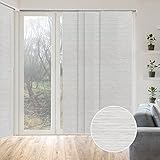
GoDear Design Natural Woven Light Filtering Panel Track Blinds, Marble

CHICOLOGY Panel Track Blinds, Brown Weave, 86"x96", Cordless, Sliding Door
Panel Blinds Pros and Cons
Pros of Panel Blinds
- Great for wide windows: Panel blinds cover large openings better than many standard blinds.
- Ideal for sliding doors: The side-to-side movement matches how patio and balcony doors operate.
- Modern appearance: Wide flat panels look cleaner and more updated than traditional vertical slats.
- Good fabric choice: Available in light-filtering, privacy, solar screen, blackout, textured, and woven styles.
- Can act as room dividers: Ceiling-mounted panel tracks can divide spaces or hide storage areas.
- Neat stacking: Panels slide behind each other instead of bunching heavily like curtains.
- Good privacy: Closed panels can block outside views well, especially with thicker fabric.
- Customizable look: You can choose panel width, fabric color, texture, openness, and track direction.
- Lower maintenance than curtains: Many fabric panels can be dusted, vacuumed, or spot-cleaned.
- Better for minimalist rooms: They suit modern interiors, apartments, offices, and simple décor styles.
Cons of Panel Blinds
- Not best for small windows: The wide panels and track system can look oversized on narrow windows.
- Stacking space required: Open panels still take up space at one side or both sides of the opening.
- Light gaps can happen: Small gaps may appear between panels, at the edges, or near the top track.
- Cheap tracks may drag: Low-quality headrails can make panels hard to slide smoothly.
- Less precise light control: Unlike Venetian or vertical blinds, panel blinds do not tilt open and closed.
- Custom sizes cost more: Large patio doors and full-wall windows can become expensive.
- Fabric can crease: Thin panels may wrinkle if handled roughly or stored incorrectly.
- Cleaning depends on material: Some woven or delicate fabrics are harder to clean than vinyl or polyester.
- Measurement must be accurate: Poor measuring can cause panels to drag, hang too short, or leave large gaps.
- May need professional fitting: Very wide tracks are easier to install with help.
Panel Blinds Cost: What Price Should You Expect?
Panel blinds usually cost more than basic mini blinds or simple roller shades because they use a wider track, multiple fabric panels, carrier hardware, and larger pieces of material. However, they can still be more affordable than high-end custom drapery, especially if you choose a ready-made or semi-custom panel track kit.
For budget planning, expect small or basic ready-made panel blind kits to start around $80 to $150. Mid-range panel blinds for patio doors often fall around $150 to $400. Custom panel track blinds for larger doors, premium fabrics, solar screen material, blackout fabrics, or extra-wide openings can range from $300 to $1,000 or more depending on size, brand, fabric, and installation.
Installation can also affect the final price. DIY installation may cost nothing beyond basic tools and mounting hardware, while professional fitting may add around $100 to $300+ depending on the width, wall type, ceiling mount, number of tracks, and local labor rates. If you are ordering several panel blinds for a large home or office, the total can rise quickly, so it helps to compare sizes and options before placing an order.
To estimate your budget more carefully, use a blind cost estimator before you buy. A cost tool is helpful because panel blind pricing changes based on width, height, quantity, fabric type, installation choice, and optional upgrades like blackout material, valance covers, premium track systems, or motorized operation.
- Basic ready-made panel blinds: Around $80 to $150 per set.
- Standard patio door panel blinds: Around $150 to $400 per set.
- Custom panel track blinds: Around $300 to $1,000+ depending on size and fabric.
- Replacement fabric panels: Around $25 to $100+ per panel depending on material and size.
- Replacement track systems: Around $40 to $200+ depending on length and quality.
- Professional installation: Often around $100 to $300+ depending on job complexity.
When comparing prices, do not look only at the lowest product cost. A cheaper panel blind may have thinner fabric, fewer panel choices, a weaker track, limited mounting options, or poor replacement part availability. For a sliding door used every day, a smoother track and better carrier system can be worth paying more for.
Where to Buy Panel Blinds Online
Amazon is one of the easiest places to start if you want ready-made panel blinds, panel track kits, replacement panels, or installation accessories. It is especially useful when you want to compare prices, sizes, fabric colors, customer photos, and delivery options quickly. When shopping on Amazon, search carefully because listings may use different names such as panel track blinds, sliding panel blinds, panel glide blinds, vertical panel blinds, patio door panel blinds, or room divider panel track systems.
Before ordering from Amazon, check the full product dimensions, not just the headline title. Panel blinds are often sold by total track width and panel height, but some listings also mention individual panel width. Make sure the full system covers your door or window, and check whether the panels stack to the left, right, or both sides. If you only need replacement parts, search for panel blind track replacement, panel track blind replacement panels, or sliding panel blind hardware instead of buying a full new set.
Amazon can be a good option for standard patio doors, apartment sliding doors, temporary room dividers, and budget-friendly panel track kits. For unusual sizes, very wide glass walls, luxury fabrics, or exact color matching, a custom blind retailer may be a better choice.
Find Panel Blinds from Amazon »
VEVOR Panel Track Blinds, Extendable Track from 45.8 in to 86 in W, Trimmable Panel Curtains Up to 96 in H, Adjustable Vertical Panel Blinds for Sliding Doors, Patio Doors, Room Divider, Window, Gray
GoDear Design Natural Woven Light Filtering Panel Track Blinds, Marble
CHICOLOGY Panel Track Blinds, Brown Weave, 86"x96", Cordless, Sliding Door
eBay is useful if you are looking for discounted panel blinds, replacement track parts, discontinued panels, open-box items, or used/new-old-stock blind hardware. It can also be helpful when you are trying to match an existing panel blind system and need a similar panel, carrier, or track part that is no longer available from the original retailer.
When buying panel blinds from eBay, check the seller’s photos closely. Make sure the listing includes the track, panels, mounting brackets, bottom weights, clips, carriers, screws, and any wand or cord control parts if you need a complete system. If a listing only includes fabric panels, it may not include the headrail. Also check shipping costs because long blind tracks can be expensive to ship.
- Blinds.com – Good for custom window treatments, including options for wide windows, patio doors, and made-to-measure blind styles.
- SelectBlinds – Useful for comparing custom blind styles, fabrics, light control levels, and large window covering options.
- The Home Depot – A practical option for ready-made blinds, custom blinds, measuring services, and installation support in many areas.
- Lowe’s – Good for browsing patio door blinds, custom window coverings, installation services, and in-store pickup options.
How to Find Panel Blinds Stores Near You
Finding panel blinds locally can be helpful if you want to see fabrics in person, test the sliding track, compare color samples, or ask about professional measuring and installation. Panel blinds are more size-sensitive than many basic blinds, so visiting a local store can reduce the chance of ordering a product that is too narrow, too short, too heavy, or difficult to mount.
Start by searching for blind shops, window treatment stores, curtain and blind showrooms, home improvement stores, and custom shade installers in your area. Search terms like “panel blinds near me,” “panel track blinds near me,” “sliding panel blinds near me,” “patio door blinds near me,” and “custom window blinds near me” can help you find local options. You can also use this window blinds buying guide to compare different places to shop before deciding whether to buy online or locally.
When you contact a local store, ask whether they sell true panel track blinds, not just vertical blinds. Some stores may suggest vertical blinds for patio doors because they are common, but panel blinds have a different look and different track system. Ask if they have fabric samples, showroom displays, custom sizing, replacement panels, blackout options, and installation service.
It is also smart to ask whether they offer measuring appointments. A professional measurement can be useful for wide sliding doors, uneven walls, ceiling-mounted tracks, outside mounts, or large openings where a small measuring mistake could create visible gaps. If you plan to install the blinds yourself, still ask the store for exact measuring instructions for their specific panel track system.
- Search locally: Try “panel track blinds near me,” “sliding panel blinds near me,” and “patio door panel blinds near me.”
- Check showrooms: Visit blind stores or window treatment shops to see fabric and track quality in person.
- Ask about samples: Fabric samples help you judge color, privacy, texture, and light filtering.
- Ask about measuring: Wide doors and ceiling mounts benefit from accurate measurement.
- Compare installation: Some stores sell only products, while others include measuring and fitting.
- Confirm lead time: Custom panel blinds can take longer than ready-made blinds.
What to Check Before Buying Panel Blinds
- Total width: Measure the full window or door opening and decide whether you want inside mount, outside mount, wall mount, or ceiling mount.
- Total height: Measure from the mounting point to where you want the panels to end. Leave enough clearance so the panels do not drag on the floor.
- Panel stack width: Check how much space the panels take when open. A large stack can block part of the glass or door opening.
- Opening direction: Choose left stack, right stack, split stack, or center opening based on how you use the door.
- Track quality: Look for a sturdy multi-channel track with smooth gliders or carriers, especially for daily-use patio doors.
- Fabric opacity: Choose sheer, light-filtering, privacy, room-darkening, solar, or blackout fabric based on the room.
- Privacy needs: Street-facing doors, bedrooms, and apartments may need thicker or blackout material.
- Sun exposure: Bright rooms may need solar screen fabric or UV-filtering material to reduce glare and fading.
- Color and texture: Order samples when possible because online photos may not show the real fabric tone.
- Cleaning method: Check whether panels can be vacuumed, spot-cleaned, wiped, or removed for deeper cleaning.
- Control type: Decide between wand control, cord control, hand-drawn operation, or motorized control.
- Mounting surface: Make sure your wall, ceiling, or frame can support the track and brackets.
- Door handle clearance: Check that the panels will not catch on handles, locks, trim, or sliding door hardware.
- Return policy: Custom panel blinds may not be returnable, so confirm size and fabric before ordering.
- Replacement parts: Check whether you can buy extra panels, carriers, brackets, bottom weights, or track parts later.
- Child safety: If choosing corded controls, make sure the product includes proper cord safety devices or consider cordless/wand control.
Panel Blinds Installation Options: DIY vs Professional Fitting

Cutelec 2pcs Box Mounting Bracket for Low Profile Horizontal Blinds with 1-3/4" x 2 1/2" Headrail - White Color

Jetec 6 Pieces Mini Blind Brackets for Window Blinds,1.18x1.18 Inch
Panel blinds can be installed by a confident DIY user, but the job is more involved than installing a small roller blind or mini blind. The main challenge is getting the track perfectly level and securely mounted. If the headrail is uneven, the panels may slide on their own, drag, bunch unevenly, or leave gaps.
DIY installation is usually realistic for standard-size patio door panel blinds, especially if the kit includes clear instructions, brackets, screws, and a manageable track length. You will typically need a tape measure, pencil, drill, screwdriver, level, step ladder, and suitable wall anchors. For wide tracks, having another person help hold the rail during marking and mounting makes the job much easier.
Professional installation is a better choice for very wide doors, ceiling-mounted systems, heavy fabrics, uneven walls, concrete surfaces, high windows, or expensive custom panel blinds. A professional fitter can measure accurately, choose the right anchors, align the track properly, and make sure the panels glide smoothly. This can be worth the extra cost when the blind is large, highly visible, or used every day.
- DIY installation is best if: You have a standard-size kit, basic tools, a simple wall mount, and confidence measuring accurately.
- Professional fitting is best if: The opening is very wide, the track is ceiling-mounted, the blinds are custom-made, or the wall surface is difficult.
- Inside mount: Gives a clean built-in look but requires enough depth and very accurate measuring.
- Outside mount: Easier for many patio doors and can reduce side light gaps when sized wider than the opening.
- Ceiling mount: Useful for room dividers, closet covers, and full-height modern window treatments.
- Wall mount: Common for patio doors and large windows where the track sits above the opening.
If installing panel blinds yourself, unpack the panels carefully and avoid folding or creasing them. Lay out all brackets, screws, carriers, and panels before starting. Mark bracket positions evenly, check the track with a level before tightening everything fully, and test the sliding operation before attaching all panels. Once the panels are attached, adjust their spacing so they overlap evenly and hang straight.
FAQ About Panel Blinds
Are panel blinds good for sliding glass doors?
Yes. Panel blinds are one of the best options for sliding glass doors because they move side-to-side like the door itself. They cover wide openings neatly and stack to the side when you need access.
Are panel blinds the same as vertical blinds?
No. Panel blinds and vertical blinds both move sideways, but panel blinds use wide flat fabric panels while vertical blinds use many narrow hanging slats. Panel blinds usually look more modern and less busy.
Do panel blinds block light completely?
Panel blinds can block a lot of light if you choose blackout or room-darkening fabric, but small light gaps may still appear between panels, around the edges, or near the track. For maximum darkness, choose blackout fabric and an outside mount.
Can panel blinds be used as room dividers?
Yes. Panel blinds can work well as room dividers when mounted to the ceiling. They are useful for separating open-plan spaces, hiding storage, covering closet openings, or creating flexible privacy in studios and offices.
Are panel blinds expensive?
Panel blinds can be moderately priced or expensive depending on size and fabric. Basic ready-made sets may cost around $80 to $150, while large custom systems can cost $300 to $1,000 or more.
Can I install panel blinds myself?
Yes, you can install panel blinds yourself if you are comfortable measuring, drilling, leveling a track, and mounting brackets. For very wide tracks, custom blinds, ceiling mounts, or heavy systems, professional fitting is usually safer.
What fabric is best for panel blinds?
The best fabric depends on the room. Light-filtering fabric is good for living areas, solar screen fabric helps reduce glare, privacy fabric blocks outside views, and blackout fabric is better for bedrooms or media rooms.
Do panel blinds provide privacy at night?
Yes, but privacy depends on the fabric. Thin light-filtering fabric may show shadows at night when lights are on, while privacy, room-darkening, or blackout panels provide better nighttime privacy.
Can panel blinds be cut to size?
Some panel blind tracks and panels may be adjustable, but many are not easy to cut cleanly at home. Always check the product instructions before buying. For exact sizing, custom-made panel blinds are usually better.
How do you clean panel blinds?
Most panel blinds can be dusted, vacuumed with a brush attachment, or spot-cleaned with a mild cleaner. Cleaning rules depend on the fabric, so always check the manufacturer’s care instructions before using water or detergents.
Are panel blinds better than curtains?
Panel blinds are better if you want a clean sliding system, modern appearance, and flat panels that stack neatly. Curtains may be better if you want a softer, fuller, more decorative look with heavier insulation or sound absorption.
Do panel blinds need a lot of wall space?
They need enough width for the track and enough stacking space when open. If there is not enough room beside the door or window, the stacked panels may cover part of the glass or opening.
Summary
Panel blinds are a practical and stylish choice for sliding doors, wide windows, patio doors, room dividers, and modern interiors. They use wide fabric panels that glide along a track, giving large openings a clean and contemporary look. Their biggest advantages are wide coverage, smooth side-to-side operation, good privacy, and flexible fabric choices. Their main drawbacks are the need for accurate measuring, proper track installation, stacking space, and higher cost for custom sizes.
If you want a simple ready-made option, Amazon and eBay are good places to compare panel blinds, panel track kits, replacement panels, and hardware. If you need exact sizing, premium fabric, or professional measuring, a custom blind retailer or local window treatment store may be a better choice. Before buying, always check the width, height, stack direction, fabric opacity, track quality, mounting type, and return policy so your panel blinds fit properly and work smoothly for years.

60 PCS Vertical Blind Repair Tabs Kit Clear Fixer Verticle Blinds Snap in Replacement Slats Parts Panels

Vertical Blind Repair Vane Savers, Metal Vertical Blind Repair Tabs for Vertical Blinds Replacement Slats, White (12)