
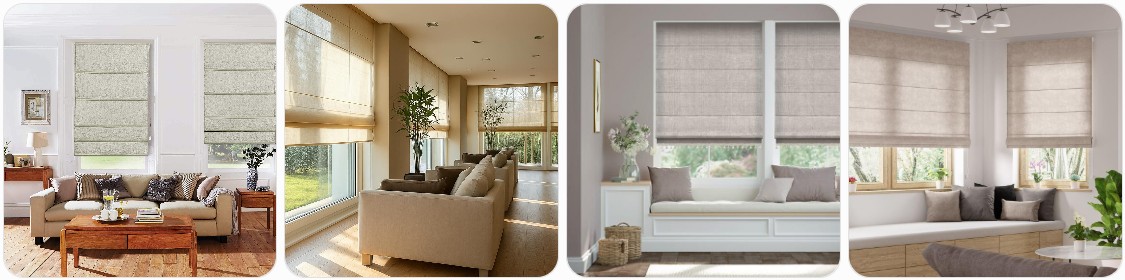
Roman blinds are a popular choice when you want window coverings that feel softer, warmer, and more decorative than basic roller or slatted blinds. This guide explains how Roman blinds work, what they cost, where to buy them online or locally, their pros and cons, and what to check before ordering.
- Table of Contents:
- Roman Blinds At a Glance
- What Are Roman Blinds? How Roman Blinds Work?
- Roman Blinds Pros and Cons
- Roman Blinds Cost
- Where to Buy Roman Blinds Online
- How to Find Roman Blinds Stores Near You
- What to Check Before Buying Roman Blinds
- Roman Blinds Installation Options
- FAQ About Roman Blinds
Roman Blinds At a Glance
- Best for: Bedrooms, living rooms, dining rooms, home offices, nurseries, guest rooms, and decorative windows where a softer fabric look is preferred.
- Main appeal: Roman blinds combine the neat function of blinds with the warmer, more furnished appearance of fabric window treatments.
- How they open: They lift upward and fold into stacked fabric pleats instead of rolling around a tube or tilting like slatted blinds.
- Common styles: Flat Roman blinds, relaxed Roman blinds, hobbled Roman blinds, cascading Roman blinds, blackout Roman blinds, cordless Roman blinds, and custom-made Roman shades.
- Light control: Depends heavily on the fabric and lining. Light-filtering fabric softens daylight, while blackout lining gives better room darkening.
- Privacy level: Usually good when lowered, especially with lined, thicker, or blackout fabrics.
- Typical cost: Ready-made Roman blinds often start around $25–$80 per window, while custom Roman blinds commonly range from about $100–$400+ per window depending on size, fabric, lining, and installation.
- Installation: DIY is possible for standard sizes, but professional measuring and fitting can be worth it for custom, wide, heavy, or expensive Roman blinds.
- Biggest advantage: They look more elegant and decorative than many basic blinds.
- Biggest drawback: They can cost more than roller blinds and may need more careful cleaning because they are made from fabric.
What Are Roman Blinds? How Roman Blinds Work?
What Are Roman Blinds?
Roman blinds are fabric window blinds that raise and lower in soft horizontal folds. Unlike roller blinds, which wrap around a tube, Roman blinds stack neatly as the fabric is lifted. When fully lowered, many Roman blinds look like a flat panel of fabric. When raised, the fabric gathers into layered pleats near the top of the window.
The main reason people choose Roman Blind styles is appearance. They are practical window coverings, but they also act like a decorative fabric feature. This makes them a good option for rooms where you want the window to look finished, styled, and comfortable rather than plain or purely functional.
Roman blinds can be made from cotton, linen, polyester, velvet, textured fabric, patterned fabric, woven materials, blackout-lined fabric, thermal-lined fabric, or designer upholstery-style fabric. Because of this wide fabric choice, Roman blinds can suit many interior styles, from simple modern rooms to traditional, farmhouse, coastal, luxury, hotel-style, and classic interiors.
They are often used in bedrooms, living rooms, dining rooms, guest rooms, nurseries, reading corners, and home offices. They are less commonly used in very wet rooms unless the fabric is suitable for moisture, because fabric blinds can absorb humidity, cooking odors, dust, and stains more easily than vinyl, aluminum, or faux wood blinds.
How Roman Blinds Work?
Roman blinds work through a lift system attached to the back of the fabric. The fabric panel is usually connected to horizontal rods, rings, tapes, cords, or a modern cordless mechanism. When you pull the cord, chain, or handle, the lift system raises the blind and folds the fabric upward into even sections.
Traditional Roman blinds often use cords running through rings on the back of the blind. Modern options may use a chain-operated headrail, cordless lift system, or motorized mechanism. Cordless and motorized Roman blinds are popular when you want a cleaner look, easier operation, or a safer choice for homes with children or pets.
Roman blinds can be fitted inside the window recess or outside the recess. An inside mount gives a neat built-in appearance, while an outside mount can cover more of the wall around the window and may block more light around the edges. Outside mounting is also useful when the window recess is too shallow for the headrail or when you want the window to appear taller or wider.
When lowered, Roman blinds provide privacy and help soften incoming sunlight. When raised, they leave a stack of folded fabric at the top of the window. This stack is part of the Roman blind look, but it also means Roman blinds may block a small amount of glass even when fully open. If you want a completely clear window when the blind is raised, measure the stack height carefully before choosing your mount position.
If you are comparing products, you can browse Roman blinds on Amazon to see common styles, ready-made sizes, cordless options, blackout linings, and fabric finishes.

ARLO BLINDS Bamboo Roman Shades w/Valance 34" W x 60" H, Tuscan

LazBlinds No Drill Bamboo Roman Shades, 20" W x 48" H, Star-Brown

UNISHADES Bamboo Roman Shades w/Valance, 26.5" W × 48" H, Highfield Teak
Roman Blinds Pros and Cons
Pros of Roman Blinds
- Soft decorative look: Roman blinds make a room feel warmer and more finished than many basic blinds.
- Wide fabric choice: Available in plain, patterned, textured, blackout, thermal, luxury, and custom fabrics.
- Good privacy: Lined Roman blinds can provide strong privacy when lowered.
- Elegant folds: The folded fabric stack gives the window a tailored, designer-style appearance.
- Works with many interiors: Suitable for modern, classic, farmhouse, coastal, traditional, and luxury rooms.
- Custom-friendly: Roman blinds are commonly available in made-to-measure sizes for unusual windows.
- Blackout options available: Good for bedrooms, nurseries, guest rooms, and media rooms when blackout lining is added.
- Thermal lining options: Some Roman blinds can help reduce drafts and improve comfort near windows.
- Cleaner than curtains: They give a softer fabric look without taking up as much side wall space as curtains.
- Can be layered: Roman blinds can be paired with curtains, sheers, or side panels for a more complete window design.
Cons of Roman Blinds
- Usually more expensive: Roman blinds often cost more than basic roller blinds or mini blinds.
- Fabric needs care: Dust, stains, moisture, and odors can affect fabric over time.
- Not ideal for wet rooms: Bathrooms, laundry rooms, and humid kitchens may require special moisture-resistant fabrics.
- Less precise light control: They do not tilt like Venetian or vertical blinds.
- Stack blocks glass: The folded fabric stack may cover part of the window when raised.
- Cleaning can be harder: Many Roman blinds cannot simply be wiped down like vinyl or aluminum blinds.
- Custom orders may be final sale: Made-to-measure Roman blinds may have limited return options.
- Cheap mechanisms can wear: Low-quality cords, rings, chains, or headrails may fail with frequent use.
- Heavy fabrics need better hardware: Large or thick Roman blinds may require stronger brackets and careful fitting.
- Pattern alignment matters: Patterned fabric can look uneven if the blind is poorly made or measured incorrectly.
Roman Blinds Cost: What Price Should You Expect?
Roman blinds can vary widely in price because the final cost depends on size, fabric, lining, control type, brand, and whether the blind is ready-made or custom-made. A small ready-made Roman blind may be affordable, while a large custom Roman blind with blackout lining, premium fabric, and professional installation can cost several hundred dollars per window.
As a general guide, budget ready-made Roman blinds may cost around $25–$80 per window. Mid-range Roman blinds often fall around $80–$180 per window, especially if they include better fabric, cordless operation, or room-darkening lining. Custom Roman blinds commonly range from $100–$400+ per window, and premium designer fabrics, motorization, or professional fitting can push the price higher.
For a full room, the cost can add up quickly. For example, buying Roman blinds for three bedroom windows may cost around $150–$600 if using ready-made or mid-range options. A whole living room with large custom Roman blinds could easily run $500–$1,500+, depending on fabric and installation.
The biggest cost factors are usually:
- Window size: Wider and taller blinds use more fabric and may need stronger hardware.
- Fabric quality: Plain polyester is usually cheaper than linen, velvet, designer prints, or upholstery-grade fabric.
- Lining: Blackout, thermal, interlining, and privacy lining can increase the cost.
- Control system: Corded options are often cheaper, while cordless, chain-operated, and motorized systems cost more.
- Ready-made vs custom: Standard sizes are cheaper, but custom sizing gives a better fit.
- Installation: DIY saves labor cost, while professional fitting adds convenience and accuracy.
Before ordering, it can help to use a blind cost estimator to compare rough pricing by blind size, blind type, quantity, material level, and installation option. This is especially useful if you are buying Roman blinds for several rooms and want a budget before contacting local fitters or ordering custom blinds online.
Where to Buy Roman Blinds Online
Amazon is a convenient place to start when you want ready-made Roman blinds, budget Roman shades, cordless Roman blinds, blackout Roman blinds, and simple fabric window shades. The main advantage is product variety. You can compare sizes, colors, customer reviews, installation photos, delivery times, and return policies in one place.
When buying Roman blinds from Amazon, check the exact width and length carefully. Some products are listed by fabric width, while others include the full headrail width. Also look for whether the blind is designed for inside mount, outside mount, or both. If you need better bedroom darkness, search for blackout Roman blinds or thermal-lined Roman shades rather than basic light-filtering fabric.
Amazon is especially useful if your window fits a common size and you do not need a custom fabric. It is also helpful for comparing cordless Roman shades, washable fabric options, and installation accessories. For larger or unusual windows, custom-made Roman blinds from a specialist retailer may give a better fit.
Find Roman Blinds from Amazon »
ARLO BLINDS Bamboo Roman Shades w/Valance 34" W x 60" H, Tuscan
LazBlinds No Drill Bamboo Roman Shades, 20" W x 48" H, Star-Brown
UNISHADES Bamboo Roman Shades w/Valance, 26.5" W × 48" H, Highfield Teak
eBay can be useful for finding discounted Roman blinds, discontinued fabric styles, custom blind sellers, replacement parts, sample fabrics, and new old stock. It may also be a good place to look if you need a specific color, pattern, or size that is no longer available from a regular retailer.
When buying Roman blinds from eBay, pay close attention to condition. Some listings are brand-new, while others may be used, returned, made-to-measure, or clearance items. Check whether brackets, screws, cords, chains, headrails, and installation instructions are included. For custom or made-to-order listings, confirm the seller’s measuring rules before purchasing because custom blinds may not be returnable if you order the wrong size.
- Blinds.com – Good for custom Roman shades, fabric choices, lining options, and made-to-measure ordering.
- The Shade Store – Useful for premium Roman shades, designer fabrics, and high-end custom window treatments.
- SelectBlinds – Offers custom Roman shades with different fabric, privacy, light-filtering, and blackout options.
- Wayfair – Good for ready-made and semi-custom Roman shades in many styles, colors, and price ranges.
How to Find Roman Blinds Stores Near You
Finding Roman blinds locally is a good idea if you want to see fabric samples in person, compare lining options, or get help measuring your windows. Roman blinds are fabric-based, so color, texture, thickness, and pattern can look different in real life than they do on a screen. A local showroom can help you avoid choosing a fabric that is too thin, too shiny, too dark, or too busy for your room.
Start by searching for terms like “Roman blinds near me,” “custom Roman shades near me,” “window treatment store near me,” “made to measure Roman blinds,” or “blind installation near me.” You can also use a window blinds buying guide to compare different places to buy blinds and decide whether a local showroom, hardware store, online retailer, or custom blind specialist makes the most sense.
Local blind stores are especially helpful when your windows are not standard sizes. A professional can measure the width, drop, recess depth, wall clearance, and mounting position. This matters with Roman blinds because the stack height, fabric weight, and lining can affect how the blind looks and operates after installation.
Before visiting a local store, take rough measurements and photos of your windows. Show the salesperson where the blind will be fitted and explain whether you want privacy, blackout, insulation, style, or easy operation. If the room gets strong sun, ask about fading. If the room is a bedroom, ask about blackout lining and side light gaps. If you have children or pets, ask about cordless or child-safe control systems.
When comparing local Roman blind stores, ask these questions:
- Do they offer free or paid measuring service?
- Do they provide fabric samples?
- Can they make Roman blinds for inside and outside mount?
- Do they offer blackout, thermal, or privacy lining?
- Are cordless or motorized Roman blinds available?
- Is installation included or charged separately?
- What is the lead time for custom Roman blinds?
- What warranty covers the fabric, stitching, headrail, and mechanism?
- Can they repair or replace cords, rings, chains, brackets, or headrails later?
What to Check Before Buying Roman Blinds
- Measure the window width accurately: Measure at the top, middle, and bottom of the window. Use the smallest width for inside mount if the window is not perfectly square.
- Measure the drop carefully: Roman blinds need enough length to cover the full window when lowered, especially if you want privacy or blackout coverage.
- Decide inside mount or outside mount: Inside mount looks neat and built-in. Outside mount can hide uneven frames, reduce edge light gaps, and make windows look larger.
- Check recess depth: Some Roman blind headrails need more depth than slim roller blinds. If the recess is shallow, outside mount may be better.
- Think about stack height: Roman blinds fold at the top when raised. Make sure the stack will not block too much natural light or interfere with window handles.
- Choose the right fabric weight: Very thin fabric may look limp, while very heavy fabric may need stronger hardware and may be harder to lift.
- Check the lining: Unlined Roman blinds may filter light but offer less privacy and insulation. Blackout lining is better for bedrooms, while thermal lining can improve comfort.
- Check cleaning instructions: Some Roman blinds are spot-clean only. Others may allow removable fabric, vacuuming, or professional cleaning.
- Look at pattern direction: Large prints, stripes, and geometric patterns must be centered and aligned properly to look good.
- Check control type: Corded blinds may be cheaper, but cordless, chain-operated, or motorized systems can look cleaner and be easier to use.
- Consider child safety: Homes with children or pets should consider cordless Roman blinds or blinds with proper cord safety devices.
- Review return policy: Ready-made blinds may be returnable, but custom Roman blinds are often final sale unless defective.
- Check what is included: Confirm whether brackets, screws, cleats, tension devices, instructions, and mounting hardware are included.
- Compare blackout claims: A blackout Roman blind may still allow light around the edges, especially with inside mount. Outside mount usually reduces this better.
- Check fabric samples first: If ordering custom blinds, samples help you see the true color, texture, thickness, and light-filtering level.
- Think about room conditions: Avoid delicate fabric in humid kitchens, bathrooms, or rooms where stains and odors are likely.
- Check warranty coverage: A good warranty should cover the headrail, lift system, stitching, and manufacturing defects.
- Compare total cost: Add the blind price, shipping, measuring, installation, upgrades, and any accessories before deciding.
Roman Blinds Installation Options: DIY vs Professional Fitting

Cutelec 2pcs Box Mounting Bracket for Low Profile Horizontal Blinds with 1-3/4" x 2 1/2" Headrail - White Color

Jetec 6 Pieces Mini Blind Brackets for Window Blinds,1.18x1.18 Inch
Roman blinds can be installed as a DIY project if you are comfortable measuring, drilling, leveling brackets, and following the manufacturer’s instructions. Ready-made Roman blinds usually include brackets and basic hardware, making DIY installation possible for standard windows. You will typically need a tape measure, pencil, level, drill, screwdriver, wall plugs, screws, and possibly a step ladder.
DIY installation is best when the blind is lightweight, the window is easy to reach, the measurements are simple, and you are not dealing with expensive custom fabric. It can save money because you avoid labor fees. However, Roman blinds need to hang level and operate smoothly. If the brackets are uneven, the blind may fold poorly, pull to one side, or look crooked when raised.
Professional fitting is worth considering for large Roman blinds, heavy fabrics, multiple windows, bay windows, awkward recesses, high windows, or custom-made blinds. A professional installer can confirm the correct mounting position, check wall or frame strength, align the headrail, reduce measurement mistakes, and make sure the blind operates correctly.
Professional measuring can also prevent costly ordering errors. With Roman blinds, an incorrect size can be more frustrating than with some other blind types because the fabric, lining, and fold structure are often made to the exact measurement. If a custom Roman blind is too narrow, too long, too short, or poorly mounted, returning it may not be possible.
- Choose DIY installation if: Your window is standard size, the blind is ready-made, the mounting surface is simple, and you are confident using basic tools.
- Choose professional fitting if: The blind is custom-made, expensive, wide, heavy, motorized, mounted high, or being installed across several rooms.
- Inside mount installation: Gives a clean fitted look inside the recess but requires accurate measurements and enough recess depth.
- Outside mount installation: Can improve coverage, hide uneven frames, reduce light gaps, and make the window look larger.
- Motorized Roman blinds: Usually benefit from professional fitting, especially if wiring, charging access, programming, or smart-home setup is involved.
If installing Roman blinds yourself, always test the blind before final tightening. Raise and lower it slowly to check that the folds stack evenly, the fabric does not catch, the headrail is level, and the control system works smoothly. For corded Roman blinds, install any required cord cleats or tension devices according to the safety instructions.
FAQ About Roman Blinds
Are Roman blinds good for bedrooms?
Yes, Roman blinds can be excellent for bedrooms, especially when they have blackout lining. They add a soft, comfortable look while helping with privacy and room darkening. For the best blackout effect, consider outside mount Roman blinds because they can cover more of the window edges.
Are Roman blinds expensive?
Roman blinds are usually more expensive than basic roller blinds because they use more fabric and have a more detailed folding construction. Ready-made Roman blinds may start around $25–$80, while custom Roman blinds can cost $100–$400+ per window depending on size, fabric, lining, and installation.
Do Roman blinds block light?
Roman blinds can block light well if they use blackout lining, thick fabric, or outside mounting. Light-filtering Roman blinds soften daylight but do not fully darken a room. Even blackout Roman blinds may allow some light around the edges if fitted inside the window recess.
Are Roman blinds better than roller blinds?
Roman blinds are better if you want a softer, more decorative fabric look. Roller blinds are usually better if you want a simpler, cheaper, easier-to-clean window covering. The better choice depends on whether style, price, maintenance, or compact operation matters most to you.
Can Roman blinds be washed?
Most Roman blinds are not machine washable unless the manufacturer specifically says so. Many should be vacuumed gently, spot-cleaned, or professionally cleaned. Always check the cleaning label because washing the fabric can cause shrinking, fading, lining damage, or distorted folds.
Are Roman blinds suitable for kitchens?
Roman blinds can work in kitchens if they are kept away from sinks, steam, grease, and cooking splashes. For busy or humid kitchens, choose easy-clean fabric or consider a more moisture-resistant blind type. Fabric Roman blinds may absorb odors and stains more easily than vinyl or faux wood blinds.
Are Roman blinds suitable for bathrooms?
Roman blinds are usually not the best choice for very humid bathrooms unless the fabric is specifically suitable for moisture. Humidity can affect fabric, lining, stitching, and folds. For bathrooms, moisture-resistant blinds are often easier to maintain.
Should Roman blinds be inside or outside the window recess?
Inside mount Roman blinds look neat and fitted, but they need accurate measurements and enough recess depth. Outside mount Roman blinds can reduce edge light gaps, hide uneven frames, and make the window appear larger. Bedrooms often benefit from outside mounting if better light blocking is important.
Do Roman blinds keep heat in?
Roman blinds can help improve comfort near windows, especially if they use thermal lining or thicker fabric. They are not a replacement for proper insulation, but lined Roman blinds can reduce drafts and make a room feel warmer than thin, unlined fabric.
Can Roman blinds be motorized?
Yes, many Roman blinds can be motorized. Motorized Roman blinds are useful for high windows, large windows, smart homes, bedrooms, and rooms where you want remote control operation. They usually cost more than manual Roman blinds.
Do Roman blinds look good with curtains?
Yes, Roman blinds can look very good with curtains. The Roman blind provides privacy and light control, while curtains add softness, fullness, and extra insulation. This combination works especially well in bedrooms, living rooms, and formal spaces.
How long do Roman blinds last?
Good-quality Roman blinds can last several years or longer with careful use and proper cleaning. Their lifespan depends on fabric quality, sunlight exposure, humidity, stitching, lining, and the lift mechanism. Strong sunlight may fade some fabrics over time.
Summary
Roman blinds are a stylish fabric window covering that works well when you want a softer and more decorative alternative to basic blinds. They fold upward into neat pleats, offer good privacy, and can be customized with different fabrics, linings, colors, and control systems. They are especially popular for bedrooms, living rooms, dining rooms, and other spaces where appearance matters.
The main benefits of Roman blinds are their elegant look, fabric choice, privacy, and ability to suit many interior styles. The main downsides are higher cost, more careful cleaning, less precise light control, and reduced suitability for damp rooms. Before buying, measure carefully, choose the right lining, check the mounting style, compare ready-made and custom options, and decide whether DIY installation or professional fitting is the better choice.
If you want affordable standard sizes, Amazon and eBay are useful starting points. If you need exact sizing, premium fabric, blackout lining, or a more tailored finish, custom blind retailers and local Roman blind stores may be better. Roman blinds can cost anywhere from around $25 for basic ready-made options to $400+ for premium custom blinds, so comparing size, fabric, lining, and installation costs before ordering is the safest way to avoid overspending.

60 PCS Vertical Blind Repair Tabs Kit Clear Fixer Verticle Blinds Snap in Replacement Slats Parts Panels

Vertical Blind Repair Vane Savers, 16PCS Metal Vertical Blind Repair Tabs, Vertical Blinds Repair Kit for Vertical Blinds Replacement Slats
