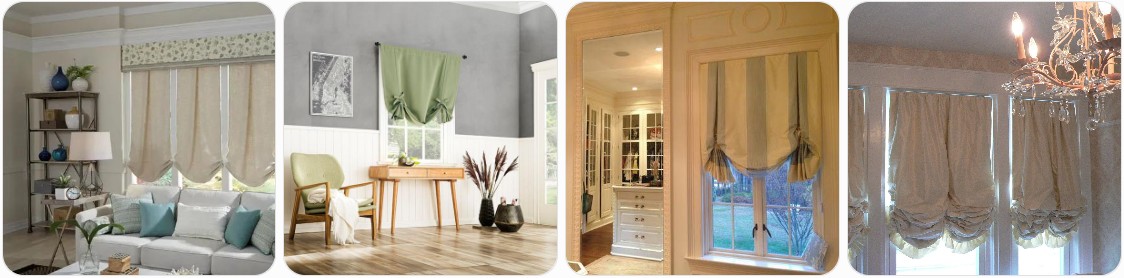
Balloon blinds are a decorative fabric window treatment that can make a room feel softer, fuller, and more traditional. This guide explains what balloon blinds are, how they work, where to buy them online, what they usually cost, the main pros and cons, and what to check before ordering them for your home.
- Table of Contents:
- Balloon Blinds At a Glance
- What Are Balloon Blinds? How Balloon Blinds Work?
- Balloon Blinds Pros and Cons
- Balloon Blinds Cost
- Where to Buy Balloon Blinds Online
- How to Find Balloon Blinds Stores Near You
- What to Check Before Buying Balloon Blinds
- Balloon Blinds Installation Options
- FAQ About Balloon Blinds
Balloon Blinds At a Glance
- Best for: Living rooms, dining rooms, bedrooms, formal sitting rooms, cottage-style interiors, vintage-inspired rooms, and decorative windows where softness matters more than sharp modern lines.
- Main look: Soft fabric gathers that create rounded, puffy folds when raised. The bottom usually forms a scalloped or balloon-like shape.
- Light control: Usually light-filtering unless made with lining or blackout fabric. They are better for soft daylight and style than complete darkness.
- Privacy level: Good when fully lowered, especially with lined fabric. Sheer or lightweight fabrics may need a privacy lining.
- Typical operation: Raised and lowered with cords, rings, tapes, or a Roman shade-style lift system. Some designs are fixed decorative valances rather than fully functioning blinds.
- Average cost: Around $40 to $150 for simple ready-made or semi-ready styles, $150 to $500+ for custom balloon blinds, and more for premium fabric, lining, large sizes, or professional fitting.
- DIY difficulty: Moderate. The fabric style is more detailed than a roller blind, so measuring, leveling, and cord setup matter.
- Biggest advantage: Elegant, soft, decorative appearance that adds fullness and charm to plain windows.
- Biggest drawback: More fabric folds mean more dust, more maintenance, and less crisp light control compared with roller, Venetian, or cellular blinds.
What Are Balloon Blinds? How Balloon Blinds Work?
What Are Balloon Blinds?
Balloon blinds are decorative fabric blinds or shades that gather into rounded, billowy folds when lifted. Instead of rolling around a tube or stacking in flat horizontal pleats, the fabric is pulled upward in a way that creates soft poufs along the lower edge. This gives the window a fuller, more romantic, and more traditional look.
They are often used in rooms where appearance is the main priority. A balloon blind can make a plain window look dressed and finished, especially when made from cotton, linen-look fabric, floral fabric, voile, lace, damask, or lined decorative fabric. They are closely related to soft fabric shade styles such as Roman blinds, Austrian blinds, and relaxed Roman blinds, but balloon blinds usually have a puffier and more gathered lower section.
If you are comparing different fabric blind styles, you can browse the related Balloon Blinds category for more information about this type of window treatment. Balloon blinds are not usually chosen for a minimal modern look. They are better for cozy, vintage, classic, farmhouse, cottage, French country, shabby chic, and traditional interiors.
Some balloon blinds are fully operational, meaning you can raise and lower them. Others are decorative balloon valances that stay mostly fixed at the top of the window. When shopping, always check whether the product is a working balloon shade, a balloon curtain panel, a tie-up shade, or a decorative valance. Product names can overlap, especially on marketplaces.
How Balloon Blinds Work?
Most balloon blinds work by gathering fabric upward through a lift system. On the back of the fabric, there may be rows of rings, tapes, cords, or stitched channels. When the cord is pulled, the fabric lifts from the bottom and bunches into soft rounded folds. The extra fabric creates the “balloon” effect.
A simple balloon blind may use ties, ribbons, or cords to hold the fabric at the chosen height. More structured versions may use a headrail, cord lock, rings, and lift cords, similar to Roman shade hardware. Some custom versions are mounted on a board or track, while ready-made versions may hang from a curtain rod, tension rod, or standard drapery hardware.
The way the blind works depends heavily on the design:
- Working balloon blinds: These raise and lower like a fabric shade, usually using cords or a lift mechanism.
- Tie-up balloon blinds: These use visible fabric ties or ribbons to hold the blind at a chosen height.
- Balloon valances: These are mainly decorative and usually cover only the upper part of the window.
- Rod-pocket balloon shades: These hang from a curtain rod and may be adjusted by hand or with ties.
- Custom board-mounted balloon blinds: These are usually made to measure and can look more tailored and professional.
Because balloon blinds use gathered fabric, they need more fullness than flat shades. That means the fabric width is often wider than the window itself. The extra width and length allow the material to puff out nicely when raised. If the blind is too narrow or too short, it may look tight, flat, or uneven instead of soft and rounded.
For hardware or repair parts, shoppers often compare items like Roman shade ring tape, blind lift cord, and Roman shade cord locks, because many balloon blind systems use similar fabric shade hardware.

NICETOWN Thermal Insulated Blackout Short Curtain - Bathroom Curtain Gray Tie Up Shade for Small Window, Window Valance Balloon Roman Blind (Rod Pocket Panel, 46 inches W x 63 inches L)

Pony Dance Blackout Shades for Windows - Tie Up Curtains and Valances Set Roman Balloon Blind Grommet Top for Kitchen/Bathroom/Bedroom/Bay, 1 Piece, 46 x 63 inches (W x L), Sage Green
Beige Romantic Little Floral Woven Lace Tie Up Balloon Curtain for Kitchen
Balloon Blinds Pros and Cons
Pros of Balloon Blinds
- Elegant decorative style: Balloon blinds add softness, fabric texture, and visual interest to windows.
- Great for traditional rooms: They suit classic, cottage, farmhouse, vintage, French country, and romantic interiors.
- Softens plain windows: The gathered fabric can make a simple window look more dressed and complete.
- Works with many fabrics: Cotton, linen-look, floral, voile, lace, damask, and lined fabrics can all work well.
- Good daytime softness: Light-filtering fabric can reduce harsh sunlight while keeping the room warm and inviting.
- Can be custom-made: They are a good option when you want a specific fabric pattern, lining, width, or drop.
- Decorative even when raised: Unlike some flat blinds, balloon blinds still look styled when pulled up.
- Can hide hardware: The full fabric gathers can cover rods, boards, brackets, and the top of the window nicely.
Cons of Balloon Blinds
- Not the most modern look: They may feel too traditional or ornate for minimalist interiors.
- More fabric to clean: Dust can collect in folds, gathers, and scalloped sections.
- Less precise light control: They do not tilt like Venetian blinds or filter light like cellular shades.
- Can block window space: The gathered fabric may cover part of the glass even when raised.
- Harder to measure: Fullness, drop, lining, and mounting style all affect the final look.
- May need custom work: True balloon blinds are less common than roller blinds or Roman blinds, so ready-made options can be limited.
- Not ideal for damp rooms: Fabric folds can absorb moisture and odors in bathrooms, kitchens, and laundry rooms.
- Cord safety matters: Older corded styles may not be suitable for homes with young children unless made with safer controls.
Balloon Blinds Cost: What Price Should You Expect?
Balloon blinds usually cost more than basic roller blinds because they use more fabric, more stitching, and often more detailed hardware. The final price depends on whether you buy a ready-made balloon shade, a tie-up balloon curtain, a custom-made balloon blind, or a professionally fitted fabric shade.
As a rough guide, simple ready-made balloon blinds or tie-up balloon shades may cost around $40 to $150 per window. Better-quality lined fabric styles may cost around $100 to $250 per window. Custom balloon blinds often start around $150 to $300 per window and can reach $500+ for large windows, premium fabric, decorative trims, blackout lining, interlining, or professional installation.
For a more realistic budget, use a blind cost estimator before ordering. A calculator is useful because balloon blind pricing changes quickly based on width, drop, fabric fullness, lining, quantity, and whether you choose DIY or professional fitting.
- Budget ready-made balloon shade: About $40 to $100 per window.
- Mid-range fabric balloon blind: About $100 to $250 per window.
- Custom balloon blind: About $150 to $500+ per window.
- Professional measuring and installation: Often adds around $50 to $150+ per window, depending on location and complexity.
- Premium fabric or lining: Can add a noticeable amount, especially for large windows.
- Hardware and repair parts: Small parts such as lift cord, rings, cleats, brackets, and cord locks may cost around $5 to $40 depending on what you need.
If you are trying to keep the cost low, look for ready-made balloon shade curtains or tie-up styles. If you want a perfect fit, a specific fabric, or a more polished finish, custom-made balloon blinds are usually the better choice.
Where to Buy Balloon Blinds Online
Amazon can be a practical place to start if you want ready-made balloon blinds, balloon shades, balloon curtain panels, tie-up fabric shades, or hardware for making or repairing a balloon blind. Because true balloon blinds are more decorative and less common than roller or Venetian blinds, search using several related terms such as “balloon blinds,” “balloon shades,” “balloon curtain,” “tie-up balloon shade,” and “fabric balloon valance.”
When buying balloon blinds from Amazon, pay close attention to the product photos and measurements. Some listings may show a balloon-style valance rather than a full working blind. Others may be curtain panels designed to create a balloon effect when tied up. Also check whether the item includes a rod pocket, ties, rings, lift cord, mounting hardware, or lining. If you already have fabric and only need parts, you can also compare Roman shade hardware kits, curtain rods for balloon shades, and shade cord cleats.
Find Balloon Blinds from Amazon »
NICETOWN Thermal Insulated Blackout Short Curtain - Bathroom Curtain Gray Tie Up Shade for Small Window, Window Valance Balloon Roman Blind (Rod Pocket Panel, 46 inches W x 63 inches L)
Pony Dance Blackout Shades for Windows - Tie Up Curtains and Valances Set Roman Balloon Blind Grommet Top for Kitchen/Bathroom/Bedroom/Bay, 1 Piece, 46 x 63 inches (W x L), Sage Green
Beige Romantic Little Floral Woven Lace Tie Up Balloon Curtain for Kitchen
eBay is useful if you are looking for vintage balloon blinds, discontinued fabric shades, handmade window treatments, second-hand custom blinds, or unique decorative curtain styles. Balloon blinds are often chosen for traditional interiors, so eBay can sometimes be a better place to find older floral, lace, country-style, and classic fabric designs that are harder to find in standard retail stores.
Before buying balloon blinds on eBay, check the condition carefully. Look for fading, stains, missing cords, broken rings, damaged stitching, and whether the blind has been stored in a smoke-free or pet-free home. For used fabric blinds, always confirm the exact width, drop, mounting method, and whether the fabric is washable or dry-clean only.
Find Balloon Blinds from eBay »
- Etsy – Good for handmade balloon blinds, custom fabric shades, cottage-style balloon curtains, and made-to-order decorative window treatments.
- Amazon – Useful for ready-made balloon shades, tie-up shades, balloon curtain panels, rods, rings, lift cords, and shade hardware.
- eBay – Helpful for vintage balloon blinds, used custom shades, discontinued patterns, and bargain fabric window treatments.
- Wayfair – Worth checking for decorative fabric shades, tie-up shades, Roman-style fabric blinds, and soft window treatments.
How to Find Balloon Blinds Stores Near You
Finding balloon blinds locally can take more effort than finding roller blinds or faux wood blinds because balloon blinds are usually a more decorative fabric treatment. Many big-box stores may not keep true balloon blinds in stock, but local curtain shops, drapery workrooms, custom blind stores, upholstery shops, and interior design studios may be able to make them to order.
Start by searching for local blind and curtain suppliers, then ask specifically for balloon blinds, balloon shades, tie-up fabric shades, Austrian-style shades, relaxed Roman shades, and custom fabric window treatments. Some stores may not list “balloon blinds” on their website, but they may still make them as a custom soft furnishing project.
You can also use this window blinds buying guide to compare places to buy blinds and find sellers that may offer measuring, custom ordering, and installation help. For balloon blinds, local help can be useful because the final look depends on fabric fullness, lining, mounting height, and accurate measurements.
- Search locally for curtain makers: Try terms like “custom curtains near me,” “drapery workroom near me,” and “custom fabric shades near me.”
- Visit local blind stores: Ask whether they offer custom Roman, Austrian, or balloon-style fabric shades.
- Check upholstery and soft furnishing shops: These businesses often work with fabric and may offer made-to-measure window treatments.
- Bring measurements and photos: A photo of your window and room style helps the shop suggest the right fabric and fullness.
- Ask to see fabric books: Balloon blinds depend heavily on fabric choice, so samples are important.
- Confirm installation options: Some local shops only make the blind, while others measure and install it for you.
- Ask about child-safe controls: If the blind uses cords, ask about cord cleats, tensioners, cordless options, or safer operating systems.
What to Check Before Buying Balloon Blinds
- Check whether it is a blind, shade, curtain, or valance: Many products use similar names. Make sure you know whether the item fully covers the window or only decorates the top.
- Confirm if it raises and lowers: Some balloon blinds are operational, while others are fixed decorative treatments.
- Measure the window width carefully: Balloon blinds need enough fabric fullness to create the rounded effect.
- Measure the drop: Decide whether the blind should sit inside the recess, outside the recess, or above the frame.
- Choose the right mount: Inside mount looks neater, but outside mount can make the window look larger and hide more light gaps.
- Look at the fabric weight: Lightweight fabric creates softer gathers, while heavier fabric may need stronger hardware.
- Check the lining: Privacy lining, blackout lining, or thermal lining can change the look, weight, and cost.
- Consider room moisture: Balloon blinds are not the best choice for damp bathrooms or greasy kitchens unless the fabric is suitable and easy to clean.
- Check cleaning instructions: Gathered fabric can collect dust, so know whether the blind is washable, spot-clean only, or dry-clean only.
- Review the lift system: Look for rings, cords, tapes, ties, cleats, or a headrail, depending on the style.
- Check child safety: Avoid loose accessible cords in children’s rooms and choose safer controls where possible.
- Compare fabric samples: Pattern scale, color, thickness, and transparency can look different in your room than online.
- Check return rules: Custom balloon blinds may not be returnable unless there is a manufacturing defect.
- Look for hardware included: Some products include only the fabric panel, while others include mounting parts.
- Check the finished look when raised: Product photos should show the blind both lowered and gathered so you know how full it looks.
- Think about window access: Balloon blinds can be bulky when raised, so make sure they will not block handles, locks, or air vents.
Balloon Blinds Installation Options: DIY vs Professional Fitting

Cutelec 2pcs Box Mounting Bracket for Low Profile Horizontal Blinds with 1-3/4" x 2 1/2" Headrail - White Color

Jetec 6 Pieces Mini Blind Brackets for Window Blinds,1.18x1.18 Inch
Balloon blinds can be installed as a DIY project, but they require more care than simple roller blinds. The fabric must hang evenly, the folds should gather neatly, and the mounting hardware must be level. If the blind uses cords, rings, or a lift mechanism, the setup also needs to work smoothly and safely.
DIY installation is a good option if you are using a ready-made balloon shade, a rod-pocket balloon curtain, or a simple tie-up style. In many cases, you may only need a curtain rod, brackets, screws, wall plugs, a tape measure, a pencil, and a level. DIY is also practical when the blind is lightweight and the window is easy to reach.
Professional fitting is better if you are buying custom balloon blinds, fitting multiple windows, using expensive fabric, mounting into difficult surfaces, or installing a corded lift system. A professional installer can help position the blind correctly, make sure the folds sit evenly, and reduce the chance of drilling mistakes.
- Choose DIY if: The blind is ready-made, lightweight, rod-mounted, or tie-up style.
- Choose DIY if: You are comfortable measuring, drilling, leveling brackets, and adjusting fabric folds.
- Choose professional fitting if: The balloon blind is custom-made, lined, heavy, wide, or expensive.
- Choose professional fitting if: You need an outside mount above the frame and want the fabric to sit at the perfect height.
- Choose professional fitting if: The blind uses a cord lock, headrail, or more complex operating system.
- Choose professional fitting if: The window is tall, awkward, bay-shaped, recessed deeply, or difficult to access.
For a basic DIY installation, measure the window, mark the bracket positions, check that both sides are level, drill pilot holes if needed, secure the brackets or rod, hang the blind, and adjust the fabric so the balloon folds sit evenly. After installation, test the blind several times before leaving it in its final position. If the fabric pulls unevenly, check the rings, ties, cords, and mounting level.
FAQ About Balloon Blinds
Are balloon blinds the same as Roman blinds?
No. Balloon blinds and Roman blinds are related fabric window treatments, but they do not look the same. Roman blinds usually fold into flatter horizontal pleats, while balloon blinds gather into rounded, puffy folds.
Are balloon blinds still popular?
Balloon blinds are not as common as roller blinds or faux wood blinds, but they are still popular for traditional, cottage, vintage, farmhouse, and romantic interiors where a soft decorative fabric look is wanted.
Do balloon blinds block light?
Balloon blinds can block some light, but most are better for soft light filtering than full blackout. For better darkness, choose a lined or blackout-lined balloon blind.
Can balloon blinds be used in bedrooms?
Yes, balloon blinds can work well in bedrooms, especially if you want a cozy and decorative fabric style. For privacy and sleep, choose lined fabric or pair them with curtains.
Are balloon blinds good for bathrooms?
Usually not. Balloon blinds have fabric folds that can hold moisture, dust, and mildew in damp bathrooms. If you use them in a bathroom, choose a well-ventilated room and suitable washable fabric.
Can I make balloon blinds myself?
Yes, balloon blinds can be made as a DIY sewing project if you are comfortable measuring fabric, creating gathers, attaching rings or ties, and mounting the shade. Simple tie-up balloon shades are easier than cord-operated versions.
How much fabric do balloon blinds need?
Balloon blinds usually need extra fabric width and length because the gathered folds require fullness. The exact amount depends on the window size, fabric type, lining, and how full you want the balloon effect to look.
Are balloon blinds hard to clean?
They can be harder to clean than flat blinds because dust settles inside the folds. Regular vacuuming with a brush attachment and occasional fabric-safe cleaning can help keep them looking fresh.
Can balloon blinds be blackout?
Yes, but they need blackout lining or a separate blackout layer. Keep in mind that the gathered style may still allow some light gaps around the sides depending on how they are mounted.
Do balloon blinds work with curtain rods?
Some balloon blinds and balloon shades are designed with rod pockets and can hang from a curtain rod. Others are board-mounted or headrail-mounted, so always check the product details before buying.
What rooms look best with balloon blinds?
Balloon blinds look best in rooms where softness and decoration are important, such as bedrooms, dining rooms, sitting rooms, guest rooms, nurseries, and traditional living rooms.
Are balloon blinds safe for children?
They can be safe if you choose child-safe controls and avoid loose hanging cords. For homes with young children, use cordless options where possible or secure cords with proper safety cleats and tension devices.
Summary
Balloon blinds are a beautiful choice when you want a soft, decorative, fabric-heavy window treatment with a traditional or romantic look. They are best for living rooms, bedrooms, dining rooms, and other spaces where style matters as much as privacy. They are not the most practical option for damp rooms, very modern interiors, or buyers who want sharp light control, but they can make a window look warm, elegant, and custom-finished.
Expect to pay around $40 to $150 for simple ready-made balloon blinds and around $150 to $500+ for custom styles, depending on fabric, lining, size, and installation. Before buying, check whether the product is a full working blind, a tie-up shade, or a decorative valance. Also confirm measurements, fabric fullness, lining, cleaning instructions, hardware, and cord safety. For the best result, choose balloon blinds when you want softness, charm, and a more dressed-up window rather than a plain modern blind.

