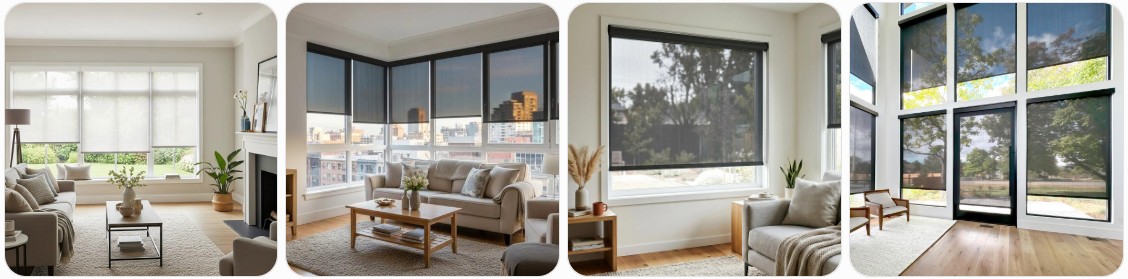
Solar blinds are a smart choice if you want to reduce glare, soften harsh sunlight, protect furniture from UV exposure, and keep your view during the day. This buying guide explains how solar blinds work, what they cost, where to buy them online, how to find local stores, and what to check before ordering.
- Table of Contents:
- Solar Blinds At a Glance
- What Are Solar Blinds? How Solar Blinds Work?
- Solar Blinds Pros and Cons
- Solar Blinds Cost
- Where to Buy Solar Blinds Online
- How to Find Solar Blinds Stores Near You
- What to Check Before Buying Solar Blinds
- Solar Blinds Installation Options
- FAQ About Solar Blinds
Solar Blinds At a Glance
- Best for: Bright rooms, sunny windows, home offices, living rooms, sunrooms, patios, large glass doors, and spaces where glare is a problem.
- Main purpose: Solar blinds are designed to reduce glare, filter sunlight, help limit UV exposure, and improve daytime comfort without fully blocking the outside view.
- Privacy level: Good for daytime privacy in many rooms, but weaker at night when indoor lights are on.
- Light control: Excellent for softening harsh sunlight, but not usually blackout unless paired with blackout shades or curtains.
- Common material: Woven screen fabric, PVC-coated polyester, fiberglass blends, or other mesh-like solar shade fabrics.
- Common openness levels: 1%, 3%, 5%, 10%, and sometimes higher, depending on how much view and light you want.
- Typical price range: About $25 to $150+ per window for ready-made solar blinds, and about $100 to $500+ per window for custom or motorized options.
- Best feature: They can make a bright room more comfortable while still allowing you to see outside during the day.
- Main drawback: They are not ideal if you need complete privacy at night or total room darkening.
What Are Solar Blinds? How Solar Blinds Work?
What Are Solar Blinds?
Solar blinds are window coverings made with a special screen-like fabric that filters sunlight instead of blocking it completely. They are often used on windows that receive strong direct sun, especially in living rooms, offices, kitchens, sunrooms, and rooms with large glass doors. Unlike blackout blinds, solar blinds are not mainly designed to make a room dark. Their main job is to reduce glare, soften heat from sunlight, protect interiors from UV exposure, and preserve a clearer daytime view.
Solar blinds are closely related to Solar Blinds as a window blind category because they are performance-focused blinds made for sunlight control. They are especially useful when a normal light-filtering blind still feels too bright, but a blackout blind feels too dark or closed off.
The fabric is usually available in different openness percentages. A lower openness percentage, such as 1% or 3%, gives more glare reduction and daytime privacy, but less outside view. A higher openness percentage, such as 5% or 10%, gives a clearer view and more daylight, but less privacy and less glare control. This is one of the most important decisions when buying solar blinds.
How Solar Blinds Work?
Solar blinds work by using tightly woven screen fabric to filter the sunlight before it enters the room. Instead of using solid fabric that blocks most light, solar blind fabric has tiny openings that let some light pass through. The size and density of those openings determine how much glare, sunlight, and outside view you get.
For example, a 1% openness solar blind has very small openings, so it blocks more sun and gives stronger glare control. A 5% openness solar blind allows more light and visibility, which can be better when you want the room to stay bright. A 10% openness fabric is even more view-friendly, but it may not reduce glare enough for very sunny windows or computer screens.
Solar blinds are usually made in roller-style designs, so they roll up and down on a tube. You can buy them with a chain control, cordless lift, spring mechanism, remote control, or smart motorized system. Some homeowners install solar blinds inside the window frame for a clean built-in look, while others install them outside the frame for better coverage and stronger light blocking around the edges.
If you are shopping for solar blinds online, it can also help to compare related products such as solar roller shades, outdoor solar blinds, and UV blocking window shades because sellers may use slightly different names for similar products.
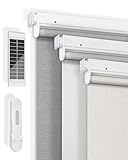
LICHTDIM24 No-Drill Motorized Blinds with Remote, Blackout Roller Shades

MUSCLEAREA No Drill Motorized Blinds with Remote, Automatic Roller Shades

AOSKY Light Filtering Roller Shades for Indoor Windows, 34"W x 72"H, White
Solar Blinds Pros and Cons
Pros of Solar Blinds
- Reduces glare: Great for rooms with TVs, computer monitors, tablets, and strong afternoon sun.
- Maintains daytime view: You can still see outside during the day, especially with higher openness fabrics.
- Helps with UV protection: Solar fabric can help reduce fading on floors, sofas, artwork, rugs, and furniture.
- Keeps rooms brighter than blackout blinds: Good when you want comfort without making the space dark.
- Clean modern look: Solar blinds usually have a simple roller-style appearance that works well in modern homes and offices.
- Good for large windows: They are often available in wider sizes for patio doors, sliding doors, sunrooms, and large glass walls.
- Available for indoor and outdoor use: Outdoor solar blinds can help shade patios, porches, decks, and pergolas.
- Can reduce heat from direct sun: They may make sunny rooms more comfortable, especially when installed on the sun-facing side of the home.
- Many control options: You can choose manual, cordless, motorized, or smart-home compatible systems.
Cons of Solar Blinds
- Not blackout: Solar blinds filter sunlight, but they usually do not fully darken a room.
- Weak nighttime privacy: When lights are on inside at night, people outside may see in more easily.
- Openness choice can be confusing: Choosing between 1%, 3%, 5%, and 10% fabric matters a lot.
- May not suit bedrooms alone: Bedrooms often need blackout curtains or blackout blinds behind or beside solar blinds.
- Cheaper fabrics may curl: Low-quality solar shade fabric may wave, curl at the edges, or hang unevenly over time.
- Outside mount may look bulkier: Outside-mounted solar blinds give better coverage but can look less built-in than inside mounts.
- Custom sizes cost more: Large windows, extra-wide shades, and exact-fit orders can raise the total price.
- Motorized options are expensive: Remote-control or smart solar blinds can cost much more than basic chain-operated versions.
Solar Blinds Cost: What Price Should You Expect?
Solar blinds usually cost more than basic vinyl mini blinds but less than many premium custom shutters or high-end Roman blinds. The final price depends on size, fabric openness, material quality, brand, mount type, control system, and whether the blinds are ready-made or custom-made. If you are comparing several windows, use a tool like the blind cost estimator to get a rough budget before ordering.
For a small or standard-size window, ready-made solar blinds may start around $25 to $60 per window. Mid-range solar roller shades often cost around $60 to $150 per window, especially if they have better fabric, cordless controls, or cleaner hardware. Custom solar blinds commonly range from about $100 to $300+ per window, depending on the width, height, fabric grade, and brand.
Motorized solar blinds are usually the most expensive option. A single motorized solar blind may cost around $200 to $600+, and premium smart-home versions can cost even more. Large patio doors, oversized windows, outdoor solar shades, and professionally installed systems can push the price higher. For a whole-home project, the total can easily reach $800 to $3,000+, depending on how many windows you cover.
- Budget ready-made solar blinds: Around $25 to $75 per window.
- Mid-range solar blinds: Around $75 to $175 per window.
- Custom solar blinds: Around $100 to $300+ per window.
- Motorized solar blinds: Around $200 to $600+ per window.
- Outdoor solar blinds: Around $80 to $500+ depending on width, fabric, and hardware.
- Professional measuring and installation: Often adds about $50 to $150+ per window or a project-based labor charge.
To save money, compare ready-made sizes first. If your window is close to a standard width and height, ready-made solar blinds may be enough. If the window is unusual, very wide, very tall, or in a room where appearance matters, custom solar blinds are usually worth considering.
Where to Buy Solar Blinds Online
Amazon is one of the easiest places to compare solar blinds because you can quickly check multiple sizes, openness levels, colors, control styles, and customer reviews. When shopping on Amazon, pay close attention to the product title and fabric description because some sellers use terms like solar shades, solar roller shades, sun screen shades, UV blocking shades, and light filtering roller blinds. These may look similar, but the fabric openness and privacy level can be different.
For sunny rooms, search for solar blinds by openness percentage. If glare is your main issue, look for 1% or 3% openness. If you want more outside view, check 5% openness. If you want outdoor patio coverage, search specifically for outdoor solar shades or exterior solar blinds because indoor products may not be weather-resistant. You can also compare solar blinds for windows, cordless solar roller shades, and motorized solar blinds if you want different control options.
Find Solar Blinds from Amazon »
LICHTDIM24 No-Drill Motorized Blinds with Remote, Blackout Roller Shades
MUSCLEAREA No Drill Motorized Blinds with Remote, Automatic Roller Shades
AOSKY Light Filtering Roller Shades for Indoor Windows, 34"W x 72"H, White
eBay can be useful if you are looking for discounted solar blinds, open-box products, discontinued sizes, replacement solar shade parts, or custom sellers offering made-to-measure options. Because eBay listings vary more than standard retail stores, check the measurements carefully before buying. Look for the exact blind width, fabric drop, mount type, color, openness level, and whether the brackets or installation hardware are included.
For eBay, solar blinds may be listed under several names, including solar shades, sunscreen roller blinds, sun screen shades, patio solar shades, outdoor roller shades, and UV roller blinds. If you are buying used or open-box solar blinds, check photos closely for fabric creases, stains, bent tubes, missing brackets, frayed edges, and chain or clutch damage.
- Blinds.com – Good for custom solar shades, fabric choices, measuring guidance, and made-to-order window coverage.
- SelectBlinds – Useful for custom indoor solar shades, cordless options, and motorized upgrades.
- Blindsgalore – Offers solar screen shades and custom window treatment options for different rooms.
- The Home Depot – Good for ready-made solar shades, outdoor solar shades, and local pickup depending on availability.
How to Find Solar Blinds Stores Near You
Finding solar blinds near you is helpful if you want to see the fabric in person before buying. Solar blind fabric can look very different online compared with real life, especially when comparing 1%, 3%, 5%, and 10% openness. A local store may also have sample books that show how much view, privacy, and glare control each fabric provides.
Start by searching for local blind shops, window treatment stores, shade installers, home improvement stores, and custom drapery businesses in your area. You can also use a window covering directory or guide for where to buy window blinds to compare buying options before choosing a store. When contacting local stores, ask specifically whether they carry solar blinds, solar roller shades, or sunscreen shades because some stores may not use the term “solar blinds” in their product names.
Before visiting, measure your window width and height, take photos of the window, and note which direction the window faces. South-facing and west-facing windows usually need stronger glare and heat control than shaded or north-facing windows. If you are covering patio doors, sunrooms, or large glass walls, ask the store whether they recommend a single wide solar shade or multiple smaller shades side by side.
Local stores are also useful when you need professional measuring and installation. Solar blinds must hang straight and level, especially on wide windows, because screen fabric can show waves or uneven edges if installed poorly. A professional installer can also help with inside mount clearance, bracket placement, chain safety devices, fascia options, and motorized wiring or battery access.
What to Check Before Buying Solar Blinds
- Openness percentage: Choose 1% or 3% for stronger glare control and privacy, 5% for a balance of view and filtering, or 10% for better view with lighter filtering.
- Daytime vs nighttime privacy: Remember that solar blinds are usually better for daytime privacy than nighttime privacy.
- Window direction: West-facing and south-facing windows may need tighter weave fabric because they often receive stronger direct sun.
- Room purpose: Home offices and TV rooms usually need lower openness fabric, while living rooms may benefit from more view-friendly fabric.
- Inside or outside mount: Inside mount looks cleaner, but outside mount usually gives better edge coverage and glare reduction.
- Exact measurements: Measure width and height carefully, and check whether the seller wants exact window opening measurements or finished blind size.
- Fabric color: Darker solar fabrics often improve outside view, while lighter fabrics may reflect more light and blend better with bright interiors.
- Control type: Compare chain, cordless, spring, remote, and motorized options based on convenience, safety, and budget.
- Child safety: If choosing chain-operated solar blinds, check whether a tension device or safety clip is included.
- Indoor vs outdoor rating: Do not use indoor solar blinds outdoors unless the product is clearly rated for exterior use.
- Hardware included: Make sure brackets, screws, chain tensioners, mounting clips, and instructions are included.
- Return policy: Custom solar blinds may not be returnable, so double-check measurements before ordering.
- Cleaning instructions: Solar screen fabric is usually easy to dust or wipe, but some fabrics can crease or stain if scrubbed too hard.
- Edge gaps: Roller-style solar blinds may leave side gaps, especially with inside mounts, so check if that matters for your room.
- Motor access: For motorized solar blinds, check battery charging, remote compatibility, smart-home support, and warranty coverage.
Solar Blinds Installation Options: DIY vs Professional Fitting

Cutelec 2pcs Box Mounting Bracket for Low Profile Horizontal Blinds with 1-3/4" x 2 1/2" Headrail - White Color

Jetec 6 Pieces Mini Blind Brackets for Window Blinds,1.18x1.18 Inch
Solar blinds can be installed by a DIY homeowner or by a professional installer. The better option depends on the size of the window, the type of mount, the weight of the shade, and how comfortable you are with measuring, drilling, leveling, and adjusting brackets.
DIY installation is usually practical for standard-size indoor solar blinds. Most roller-style solar blinds come with brackets, screws, and instructions. You normally mark the bracket positions, drill pilot holes, attach the brackets, snap the blind into place, and test the operation. For a small or medium window, this can be a simple project if you have a tape measure, pencil, drill, screwdriver, and level.
Professional installation is worth considering for large windows, wide patio doors, outdoor solar blinds, hard-to-reach windows, and motorized solar blinds. Wide solar shades need to be mounted level so the fabric rolls smoothly and does not drift to one side. Outdoor solar shades may also require stronger anchors, side channels, tie-downs, or weather-resistant fittings. Motorized solar blinds may need pairing, charging access, remote setup, app setup, or smart-home integration.
- Choose DIY if: The window is standard size, the blind is lightweight, the installation area is easy to reach, and you are comfortable using basic tools.
- Choose professional fitting if: The blind is very wide, the window is high, the shade is motorized, the surface is masonry or tile, or you are ordering several blinds at once.
- Inside mount installation: Best for a clean look, but it requires enough depth inside the frame and very accurate measurements.
- Outside mount installation: Better for reducing side gaps, hiding imperfect window frames, and improving light coverage.
- Outdoor installation: Usually needs more durable brackets, weather-resistant hardware, and secure anchoring.
If you install solar blinds yourself, take your time with measuring and leveling. A slightly crooked bracket can make the blind roll unevenly. For chain-operated models, install the chain tension device properly for safer use. For motorized models, test the motor and remote before finalizing the installation so you know everything works before the blind is fully in place.
FAQ About Solar Blinds
Are solar blinds the same as solar shades?
In many stores, yes. Solar blinds are often sold as solar shades, solar roller shades, sun screen shades, or sunscreen roller blinds. The key feature is the screen-like fabric that filters sunlight and reduces glare.
Do solar blinds block heat?
Solar blinds can help reduce heat from direct sunlight, especially on sunny windows. They do not insulate like cellular shades, but they can make bright rooms feel more comfortable by filtering harsh sun before it spreads through the room.
Do solar blinds give privacy at night?
Solar blinds are not the best choice for nighttime privacy. During the day, they can make it harder for people outside to see in. At night, when your indoor lights are on, visibility can reverse and people outside may see inside.
What openness percentage is best for solar blinds?
For strong glare control, choose 1% or 3%. For a balance of view and sunlight filtering, 5% is a popular choice. For better outside view and more natural light, 10% may work, but it gives less privacy and less glare reduction.
Are solar blinds good for bedrooms?
Solar blinds can work in bedrooms if you mainly want daytime glare control, but they are usually not enough for sleeping privacy or darkness. For bedrooms, many people pair solar blinds with blackout curtains or use a dual shade setup.
Can solar blinds protect furniture from fading?
Solar blinds can help reduce UV exposure and harsh sunlight, which may slow fading on furniture, rugs, floors, and artwork. They do not make a room completely UV-proof, but they are helpful for sunny windows.
Are darker or lighter solar blinds better?
Darker solar fabrics often provide a clearer outside view and better glare control. Lighter fabrics can look brighter from inside and may reflect more sunlight, but the outside view may appear softer or less sharp.
Can solar blinds be used outdoors?
Yes, but only if the product is made for outdoor use. Outdoor solar blinds usually have stronger fabric, weather-resistant hardware, and better anchoring options. Indoor solar blinds should not be installed outdoors unless the seller clearly says they are exterior-rated.
Are solar blinds expensive?
Solar blinds can be affordable in ready-made sizes, often starting around $25 to $75 per window. Custom, extra-wide, outdoor, cordless, and motorized solar blinds cost more, sometimes reaching several hundred dollars per window.
Do solar blinds completely block sunlight?
No. Solar blinds filter sunlight rather than block it completely. They reduce glare and brightness, but they usually still allow some daylight through. If you want complete darkness, choose blackout blinds instead or layer blackout curtains with solar blinds.
Summary
Solar blinds are one of the best choices for controlling glare, softening bright sunlight, protecting interiors from UV exposure, and keeping a daytime outside view. They are especially useful for sunny living rooms, home offices, patio doors, sunrooms, and large windows. The most important buying decision is the openness percentage because it affects glare control, privacy, brightness, and view.
Expect to pay around $25 to $150+ for many ready-made solar blinds, around $100 to $300+ for custom options, and $200 to $600+ for motorized versions. Amazon, eBay, custom blind websites, and local window treatment stores are all good places to compare options. Before buying, check your measurements, mount type, fabric openness, privacy needs, control system, hardware, and return policy. If you want glare reduction without making the room feel closed off, solar blinds are a practical and modern window covering worth considering.

