
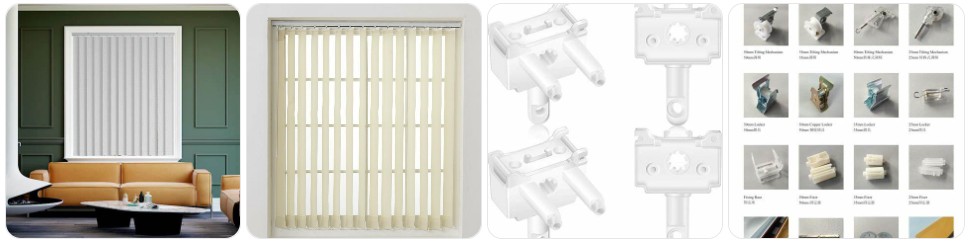
Vertical Blinds are one of the most practical choices for patio doors, sliding glass doors, and wide windows, but because they rely on rotating carriers, hanging vanes, control chains, tilt gears, and a long headrail track, they can develop very specific hardware problems over time. The quick answer is that a broken vertical blind often does not need to be replaced completely if the vanes are still in good condition and the problem is limited to the carriers, vane clips, control chain, tilt mechanism, wand, weights, spacer chain, or mounting brackets. In many cases, replacing a damaged clip, fitting a new carrier, reconnecting the bottom chain, or swapping out a broken control part is much cheaper than buying a whole new blind. If you want to compare likely parts while diagnosing the issue, it helps to look at vertical blind repair kits, vertical blind replacement slats, and vertical blind replacement parts.
Fix Common Vertical Blind Problems & Repair Cost
Vertical blind vanes will not turn properly: This is one of the most common vertical blind problems and usually points to worn carriers, a damaged tilt rod, a stripped gear, or a control chain that no longer rotates the track evenly. Because vertical blinds depend on every carrier turning together, even one damaged mechanism can stop the whole blind from opening or closing smoothly. In many cases, replacing a carrier or small tilt part is enough to restore normal movement. Minor parts are often in the range of about $5 to $25, while a more involved headrail repair can run closer to $15 to $50 depending on how many carriers or control parts need replacing. Looking at vertical blind carrier replacements and vertical blind repair kits can help you match the most likely fix. Do not keep forcing the chain or wand if the vanes are stuck, because that often strips more of the internal tilt system.
One or more vanes have fallen down: This usually means the vane clip, hanger stem, or the punched top of the vane has failed. Vertical blinds are very repairable when the main issue is a dropped vane, especially if the rest of the track still works properly. A simple repair tab, new hanger, or replacement clip is often enough to get the blind working again without changing the full set. This is usually one of the cheapest vertical blind repairs and often costs only a few dollars in parts.
The blind will not draw open or closed smoothly: If the vanes no longer stack neatly to one side or the blind drags while opening, the problem is often a worn master carrier, broken overlap carrier, damaged track runner, or headrail that is slightly bent or dirty. On a vertical blind, smooth drawing depends on the whole rail system working in sequence, so even one broken carrier can affect the full blind. If the rail is still straight, a targeted hardware replacement often solves the problem.
The bottom weights or spacer chain keep coming loose: Vertical blind vanes use bottom weights and linking chains to stay aligned and hang evenly. If those parts crack or disconnect, the vanes can twist, separate, or tangle much more easily. This is usually a low-cost repair, and comparing vertical blind weights and chains can help you restore the lower edge quickly.
The wand or control chain is broken: A snapped wand or broken control chain is one of the easiest vertical blind repairs. If the track and vanes are otherwise fine, replacing the control part can make the blind fully usable again. Searching vertical blind wand replacements and vertical blind chain replacements can help if the blind still looks good but no longer operates correctly.
Vertical Blind Repair Kit
A vertical blind repair kit is most useful when the problem is in the headrail hardware, vane attachments, or lower weighting system rather than in every vane itself. Because vertical blinds rely on several small moving parts working together, the visible problem is often caused by a part that is inexpensive and easy to replace once identified. A good vertical blind repair kit may include repair tabs, replacement clips, carriers, weights, bottom chains, wand connectors, small control parts, and other hardware that helps restore movement without changing the entire blind.
It is worth checking kit photos carefully because some kits focus mainly on fixing torn vane tops, while others are designed for carrier and headrail repairs. If your blind has only one obvious issue, buying the exact part may be cheaper. But if the blind has dropped vanes, a loose bottom chain, and rough rotation at the same time, a broader vertical blind repair kit can make the repair easier and more consistent. For vertical blinds, matching the headrail style and vane width is just as important as matching the visible color.

60 PCS Vertical Blind Repair Tabs Kit Clear Fixer Verticle Blinds Snap in Replacement Slats Parts Panels
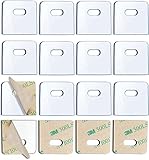
SOGEWO (16 Set/32 Pieces) Clear Vertical Blind Repair Tabs, Vertical Blinds tabs/Blind Fixers for Vertical Blinds Replacement Slats & Parts

35 Sets (70 Pieces) Clear Vertical Blind Repair Tabs for Replacement Slats
Signs Your Vertical Blind Need Repair
- One or more vanes keep falling down: This often means the top punch hole has torn or the hanger clip has failed. Checking vertical blind repair tabs is a smart first step if the vane itself is still usable.
- The vanes no longer rotate together: On a vertical blind, uneven turning usually means a worn carrier, damaged gear, or control part rather than a problem with the vanes themselves.
- The blind sticks when opening or closing: This often points to a broken master carrier, a worn runner, or a rail issue that is preventing the vanes from stacking properly.
- The bottom chain keeps disconnecting: A broken or brittle bottom spacer chain is a common repair sign, especially on older vinyl or fabric vanes that have been exposed to regular movement.
- The wand turns but the vanes barely move: That usually means the tilter or internal control section is wearing out. Looking at vertical blind carrier replacements can help if rotation is inconsistent.
- The vanes overlap badly or will not close evenly: This often means one or more carriers are out of alignment, causing the blind to lose smooth privacy control.
- The headrail still looks fine, but daily operation keeps getting worse: This is very common with vertical blinds because the real wear is often hidden inside the track hardware rather than in the visible parts.
- The blind body still looks good, but the controls feel loose or rough: This is usually the best time to repair the blind before more carriers, chains, or clips start failing.
Tools You May Need to Repair Vertical Blind
- Small screwdriver set: A precision screwdriver set is useful for opening end covers, loosening control parts, and working on compact vertical blind hardware.
- Needle-nose pliers: A pair of needle-nose pliers helps with handling clips, spacer chain ends, vane weights, and small carrier parts without damaging them.
- Replacement repair tabs: If one or more vanes have torn at the top, vertical blind repair tabs are often one of the fastest and cheapest fixes.
- Replacement carriers or stems: If the vanes do not rotate properly, matching vertical blind carrier replacements may be the most important repair parts to have ready.
- Bottom weights and spacer chain: If the vanes twist or separate at the bottom, looking at vertical blind weights and chains can help restore neat alignment.
- Replacement wand or control chain: A broken control part is often easy to fix with a new vertical blind wand or vertical blind chain replacement.
- Measuring tape: A measuring tape helps you confirm vane width, track length, and replacement part size before ordering anything.
- Soft cloth or protected work surface: Vertical blind vanes can crease, especially fabric styles, so protecting them during repair is a good idea.
Should You Repair or Replace Your Broken Vertical Blind?
Repairing a broken vertical blind usually makes sense when the vanes still look good and the main problem is clearly limited to the clips, carriers, control chain, wand, weights, or track hardware. Because vertical blinds often fail in small moving parts rather than in the whole blind, a relatively minor repair can make the entire set work properly again. In that situation, replacing the failed part is usually much cheaper than replacing the whole blind, especially if you only need repair tabs, a few carriers, or a new wand. Comparing a vertical blind repair kit with the cost of a new blind often shows that repair is the better value.
Replacement becomes the better option when the headrail is bent, several carriers have failed at once, the vanes are badly stained or cracked, or the blind has multiple visible and mechanical problems at the same time. It can also make sense to replace the blind if the part style is hard to match and the existing blind was already a low-cost older model. A quick comparison between vertical blind options and the parts you need can help you decide. In many cases, though, vertical blinds are very repairable when the issue is concentrated in the carrier system, controls, or vane attachments rather than the full blind itself.

CHICOLOGY Vertical Blinds, Oxford White (Vinyl), 3.5" PVC, 78" W x 84" H
SOGEWO (16 Set/32 Pieces) Clear Vertical Blind Repair Tabs, Vertical Blinds tabs/Blind Fixers for Vertical Blinds Replacement Slats & Parts

82.5" x 3.5" White PVC Vertical Blind Replacement Slats Curved Smooth (5 Pack)
Tips to Make Your Vertical Blind Last Longer
- Rotate the vanes before drawing them fully open: Vertical blinds last longer when the vanes are turned into the correct position before you slide them across the track.
- Do not force the wand or control chain: If the vanes resist turning, inspect the carriers or control mechanism before applying more pressure.
- Replace torn vane tops early: Fixing a single damaged vane with vertical blind repair tabs is much cheaper than letting more vanes drop and twist.
- Keep the track reasonably clean: Dust buildup in the headrail can add friction over time, especially on frequently used patio-door blinds.
- Make sure the bottom weights and chain stay connected: Balanced vanes hang straighter and are less likely to twist, tangle, or catch when opening and closing.
- Use the controls gently and evenly: Rough handling can strip gears, crack stems, and wear out the lead carrier much faster.
- Replace small worn parts early: A loose carrier or brittle chain is much cheaper to fix than a blind that has been strained by repeated forced operation.
- Support the vanes properly during cleaning or removal: Letting vertical blind vanes bend sharply or twist around each other can create repair problems that did not exist before.
Vertical Blind Repairs FAQ
What usually breaks on a vertical blind?
The parts that fail most often are carriers, stems, repair clips, control chains, wands, bottom weights, and spacer chains. On vertical blinds, the track hardware usually wears out before the vanes themselves.
Can I fix vertical blinds that will not turn properly?
Yes, in many cases. The most common causes are worn carriers, a damaged tilter, or a broken control part. If the vanes are still in good condition, replacing those parts is often enough to restore normal use.
Is a vertical blind repair kit worth buying?
It can be, especially when the blind has more than one small hardware issue. A vertical blind repair kit is often easier than sourcing tabs, clips, chains, and small hardware one item at a time.
Why do my vertical blind vanes keep falling down?
This usually means the vane top has torn, the hanger clip has failed, or the stem is damaged. In many cases, you can repair the vane top or replace the hanging part without replacing the whole blind.
Can I replace just one or two damaged vanes?
Yes, if you can match the vane width, color, and material. Replacing a few damaged vanes can be a worthwhile repair when the rest of the blind still works properly.
How much does it usually cost to repair a vertical blind?
Minor repairs such as tabs, chains, weights, or a few clips are often relatively inexpensive, usually around $5 to $25 in parts. Larger repairs involving several carriers or headrail control parts can cost more, but they may still be cheaper than a full replacement.
Should I repair or replace a vertical blind with several issues?
If the vanes still look good and the parts are easy to match, repair can still make sense. If the blind has worn controls, broken carriers, and badly damaged vanes all at the same time, replacement is often the better choice.
Can vertical blind parts be hard to match?
Sometimes, yes. Carrier shapes, vane widths, and control styles vary by brand, so it helps to inspect the headrail, measure carefully, and compare the damaged part before ordering replacements.
60 PCS Vertical Blind Repair Tabs Kit Clear Fixer Verticle Blinds Snap in Replacement Slats Parts Panels
SOGEWO (16 Set/32 Pieces) Clear Vertical Blind Repair Tabs, Vertical Blinds tabs/Blind Fixers for Vertical Blinds Replacement Slats & Parts
