
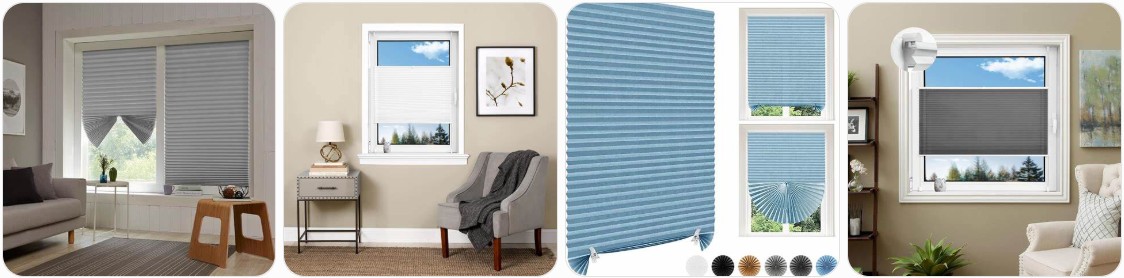
Temporary blinds are a quick, affordable way to cover bare windows when you need privacy, light control, or a short-term window covering before permanent blinds arrive. They are popular for rentals, new homes, renovations, dorm rooms, offices, nurseries, guest rooms, and anyone who needs a simple no-drill blind solution without spending much money upfront.
- Table of Contents:
- Temporary Blinds At a Glance
- What Are Temporary Blinds? How Temporary Blinds Work?
- Temporary Blinds Pros and Cons
- Temporary Blinds Cost
- Where to Buy Temporary Blinds Online
- How to Find Temporary Blinds Stores Near You
- What to Check Before Buying Temporary Blinds
- Temporary Blinds Installation Options
- FAQ About Temporary Blinds
Temporary Blinds At a Glance
- Best for: Move-ins, rentals, renovations, short-term privacy, unfinished rooms, dorms, offices, guest rooms, and temporary blackout needs.
- Common styles: Pleated paper blinds, adhesive fabric shades, temporary blackout blinds, stick-on blinds, clip-on temporary blinds, and cut-to-size paper shades.
- Typical installation: Peel-and-stick adhesive strips, temporary clips, tension mounting, trimming to size, or simple no-drill mounting.
- Average cost: Around $5 to $30 per blind for basic temporary paper or fabric options, with multi-packs often costing $15 to $60 depending on size and blackout level.
- Main advantage: Very affordable and fast to install, often without screws, brackets, tools, or professional fitting.
- Main drawback: Usually not as durable, stylish, smooth-operating, or long-lasting as permanent roller blinds, cellular blinds, faux wood blinds, or custom blinds.
- Light control: Available in light-filtering and blackout versions, but performance depends heavily on material thickness, edge gaps, and window fit.
- Privacy level: Good for short-term privacy, especially at night, but thin paper styles may show silhouettes when lights are on inside.
- Best buying tip: Buy slightly wider than your glass area or window recess if possible, then trim carefully for better coverage.
- Not ideal for: Long-term decorative rooms, high-humidity bathrooms, busy children’s rooms, windows opened frequently, or wide windows needing a polished finish.
What Are Temporary Blinds? How Temporary Blinds Work?
What Are Temporary Blinds?
Temporary blinds are short-term window coverings designed to provide quick privacy, shade, and light control without the cost or commitment of permanent blinds. They are usually lightweight, inexpensive, easy to install, and removable. Many temporary blinds are made from pleated paper, non-woven fabric, polyester material, or thin blackout fabric. Instead of using standard brackets, screws, and headrails, they often attach with adhesive strips, clips, removable tape, or tension-based systems.
These blinds are commonly used when you have moved into a new home and have not chosen permanent window treatments yet. They are also useful during remodeling, painting, construction, staging a house for sale, covering windows in a rental, or adding privacy to a room that does not need a long-term blind. If you are comparing short-term window covering types, you can browse the related Temporary Blinds category for more temporary blind parts, repairs, and guides.
Most temporary blinds are meant to solve an immediate problem: bare glass. They are not usually purchased for luxury styling or years of operation. Instead, the goal is to cover the window today, reduce glare, stop people from seeing in, make a bedroom darker, or protect furniture from direct sunlight until you choose a permanent window covering.
Temporary blinds can also be helpful if you are unsure what style you want long-term. For example, you may use temporary paper blinds for a few weeks while deciding between roller blinds, cellular shades, Roman blinds, faux wood blinds, or custom blackout shades. This gives you time to test how much light enters the room, where privacy is needed most, and whether inside-mount or outside-mount blinds would work better.
How Temporary Blinds Work?
Temporary blinds work by covering the window with a lightweight foldable, pleated, or fabric panel. Many styles use an adhesive strip at the top. You peel off the backing, press the blind onto the window frame, wall, or glass, and then lower the material over the window. Some are held in place with included clips, while others are simply trimmed to width and attached directly to the top of the window opening.
Basic paper temporary blinds usually come folded in a pleated design. The pleats help the blind collapse upward and expand downward. To raise the blind, you gather the pleated material and secure it with clips. To lower it, you remove the clips and let the material extend. This is very simple, but it is not as smooth as a corded, cordless, or spring-loaded permanent blind.
Temporary blackout blinds work in a similar way, but the material is thicker and designed to block more light. These are popular for bedrooms, nurseries, shift workers, travel stays, short-term apartments, and rooms where sunlight causes glare. You can compare options like temporary blackout blinds if darkness is more important than daytime brightness.
Some temporary blinds are designed as cut-to-size products. You measure your window, mark the blind, and trim the excess width with scissors or a utility knife. This makes them flexible for odd-sized windows, but careful measuring is important. If the blind is cut too narrow, you may get large side gaps. If it is too wide, it may wrinkle, bow, or fail to stick properly.
Other temporary options work more like no-drill shades. These may use tension rods, spring clips, suction cups, or adhesive mounting strips. They tend to feel sturdier than basic paper shades, but they also cost more. They can be a better choice if you need something temporary for several months instead of a few days or weeks.

MYshade 6 Pack Temporary Light Filtering Paper Shades for Windows,Paper Pleated Blinds with Adhesive,No Tools No Drilling Free Cut Size Temporary Room Darkening Shades(White, 36" W x 72" H)

Window Blinds Cordless No Drill Cut to Size Clip On Stick On Self Adhesive Temporary Blinds Pleated Paper Blinds for Windows Doors Shades for Home Nursery Bedroom Kitchen Bathroom

MYshade 6 Pack Temporary Blackout Paper Shades for Windows,Paper Pleated Blinds with Adhesive,No Tools No Drilling Free Cut Size Temporary Room Darkening Shades(Black, 36" W x 72" H)
Temporary Blinds Pros and Cons
Pros of Temporary Blinds
- Low cost: One of the cheapest ways to cover windows quickly.
- Fast installation: Many styles install in minutes with peel-and-stick adhesive.
- No drilling: Great for renters, dorms, apartments, and short-term spaces.
- Easy to trim: Many paper and fabric temporary blinds can be cut to fit different window widths.
- Good for move-ins: Useful when you need privacy before custom blinds arrive.
- Available in blackout: Some temporary blinds can make bedrooms, nurseries, and media rooms much darker.
- Lightweight: Easy to handle, transport, store, and remove.
- Good testing option: Lets you live with covered windows before choosing permanent blinds.
- Multi-pack options: Easy to cover several windows on a small budget.
- Minimal tools needed: Many require only a tape measure, pencil, and scissors.
Cons of Temporary Blinds
- Not very durable: Paper and thin fabric can tear, sag, crease, or lose shape.
- Adhesive can fail: Heat, dust, humidity, textured paint, or uneven surfaces can weaken the bond.
- Less polished appearance: They usually look more basic than real blinds or custom shades.
- Limited operation: Many must be clipped manually instead of lifting smoothly.
- Not ideal long-term: Best as a short-term fix, not a permanent window treatment.
- Possible residue: Adhesive strips may leave marks or pull paint if removed carelessly.
- Side gaps: Poor sizing can allow light leakage and reduce privacy.
- Weak in humid rooms: Bathrooms, laundry rooms, and steamy kitchens can damage paper blinds.
- Limited colors: Most temporary blinds come in white, black, gray, or neutral tones.
- Not always child-safe: Clips, loose material, or poorly secured blinds should be kept away from young children and pets.
Temporary Blinds Cost: What Price Should You Expect?
Temporary blinds are usually very budget-friendly compared with permanent window blinds. Basic paper temporary blinds often cost around $5 to $15 per blind, while multi-packs may cost around $15 to $40 depending on size, brand, and quantity. Temporary blackout blinds are usually slightly more expensive, commonly around $10 to $30 per blind or around $20 to $60 for multi-packs. Larger sizes, thicker blackout material, reusable adhesive systems, and no-drill fabric shades can cost more.
For a single small bedroom window, you may only need one temporary blind. For a whole apartment, rental house, or new home move-in, you may need several multi-packs. A realistic budget for covering multiple windows with basic temporary blinds is often around $30 to $100, while better temporary blackout coverage for several rooms may be closer to $60 to $150.
The final price depends on the number of windows, window size, material type, blackout level, and whether you choose single blinds or multi-packs. If you are trying to compare temporary blinds against permanent blinds, a blind cost estimator can help you think through size, quantity, installation, and total budget before you buy.
Here is a simple temporary blinds cost guide:
- Basic paper temporary blinds: Around $5 to $15 per blind.
- Light-filtering temporary blinds multi-pack: Around $15 to $40.
- Temporary blackout blinds: Around $10 to $30 per blind.
- Temporary blackout blind multi-pack: Around $20 to $60.
- Reusable no-drill temporary shades: Around $20 to $70+ depending on size and material.
- Whole-room temporary coverage: Around $20 to $80 for most standard rooms with several windows.
- Whole-home temporary coverage: Around $60 to $200+ depending on how many windows need privacy.
Temporary blinds are usually worth the money when the need is short-term. If you only need privacy for a few weeks, they can be much cheaper than buying permanent blinds immediately. However, if you expect to keep them up for a year or longer, it may be better to compare low-cost permanent options like vinyl mini blinds, basic roller shades, or cordless cellular shades.
Where to Buy Temporary Blinds Online
Amazon is one of the easiest places to buy temporary blinds because you can compare paper blinds, blackout temporary blinds, adhesive shades, and multi-pack options in one place. When shopping on Amazon, pay close attention to the size, number of blinds included, material thickness, adhesive style, and whether the product is light-filtering or blackout. Many temporary blinds look similar in photos, but the actual privacy level and light-blocking performance can be very different.
For move-ins and rental privacy, basic temporary blinds are usually enough for living rooms, offices, kitchens, and rooms where you only need daytime coverage. For bedrooms, nurseries, and bright windows, it is better to compare temporary blackout shades instead. If you want a cleaner no-drill option, search for no-drill temporary blinds or adhesive window shades.
Before ordering from Amazon, measure each window and check whether the blind can be trimmed. Also check how the blind raises and lowers. Some products use clips only, while others may include a more usable lift system. For temporary use, clips may be fine. For daily use, a sturdier no-drill shade may be more practical.
Find Temporary Blinds from Amazon »
MYshade 6 Pack Temporary Light Filtering Paper Shades for Windows,Paper Pleated Blinds with Adhesive,No Tools No Drilling Free Cut Size Temporary Room Darkening Shades(White, 36" W x 72" H)
Window Blinds Cordless No Drill Cut to Size Clip On Stick On Self Adhesive Temporary Blinds Pleated Paper Blinds for Windows Doors Shades for Home Nursery Bedroom Kitchen Bathroom
MYshade 6 Pack Temporary Blackout Paper Shades for Windows,Paper Pleated Blinds with Adhesive,No Tools No Drilling Free Cut Size Temporary Room Darkening Shades(Black, 36" W x 72" H)
eBay can also be useful for buying temporary blinds, especially if you are looking for bulk packs, discounted stock, discontinued products, or low-cost window covering bundles. It may be a good place to compare prices if you need to cover many windows at once. However, you should check seller ratings, shipping time, return policy, product condition, and exact package quantity before buying.
When buying temporary blinds from eBay, be careful with listings that show generic photos but do not clearly state the size or number of blinds included. Temporary blinds are low-cost products, so shipping cost can make a big difference. A cheap listing may not be the best deal if shipping is high or delivery takes too long for your move-in or renovation schedule.
Find Temporary Blinds from eBay »
- The Home Depot – Good for temporary paper shades, blackout shades, and quick pickup options if you need blinds urgently.
- Lowe’s – Useful for temporary shades, paper blinds, and budget-friendly window covering products for move-ins and renovations.
- Walmart – Often has affordable temporary blinds, paper shades, and blackout window coverings for basic privacy needs.
- Target – Worth checking for temporary window shades, dorm room privacy products, and simple light-filtering window coverings.
How to Find Temporary Blinds Stores Near You
Finding temporary blinds locally is usually easier than finding custom blinds because many home improvement stores, hardware stores, department stores, and general retailers carry basic paper shades or temporary blackout shades. If you need privacy today, local shopping may be better than waiting for online delivery. You can start by checking big-box stores, hardware stores, home decor shops, and discount retailers in your area.
A practical way to search is to use terms like “temporary blinds near me,” “temporary paper shades near me,” “temporary blackout shades near me,” “paper window shades,” “stick-on blinds,” or “no-drill blinds.” You can also use a window covering buying directory such as this guide to where to buy window blinds to compare different buying options before choosing a store.
When calling or visiting a store, ask whether the blinds are sold as single shades or multi-packs. Also ask about size availability. Some stores only carry a few standard widths, while others carry trimmable temporary shades that can be cut to fit many windows. If you need blackout, confirm that the package says blackout or room darkening, not just light-filtering.
For urgent needs, local stores are best when you want to install the blinds the same day. For better selection, online stores usually have more sizes, colors, blackout options, and bulk packs. A good approach is to buy enough local temporary blinds to cover the most important windows immediately, then order better sizes online if needed.
- Search local home improvement stores: Check The Home Depot, Lowe’s, Ace Hardware, Menards, B&Q, or similar stores depending on your location.
- Check general retailers: Walmart, Target, and similar stores may carry paper shades or basic temporary blackout blinds.
- Call before visiting: Ask about stock, width, length, blackout options, and multi-pack availability.
- Bring measurements: Measure width and height before going to the store so you do not buy blinds that are too small.
- Look for trimmable options: Cut-to-size temporary blinds are easier to fit when your windows are not standard sizes.
- Check adhesive quality: If the store has reviews online, read comments about whether the blinds stay attached.
What to Check Before Buying Temporary Blinds
- Window width: Measure the exact width of the glass, frame, or recess where the blind will sit. Temporary blinds can often be trimmed, but buying too narrow creates privacy gaps.
- Window height: Make sure the blind is long enough to cover the full window when lowered. Pleated paper blinds may shorten slightly because of the folds.
- Mounting surface: Adhesive temporary blinds need a clean, dry, smooth surface. Dusty paint, textured walls, damp frames, or old peeling paint can cause failure.
- Light-filtering vs blackout: Light-filtering blinds soften daylight but do not fully darken a room. Blackout temporary blinds are better for sleeping, nurseries, and privacy at night.
- Privacy at night: Thin white paper blinds may show shadows or silhouettes when lights are on indoors. Choose thicker material if privacy is important.
- Adhesive type: Strong adhesive holds better but may leave residue or damage paint. Removable adhesive is safer but may not hold as long.
- Room humidity: Avoid paper temporary blinds in bathrooms, laundry rooms, and damp kitchens unless the product is designed for moisture exposure.
- Heat exposure: Direct sun can weaken adhesive and warp lightweight material. South-facing or west-facing windows may need stronger blackout material.
- How often you will use them: If you need to raise and lower the blind daily, consider a better no-drill shade instead of basic paper blinds with clips.
- Included clips: Check whether clips are included for holding the blind open. Some budget packs include very few clips.
- Number of blinds in the pack: Read the listing carefully. Some photos show multiple blinds, but the package may include only one.
- Cutting instructions: Make sure the blind can be trimmed cleanly with scissors or a utility knife if your window size is unusual.
- Color choice: White temporary blinds keep the room brighter, while black temporary blackout blinds usually block more light.
- Outside view: Most temporary blinds do not preserve outside views. They cover the window rather than filtering light like solar shades.
- Removal risk: If you rent, test adhesive carefully and remove slowly to reduce the chance of paint damage.
- Child and pet safety: Keep loose clips, excess material, and unstable blinds away from children and pets.
- Return policy: Since temporary blinds are often trimmed or stuck to a surface, they may not be returnable after use.
Temporary Blinds Installation Options: DIY vs Professional Fitting

Cutelec 2pcs Box Mounting Bracket for Low Profile Horizontal Blinds with 1-3/4" x 2 1/2" Headrail - White Color

Jetec 6 Pieces Mini Blind Brackets for Window Blinds,1.18x1.18 Inch | with Screws,Metal Replacement Parts,Easy DIY Installation
Temporary blinds are mainly designed for DIY installation. In most cases, hiring a professional is unnecessary because the product is lightweight, inexpensive, and made for quick setup. The most common installation method is peel-and-stick mounting. You clean the surface, measure the placement, peel the adhesive backing, press the blind into position, and then adjust the length with clips.
For basic temporary paper blinds, the process is usually simple enough for most homeowners and renters. The important part is preparation. The surface must be clean and dry before the adhesive touches it. If there is dust, grease, moisture, or loose paint, the blind may fall down. It is also best to press the adhesive firmly along the full width for several seconds to improve the bond.
DIY installation is the best choice when you are covering standard windows, using lightweight paper blinds, or installing temporary shades for a short period. It saves money and allows you to cover many windows quickly. You may only need a tape measure, pencil, scissors, cleaning cloth, and possibly a utility knife for cleaner trimming.
Professional fitting only makes sense in limited situations. For example, if you are using higher-quality no-drill temporary shades, fitting many windows in a rental property, staging a home for sale, or covering unusually high windows, a handyman or blind installer may help. However, once professional labor is added, temporary blinds can become less cost-effective. At that point, you may want to compare permanent budget blinds instead.
Here is a practical comparison:
- DIY temporary blind installation: Best for paper blinds, adhesive shades, blackout temporary blinds, dorm rooms, rentals, and quick move-in privacy.
- Professional temporary blind fitting: Only worth considering for high windows, many windows, staged properties, office spaces, or better no-drill products that need a cleaner finish.
- Tools needed for DIY: Tape measure, pencil, scissors, cleaning cloth, step stool, and sometimes a utility knife.
- Time required: Many temporary blinds can be installed in 5 to 15 minutes per window.
- Skill level: Beginner-friendly, as long as you measure carefully and follow the adhesive instructions.
- Biggest DIY mistake: Sticking the blind before checking alignment or failing to clean the surface first.
- Best installation tip: Dry-fit the blind first, mark the center point, then attach it once you are sure the width and position are correct.
For renters, it is smart to test adhesive in a hidden area before installing many temporary blinds. Some adhesives remove cleanly, while others can pull paint from older surfaces. If the wall or frame finish is delicate, consider attaching the blind to glass, using a tension rod style, or choosing a removable no-drill shade instead.
FAQ About Temporary Blinds
Are temporary blinds worth buying?
Yes, temporary blinds are worth buying when you need quick privacy, short-term light control, or a low-cost window covering before installing permanent blinds. They are especially useful for move-ins, rentals, renovations, dorm rooms, and rooms waiting for custom blinds.
How long do temporary blinds last?
Most temporary blinds last from a few weeks to several months, depending on material quality, humidity, sunlight, adhesive strength, and how often they are opened or adjusted. Some better no-drill temporary shades may last longer, but basic paper blinds are not meant to be permanent.
Do temporary blinds block light?
Temporary blinds can reduce light, but the level depends on the material. Light-filtering paper blinds soften daylight, while temporary blackout blinds block much more light. For bedrooms or nurseries, choose blackout temporary blinds and install them wide enough to reduce side gaps.
Can temporary blinds be cut to size?
Many temporary blinds can be trimmed to size with scissors or a utility knife. Always check the product instructions before cutting. Measure carefully, mark the blind evenly, and cut slightly wider if you want better privacy and light coverage.
Do temporary blinds damage walls or window frames?
They can damage paint or leave adhesive residue if removed too quickly or installed on weak surfaces. To reduce risk, clean the surface first, avoid peeling paint, test the adhesive in a hidden spot, and remove the blind slowly according to the manufacturer’s instructions.
Are temporary blinds good for renters?
Temporary blinds are often good for renters because many install without screws or drilling. However, renters should be careful with adhesive products because some can leave residue or lift paint. Removable adhesive, tension-fit options, or no-drill blinds may be safer choices.
Can I use temporary blinds in a bathroom?
Basic paper temporary blinds are not ideal for bathrooms because humidity can weaken the adhesive and damage the paper. If you need temporary bathroom privacy, choose a moisture-resistant temporary shade, frosted window film, or a no-drill blind designed for damp areas.
Are temporary blackout blinds good for sleeping?
Temporary blackout blinds can be very helpful for sleeping, especially in bright bedrooms, nurseries, rental rooms, and travel stays. For the best result, choose blackout material, cover the full window, and reduce gaps around the sides and bottom.
Can temporary blinds be reused?
Some temporary blinds can be reused, but many adhesive paper blinds are designed for one-time installation. Once removed, the adhesive may not stick well again. If reuse matters, look for no-drill temporary shades, tension-fit blinds, or products that specifically say reusable.
What is the cheapest type of temporary blind?
The cheapest temporary blinds are usually pleated paper blinds or light-filtering adhesive paper shades. They are inexpensive and easy to install, but they are also less durable and less polished than fabric temporary shades or permanent blinds.
Summary
Temporary blinds are a practical short-term solution when you need fast privacy, light control, or blackout coverage without installing permanent window treatments. They are inexpensive, easy to find, simple to install, and useful for renters, move-ins, renovations, dorm rooms, offices, and unfinished spaces. Basic paper temporary blinds are the cheapest option, while temporary blackout blinds and no-drill fabric shades offer better performance for bedrooms and longer use.
The main things to check before buying are window size, material type, blackout level, adhesive quality, mounting surface, and whether the blind can be trimmed. For quick coverage, Amazon, eBay, home improvement stores, and general retailers are all good places to compare options. If you only need privacy for a short time, temporary blinds can save money and solve the problem quickly. If you need a polished long-term window treatment, consider upgrading later to permanent blinds or custom shades.

60 PCS Vertical Blind Repair Tabs Kit Clear Fixer Verticle Blinds Snap in Replacement Slats Parts Panels

joytrace RV Pleated Shade Repair Kit, RV Window Shade Restringing Kit, Repair and Maintain of Day Night Pleated Shade (White)
