
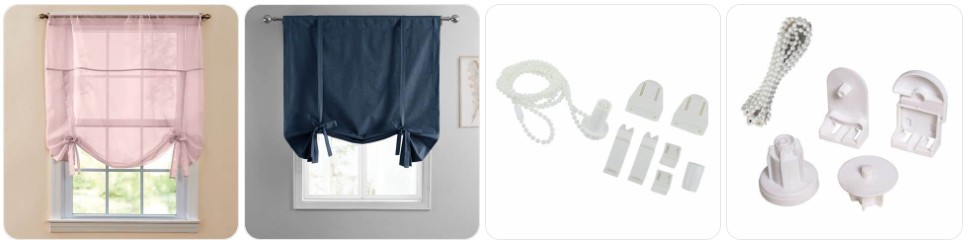
Tie-up Blinds are one of the more decorative fabric blind styles, so repairs often involve the visible ties, rings, fabric folds, stitching, headrail attachments, and lift support points rather than a heavy mechanical system. The quick answer is that a broken tie-up blind often does not need full replacement if the fabric is still in good condition and the problem is limited to one damaged tie, a loose ring, uneven folds, worn lining, or a broken support point at the top of the blind. In many cases, you can restore the blind by re-sewing a tie, replacing rings, reinforcing stressed fabric, or correcting uneven fold points before the whole blind starts hanging badly. If you want to compare useful repair supplies while troubleshooting, it helps to browse tie-up blind repair kits, shade repair rings, and replacement fabric tie cords.
Fix Common Tie-Up Blind Problems & Repair Cost
Tie-up blind hangs unevenly: This is one of the most common tie-up blind problems and usually happens when one tie has stretched, a ring has come loose, or the fold points are no longer lifting at the same height. Start by checking whether both sides of the blind are tied at the same length and whether the top attachment points still look secure. If the blind fabric still looks good, the fix may be as simple as replacing one tie or re-sewing a loose ring rather than replacing the whole blind. Smaller repairs are often in the range of about $5 to $20 in parts and sewing supplies, while more involved repairs with several rings, tape, or reinforcement materials can cost around $15 to $40. It helps to compare shade repair rings, upholstery needle sets, and fabric repair tape. Do not keep forcing the blind upward if one side is already dropping lower, because that can tear the fabric around the ring or tie point.
The ties are frayed, missing, or breaking: On tie-up blinds, the decorative ties are also functional, so once they begin fraying the blind can quickly stop lifting or folding neatly. If the fabric panel still looks strong, replacing the ties or reattaching matching cords is usually a very practical repair. This is often one of the least expensive tie-up blind fixes and can usually be done without replacing the full blind.
The fabric has torn around the rings or stitched lift points: This usually means the stress points have been carrying more weight than the surrounding fabric can handle. On older tie-up blinds, the rings may still be intact while the fabric around them has weakened. In that situation, repairing the area with reinforcing fabric, interfacing, or careful re-stitching can often save the blind if the damage is still localized.
The folds no longer sit neatly when the blind is raised: Tie-up blinds are as much about appearance as function, so messy folds are a real repair issue rather than just a cosmetic annoyance. Uneven folds often point to mismatched tie lengths, shifted rings, worn lining, or fabric that has stretched on one side more than the other.
The top of the blind has pulled away from the headrail or mounting strip: If the blind is sagging at the top, the issue may be the hook-and-loop fastening, top stitching, or the mounting board connection rather than the blind body itself. Tightening or replacing that top fixing can often restore the blind without replacing the fabric panel.
Tie-Up Blind Repair Kit
A tie-up blind repair kit is most useful when the problem is in the fabric support details rather than in the full blind body. Many tie-up blind repairs rely on small sewing and fixing items such as replacement rings, lift tape, fabric ties, matching thread, repair tape, reinforcing patches, hook-and-loop fastening, or small hand-sewing tools that help restore the blind without changing its overall look. For tie-up blinds specifically, the most useful repair kits are the ones that help you rebuild the support and fold points, because those are the areas that usually wear first.
It is worth checking the product photos carefully because many “blind repair kits” are aimed at roller, Roman, or Venetian blinds and may not include the soft-furnishing style items needed for a tie-up blind. If your issue is clearly limited to one failed ring or a single broken tie, buying that exact replacement may be cheaper. But if the blind has frayed ties, loose rings, and weakened top fixing points at the same time, a broader tie-up blind repair kit or a mix of shade repair rings, home sewing repair kits, and hook-and-loop fabric tape can save time and make the repair more consistent. For tie-up blinds, matching the fabric style and stitch placement matters just as much as replacing the hardware.

joytrace RV Pleated Shade Repair Kit, RV Window Shade Restringing Kit, Repair and Maintain of Day Night Pleated Shade (White)

PKOLSFE RV Blinds Repair Kit, Camper Pleated Window Blind String Fixing Set, Day Night Curtain Shades Threading Tool Repair Kit for RV Camper Trailer Motorhome, Car Accessories (Brown)

XJVSS RV Blinds Repair Kit for Camper Window, RV Window Shades Restringing Cord Threading Tool, Day & Night Pleated Shade String Repair Kit for RVs Campers, Car Accessories (White)
Signs Your Tie-Up Blind Need Repair
- One side of the blind hangs lower than the other: This usually means a tie has stretched, a ring has shifted, or one support point is beginning to fail. Checking shade repair rings is a smart first step if the folds are no longer rising evenly.
- The ties look frayed, thin, or partly detached: On a tie-up blind, worn ties are both a structural and decorative warning sign. Replacing them early can prevent fabric tearing around the attachment points.
- The folds bunch awkwardly when raised: Tie-up blinds should gather into soft, even folds. If the folds start bunching to one side, the rings, ties, or stitched lift points may need attention.
- The fabric is tearing around the ring areas: That usually means the stress points are weakening and need reinforcement before the ring pulls through completely.
- The top edge looks loose or starts sagging: If the blind no longer sits firmly against its mounting board or top strip, the fastening or stitching at the top may need repair.
- The lining has separated from the main fabric: Many tie-up blinds rely on the lining to support the fold shape. Once the lining starts pulling away, the blind can lose both shape and strength.
- The ties no longer match in length: Mismatched ties can make the blind look crooked even if the fabric itself is still fine.
- You are avoiding using the blind because it feels delicate: That is often a sign that a small repair is already overdue and the weak point will only worsen with regular use.
Tools You May Need to Repair Tie-Up Blind
- Basic sewing kit: A home sewing kit is one of the most useful things to have for tie-up blind repairs because many problems involve re-stitching rings, ties, or top seams.
- Upholstery or hand-sewing needles: A set of upholstery needles helps when sewing through thicker blind fabric, lining, or reinforcing patches.
- Replacement rings: Loose or missing rings are a common cause of uneven lifting, so matching shade repair rings can be one of the most important repair supplies to have on hand.
- Matching thread or upholstery thread: Strong upholstery thread helps secure high-stress points better than lightweight standard thread.
- Fabric repair tape or fusible interfacing: If the fabric is weakening around the ties or rings, fabric repair tape or interfacing can help reinforce the area before re-sewing.
- Replacement tie cords or fabric ties: If the blind’s ties are worn, comparing tie cords or matching fabric ribbon can help restore both function and appearance.
- Measuring tape: A measuring tape helps you match tie lengths, fold spacing, and ring placement more accurately.
- Step stool or ladder: A stable step stool helps if you need to take the blind down, inspect the top mounting strip, or reinstall the blind safely after repair.
Should You Repair or Replace Your Broken Tie-Up Blind?
Repairing a broken tie-up blind usually makes sense when the fabric still looks attractive and the issue is clearly limited to the ties, rings, stitching, top attachment, or a few localized stress points. Because tie-up blinds are decorative soft-fabric blinds, a small broken detail can make the whole blind look unusable even though most of the blind is still perfectly serviceable. In that situation, replacing the failed tie, re-sewing the rings, reinforcing the fabric, or correcting the top fixing is usually much cheaper than replacing the whole blind, especially if the fabric still matches the room and the rest of the window treatment. Comparing a tie-up blind repair kit with the cost of a full new blind often shows that repair is the better value.
Replacement becomes the better option when the fabric is badly faded, stained, torn in several places, or stretched so unevenly that the blind no longer hangs properly even after repairs. It can also make sense to replace the blind if several support points have failed and the total repair time and cost begin to approach the price of a new blind. A quick comparison between tie-up blind options and the materials you need will help you decide. In many cases, though, tie-up blinds are very repairable when the problem is in the ties, rings, or stitching rather than in the whole fabric panel.
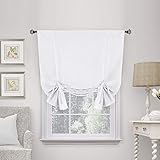
H.VERSAILTEX Pure White Curtain Thermal Insulated Tie Up Window Shade Light Blocking Curtains for Bathroom, Rod Pocket Panel- 42in Wide by 63in Long

NICETOWN Thermal Insulated Blackout Short Curtain - Bathroom Curtain Gray Tie Up Shade for Small Window, Window Valance Balloon Roman Blind (Rod Pocket Panel, 46 inches W x 63 inches L)

Beige Romantic Little Floral Woven Lace Tie Up Balloon Curtain for Kitchen | Liftable Tier Roman Blind Scallop Edge Lace Cafe Curtain Victorian Drapes for Small Window Balcony Doorway Rod Pocket
Tips to Make Your Tie-Up Blind Last Longer
- Lift and lower the blind gently: Tie-up blinds depend on fabric ties and stitched support points, so sudden pulling puts more strain on the blind than slow, even adjustment.
- Keep the ties evenly adjusted: Uneven tie lengths create extra stress on one side of the blind and can distort the folds over time.
- Check rings and stitched points regularly: Catching a loose ring early is much easier than repairing a torn fabric area after the ring has pulled through.
- Do not force a blind that is already hanging crooked: If the folds are uneven, inspect the ties and ring positions before lifting again.
- Dust the folds gently: Tie-up blinds often use softer fabric that can hold dust in the folds. Light, regular cleaning is better than rough handling.
- Replace worn ties before they snap: A frayed tie is much cheaper to fix than a torn blind panel or ripped stitch line.
- Support the blind when taking it down for cleaning: The top attachment points on tie-up blinds can weaken if the blind is allowed to pull down under its own weight.
- Use matching repair materials: Choosing the right thread, ring size, and tie style helps the blind keep both its look and its function after repair.
Tie-Up Blind Repairs FAQ
What usually breaks on a tie-up blind?
The parts that fail most often are the ties, rings, stitched support points, top attachment, and sometimes the lining around the stress areas. On tie-up blinds, these soft-furnishing details usually wear out before the whole blind does.
Can I fix a tie-up blind that hangs unevenly?
Yes, in many cases. The most common causes are stretched ties, loose rings, or uneven fold points. If the fabric is still in good condition, correcting those details is often enough to restore the blind.
Is a tie-up blind repair kit worth buying?
It can be, especially when the blind has more than one small issue. A tie-up blind repair kit is often easier than sourcing rings, thread, repair tape, and ties separately.
Why do the folds on my tie-up blind look messy?
This usually means the tie lengths are uneven, one ring has shifted, or the fabric has stretched more on one side. Because tie-up blinds rely on decorative folds, even a small imbalance is easy to notice.
Can I replace just the ties on a tie-up blind?
Yes, if the rest of the blind is still in good condition and the issue is limited to worn or frayed ties. This is often one of the simplest and cheapest tie-up blind repairs.
How much does it usually cost to repair a tie-up blind?
Minor repairs such as replacing rings, ties, or stitching materials are often relatively inexpensive, usually around $5 to $20 in supplies. Larger repairs involving several reinforcement points or top-mount fixes can cost more, but they are often still cheaper than replacing the full blind.
Should I repair or replace a tie-up blind with torn fabric?
If the tear is small and close to a support point, repair may still make sense if you reinforce the area correctly. If the fabric is badly torn across several places or very worn overall, replacement is usually the better choice.
Can tie-up blind parts be hard to match?
Yes, sometimes. Ring size, tie style, lining weight, and top attachment methods can vary, so it helps to remove or measure the damaged part carefully before ordering replacement materials.

60 PCS Vertical Blind Repair Tabs Kit Clear Fixer Verticle Blinds Snap in Replacement Slats Parts Panels
joytrace RV Pleated Shade Repair Kit, RV Window Shade Restringing Kit, Repair and Maintain of Day Night Pleated Shade (White)
