
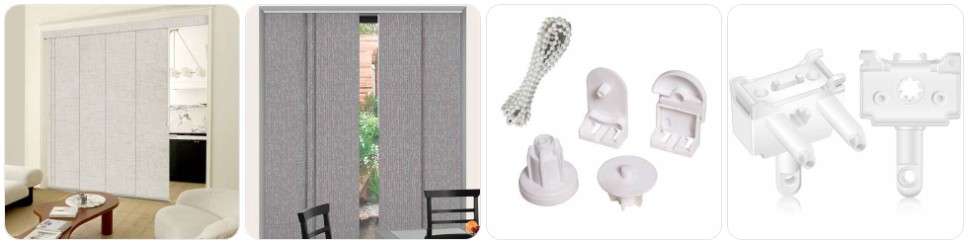
If you are dealing with worn gliders, broken carriers, missing hooks, or a stiff sliding track, this guide to Panel Blind replacement parts will help you identify what usually fails first, where to buy replacements, and when a simple hardware swap is enough to get the blind moving smoothly again. In many cases, replacing a damaged runner, carrier, wand control, or a complete panel blind repair kit is far cheaper than replacing the whole system, especially if your fabric panels are still in good shape.
Buy Panel Blind Parts Online
Carriers are the sliding units inside the headrail that support each fabric panel and keep spacing consistent. Replace them when panels drag, separate unevenly, or stop overlapping correctly during travel. » find on amazon / find on ebay
Gliders help carriers move cleanly through the track without binding or jerking. If the blind sticks at one point, feels rough, or leaves one panel lagging behind, worn gliders are often the hidden cause. » find on amazon / find on ebay
Hangers and hooks connect the fabric panel to the carrier assembly. Replace them if one panel hangs lower than the others, drops off completely, or twists during opening and closing instead of staying straight. » find on amazon / find on ebay
A replacement control wand is useful when the original cracks, slips, or no longer engages the master carrier properly. It restores manual sliding control and helps prevent forcing the track by pulling directly on panels. » find on amazon / find on ebay
Track parts include the headrail itself, end stops, spacer pieces, and internal guides that keep the blind aligned. They matter when the system sags, carriers jump channels, or the blind no longer stacks neatly. » find on amazon / find on ebay
Mounting brackets secure the panel blind headrail to the wall or ceiling. Replace them if the rail tilts forward, feels loose, rattles during operation, or shows stress cracks around the screw and clip points. » find on amazon / find on ebay
A repair kit is the best option when you need several small parts at once, such as hooks, gliders, clips, and stops. It is ideal for older panel blinds with multiple worn pieces. » find on amazon / find on ebay
Signs You Need Replacement Parts for Your Panel Blind
- One panel drags behind the others when you open the blind: This usually points to a worn carrier or damaged glider inside the track. If the fabric is still intact, a new set of panel blind carriers is often the smarter fix.
- The panels no longer stack evenly at the side: When panel blinds stop parking in a neat, uniform stack, the master carrier, overlap spacing, or end stop may be out of position. Uneven stacking is a hardware symptom, not just a cosmetic issue.
- A panel has dropped lower than the rest: If one fabric panel hangs crooked or lower, inspect the hanger tab, panel hook, or attachment clip first. These small pieces fail more often than the actual fabric panel.
- The track feels rough or catches at the same point every time: Repeated sticking in one section usually means cracked gliders, a bent internal guide, or debris buildup in the rail. A smooth panel blind should slide with steady resistance, not sudden jolts.
- The control wand turns but the blind barely moves: This often means the wand connection or master carrier is slipping. Replacing a worn control wand can restore proper leverage before extra strain damages the track.
- The headrail is loose against the wall or ceiling: Panel blinds cover wide openings, so bracket weakness becomes obvious fast. If the rail sags or clicks during use, check the mounting clips and bracket screws before assuming the entire blind has failed.
- Panels twist instead of staying flat while sliding: Twisting often means one carrier is binding or one hook is sitting at the wrong angle. That misalignment can gradually wear the panel edge and make overlap look messy.
- You hear snapping, clicking, or popping inside the rail: Sharp internal noises are commonly caused by broken stops, cracked carriers, or displaced gliders. At that stage, using force usually makes the repair more expensive.

60 PCS Vertical Blind Repair Tabs Kit Clear Fixer Verticle Blinds Snap in Replacement Slats Parts Panels

30 Sets (60 Pcs) Vertical Blinds Replacement Slats Panels, Vertical Blind Repair Tabs Kit, Clear Apartment Blinds Replacement Fixers, Horizontal Blinds Replacement Parts

Vertical Blinds Replacement Stem and Gear Used for Headrail, Carrier Stem Vertical Blinds Curtain Accessories(12 Sets)
How to Identify the Right Panel Blind Replacement Part
- Check whether your blind is a true panel blind or a panel track system: Some sellers use those names interchangeably, but the carrier spacing, wand connection, and panel attachment style can differ. Start by matching the headrail design before ordering any panel track parts.
- Count how many fabric panels your track supports: A three-panel system, four-panel system, and wider multi-panel setup may use different carrier layouts and stack directions. The correct replacement part must match the number of moving positions, not just the width of the blind.
- Look at how the fabric attaches to the hardware: Some panel blinds use stitched-in hanger tabs, while others use removable clips or plastic hook fittings. If you replace the wrong attachment style, the panel may hang unevenly or detach under normal movement.
- Identify the opening direction before buying master parts: Panel blinds can stack left, right, center, or split from the middle. That matters because the master carrier and wand-control side must match the actual travel direction of your blind.
- Measure the headrail profile instead of guessing by brand: Many replacement listings are generic. Compare the rail width, internal channel shape, and end-stop style so you do not buy a carrier that looks close but will not seat properly in the track.
- Check whether the problem is isolated or system-wide: If only one panel drops, you may only need a hook or clip. If several panels bind, a full repair kit or multiple carriers may make more sense than replacing parts one by one.
- Inspect the wand and master carrier connection together: A cracked wand socket can look like a bad carrier, and a slipping carrier can feel like a bad wand. Confirm which piece is actually stripped before placing the order.
- Use photos of your removed part when comparing listings: Panel blind hardware is often easiest to match by shape, hook orientation, and slot detail. A quick side-by-side check usually prevents the most common online ordering mistake.
Should You Repair or Replace the Whole Panel Blind?
If your panel blind fabric is still clean, straight, and not badly sun-faded, repairing the hardware is usually the better value. Panel blinds often fail at the moving parts first, especially the carrier train, gliders, hooks, wand assembly, and mounting brackets. Replacing those items can bring back smooth sliding action without forcing you to match new fabric panels to an existing room. For many homeowners, ordering targeted parts like replacement carriers or a panel blind repair kit is the lowest-cost fix.
You should lean toward full replacement when the headrail is bent, multiple panels are torn or badly stained, the stack spacing is inconsistent across the entire system, or replacement hardware for your exact track is no longer available. Wide patio-door panel blinds put more stress on the rail than many other blind types, so once the track itself is warped or the mounting points have repeatedly failed, replacing the entire unit is often more reliable than trying to rebuild it piece by piece.

HUNTSEN 4-Panel Hunting Blind - 360° See Through with Wide View Dog Door
Auscamotek Duck Hunting Pop Up Ground Blind Portable Quick Setup Lightweight Deer Blind 3-Sides Camouflage Tent

Ameristep outdoors Mossy Oak Hunting Blinds Treestands Blinds, Mossy Oak Obsession, 21.0X4.33X4.33 US
How to Prevent Parts Damage to Panel Blind
- Slide the blind with the control wand instead of pulling fabric panels: Pulling the panels by hand twists the hangers and puts side-load on the carriers. Using the wand keeps the force centered through the master carrier where the system is designed to handle it.
- Keep the track channel free from dust and grit: Panel blinds rely on smooth side-to-side travel. Even light debris inside the headrail can make gliders scrape and skip, which gradually wears down both the carriers and the internal guide surfaces.
- Do not force the blind when one panel catches: If a panel sticks, stop and inspect the nearest carrier, hook, and track section. Forcing a jam usually turns one broken part into several, especially on wider patio-door panel systems.
- Check bracket tightness on wide openings every few months: Panel blinds are often installed over sliding doors and large windows, so loose brackets can let the headrail flex. That extra movement shortens the life of the track and makes carrier alignment worse.
- Keep panels evenly weighted and properly attached: A half-detached panel or crooked hanger places uneven stress on the neighboring carriers. Re-seat loose clips early so the blind does not start stacking unevenly and wearing one side of the rail.
- Replace small damaged parts before they damage larger ones: A cheap broken hook, stop, or glider can quickly lead to misalignment throughout the system. Keeping a small repair kit on hand makes early fixes much easier.
- Avoid swinging or over-rotating the wand connection: The control wand on a panel blind is built for guided sliding movement, not twisting force from odd angles. Rough handling can strip the wand socket or crack the master carrier housing.
- Inspect the stack end and end stops during cleaning: When end stops loosen, the carriers can overtravel and bunch up too tightly. A quick visual check helps catch missing or shifted hardware before the panels begin colliding at the stack side.
Panel Blind Parts FAQ
What is the most common replacement part on a panel blind?
The most commonly replaced parts are carriers, gliders, hooks, and the master carrier assembly. These parts do most of the moving work inside the track, so they typically wear out long before the fabric panels themselves.
Can I replace one panel blind carrier without replacing the whole track?
Yes, in many cases you can replace a single damaged carrier if the headrail is still straight and the rest of the carrier train is in good shape. The key is matching the carrier shape, track profile, and stack direction correctly.
Why do my panel blinds no longer stack neatly on one side?
Uneven stacking usually points to worn carriers, displaced end stops, bent track sections, or one panel hanging from the wrong hook position. It is usually a hardware alignment issue rather than a problem with the fabric itself.
Can I buy a universal panel blind repair kit?
Some kits are sold as universal, but panel blind hardware is not fully standardized. A kit can be useful for common clips, hooks, or gliders, but you should still compare your removed part to the listing before ordering.
Should I replace the wand if the blind is hard to move?
Only if the wand is cracked, slipping, or no longer engaging the master carrier properly. If the blind catches at the same point each time, the real problem is more likely inside the track, such as a bad glider or carrier.
Are panel blind parts different from vertical blind parts?
Yes. Although both systems slide along a headrail, panel blinds use wider fabric panels, different carrier spacing, and different attachment hardware. Vertical blind stems and vane parts are usually not a direct substitute for panel blind components.
Where can I buy panel blind replacement parts online?
You can usually find them through blind-parts suppliers, eBay listings, and Amazon searches such as panel blind parts, panel blind carriers, and panel blind repair kits.
60 PCS Vertical Blind Repair Tabs Kit Clear Fixer Verticle Blinds Snap in Replacement Slats Parts Panels
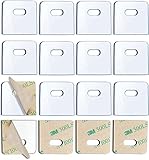
SOGEWO (16 Set/32 Pieces) Clear Vertical Blind Repair Tabs, Vertical Blinds tabs/Blind Fixers for Vertical Blinds Replacement Slats & Parts