
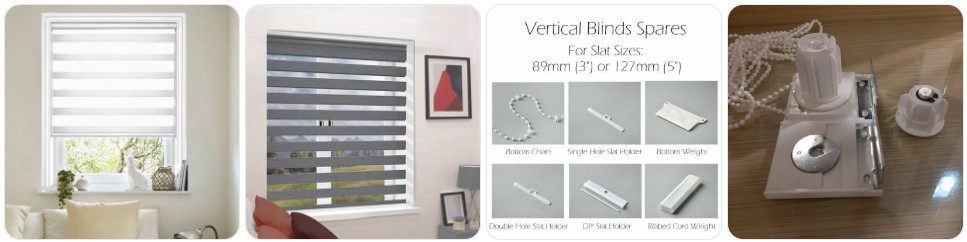
Day and Night Blinds are designed with alternating sheer and solid fabric bands, which means repairs usually involve the clutch, chain loop, brackets, idle end, roller tube, cassette, bottom bar, or the fabric alignment itself rather than a simple one-layer shade mechanism. The quick answer is that a broken day and night blind can often be repaired for much less than a full replacement if the striped fabric is still in good condition and the main issue is limited to the operating hardware. In many cases, the fix comes down to replacing a worn clutch, re-seating a loose bracket, swapping out a damaged chain, correcting uneven fabric tracking, or fitting a new end cap before the blind starts misaligning even more. If you want to compare useful parts while troubleshooting, it helps to browse day and night blind repair kits, zebra blind parts, and roller shade clutch replacements.
Fix Common Day and Night Blind Problems & Repair Cost
The blind slips down or will not stay in position: This is one of the most common day and night blind problems and usually points to a worn clutch, damaged chain drive, or a roller mechanism that is no longer gripping properly. Because day and night blinds rely on precise band alignment, even a small amount of clutch wear can make the blind drift, stop at the wrong point, or lose its usual light-control positions. In many cases, replacing the clutch or chain mechanism is enough to solve the problem, and minor repairs are often in the range of about $8 to $25 in parts, while a more complete mechanism repair can run around $15 to $40 depending on the blind size and hardware style. It helps to compare roller shade clutch replacements and roller blind bead chain replacements. Do not keep forcing the chain when the blind starts slipping, because that often wears the clutch faster.
The sheer and solid bands no longer line up correctly: On a day and night blind, band alignment is one of the main signs of overall health. If the stripes stop matching cleanly, the problem is often a shifted roller tube, loose bracket, worn idle end, or fabric wrap that has started tracking unevenly. Depending on the cause, the repair may be as simple as re-seating the blind in the brackets or correcting the fabric wrap, but it is worth fixing early before the material develops a more obvious skew.
The blind will not raise or lower smoothly: This usually means the chain mechanism, clutch, bracket alignment, or internal roller support is wearing out rather than the fabric being the main issue. On day and night blinds, rough movement often shows up just before the fabric starts misaligning, so it helps to compare roller shade clutch parts, mounting brackets, or compatible zebra-blind hardware before assuming the whole blind needs replacing.
The chain loop is broken, stretched, or keeps coming off: This is a very common repair on day and night blinds because the chain is used constantly to move the double-layer fabric into different light positions. If the clutch still feels firm, replacing the chain loop may be enough. If the chain keeps slipping even with a new loop, the clutch teeth may already be worn.
The blind hangs crooked or rubs at one side: This often means one bracket has shifted, the idle end is worn, or the blind is no longer sitting square in its mounts. On a day and night blind, even a slight tilt becomes obvious because the fabric bands stop looking level across the window.
Day and Night Blind Repair Kit
A day and night blind repair kit is most useful when the problem is clearly in the operating hardware rather than in the full fabric body of the blind. Because these blinds use alternating sheer and opaque fabric bands on a roller-style mechanism, the parts that fail most often are the clutch, bead chain, idle end, mounting brackets, end caps, and small support fittings that keep the blind aligned. A good repair kit may include the control-side clutch, a replacement chain loop, idle-end hardware, bracket pieces, and small fittings that help restore smooth rolling and proper band positioning.
It is worth checking kit photos carefully because many compatible items are sold under broader names like zebra blind parts, vision blind hardware, or day and night roller blind parts rather than using exactly the same phrase. If the problem is limited to one obvious piece, buying that exact part may be cheaper. But if the blind is slipping, the bands are misaligning, and the chain already feels worn, a broader day and night blind repair kit or a set of zebra blind parts can make the repair much more consistent. For day and night blinds, matching the roller hardware matters just as much as matching the fabric style.

joytrace RV Pleated Shade Repair Kit, RV Window Shade Restringing Kit, Repair and Maintain of Day Night Pleated Shade (White)

NOVINO RV Blinds Repair Kit for Camper Window,RV Pleated Shade Repair Kit

XJVSS RV Blinds Repair Kit for Camper Window, RV Window Shades Restringing Cord Threading Tool, Day & Night Pleated Shade String Repair Kit for RVs Campers, Car Accessories (White)
Signs Your Day and Night Blind Need Repair
- The blind keeps drifting down after you stop the chain: This usually points to a worn clutch or internal roller part. Checking roller shade clutch replacements is often a smart first step.
- The sheer and solid bands no longer line up: On a day and night blind, this is one of the clearest signs that the roller, bracket alignment, or support hardware is no longer working correctly.
- The chain skips, jams, or comes off the side mechanism: This often means the chain loop is stretched, the connector is damaged, or the clutch teeth are wearing down. It may help to compare bead chain replacements.
- One side hangs lower than the other: Day and night blinds need to stay level for the bands to align properly, so uneven hanging often means a bracket or idle-end issue.
- The blind rubs at one side when moving: This can happen when the blind is no longer square in the brackets or the fabric has started tracking unevenly on the tube.
- The control side feels weak or unstable: If the chain side is wobbling or the mechanism sounds rough, it may help to compare zebra blind parts and bracket hardware before the clutch fails completely.
- The bottom bar does not sit level: On a striped blind, even a slight drop on one side can ruin the clean day-and-night alignment and make the blind look far more damaged than it first seems.
- The fabric still looks good, but the movement feels wrong: This is often the ideal time to repair a day and night blind, because the issue is still mostly mechanical rather than decorative.
Tools You May Need to Repair Day and Night Blind
- Measuring tape: A measuring tape helps you check bracket spacing, roller tube size, chain length, and blind width before ordering replacement parts.
- Precision screwdriver set: A precision screwdriver set is useful for small bracket covers, cassette clips, and compact control-side fittings.
- Needle-nose pliers: A pair of needle-nose pliers helps with chain connectors, clips, end caps, and small retaining parts without damaging them.
- Replacement clutch: If the blind is slipping or refusing to hold position, a matching roller shade clutch replacement may be the most important repair part.
- Replacement chain loop: If the control loop is broken, stretched, or skipping, compare roller blind bead chain replacements before replacing larger components unnecessarily.
- Mounting brackets or idle-end hardware: If the blind hangs crooked or rubs at one side, matching roller shade mounting brackets or compatible end fittings may be the real fix.
- Soft cloth and clean work surface: If the blind has to come down for repair, it helps to protect the striped fabric and bottom bar while you inspect the fittings and control side.
- Level: A small spirit level helps you check whether the blind is sitting square, which matters a lot more on day and night blinds because uneven mounting quickly shows in the band alignment.
Should You Repair or Replace Your Broken Day and Night Blind?
Repairing a broken day and night blind usually makes sense when the striped fabric is still clean, straight, and not badly frayed, and the problem is clearly limited to the clutch, chain, brackets, or support hardware. Because these blinds rely on precise alternating band alignment, a small hardware failure can make the entire blind seem unusable even when the fabric is still perfectly serviceable. In that situation, replacing the failed mechanism or mounting part is usually much cheaper than replacing the whole blind, especially if all you need is a day and night blind repair kit or a new clutch and chain loop.
Replacement becomes the better option when the fabric has shifted badly, the bands no longer line up even after hardware correction, the edges are damaged, or the blind has multiple problems at once including a worn mechanism and visibly tired material. It may also make sense to replace the full blind if the hardware is very difficult to match or the blind was an inexpensive model to begin with. A quick comparison between day and night blind options and the parts you need can help you decide. In many cases, though, day and night blinds are worth repairing when the problem is in the control hardware rather than the fabric body itself.

Persilux Cordless Zebra Blinds for Windows Free-Stop Window Blinds (34" W X 64" H, White) Dual Layer Light Control for Day and Night, Light Filtering Sheer Shades for Home, Bedroom, Easy to Install

SLKWDOBD 2-in-1 Day Night Cellular Shades Cordless, Top Down Bottom Up Double Honeycomb Blinds, Blackout and Light Filtering Pull Down Pleated Accordion Shades for Indoor Windows (Custom Size)
Persilux Cordless Zebra Blinds for Windows Free-Stop Roller Windows Shades (24" W X 72" H, White) Dual Layer Light Control for Day and Night, Light Filtering Sheer Shades for Home, Easy to Install
Tips to Make Your Day and Night Blind Last Longer
- Do not force the chain when the blind feels stiff: Repeated force can wear out the clutch and make the striped bands misalign faster.
- Keep the blind level: A day and night blind that starts sitting slightly crooked should be corrected early before it begins rubbing, drifting, or tracking unevenly.
- Operate the blind gently and evenly: Sudden pulls put more strain on the control side than smooth, steady movement.
- Check the chain loop when it first starts skipping: Replacing a worn bead chain early is much easier than fixing a worn clutch later.
- Keep dust away from the control side: Fine dust around the clutch and bracket area can make the mechanism feel rough over time.
- Do not ignore slight band misalignment: On a day and night blind, a small tracking issue can grow into a much more obvious fit problem if left alone.
- Check the brackets when the blind starts catching: Sometimes the control hardware looks like the problem, but the real cause is a mount that has shifted out of square.
- Store removed blinds carefully: If you take the blind down temporarily, protect the striped fabric, control side, and end fittings so the blind goes back up in the same condition.
Day and Night Blind Repairs FAQ
What usually breaks on a day and night blind?
The parts that fail most often are the clutch, bead chain, idle end, end caps, and mounting brackets. On day and night blinds, the roller hardware usually wears out before the striped fabric does.
Can I fix a day and night blind that keeps slipping down?
Yes, in many cases. The most common causes are a worn clutch or damaged chain mechanism. Replacing the control-side hardware is often enough to solve the problem.
Is a day and night blind repair kit worth buying?
It can be, especially when the blind has more than one small hardware issue. A day and night blind repair kit is often easier than sourcing clutch parts, chain loops, and brackets separately.
Why are the sheer and solid bands no longer lining up?
This usually means the blind is no longer sitting square, the roller is tracking unevenly, or one of the end fittings is worn. Because day and night blinds depend on precise fabric alignment, even a small hardware fault becomes very noticeable.
Can I replace just the chain on a day and night blind?
Yes, if the clutch still feels solid and the chain is the only obviously worn part. If the chain keeps slipping off or skipping even after replacement, the clutch may also need to be changed.
How much does it usually cost to repair a day and night blind?
Minor repairs such as a chain loop, clutch, bracket, or end fitting are often relatively inexpensive, usually around $8 to $25 in parts. Larger repairs involving several hardware pieces may cost more, but they are still often cheaper than a full replacement.
Should I repair or replace a day and night blind with repeated alignment problems?
If the fabric is still in good condition and the alignment issue is clearly coming from the hardware, repair still makes sense. If the fabric has shifted badly or the blind keeps misaligning even after hardware fixes, replacement may be the better long-term choice.
Can day and night blind parts be hard to match?
Sometimes, yes. Many compatible parts are sold under zebra blind or vision blind terminology rather than day and night wording, so it helps to compare measurements and product photos before ordering.

60 PCS Vertical Blind Repair Tabs Kit Clear Fixer Verticle Blinds Snap in Replacement Slats Parts Panels

Vertical Blinds Replacement Stem and Gear Used for Headrail, Carrier Stem Vertical Blinds Curtain Accessories(12 Sets)
