
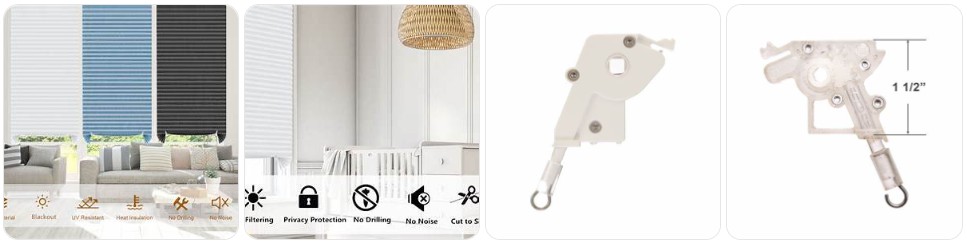
Stick-On Blinds are designed for quick, no-drill installation, which means repairs usually involve adhesive strips, peel-and-stick mounting rails, lightweight pleated or paper-style blind material, clips, tabs, bottom edges, or simple hold-up components rather than heavy-duty brackets and complex headrails. The quick answer is that a broken stick-on blind can often be repaired for very little money if the main blind material is still usable and the problem is limited to the adhesive mounting, a torn fold section, a weak clip, or a damaged bottom edge. In many cases, the fix comes down to replacing the adhesive, reinforcing the top rail, reattaching a loose section, correcting sagging folds, or swapping a small fastening part before the blind stops working altogether. If you want to compare useful repair items while troubleshooting, it helps to browse stick-on blind repair kits, pleated shade clips, and heavy-duty mounting tape.
Fix Common Stick-On Blind Problems & Repair Cost
The stick-on blind keeps falling off the window frame: This is one of the most common stick-on blind problems and usually means the adhesive strip has weakened, the surface was dusty when installed, or the blind is carrying more weight than the original tape can hold. In many cases, removing the old adhesive completely and replacing it with a stronger mounting strip is enough to fix the problem. Minor adhesive-related repairs are often very inexpensive, often around $5 to $15 in materials, especially if you only need heavy-duty mounting tape or new peel-and-stick fasteners. Do not keep pressing the same weak adhesive back into place, because repeated failure can warp the top edge of the blind and make it harder to remount cleanly.
The pleated blind material is sagging or not holding its shape: Stick-on blinds often rely on lightweight pleated material, so once the folds start collapsing, the blind can look uneven and stop raising or lowering neatly. If the material is only mildly distorted, reinforcing the top section and replacing worn clips may help. If the pleats are badly crushed, replacing the blind may be more practical than trying to rebuild the fold structure.
The clips or hold-up tabs are broken: Many stick-on blinds use simple clips or tabs to hold the blind at the desired height. Once those parts crack or stop gripping, the blind may drop unevenly or refuse to stay raised. This is often a low-cost repair, and it helps to compare pleated shade clips and similar small blind fasteners before replacing the whole blind.
The top edge of the blind has torn away from the adhesive rail: This is common when a stick-on blind has been pulled down too roughly or when the mounting strip has failed under tension. If the blind body is still in reasonable shape, reinforcing the top edge and remounting it with fresh adhesive can often restore use. If the tear is long or the top edge is badly creased, full replacement may make more sense.
The blind looks crooked or hangs unevenly: On a stick-on blind, uneven hanging usually means the adhesive rail was mounted off-level, one side has started peeling away, or the folds have shifted after repeated use. This type of problem is usually easier to fix early, before the blind material begins creasing permanently.
Stick-On Blind Repair Kit
A stick-on blind repair kit is most useful when the problem is in the mounting system or the simple hold-up hardware rather than across the whole blind. Because stick-on blinds are designed to be lightweight, affordable, and easy to fit without drilling, the parts that fail are usually the adhesive strips, top attachment points, tabs, clips, and small reinforcing sections rather than a heavy internal mechanism. A good stick-on blind repair kit may include replacement adhesive, mounting strips, hold-up clips, reinforcing tabs, or small shade fasteners that help restore normal use without replacing the full blind.
It is worth checking product photos carefully because some kits are sold more generally under pleated shade, paper shade, temporary blind, or no-drill blind repair terms. If your problem is clearly limited to weak adhesive, buying a simple mounting tape may be enough. But if the blind has a damaged top edge, worn clips, and loose hold-up hardware at the same time, a broader stick-on blind repair kit or a combination of shade clips and fresh adhesive supplies can make the repair much more consistent. For stick-on blinds, the quality of the replacement adhesive matters just as much as the blind material itself.

60 PCS Vertical Blind Repair Tabs Kit Clear Fixer Verticle Blinds Snap in Replacement Slats Parts Panels

35 Sets (70 Pieces) Clear Vertical Blind Repair Tabs for Replacement Slats

ZNBSIXP 60 PCS Vertical Blind Repair Tabs Kit, Clear Strong Adhesive PVC Fixers & Vertical Blinds Replacement Slats, Blind Fixer Tabs Invisible Snap in Repair Patches, Easy DIY Fix No Tools Needed
Signs Your Stick-On Blind Need Repair
- The blind keeps peeling away from the window frame: This usually points to worn adhesive or a mounting surface that no longer lets the tape grip properly. Checking heavy-duty mounting tape is often the first step.
- The pleats are collapsing or sagging: On a stick-on blind, that often means the material has weakened or the top mounting edge is no longer supporting the blind evenly.
- The blind will not stay raised: If the hold-up clips or tabs are failing, the blind may slide down or bunch unevenly. Comparing pleated shade clips may help.
- The top edge is creased, torn, or pulling away: This is one of the clearest signs a stick-on blind needs repair, because the top edge carries most of the stress during daily use.
- One side hangs lower than the other: Uneven hanging usually means the adhesive strip is starting to fail on one side or the blind was remounted slightly out of level.
- The bottom edge is curling badly: Stick-on blinds are lightweight, so once the bottom edge curls or bends, the blind may stop hanging neatly and become harder to operate smoothly.
- The blind has to be pressed back onto the frame regularly: That is usually a sign that the original adhesive has worn out and should be replaced rather than reused.
- The material still looks mostly good, but the blind no longer works neatly: This is often the best time to repair a stick-on blind instead of replacing it, because the damage is still limited to the simple mounting and support parts.
Tools You May Need to Repair Stick-On Blind
- Measuring tape: A measuring tape helps you align the blind properly and avoid remounting it crooked on the window frame.
- Scissors or utility knife: A utility knife or sharp scissors are useful for trimming replacement adhesive strips or cleaning up damaged top-edge material before reattachment.
- Heavy-duty double-sided mounting tape: Fresh double-sided mounting tape is often the single most important repair item when a stick-on blind keeps peeling away.
- Cleaning cloth and mild cleaner: A microfiber cloth and gentle cleaner help remove dust and grease from the frame before applying new adhesive.
- Pleated shade clips or hold-up clips: If the blind will not stay raised, a set of pleated shade clips may be the main thing you need.
- Reinforcing tape or repair patches: If the top edge has started tearing, a small reinforcing strip can strengthen the mounting area before you apply new adhesive.
- Small level: A small level helps ensure the blind goes back up straight, which matters a lot with lightweight stick-on products that show uneven hanging quickly.
- Plastic scraper or old card: This helps remove old adhesive cleanly from the frame without scratching the surface before you install fresh tape.
Should You Repair or Replace Your Broken Stick-On Blind?
Repairing a broken stick-on blind usually makes sense when the blind material is still mostly intact and the problem is clearly limited to the adhesive mounting, hold-up clips, or top attachment area. Because stick-on blinds are lightweight and simple by design, even a small problem such as weak tape or a cracked clip can make the whole blind seem unusable when the rest of it is still perfectly serviceable. In that situation, replacing the failed part is usually much cheaper than replacing the whole blind, especially if all you need is fresh mounting tape, a new set of shade clips, or a little top-edge reinforcement.
Replacement becomes the better option when the blind material is badly creased, heavily torn, permanently sagging, or no longer hanging neatly even after the top edge and clips are repaired. It may also make sense to replace the full blind if the material was very inexpensive to begin with and several issues are happening at once. A quick comparison between stick-on blind options and the parts you need can help you decide. In many cases, though, stick-on blinds are worth repairing when the issue is mainly in the mounting or hold-up system rather than in the full blind body.

Temporary Blackout Window Blinds and Shades 24" W x 71" H White | No Drill No Tools Pleated Paper Blinds, Cut to Size Stick On Self-Adhesive Room Darkening Temporary Shades for Bedroom

Sovtfides 100% Blackout Roller Shades No Drill 35" W x 72" H,Light Beige

GONNRLY Adhesive Blackout Curtains, Portable Blackout Curtains, Curtains No Rod Needed, Easy to Clean, 100% Blackout for Privacy Protection, Stick on Blinds (Light Beige - W35 × L72 in)
Tips to Make Your Stick-On Blind Last Longer
- Clean the mounting surface before installing or reattaching the blind: Adhesive lasts much longer on a clean, dry frame than on a dusty or greasy surface.
- Do not pull the blind down too roughly: Stick-on blinds are light-duty products, so sharp pulling puts extra stress on the top edge and adhesive rail.
- Replace weak adhesive early: It is much easier to fix a slightly loose top edge with fresh mounting tape than to wait until the blind drops and creases.
- Use the correct clips to hold the blind up: Improvised clips can crush the pleats or create uneven pressure points. Matching shade clips are a better choice.
- Keep the pleats straight when raising the blind: If the folds bunch unevenly every day, the blind is more likely to sag or lose its shape over time.
- Avoid humid or greasy mounting surfaces where possible: Kitchens, bathrooms, and sun-heated glass can weaken adhesive faster, especially on budget stick-on blinds.
- Support the blind during cleaning: Do not scrub or press too hard on lightweight blind material, because that can flatten the pleats or tear the top edge.
- Fix small tears before they spread: A little reinforcement at the top edge or fold line is much easier than trying to save a blind once the material has split badly.
Stick-On Blind Repairs FAQ
What usually breaks on a stick-on blind?
The parts that fail most often are the adhesive strip, top mounting edge, hold-up clips, and the lightweight pleated material near the stress points. On stick-on blinds, the mounting system usually fails before the whole blind wears out.
Can I fix a stick-on blind that keeps falling down?
Yes, in many cases. The most common fix is removing the old adhesive completely and replacing it with fresh, stronger mounting tape on a clean surface.
Is a stick-on blind repair kit worth buying?
It can be, especially when the blind has more than one small issue such as weak adhesive, damaged clips, and a worn top edge. A stick-on blind repair kit is often easier than sourcing each piece separately.
Why does my stick-on blind hang crooked?
This usually means one side of the adhesive is failing, the blind was mounted slightly out of level, or the pleats have shifted after repeated uneven use.
Can I replace just the clips on a stick-on blind?
Yes, if the blind material and mounting edge are still in decent condition. Replacing only the clips is a common and worthwhile repair when the blind will not stay raised.
How much does it usually cost to repair a stick-on blind?
Minor repairs such as adhesive replacement, simple reinforcing tape, or new hold-up clips are often inexpensive, usually around $5 to $15 in materials. Larger repairs involving torn material may still be cheap, but they are not always worth the effort if the blind itself was very low-cost.
Should I repair or replace a stick-on blind with torn material?
If the tear is small and near the top edge, repair can still make sense. If the material is badly creased, split across several folds, or permanently sagging, replacement is usually the better option.
Can stick-on blind parts be hard to match?
Sometimes, yes. Many parts are sold under pleated shade, paper shade, or temporary blind terms rather than stick-on blind wording, so it helps to compare sizes and shapes before ordering.
60 PCS Vertical Blind Repair Tabs Kit Clear Fixer Verticle Blinds Snap in Replacement Slats Parts Panels

joytrace RV Pleated Shade Repair Kit, RV Window Shade Restringing Kit, Repair and Maintain of Day Night Pleated Shade (White)
