
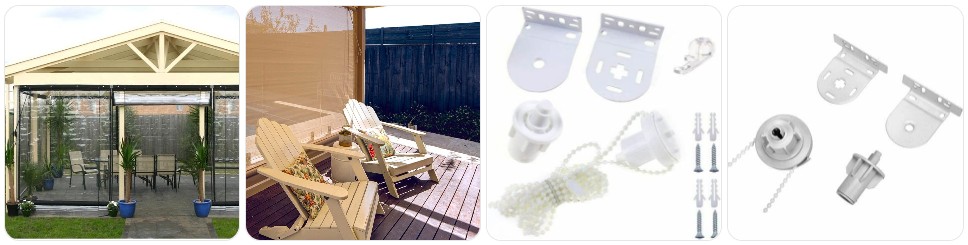
If you are trying to fix worn outdoor hardware, cracked PVC fittings, or missing hold-down pieces, this guide to Bistro Blinds replacement parts will help you identify what usually fails first, where to buy compatible spares, and when a simple part swap is enough to get your outdoor blind working smoothly again. In most cases, a Bistro Blind does not need full replacement when the issue is limited to straps, eyelets, zips, turn buttons, anchors, or mounting hardware. You can often restore weather protection and tension with the right Bistro Blind replacement parts on Amazon, especially if the clear PVC panel is still in usable condition.
Buy Bistro Blind Parts Online
Flexible retaining straps secure the rolled blind when opened and help keep the panel neatly bundled above the opening. Cracked straps, stretched holes, and hardened plastic are common outdoor failures, so replacing them early helps prevent tearing around the top edge. » find on amazon / find on ebay
Eyelets reinforce the blind edge where straps, cords, hooks, or tie-down fittings pass through the material. Rust, splitting, or pulling through the PVC border usually means the blind can no longer tension properly in wind, making fresh grommets an important repair part. » find on amazon / find on ebay
Turn buttons are used to lock the blind edge down against posts, rails, or frames. When they seize, snap, or loosen from timber or aluminium supports, the blind starts flapping and rubbing, which increases stress on the PVC and stitched border. » find on amazon / find on ebay
Zip-track and zip-sided Bistro Blinds rely on smooth-running sliders to seal the panel and keep edges aligned. If the zipper jams, separates, or loses teeth, the blind will not close squarely and can gap badly during rain or gusty weather. » find on amazon / find on ebay
Bungee loops and tie-down cords help hold the lower edge stable without over-stressing the PVC sheet. Over time they perish under UV exposure, lose elasticity, or fray at the ends, which reduces tension and allows noisy movement in outdoor conditions. » find on amazon / find on ebay
Top-mount hardware supports the roller or fixed upper bar and keeps the entire blind hanging square. Bent brackets, loose screws, and corroded fixings can throw the panel out of line, making opening, rolling, and fastening much harder than normal. » find on amazon / find on ebay
A repair kit usually bundles the most useful emergency items for outdoor blind fixes, such as clear PVC patches, adhesive, eyelets, fasteners, and replacement strap hardware. It is the best last-item option when you need a practical all-in-one maintenance solution. » find on amazon / find on ebay
Signs You Need Replacement Parts for Your Bistro Blind
- The clear PVC panel starts flapping even when the blind is fully fastened: This usually points to worn straps, stretched tie-downs, broken turn buttons, or missing anchors rather than a problem with the whole blind. Replacing the fastening hardware early can stop edge tearing from getting worse.
- The blind no longer rolls up neatly at the top: If the panel bunches unevenly, sags on one side, or feels awkward to secure in the open position, inspect the top straps, mounting points, and retaining clips. Fresh replacement straps often solve this specific Bistro Blind issue.
- Eyelets are pulling out of the border hem: Bistro Blinds often rely on reinforced edge holes for straps, cords, and hold-down points. Once those eyelets deform, rust, or rip through the hem, the blind will not tension correctly in wind and rain.
- The zipped side channels will not close smoothly: On zip-sided Bistro Blinds, a slider that jams, separates, or skips teeth can leave the outdoor opening partially exposed. In that case, the fix is often a zipper or slider replacement, not a full panel replacement.
- The lower edge keeps lifting during breezy weather: This is a strong sign that the bungee loops, hold-down cords, or bottom fasteners have lost elasticity. Outdoor UV damage commonly weakens these smaller Bistro Blind parts before the main sheet fails.
- Turn buttons spin loosely or no longer lock the blind edge down: When the fastener body strips out of timber posts or the rotating head bends, the blind cannot stay tensioned against the frame. This can cause rubbing marks, noise, and long-term edge distortion.
- The border stitching is intact but the attachment hardware is missing: If the PVC and edging still look usable, replacing missing screws, clips, eyelets, or fasteners is usually the most economical repair path for Bistro Blinds installed on patios, verandas, and alfresco areas.
- The blind becomes harder to operate after wet weather: Outdoor blinds accumulate grime, salt, and moisture around fasteners and zips. If operation changes suddenly, inspect the small hardware first and keep a Bistro Blind repair kit handy before assuming the entire blind has failed.
SOGEWO (16 Set/32 Pieces) Clear Vertical Blind Repair Tabs, Vertical Blinds tabs/Blind Fixers for Vertical Blinds Replacement Slats & Parts

60 PCS Vertical Blind Repair Tabs Kit Clear Fixer Verticle Blinds Snap in Replacement Slats Parts Panels
How to Identify the Right Bistro Blind Replacement Part
- Start with the exact way your Bistro Blind secures at the bottom: Some models use turn buttons, others use bungee loops, tie-down straps, or eyelet-and-hook systems. Matching the fastening style first is the quickest way to avoid ordering a part that fits the blind material but not the frame setup.
- Check whether your blind is strap-up, crank-up, or zip-sided: A standard strap-retained Bistro Blind needs different spare parts than a zip-track outdoor blind. If you have side zips, look for slider, zipper, and edge alignment issues before buying generic outdoor blind hardware.
- Measure the spacing between eyelets and fixing points: Bistro Blind hardware only works properly when the replacement part lines up with the existing holes and anchor positions. Measure center-to-center spacing on the blind border and the post or rail so the new part does not twist the panel out of square.
- Inspect the blind border rather than the clear center panel first: On Bistro Blinds, the most common failures happen around the stitched hem, eyelets, zips, straps, and lower edge anchors. That is why you should identify whether the damage is in the attachment zone or in the clear PVC itself.
- Match the material to outdoor conditions: Stainless steel, marine-grade hardware, UV-stable straps, and weather-resistant cords generally last longer in exposed patio settings. If your current parts show rust or brittleness, use that as a clue to upgrade the replacement specification when browsing outdoor blind hardware on Amazon.
- Compare the top mounting style before ordering brackets: Some Bistro Blinds hang from a simple top bar while others integrate with roller tubes or fixed channels. Brackets that are close in size but wrong in shape can leave the blind skewed, so compare screw-hole layout, bracket depth, and mounting orientation carefully.
- Look for wear patterns that reveal the failed part: Torn holes suggest eyelet problems, noisy edge movement points to missing hold-downs, and a blind that will not stay rolled usually indicates worn retaining straps. Diagnosing the symptom pattern is often easier than identifying the part by name alone.
- Buy a repair kit when several small parts are aging together: If the blind has multiple weak points such as brittle straps, loose fasteners, and minor edge damage, it is often smarter to start with a Bistro Blind repair kit than to order each item separately one by one.
Should You Repair or Replace the Whole Bistro Blind?
In many Bistro Blind setups, repair makes more sense than full replacement when the main clear or tinted PVC sheet is still reasonably transparent, flexible, and free from major splitting. If the real problem is isolated to straps, zips, eyelets, turn buttons, bungee loops, or brackets, replacing those smaller components is usually the most cost-effective way to restore function. This is especially true on patio and alfresco installations where the blind body still provides decent coverage but the hardware has aged faster from sun, wind, and moisture. A targeted hardware refresh using Bistro Blind replacement parts can often add useful life without the expense of an entirely new outdoor blind.
You should lean toward replacing the whole Bistro Blind when the clear PVC has turned heavily yellow, gone stiff and brittle, cracked across wide sections, shrunk badly around the edges, or become too cloudy to serve its purpose. Likewise, if the stitched borders are failing in multiple places and the fixing points are tearing out repeatedly, new hardware alone may not hold for long. In that case, full replacement is the better long-term option, while a smaller repair kit is better reserved for temporary repairs or maintenance between seasons. If the panel is sound, repair the parts; if the panel itself is failing, replace the blind.

Farmhouse Brown Tie Up Curtains for Small Windows,Adjustable Rod Pocket Vintage Flower Leaf Botanical Plant Valance 45 Inch Short,Bathroom Kitchen Living Room Balloon Roman Blind Shade,34"x45"

Stylemaster Lucky Stripe Shade with Tie-ups Claret, 44-Inch by 63-Inch

YJ YANJUN Vintage Lace Curtains 30 Inch Length-Victorian Floral Pattern Boho Sage Green Kitchen Window Curtains Over Sink Set of 2 Camper Window Privacy DrapesThat Let Light in Spring
How to Prevent Parts Damage to Bistro Blind
- Roll the blind only when the PVC is dry and relatively clean: Trapped grit, moisture, and leaf debris can grind against the clear sheet and the stitched border every time you open the blind. On Bistro Blinds, this extra friction speeds up wear around straps, zips, and edge eyelets.
- Do not over-tension the bottom edge in windy weather: Bistro Blinds need to be secure, but pulling straps, bungees, and turn buttons too tight can distort the hem and overstress the fixing holes. A firm fit is better than a forced one.
- Use UV- and rust-resistant replacement hardware outdoors: Patio-installed Bistro Blinds live in harsher conditions than indoor blinds, so stainless fixings, marine-grade fasteners, and UV-stable straps usually last longer than generic hardware. That matters most for coastal and high-sun locations.
- Support the blind evenly when rolling it up: If one side is lifted faster than the other, the blind can twist and place uneven strain on the top straps and brackets. Consistent rolling helps keep the panel straight and reduces wear at the top mounting points.
- Lubricate zippers and moving fasteners with products safe for outdoor plastics: Zip-sided Bistro Blinds benefit from occasional light maintenance so the slider does not bind and force the stitched edge sideways. When needed, browse zipper-care products on Amazon and avoid anything that may haze clear PVC.
- Inspect straps, eyelets, and turn buttons before stormy weather: Small Bistro Blind parts usually fail under load, not when the blind is sitting still. Replacing a weak strap or loose fastener ahead of rough conditions is much cheaper than repairing a torn edge afterward.
- Keep mounting screws tight but not overdriven: Loose brackets let the blind wobble, while over-tightened screws can crack plastic fittings or strip timber mounting points. This balance is important on outdoor frames that expand and contract with temperature changes.
- Store a small repair kit near the patio area: Having spare straps, eyelets, adhesive patches, and basic fasteners ready means you can deal with minor Bistro Blind damage immediately instead of letting a small outdoor hardware issue grow into panel failure.
Bistro Blind Parts FAQ
What are the most common Bistro Blind replacement parts?
The most commonly replaced Bistro Blind parts are retaining straps, eyelets or grommets, turn buttons, bungee tie-downs, zippers or zip sliders, mounting brackets, and general repair-kit items such as clear PVC patches and replacement fasteners.
Can I repair a Bistro Blind without replacing the whole panel?
Yes. If the main clear or tinted PVC sheet is still flexible and mostly intact, many Bistro Blind problems can be fixed by replacing the smaller hardware. This is especially true for failed straps, edge fasteners, loose brackets, and worn hold-down parts.
How do I know whether I need a new strap or a new eyelet?
If the strap itself is cracked, stretched, or no longer holds the rolled blind securely, replace the strap. If the hole in the blind border has torn, deformed, or the metal ring has pulled through the hem, the eyelet or grommet is the part that needs attention.
Are Bistro Blind parts the same as general indoor blind parts?
No. Bistro Blind parts are designed for outdoor use and typically need better weather resistance. Hardware such as turn buttons, bungee cords, stainless fixings, and PVC-safe repair materials are much more relevant here than standard indoor blind clutches or chain controls.
Where can I buy Bistro Blind replacement parts online?
You can usually find them through specialist outdoor blind suppliers, hardware marketplaces, eBay listings, and broad search results such as Bistro Blind parts on Amazon. Search by the exact failed part name whenever possible for better matches.
Is a Bistro Blind repair kit worth buying?
Yes, especially when several smaller pieces are wearing out together or when you want to keep emergency supplies on hand for an outdoor entertaining area. A repair kit is often the fastest way to handle eyelet issues, minor PVC patching, and missing fastening hardware.
When should I replace the entire Bistro Blind instead of the parts?
Replace the whole blind when the PVC has become brittle, deeply yellowed, badly clouded, or cracked across large sections, or when the stitched borders are failing in multiple places. In those cases, new parts may only provide a short temporary fix.
60 PCS Vertical Blind Repair Tabs Kit Clear Fixer Verticle Blinds Snap in Replacement Slats Parts Panels

30 Sets (60 Pcs) Vertical Blinds Replacement Slats Panels, Vertical Blind Repair Tabs Kit, Clear Apartment Blinds Replacement Fixers, Horizontal Blinds Replacement Parts
