
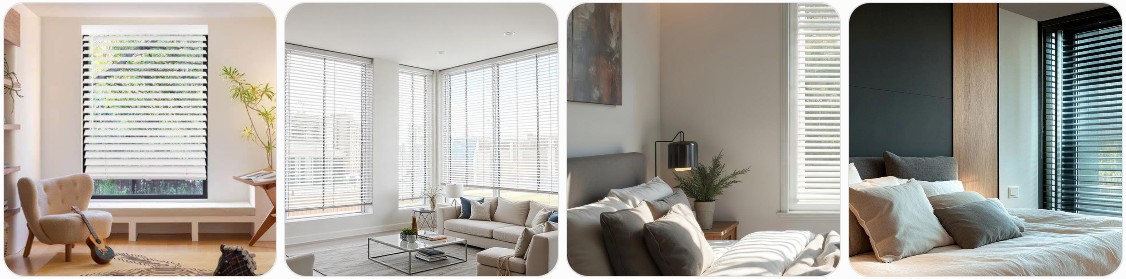
Horizontal blinds are one of the most practical window covering choices if you want adjustable light control, privacy, and a clean slatted look without overcomplicating the room. This buying guide explains what horizontal blinds are, how they work, where to buy them, what they cost, and what to check before ordering.
- Table of Contents:
- Horizontal Blinds At a Glance
- What Are Horizontal Blinds? How Horizontal Blinds Work?
- Horizontal Blinds Pros and Cons
- Horizontal Blinds Cost
- Where to Buy Horizontal Blinds Online
- How to Find Horizontal Blinds Stores Near You
- What to Check Before Buying Horizontal Blinds
- Horizontal Blinds Installation Options
- FAQ About Horizontal Blinds
Horizontal Blinds At a Glance
- Best for: Bedrooms, living rooms, offices, kitchens, rental homes, street-facing windows, and rooms where you want adjustable privacy.
- Main design: Horizontal slats stacked one above another, usually made from faux wood, real wood, aluminum, vinyl, or PVC.
- Light control: Very good, because the slats can tilt open, tilt closed, or lift fully upward.
- Privacy control: Strong, especially when the slats are fully closed and angled away from outside views.
- Common slat sizes: 1 inch, 2 inch, and 2.5 inch slats, with mini blinds using narrower slats and faux wood/wood blinds often using wider slats.
- Typical price range: Around $15 to $150+ per blind for many ready-made options, and about $75 to $300+ per window for higher-end custom or professionally installed options.
- Installation difficulty: Usually beginner to moderate DIY, depending on window size, mounting style, and bracket access.
- Best value choice: Faux wood horizontal blinds, because they balance cost, durability, moisture resistance, and a classic look.
- Best budget choice: Vinyl or aluminum mini horizontal blinds for basic privacy and light control.
- Best premium choice: Real wood horizontal blinds for a warmer, more natural finish in living rooms, bedrooms, and offices.
- Biggest drawback: Slats can collect dust, and very wide blinds can become heavy or harder to lift smoothly.
What Are Horizontal Blinds? How Horizontal Blinds Work?
What Are Horizontal Blinds?
Horizontal blinds are window blinds made with slats that run from left to right across the window. The slats sit in a stacked ladder system and can be tilted to control light, raised to uncover the window, or lowered for privacy. They are one of the most common blind styles because they are simple, practical, and available in many materials, colors, widths, and price levels.
In everyday shopping, the term “horizontal blinds” can include several related styles, such as mini blinds, aluminum blinds, vinyl blinds, faux wood blinds, wood blinds, and classic Venetian Blind styles. The key feature is the same: the slats run horizontally and rotate open or closed. That makes them different from vertical blinds, which use long up-and-down vanes, and roller blinds, which use one continuous sheet of fabric.
Horizontal blinds are especially popular for standard windows because they offer a strong mix of privacy, light control, and affordability. If you want a blind that lets you block glare while still allowing some daylight into the room, horizontal slats are very useful. You can angle the slats upward or downward depending on whether you want more light, more privacy, or less glare on a TV, computer screen, or workspace.
The most common horizontal blind materials are vinyl, aluminum, faux wood, and real wood. Vinyl and aluminum are usually lightweight and budget-friendly. Faux wood is thicker and often better for kitchens, bathrooms, and humid areas because it resists moisture better than real wood. Real wood has a more premium appearance but usually costs more and is not ideal for damp rooms.
How Horizontal Blinds Work?
Horizontal blinds work through a simple headrail, ladder, slat, and lift system. The headrail sits at the top of the blind and holds the internal mechanism. The slats hang below it on cord ladders or tape ladders. When you use the tilt wand, tilt cord, or control mechanism, the slats rotate together. When you raise the blind, the slats stack upward toward the headrail.
The two main functions are tilting and lifting. Tilting changes the angle of the slats without raising the blind. This is what makes horizontal blinds so flexible. You can close the slats fully for privacy, open them slightly for soft daylight, or angle them to reduce glare. Lifting moves the entire blind up and down, which is useful when you want a clear view outside, want to clean the window, or want maximum daylight.
Modern horizontal blinds may be corded, cordless, motorized, or smart-home compatible. Corded blinds use pull cords, but many newer blinds are cordless for a cleaner look and improved child safety. Cordless horizontal blinds usually lift and lower by gently pushing or pulling the bottom rail. Motorized horizontal blinds use a remote, wall switch, app, or smart-home system, although motorized slatted blinds usually cost more than manual versions.
When shopping, pay attention to the mount type. Inside-mount horizontal blinds fit inside the window frame for a neat built-in look. Outside-mount blinds attach above or around the window opening and can help cover trim, hide uneven frames, or block more light around the sides. The right mount depends on your window depth, measurement accuracy, and the look you want.
You can compare product options such as horizontal blinds on Amazon, cordless horizontal blinds, and faux wood horizontal blinds when checking sizes, colors, slat widths, and mounting hardware.
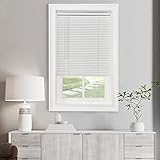
Cordless Light Filtering Mini Blind, 22 x 64 in, Pearl White | Cordless Lift and Light-Filtering Control: Slat-Based Blind Construction with Adjustable Light Control.

LOTUS & WINDOWARE Cordless Faux Wood Blinds, 35" Wide x 60" Long, Smooth, Snow White, 2 Inch Horizontal Blinds – for Living Room, Bedroom, Interior Door Windows
Horizontal Blinds Pros and Cons
Pros of Horizontal Blinds
- Excellent light control: Tilt the slats slightly, halfway, or fully closed depending on how much light you want.
- Good privacy: Closed slats help block views from outside, especially on street-facing windows.
- Affordable options: Vinyl, aluminum, and basic faux wood blinds are often budget-friendly.
- Many material choices: Available in vinyl, aluminum, faux wood, real wood, PVC, and composite materials.
- Works in many rooms: Suitable for bedrooms, offices, kitchens, living rooms, dining rooms, and rental properties.
- Classic look: Horizontal slats give windows a clean, familiar, timeless appearance.
- Easy to find: Sold by major retailers, online stores, home improvement shops, and custom blind companies.
- DIY-friendly: Many ready-made horizontal blinds include brackets and basic installation hardware.
- Good for glare control: Useful near TVs, desks, monitors, and bright windows.
- Customizable: You can choose slat size, color, material, mount type, cordless lift, valance style, and room-darkening features.
Cons of Horizontal Blinds
- Dust collects on slats: Each slat can gather dust, so regular cleaning is needed.
- Not fully blackout: Small light gaps may appear between slats and along the edges.
- Can be noisy: Aluminum and lightweight vinyl slats may rattle when windows are open or fans are running.
- Wide blinds can be heavy: Large faux wood or real wood horizontal blinds may be harder to lift.
- Slats can bend: Thin aluminum or vinyl slats can crease if pulled, twisted, or handled roughly.
- Real wood dislikes moisture: Wood horizontal blinds may warp in bathrooms, kitchens, or humid areas.
- Cheap blinds may feel flimsy: Very low-cost blinds may have weaker headrails, thinner slats, or less durable controls.
- Cords can be a concern: Older corded blinds may not be ideal for homes with young children or pets.
Horizontal Blinds Cost: What Price Should You Expect?
Horizontal blinds can be very affordable or moderately expensive depending on the material, size, lift system, brand, and whether you choose ready-made or custom sizing. Basic vinyl or aluminum mini horizontal blinds may start around $15 to $40 per window for smaller standard sizes. Faux wood horizontal blinds often fall around $35 to $120 per blind for many common ready-made sizes. Real wood horizontal blinds and custom-sized products can cost around $100 to $300+ per window, especially for wider windows, premium finishes, or professional installation.
For a simple bedroom, office, or rental property, budget horizontal blinds may be enough if you mainly need privacy and basic glare control. For living rooms, dining rooms, and visible front-facing windows, mid-range faux wood blinds often look more finished and hold up better than very thin vinyl or aluminum options. For a premium interior, real wood horizontal blinds can look warmer and more elegant, but they usually cost more and require more care.
Installation also affects the total price. DIY installation may only require basic tools if the blind comes with brackets and screws. Professional installation may add around $50 to $150+ per window depending on your area, window size, mounting difficulty, and whether the installer also measures before ordering. Whole-home blind projects may qualify for package pricing, but custom orders can still add up quickly.
Use the blind cost estimator to plan a rough budget before buying, especially if you are ordering several horizontal blinds at once. A cost estimate is helpful because the final price changes when you add cordless controls, decorative valances, wider slats, premium materials, larger sizes, or professional fitting.
- Basic vinyl/aluminum horizontal blinds: Around $15 to $50 per blind.
- Standard faux wood horizontal blinds: Around $35 to $150 per blind.
- Real wood horizontal blinds: Around $80 to $300+ per blind.
- Custom horizontal blinds: Around $100 to $400+ per window depending on size and finish.
- Professional installation: Often around $50 to $150+ per window, depending on local labor and job complexity.
- Motorized or smart horizontal blinds: Usually much higher, often several hundred dollars per window depending on the system.
Where to Buy Horizontal Blinds Online
Amazon is one of the easiest places to start if you want ready-made horizontal blinds in common sizes. It is especially useful for comparing cordless mini blinds, faux wood horizontal blinds, room-darkening slatted blinds, and budget replacement blinds for bedrooms, offices, apartments, and rental units. When shopping on Amazon, check the exact width and length, inside-mount depth, slat size, color, return policy, and whether the product includes mounting brackets, screws, and a valance.
Amazon can be a good fit if your windows are close to standard sizes and you want fast shipping. Search terms like white horizontal blinds, 2 inch horizontal blinds, and cordless faux wood horizontal blinds can help narrow the results. Read reviews carefully because some lower-priced blinds may have lighter slats, limited mounting instructions, or less durable lift mechanisms.
Find Horizontal Blinds from Amazon »
Cordless Light Filtering Mini Blind, 22 x 64 in, Pearl White | Cordless Lift and Light-Filtering Control: Slat-Based Blind Construction with Adjustable Light Control.
LOTUS & WINDOWARE Cordless Faux Wood Blinds, 35" Wide x 60" Long, Smooth, Snow White, 2 Inch Horizontal Blinds – for Living Room, Bedroom, Interior Door Windows
eBay can be useful if you are looking for discounted horizontal blinds, overstock blinds, replacement blinds, discontinued colors, or specific sizes that may be harder to find elsewhere. It can also be worth checking if you need a single blind to match an existing room and do not want to replace every window covering. When buying horizontal blinds from eBay, check whether the item is new, open box, used, custom-cut, or final sale.
Because blinds are size-sensitive, eBay purchases require extra care. Confirm the actual blind width, the listed window size, the slat width, mount type, color name, included brackets, and shipping cost. If the blind was previously cut or custom-made, make sure the final size matches your window exactly. Also check seller ratings and return terms before ordering, since blinds that do not fit may be expensive or impossible to return.
Find Horizontal Blinds from eBay »
- Blinds.com – Good for custom horizontal blinds, faux wood blinds, wood blinds, measuring guides, samples, and made-to-order sizes.
- The Home Depot – Useful for ready-made and custom horizontal blinds, in-store pickup, measuring services, and installation options.
- Lowe’s – Good for cordless faux wood blinds, vinyl blinds, mini blinds, custom ordering, and local store support.
- SelectBlinds – Helpful for custom horizontal blinds, free samples, faux wood choices, wood blinds, and cordless upgrade options.
How to Find Horizontal Blinds Stores Near You
To find horizontal blinds stores near you, start by searching for local window treatment shops, home improvement stores, blind installers, and custom blind showrooms. Use search phrases like “horizontal blinds near me,” “faux wood blinds near me,” “custom blinds near me,” “Venetian blinds near me,” or “window blinds store near me.” If you want a broader buying directory, check this guide to where to buy window blinds and then compare local and online options.
Local stores are useful because you can see slat colors, finishes, and materials in person. This matters with horizontal blinds because white, off-white, ivory, gray, espresso, oak, and walnut finishes can look very different under natural light compared with product photos online. A local shop can also help you decide whether faux wood, real wood, aluminum, or vinyl makes more sense for your room.
Before visiting a store, measure your windows roughly so the staff can give you a better price estimate. You do not need final professional measurements just to compare products, but you should know the approximate width and height of each window. Also take photos of the window frame, trim, handles, locks, and any obstructions. This helps the store recommend inside mount, outside mount, spacer blocks, extension brackets, or alternative blind styles if needed.
When comparing local horizontal blind stores, ask whether they offer free samples, in-home measuring, custom cutting, installation, repair support, warranty service, and child-safe cordless options. A slightly higher price may be worth it if the store measures accurately, handles installation, and helps with problems after purchase.
- Search locally: Try “horizontal blinds near me,” “faux wood blinds near me,” and “window treatment store near me.”
- Visit home improvement stores: Check places like Home Depot, Lowe’s, local hardware stores, and regional building supply shops.
- Check custom blind showrooms: These are better for unusual window sizes, premium finishes, and whole-home projects.
- Ask about measuring: Professional measurement can prevent expensive sizing mistakes.
- Ask about installation: Some stores sell blinds only, while others provide full measuring and fitting services.
- Compare samples: Take material samples home if possible so you can view them in your room’s lighting.
What to Check Before Buying Horizontal Blinds
- Window measurements: Measure width and height carefully. For inside mount, measure inside the frame at the top, middle, and bottom. For outside mount, decide how much extra coverage you want around the window.
- Mounting depth: Check whether your window frame is deep enough for an inside mount. Faux wood and wider slat blinds often need more depth than thin mini blinds.
- Slat size: Choose 1 inch slats for a compact look, 2 inch slats for a classic faux wood or wood look, and larger slats if you want a wider, more open view when tilted.
- Material: Choose vinyl or aluminum for low-cost use, faux wood for durability and moisture resistance, and real wood for premium appearance in dry rooms.
- Room moisture: Avoid real wood in bathrooms, laundry rooms, and humid kitchens. Faux wood or vinyl usually handles moisture better.
- Color match: Compare white, ivory, gray, wood-tone, and dark finishes against your wall color, trim, flooring, and furniture.
- Lift style: Cordless is cleaner and safer for homes with children or pets. Corded may still be found in some older or budget products, but check current safety requirements and product details.
- Blind weight: Wide faux wood or real wood blinds can be heavy. For very large windows, consider splitting one wide blind into two or three smaller blinds on one headrail or separate headrails.
- Privacy direction: Think about how the slats will angle. In bedrooms and street-facing rooms, test which direction blocks outside views best.
- Light gaps: Horizontal blinds are good for light control but not perfect blackout. For bedrooms, consider room-darkening materials or pair blinds with curtains.
- Included hardware: Confirm the blind includes brackets, screws, valance clips, hold-down brackets if needed, and installation instructions.
- Return policy: Ready-made blinds are usually easier to return than custom-cut blinds. Always check before ordering.
- Warranty: Look for warranty coverage on the headrail, lift system, tilt mechanism, slats, and manufacturing defects.
- Cleaning needs: Horizontal slats need dusting. If you dislike cleaning individual slats, consider whether another blind style may be easier to maintain.
- Window handles and locks: Check for handles, cranks, locks, sensors, or trim that could interfere with slat movement or the bottom rail.
Horizontal Blinds Installation Options: DIY vs Professional Fitting

Cutelec 2pcs Box Mounting Bracket for Low Profile Horizontal Blinds with 1-3/4" x 2 1/2" Headrail - White Color

Jetec 6 Pieces Mini Blind Brackets for Window Blinds,1.18x1.18 Inch | with Screws,Metal Replacement Parts,Easy DIY Installation
Horizontal blinds are often suitable for DIY installation, especially if you are buying ready-made blinds in standard sizes. Most basic horizontal blinds come with mounting brackets, screws, and instructions. If you have a drill, screwdriver, tape measure, pencil, and level, you can usually install a simple inside-mount or outside-mount blind yourself.
DIY installation is best when the window frame is square, the blind is not too wide, and you are comfortable drilling into wood, drywall, or trim. It is also a good option for budget blinds, rental replacements, home offices, spare bedrooms, and smaller windows. The main risk is measurement or bracket placement error. If the brackets are uneven, the blind may hang crooked, rub the frame, or not lift smoothly.
Professional fitting is better for expensive horizontal blinds, custom wood blinds, very wide windows, bay windows, high windows, whole-home projects, or homes with unusual trim. A professional installer can confirm the mount type, use the right anchors, adjust brackets correctly, and reduce the risk of damaging the blind or window frame. If you are ordering custom horizontal blinds, professional measuring may also protect you from ordering the wrong size.
For inside mount, the brackets usually attach inside the top of the window frame. This gives a clean built-in look but requires enough frame depth. For outside mount, the brackets attach above or around the window opening. This can make the window look larger, improve coverage, and hide uneven trim, but it may project farther from the wall.
When installing horizontal blinds yourself, always test the blind before snapping on the valance. Raise and lower it, tilt the slats both directions, check that the bottom rail sits level, and make sure the blind does not scrape the sides. If the blind is cordless, follow the instructions carefully because the lift tension and first-use steps may vary by brand.
- Choose DIY installation if: The blind is standard size, the window is easy to reach, you have basic tools, and you are comfortable measuring and drilling.
- Choose professional fitting if: The blinds are custom, heavy, expensive, very wide, mounted high, or being installed across several rooms.
- Inside mount is best for: A neat, recessed look when the frame has enough depth.
- Outside mount is best for: More coverage, shallow frames, uneven windows, or reducing light gaps around the edge.
- Common DIY tools: Tape measure, pencil, drill, screwdriver, level, step stool, screws, anchors, and safety glasses.
FAQ About Horizontal Blinds
Are horizontal blinds the same as Venetian blinds?
Horizontal blinds and Venetian blinds are closely related. Venetian blinds are a classic type of horizontal slatted blind, while “horizontal blinds” is a broader term that can include mini blinds, aluminum blinds, vinyl blinds, faux wood blinds, and wood blinds.
Are horizontal blinds good for bedrooms?
Yes, horizontal blinds can work well in bedrooms because they offer adjustable privacy and light control. However, they are not always fully blackout because light can leak between slats and around the sides. For darker sleep conditions, choose room-darkening horizontal blinds or pair them with curtains.
What is the best material for horizontal blinds?
Faux wood is often the best all-around choice because it looks clean, resists moisture better than real wood, and is usually more durable than very cheap vinyl. Aluminum is good for budget and office use, vinyl is affordable, and real wood is best for a premium look in dry rooms.
Are horizontal blinds good for bathrooms?
Faux wood, vinyl, and PVC horizontal blinds can work well in bathrooms because they handle moisture better than real wood. Avoid real wood horizontal blinds in damp bathrooms because humidity may cause warping, swelling, or finish problems over time.
How much do horizontal blinds cost?
Basic horizontal blinds may cost around $15 to $50 per window, while faux wood blinds often cost around $35 to $150. Real wood, custom sizes, and professionally installed horizontal blinds can cost $100 to $300+ per window depending on size, material, and upgrades.
Can I install horizontal blinds myself?
Yes, many horizontal blinds are DIY-friendly if you have basic tools and accurate measurements. DIY installation is easiest on standard-size windows with simple inside or outside mounts. For large, heavy, custom, or high windows, professional installation may be safer and more accurate.
Are cordless horizontal blinds worth it?
Yes, cordless horizontal blinds are usually worth considering because they look cleaner and remove dangling lift cords. They are especially useful in homes with children or pets. They may cost more than basic corded blinds, but many buyers prefer the safer and neater design.
Do horizontal blinds block heat?
Horizontal blinds can reduce direct sunlight and glare, which may help a room feel cooler, but they are not usually the best insulating option. Faux wood and wood slats may help more than thin aluminum, but cellular shades are usually better if insulation is your main goal.
Do horizontal blinds collect dust?
Yes, horizontal slats can collect dust because each slat has a flat surface. Regular dusting with a microfiber cloth, blind duster, or vacuum brush attachment helps keep them clean. Wider slats are often easier to clean than very narrow mini blind slats.
Should horizontal blinds be inside mount or outside mount?
Inside mount is best if you want a clean fitted look and your window frame has enough depth. Outside mount is better if your frame is shallow, your window is uneven, or you want more coverage around the edges to reduce light gaps.
Summary
Horizontal blinds are a practical, affordable, and flexible choice for many homes. They work by using horizontal slats that tilt for light control and lift for a clear window view. They are available in budget vinyl and aluminum, durable faux wood, and premium real wood, so the right choice depends on your room, budget, moisture level, and style preference.
For most buyers, cordless faux wood horizontal blinds offer the best balance of appearance, price, privacy, and durability. Budget mini blinds are useful for simple coverage, while real wood horizontal blinds are better for a warmer, high-end look. Before buying, measure carefully, check mounting depth, choose the right slat size, compare return policies, and decide whether DIY or professional installation makes more sense for your windows.

60 PCS Vertical Blind Repair Tabs Kit Clear Fixer Verticle Blinds Snap in Replacement Slats Parts Panels

joytrace RV Pleated Shade Repair Kit, RV Window Shade Restringing Kit, Repair and Maintain of Day Night Pleated Shade (White)
