
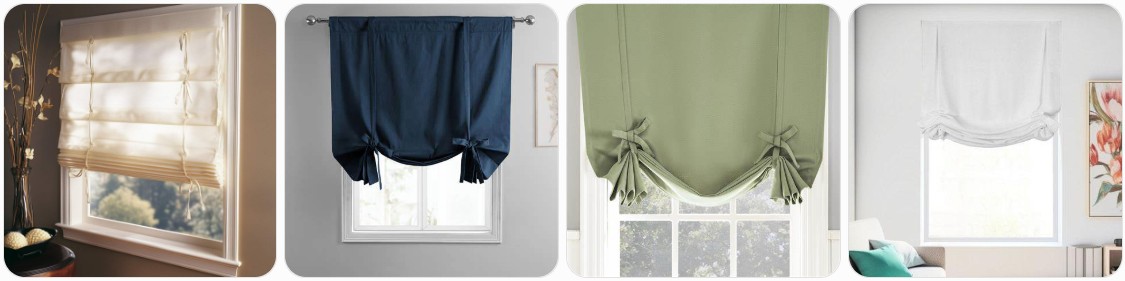
Tie-up blinds are a soft, decorative window covering choice for anyone who wants fabric texture, gentle light control, and a relaxed cottage-style look without the heavier structure of traditional blinds. They are especially popular for kitchens, bedrooms, dining rooms, nurseries, laundry rooms, and small windows where style matters as much as privacy. This guide covers what tie-up blinds are, how they work, where to buy them online, how much they usually cost, pros and cons, installation options, and what to check before choosing the right set for your home.
- Table of Contents:
- Tie-up Blinds At a Glance
- What Are Tie-up Blinds? How Tie-up Blinds Work?
- Tie-up Blinds Pros and Cons
- Tie-up Blinds Cost
- Where to Buy Tie-up Blinds Online
- How to Find Tie-up Blinds Stores Near You
- What to Check Before Buying Tie-up Blinds
- Tie-up Blinds Installation Options
- FAQ About Tie-up Blinds
Tie-up Blinds At a Glance
- Best for: Kitchens, bedrooms, breakfast nooks, cottage-style rooms, farmhouse interiors, laundry rooms, nurseries, and decorative small windows.
- Main look: Soft fabric panel with ribbon ties, fabric straps, or attached bands that gather the blind upward.
- Light control: Light filtering to moderate privacy, depending on fabric thickness and lining.
- Privacy level: Good during daytime with thicker fabric, but may need lining for better nighttime privacy.
- Typical price range: Around $15 to $80 per window for ready-made tie-up blinds, with custom options often costing $80 to $250+ per window.
- Installation difficulty: Usually easy for basic rod-pocket styles; more involved if using brackets, mounting boards, or custom hardware.
- Biggest advantage: Affordable, decorative, soft-looking, and easy to match with casual home décor.
- Biggest drawback: Not as quick or precise to adjust as roller blinds, Venetian blinds, cellular shades, or Roman shades.
- Best buying tip: Check the fabric weight, lining, width, length, tie placement, and mounting method before ordering.
What Are Tie-up Blinds? How Tie-up Blinds Work?
What Are Tie-up Blinds?
Tie-up blinds are fabric window coverings that hang flat over a window and are raised by tying fabric straps, ribbons, or bands to hold the panel at the desired height. They are sometimes described as tie-up shades, tie-up curtains, balloon shades, fabric tie shades, or casual Roman-style fabric blinds. Unlike hard blinds with slats, tie-up blinds are made from fabric, so they create a softer and more decorative appearance.
The main purpose of tie-up blinds is to combine privacy, light filtering, and style. They are not usually the most technical window treatment, but they are excellent when you want something warmer and less formal than standard blinds. Many people use them in farmhouse, cottage, coastal, shabby chic, country, traditional, and casual modern rooms because the gathered fabric gives the window a relaxed finished look.
If you are comparing fabric blind styles, Tie-up Blinds are best understood as a decorative fabric shade rather than a precision light-control blind. They do not have rotating slats, built-in tracks, or a spring roller mechanism. Instead, the fabric itself is the main design feature, and the ties are used to hold the shade in place.
Tie-up blinds can be made from cotton, linen blends, polyester, lace, sheer fabric, blackout-lined fabric, burlap-style fabric, patterned fabric, embroidered fabric, or textured woven material. Some are sold as single fabric panels, while others come as a pair. Many ready-made options include a rod pocket at the top, making them easy to hang on a standard curtain rod.
How Tie-up Blinds Work?
Tie-up blinds work by manually gathering the lower part of the fabric and securing it with the attached ties. When the blind is fully lowered, the fabric panel covers the window like a flat curtain. When you want more light or a more decorative look, you lift the bottom section upward and tie the straps into bows or knots at the front, side, or back depending on the design.
Most tie-up blinds have two or more vertical fabric ties sewn into the panel. These ties may hang down from the top, run along the front of the fabric, or wrap around the blind from behind. To raise the blind, you fold or gather the fabric upward by hand, then secure the ties at the height you want. This creates soft folds, swags, or gathered sections across the bottom of the blind.
Because tie-up blinds are adjusted manually, they are not the best option for windows you need to open and close many times per day. However, they work very well on windows where you usually keep the shade at one height. For example, you might keep a kitchen tie-up blind half raised during the day, then untie it at night for privacy.
For the best result, tie-up blinds should be sized wider than the glass area and long enough to cover the window fully when untied. If the fabric is too short, it may look awkward when lowered. If it is too narrow, light gaps may appear on the sides. If you want a fuller, softer look, choose a blind slightly wider than the window or mount it outside the frame.
You can find many styles of tie-up blinds on Amazon, including solid-color fabric shades, linen-look tie-up shades, farmhouse window treatments, lace tie-up curtains, and blackout-lined options for bedrooms.

NICETOWN Natural 100% Linen Blackout French Door Curtains for Front Glass
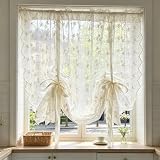
Beige Romantic Little Floral Woven Lace Tie Up Balloon Curtain for Kitchen

NICETOWN Biscotti Beige Roman Curtains 48 Inches Long for Kitchen
Tie-up Blinds Pros and Cons
Pros of Tie-up Blinds
- Soft decorative look: Tie-up blinds add fabric texture and warmth without looking too heavy.
- Affordable options: Many ready-made tie-up blinds cost less than custom Roman shades or professionally fitted blinds.
- Easy to install: Rod-pocket designs can often be installed with a simple curtain rod.
- Good for casual rooms: They fit well in farmhouse, cottage, coastal, rustic, traditional, and cozy room styles.
- Many fabric choices: You can choose sheer, semi-sheer, cotton, linen-look, patterned, textured, or lined fabric.
- No cords required: Many tie-up blinds are cordless because the fabric is raised manually with ties.
- Great for small windows: They work especially well on kitchen windows, bathroom windows, laundry windows, and narrow accent windows.
- Easy to change seasonally: Because many are inexpensive and simple to hang, you can swap colors or fabrics when redecorating.
- Can soften hard window frames: They make plain windows look more finished and less bare.
- Good DIY potential: Simple tie-up blinds can be made from fabric panels if you are comfortable sewing or crafting.
Cons of Tie-up Blinds
- Manual adjustment: You must tie and untie them by hand.
- Less precise light control: They do not tilt like Venetian blinds or adjust smoothly like roller shades.
- Can look uneven: The fabric may gather unevenly if the ties are not adjusted carefully.
- Not ideal for daily heavy use: They are better for decorative or occasional adjustment than constant opening and closing.
- Limited insulation: Basic unlined fabric does not insulate as well as cellular shades or thermal curtains.
- May need lining: Thin fabric can become see-through at night when indoor lights are on.
- Fabric can wrinkle: Cotton, linen, and linen-look materials may crease or need steaming.
- Not best for very wide windows: Large panels can be hard to gather neatly and may sag.
- Cleaning depends on fabric: Some can be machine washed, while others require spot cleaning or dry cleaning.
- May not suit modern minimal rooms: The tied fabric look is softer and more decorative than sleek roller or panel blinds.
Tie-up Blinds Cost: What Price Should You Expect?
Tie-up blinds are usually one of the more affordable fabric window covering options, especially when you buy ready-made sizes online. For a basic small or medium window, you can often expect to pay around $15 to $40 per panel. Better-quality linen-look, cotton, embroidered, patterned, or lined tie-up blinds usually cost around $30 to $80 per window. Custom-made tie-up blinds, designer fabrics, special widths, blackout lining, or professional workroom sewing can raise the price to around $80 to $250+ per window.
The final price depends on fabric quality, size, lining, brand, hardware, and whether the blind is ready-made or custom. A simple sheer tie-up shade for a kitchen window will cost much less than a lined decorative shade for a large bedroom window. If you are buying several blinds for one room, measure carefully and compare the total cost before ordering, because small price differences per panel can add up quickly.
For a quick estimate before you shop, use a blind cost estimator to compare approximate costs based on window size, blind type, quantity, upgrades, and installation choices. This is especially useful if you are deciding between ready-made tie-up blinds, custom fabric shades, Roman shades, or another blind style.
Here is a general cost guide:
- Basic ready-made tie-up blinds: $15 to $35 per window.
- Mid-range fabric tie-up blinds: $30 to $80 per window.
- Lined or blackout tie-up blinds: $40 to $120 per window.
- Custom tie-up blinds: $80 to $250+ per window.
- Curtain rod or mounting hardware: $8 to $40+ depending on style and quality.
- Professional installation: Around $50 to $150+ per window or project, depending on your area and installer minimums.
Where to Buy Tie-up Blinds Online
Amazon is one of the easiest places to buy tie-up blinds because you can compare many ready-made sizes, fabric styles, colors, and customer photos in one place. This is especially helpful for tie-up blinds because the final look depends heavily on how the fabric hangs. When shopping on Amazon, pay close attention to the width, length, fabric material, washing instructions, and whether the listing is for one panel or a set. Some tie-up blinds are sold individually, while others are sold as pairs, so always check before buying.
Amazon is also useful if you want affordable tie-up blinds for a quick room refresh. You can search for linen tie-up shades, farmhouse tie-up curtains, blackout tie-up blinds, kitchen tie-up blinds, lace tie-up shades, and short tie-up curtains. For bedrooms or street-facing windows, choose lined or thicker fabric. For kitchens and breakfast areas, light-filtering cotton or linen-look fabrics usually work well.
Find Tie-up Blinds from Amazon »
NICETOWN Natural 100% Linen Blackout French Door Curtains for Front Glass
Beige Romantic Little Floral Woven Lace Tie Up Balloon Curtain for Kitchen
NICETOWN Biscotti Beige Roman Curtains 48 Inches Long for Kitchen
eBay can be a good place to look for tie-up blinds if you want discontinued patterns, vintage-style fabrics, handmade tie-up shades, discounted stock, or unique window treatments that may not be available in big retail stores. Because tie-up blinds are fabric-based, check the item condition carefully when buying used or open-box products. Look for clear photos, measurements, fabric details, return policy, and whether the blinds come from a smoke-free or pet-free home if that matters to you.
eBay is also useful if you are trying to match an older curtain pattern or find a specific brand, color, or style that is no longer sold in stores. However, measure your window first and avoid buying only because the fabric looks nice. Tie-up blinds must fit correctly to look balanced when tied up and fully lowered.
Find Tie-up Blinds from eBay »
- Wayfair – Good for decorative tie-up shades, farmhouse styles, cottage fabrics, and ready-made window treatments in many colors.
- Walmart – Useful for budget-friendly tie-up blinds, kitchen tie-up curtains, and simple fabric shades.
- Etsy – Best for handmade, custom, vintage-inspired, linen, cotton, and made-to-measure tie-up blinds.
- Target – Worth checking for casual decorative window shades, kitchen curtains, and soft fabric window treatments.
How to Find Tie-up Blinds Stores Near You
Finding tie-up blinds locally can be a little different from finding standard mini blinds or roller shades. Many local blind stores focus on custom shutters, cellular shades, roller blinds, vertical blinds, and motorized window coverings. Tie-up blinds are more fabric-focused, so you may also need to check curtain shops, home décor stores, fabric workrooms, upholstery shops, and custom drapery businesses.
Start by searching for window treatment stores, curtain shops, drapery workrooms, and fabric stores in your area. Use search terms like “tie-up blinds near me,” “tie-up shades near me,” “custom fabric shades near me,” “Roman shade workroom near me,” or “curtain shop near me.” If you want a ready-made option, check big home stores and local home décor retailers. If you want a custom tie-up blind, call a drapery workroom or window treatment specialist and ask whether they can make a fabric tie-up shade from your chosen material.
You can also use a local blinds buying guide to compare where to buy window blinds near you, especially if you are deciding between online shopping, big-box stores, local installers, and custom window treatment shops. For tie-up blinds specifically, local shopping is helpful when you want to feel the fabric, check lining thickness, match existing curtains, or order custom sizing.
Before visiting a store, measure your window width and height, take photos of the room, and decide whether you want an inside mount or outside mount look. Bring paint colors, fabric swatches, or photos of nearby furniture if you want the blind to match your décor. Because tie-up blinds are decorative, the right fabric choice can matter as much as the size.
What to Check Before Buying Tie-up Blinds
- Window measurements: Measure the width and height carefully. For outside mount, add extra width so the blind covers side gaps.
- Panel quantity: Check whether the product includes one panel or two panels. Many buyers accidentally order half of what they need.
- Fabric type: Cotton and linen-look fabrics feel casual and natural, while polyester is often easier to maintain and less wrinkly.
- Fabric thickness: Thin fabric gives soft daylight but less privacy. Thicker fabric gives better privacy and a fuller shape.
- Lining: Choose lined or blackout-lined tie-up blinds for bedrooms, street-facing windows, and rooms where privacy matters.
- Mounting style: Some tie-up blinds use a rod pocket, while others need clips, rings, brackets, or a mounting board.
- Tie placement: Check whether the ties are on the front, back, sides, or integrated into the design. This affects how the folds look.
- Finished length: Make sure the blind is long enough to cover the window fully when untied.
- Raised appearance: Look at customer photos to see how the blind gathers when tied. Some styles look neat, while others look more relaxed.
- Privacy at night: If the room is lit from inside, sheer or thin fabric may allow people outside to see silhouettes.
- Cleaning instructions: Check whether the blind is machine washable, spot clean only, hand wash only, or dry clean only.
- Room moisture: For bathrooms, laundry rooms, and kitchens, choose fabric that can handle humidity and occasional cleaning.
- Color accuracy: Product photos can look different from real fabric. Read reviews and check buyer-uploaded images when available.
- Child and pet safety: Tie-up blinds are often cordless, but long fabric ties should still be kept secured and out of reach.
- Return policy: Fabric window treatments can look different in person, so a good return policy is useful.
Tie-up Blinds Installation Options: DIY vs Professional Fitting

Tie-up blinds are usually easier to install than many other blind types, especially if they have a simple rod pocket. In that case, installation is similar to hanging a curtain panel. You install a curtain rod above the window, slide the tie-up blind onto the rod, adjust the fabric, and tie the straps to the height you want. This makes tie-up blinds a good DIY option for renters, budget projects, and quick room updates.
DIY installation is best when the blind is ready-made, lightweight, and designed for a standard curtain rod. It is also a good choice for small kitchen windows, laundry room windows, bathroom accent windows, and guest rooms. You will usually need a tape measure, pencil, level, drill or screwdriver, wall anchors, screws, and the correct rod or brackets. The most important part is mounting the rod level and high enough so the blind covers the window properly.
Professional fitting may be worth it if you are ordering custom tie-up blinds, installing several windows, using expensive fabric, mounting into difficult surfaces, or trying to match multiple shades across one room. A professional installer or drapery workroom can help with exact measurements, proper fullness, lining, mounting height, and a cleaner finished appearance. This is especially helpful if the windows are wide, uneven, recessed, or unusually shaped.
For inside mount tie-up blinds, the shade sits within the window frame. This can look neat, but it requires accurate measurements and may create more side gaps. For outside mount tie-up blinds, the blind is installed above and outside the window frame. This usually gives better coverage, makes the window look larger, and is more forgiving if your measurements are slightly off.
If you install tie-up blinds yourself, test the tie height before making final adjustments. Tie both sides evenly and step back to check whether the folds look balanced. If the fabric looks too flat, you may need a wider panel. If the blind looks bulky, the fabric may be too heavy for the window size or tied too high.
FAQ About Tie-up Blinds
Are tie-up blinds the same as Roman shades?
No. Tie-up blinds and Roman shades can look similar because both use fabric folds, but they work differently. Roman shades usually have cords, rings, or a lift mechanism, while tie-up blinds are raised manually and secured with fabric ties or ribbons.
Are tie-up blinds good for privacy?
Tie-up blinds can be good for privacy if the fabric is thick or lined. Thin, sheer, or lightweight fabric may provide daytime softness but less nighttime privacy when the lights are on inside.
Can tie-up blinds block light?
Basic tie-up blinds usually filter light rather than block it completely. If you want stronger light blocking, choose blackout-lined or room-darkening tie-up blinds.
Are tie-up blinds easy to install?
Yes, most ready-made tie-up blinds are easy to install, especially rod-pocket styles. They usually hang on a standard curtain rod, making them simpler than many bracket-mounted blind systems.
Can I use tie-up blinds in a kitchen?
Yes. Tie-up blinds are popular for kitchens because they add softness and style without covering the window too heavily. Choose washable or easy-clean fabric if the blind will be near cooking areas.
Are tie-up blinds good for bedrooms?
They can work well in bedrooms if you choose lined or blackout-lined fabric. Unlined tie-up blinds may let in too much light and may not provide enough privacy at night.
Do tie-up blinds work on wide windows?
They can work on wide windows, but very wide panels may sag or gather unevenly. For large windows, using multiple panels or choosing a custom-made option usually looks better.
How do you raise and lower tie-up blinds?
To raise tie-up blinds, gather the fabric upward by hand and secure the attached ties at the desired height. To lower them, untie the straps and let the fabric panel hang down over the window.
Can tie-up blinds be washed?
Some tie-up blinds are machine washable, but others are spot clean only or dry clean only. Always check the care label because washing the wrong fabric can cause shrinking, fading, or wrinkling.
Are tie-up blinds safe for children?
Many tie-up blinds are cordless, which can be safer than corded blinds. However, long fabric ties should still be secured and kept out of reach of small children and pets.
Do tie-up blinds look formal or casual?
Tie-up blinds usually look casual, soft, and decorative. They are better for farmhouse, cottage, coastal, traditional, and cozy interiors than very sleek modern rooms.
Should tie-up blinds be inside mount or outside mount?
Outside mount is usually more forgiving and gives better coverage, while inside mount can look cleaner if the window frame is deep enough and the measurements are exact.
Summary
Tie-up blinds are a stylish and affordable fabric window covering for rooms where softness, charm, and decorative appeal are important. They work by manually gathering the fabric and tying it in place, which makes them simple but less precise than mechanical blinds or shades. They are best for kitchens, bedrooms, small windows, cottage-style interiors, farmhouse rooms, and casual spaces. Before buying, check the measurements, fabric thickness, lining, tie design, cleaning instructions, and mounting style. Ready-made tie-up blinds are usually budget-friendly, while custom versions cost more but offer better fit, fabric choice, and privacy control.

60 PCS Vertical Blind Repair Tabs Kit Clear Fixer Verticle Blinds Snap in Replacement Slats Parts Panels

30 Sets (60 Pcs) Vertical Blinds Replacement Slats Panels, Vertical Blind Repair Tabs Kit, Clear Apartment Blinds Replacement Fixers, Horizontal Blinds Replacement Parts
