
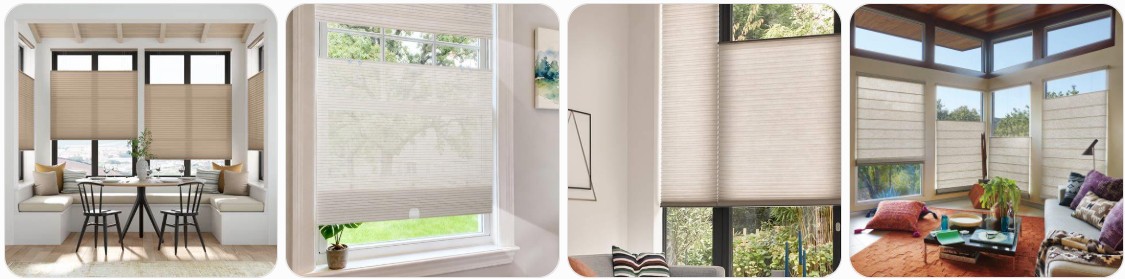
Bottom-up blinds are one of the most common and practical window covering styles because they lift upward from the bottom of the window, giving you simple privacy, light control, and everyday usability. This guide explains how bottom-up blinds work, where to buy them online, what they usually cost, and what to check before ordering for your home.
- Table of Contents:
- Bottom-up Blinds At a Glance
- What Are Bottom-up Blinds? How Bottom-up Blinds Work?
- Bottom-up Blinds Pros and Cons
- Bottom-up Blinds Cost
- Where to Buy Bottom-up Blinds Online
- How to Find Bottom-up Blinds Stores Near You
- What to Check Before Buying Bottom-up Blinds
- Bottom-up Blinds Installation Options
- FAQ About Bottom-up Blinds
Bottom-up Blinds At a Glance
- Best for: Bedrooms, living rooms, kitchens, offices, rentals, and everyday home windows where simple privacy and light control are needed.
- How they open: Bottom-up blinds lift from the lower rail and stack toward the top of the window.
- Main benefit: Easy operation, wide availability, and flexible coverage for most standard windows.
- Privacy level: Good privacy when fully lowered, but less flexible than top-down bottom-up blinds because the top section cannot usually open separately.
- Light control: Depends on the blind style. Roller, cellular, blackout, Roman, pleated, Venetian, and mini blind versions all control light differently.
- Average cost: About $15–$80 per ready-made blind for basic sizes, $50–$250+ for custom options, and more for cordless, blackout, cellular, or motorized versions.
- Installation difficulty: Usually beginner-friendly for standard inside-mount or outside-mount blinds, but large or custom blinds may be better installed professionally.
- Common control types: Corded lift, cordless lift, chain control, spring-loaded roller, wand tilt, remote control, and motorized operation.
- Best upgrade: Cordless bottom-up blinds are usually worth considering because they look cleaner and are safer around children and pets.
What Are Bottom-up Blinds? How Bottom-up Blinds Work?
What Are Bottom-up Blinds?
Bottom-up blinds are window blinds that open from the bottom of the window and move upward. This is the standard operating style most people think of when they picture blinds: the blind covers the full window when lowered, then lifts toward the headrail when opened. As the blind rises, the lower part of the window becomes uncovered first, allowing light and visibility from the bottom upward.
The term Bottom-up Blinds can describe several blind styles, not just one material or design. For example, you can find bottom-up roller blinds, cellular shades, pleated blinds, Roman shades, mini blinds, Venetian blinds, and blackout blinds. The main thing they share is the lift direction: they rise from the bottom instead of lowering from the top.
Bottom-up blinds are different from top-down blinds and top-down bottom-up shades. A standard bottom-up blind normally gives you two main positions: lowered for coverage or raised for more light and view. A top-down bottom-up blind gives more privacy flexibility because it can open from the top, the bottom, or both. However, bottom-up blinds are usually easier to find, easier to compare, and often more affordable.
How Bottom-up Blinds Work?
Bottom-up blinds work by using a lower rail, fabric panel, slats, or shade material that moves upward toward the top mounting rail. The exact mechanism depends on the blind type. A cellular bottom-up shade may compress into neat pleats at the top. A roller blind may wrap around a tube. A Venetian or mini blind may lift horizontal slats using internal lift cords. A Roman blind may fold into soft fabric pleats as it rises.
Most bottom-up blinds are mounted either inside the window recess or outside the frame. Inside-mount blinds sit within the window opening for a clean built-in look. Outside-mount blinds attach above or around the window frame and can provide better coverage if the window is uneven, shallow, or needs extra light blocking around the edges.
The most common control options include cords, cordless lift systems, chains, spring rollers, and motorized controls. Cordless bottom-up blinds are especially popular because you simply push or pull the bottom rail to raise or lower the blind. Motorized versions use a remote, wall switch, app, or smart-home control, which can be useful for tall windows, hard-to-reach areas, or rooms with many blinds.
If you are comparing bottom-up options online, it helps to browse related products such as cordless bottom-up blinds, bottom-up cellular shades, and bottom-up blackout blinds so you can compare price, size, fabric, and control styles.

LazBlinds No Drill Cordless Cellular Shades, 35" W x 64" H, White

LazBlinds No Drill Cordless Cellular Shades, 34" W x 48" H, White

SUNFREE Top Down Bottom Up Cellular Shades 22" W x 36" H, White
Bottom-up Blinds Pros and Cons
Pros of Bottom-up Blinds
- Easy to find: Bottom-up operation is the standard style for many blinds and shades, so there are many choices online and in local stores.
- Simple to use: Most people already understand how they work, making them practical for homes, rentals, offices, and guest rooms.
- Budget-friendly options: Basic vinyl, mini, roller, and ready-made cellular blinds are often affordable.
- Good full-window privacy: When fully lowered, they cover the entire glass area and help block outside views.
- Many material choices: Available in fabric, vinyl, aluminum, faux wood, woven textures, blackout fabric, and insulating cellular materials.
- Works with most windows: Suitable for many standard bedroom, living room, bathroom, kitchen, and office windows.
- DIY-friendly: Many ready-made bottom-up blinds can be installed with basic tools.
- Available in cordless versions: Cordless designs look cleaner and reduce loose cord hazards.
- Custom sizing available: If standard sizes do not fit, many retailers offer made-to-measure bottom-up blinds.
- Easy to replace: Because they are common, replacing a damaged blind is usually simpler than finding parts for niche blind systems.
Cons of Bottom-up Blinds
- Less privacy flexibility: Standard bottom-up blinds do not let daylight in from the top while keeping the bottom covered.
- May block the view: To maintain privacy, the blind often needs to stay fully lowered, which can reduce your outside view.
- Light gaps can happen: Inside-mount blinds may leave small side gaps, especially blackout styles.
- Cheap models can wear faster: Budget lift cords, weak brackets, thin slats, or low-quality fabric may fail sooner.
- Corded versions can look messy: Visible cords may not suit modern interiors and can be unsafe around children or pets.
- Large blinds can be heavy: Wider blinds may be harder to lift smoothly, especially with heavier materials.
- Not always ideal for street-facing rooms: If you want privacy at eye level but daylight above, top-down bottom-up shades may be better.
- Custom orders cost more: Non-standard windows, premium fabrics, and cordless upgrades can raise the final price.
Bottom-up Blinds Cost: What Price Should You Expect?
Bottom-up blinds can range from very affordable to premium depending on the size, material, control system, and whether they are ready-made or custom. Basic ready-made bottom-up blinds for small or medium windows often cost around $15–$80 each. Mid-range cordless cellular shades, faux wood blinds, pleated blinds, or better fabric roller blinds often fall around $40–$150 each. Custom bottom-up blinds can cost around $80–$250+ per window, especially if you choose blackout fabric, thermal cellular material, decorative textures, or special sizing.
Installation also affects the total. DIY installation may only require basic tools, screws, brackets, and a level. Professional installation may add around $50–$150+ per window depending on your location, window size, number of blinds, and whether the installer also measures before ordering. Whole-home jobs may be priced differently, so it is always worth comparing the blind price and the installation price separately.
For a quick planning estimate before shopping, you can use the Blind Cost Estimator to compare likely costs based on size, type, quantity, upgrades, and installation. This is useful if you are deciding whether to buy ready-made bottom-up blinds from a marketplace or order custom blinds from a specialist retailer.
Price can increase when you add features such as cordless lift, blackout lining, room-darkening fabric, double-cell insulation, valances, decorative headrails, motorization, remote controls, or smart-home compatibility. If your main goal is low cost, start with standard-size cordless mini blinds or simple roller blinds. If comfort and insulation matter more, bottom-up cellular shades usually cost more but may provide better everyday performance.
Where to Buy Bottom-up Blinds Online
Amazon is one of the easiest places to compare bottom-up blinds because you can quickly filter by size, color, material, mount type, and control style. This is especially useful for standard-size windows where ready-made blinds may fit without needing a custom order. When shopping on Amazon, search for the exact style you want, such as bottom-up cellular blinds, cordless bottom-up window blinds, or bottom-up blackout shades. Always check the width, height, return policy, mounting instructions, and whether the listed size is the actual blind size or the window opening size.
Amazon is also helpful if you need accessories at the same time, such as replacement brackets, mounting screws, spacer blocks, hold-down brackets, blind cleaning tools, or measuring tape. For bottom-up blinds, pay close attention to whether the product is corded, cordless, spring-loaded, or motorized because the photos can look similar even when the operating system is different.
Find Bottom-up Blinds from Amazon »
LazBlinds No Drill Cordless Cellular Shades, 35" W x 64" H, White
LazBlinds No Drill Cordless Cellular Shades, 34" W x 48" H, White
SUNFREE Top Down Bottom Up Cellular Shades 22" W x 36" H, White
eBay can be useful for finding discounted bottom-up blinds, discontinued styles, open-box blinds, replacement parts, and custom blind sellers. It may also be a good place to look if you are matching an existing blind and need a similar color, bracket, control type, or size. However, you should be more careful with measurements and returns because some blinds may be sold as clearance, used, refurbished, or final-sale items.
When buying bottom-up blinds from eBay, read the item description closely. Confirm whether the blind is new or pre-owned, whether all brackets are included, whether the control mechanism works properly, and whether the blind can be cut down or adjusted. For custom listings, message the seller before ordering if your window size is unusual or if you are unsure about inside mount versus outside mount.
Find Bottom-up Blinds from eBay »
- Blinds.com – Good for made-to-measure blinds, cordless options, cellular shades, and custom window sizes.
- The Home Depot – Useful for ready-made blinds, custom blinds, measuring help, and installation services in many areas.
- Lowe’s – Offers standard and custom window blinds, including cordless and room-darkening styles.
- SelectBlinds – A strong option for custom sizes, fabric choices, cellular shades, and upgraded lift systems.
How to Find Bottom-up Blinds Stores Near You
Finding bottom-up blinds locally is usually easy because many home improvement stores, blind showrooms, hardware shops, and interior furnishing stores carry standard bottom-up styles. Start by searching for terms such as “bottom-up blinds near me,” “cordless blinds near me,” “cellular shades near me,” “custom blinds store near me,” or “window treatment showroom near me.” If you are unsure which stores to check first, use a local buying guide such as where to buy window blinds to compare common buying options before visiting stores.
Local stores are helpful when you want to see fabric samples, compare colors in person, test cordless lift systems, or ask about measuring and installation. This is especially useful for bottom-up cellular shades, blackout blinds, and fabric blinds because online photos may not show the exact texture, opacity, or color tone accurately.
Before visiting a store, measure each window roughly and take photos of the window frame, trim, handle, lock, and any obstructions. This helps the salesperson recommend the correct mount type and control system. If you want inside-mount bottom-up blinds, measure the inside width at the top, middle, and bottom of the window opening. If you want outside-mount blinds, measure the area you want the blind to cover beyond the frame.
You can also ask local stores whether they offer free measuring, paid measuring, installation packages, or cut-to-size services. Some big-box stores sell ready-made blinds that can be trimmed to width in-store, while custom blind shops usually order blinds to your exact measurements. If you are buying several bottom-up blinds for the same room, bring paint colors, flooring photos, or fabric samples so the color choice works with the rest of the space.
What to Check Before Buying Bottom-up Blinds
- Window measurements: Measure width and height carefully. For inside mount, measure the inside opening in multiple places. For outside mount, include extra coverage on the sides and above the window.
- Mount type: Confirm whether you need inside mount, outside mount, ceiling mount, or door mount. Some windows are too shallow for inside mounting.
- Actual blind size: Some retailers list the blind size, while others list the window opening size and make deductions automatically.
- Control system: Choose between corded, cordless, chain-operated, spring-loaded, wand tilt, or motorized operation.
- Privacy needs: Choose light-filtering fabric for soft daylight or blackout fabric for bedrooms, nurseries, media rooms, and privacy-sensitive areas.
- Material: Cellular shades help with insulation, roller blinds look simple and modern, faux wood handles moisture better, and fabric Roman shades add a softer decorative finish.
- Room conditions: Bathrooms and kitchens may need moisture-resistant materials, while sunny rooms may need UV-filtering or room-darkening fabric.
- Color and opacity: Check whether the blind is sheer, light-filtering, room-darkening, or blackout. Similar colors can perform very differently.
- Stack height: Some blinds take up more space at the top when raised. This matters if you want a clear view through the window.
- Child and pet safety: Cordless bottom-up blinds are usually better where loose cords could be a hazard.
- Return policy: Custom blinds may not be returnable, so double-check every measurement before ordering.
- Included hardware: Confirm that brackets, screws, anchors, hold-down clips, and installation instructions are included.
- Cleaning needs: Smooth vinyl, aluminum, and faux wood are easier to wipe down. Fabric and cellular shades may need gentler cleaning.
- Warranty: Check the warranty on the lift mechanism, fabric, motor, remote, and hardware.
- Matching multiple windows: If buying for a full room, order all blinds together to reduce color or batch differences.
Bottom-up Blinds Installation Options: DIY vs Professional Fitting

Bottom-up blinds can often be installed as a DIY project, especially if they are standard-size ready-made blinds with simple brackets. Most installations involve measuring, marking bracket positions, drilling pilot holes, attaching brackets, snapping the blind into place, and testing the lift mechanism. For lighter blinds, this may be a quick job. For wide blinds, high windows, or custom blinds, it can take longer and may require a second person.
DIY installation is usually best when the window is easy to reach, the blind is not too heavy, and the mounting surface is solid. It can save money and gives you control over the timing. However, the main risk is measurement or mounting error. If brackets are uneven, the blind may lift poorly, rub against the frame, or hang crooked. If an inside-mount blind is ordered too wide, it may not fit at all.
Professional fitting is better when you are ordering custom bottom-up blinds, installing several blinds at once, dealing with oversized windows, mounting into tile or concrete, or choosing expensive motorized blinds. A professional installer can confirm measurements, check the window depth, make sure brackets are level, and reduce the risk of damaging the frame or blind.
For rentals, no-drill or tension-fit options may be worth considering if your lease does not allow holes in the frame or wall. However, not every bottom-up blind is available in a no-drill format, and adhesive or tension-mounted products may not be as stable as screw-mounted blinds. Always check weight limits and surface requirements before choosing a damage-free installation method.
In general, DIY fitting is the cheaper option for standard bottom-up blinds, while professional fitting is the safer option for expensive, custom, heavy, or hard-to-reach blinds. If you are unsure, consider paying for professional measuring even if you plan to install the blinds yourself. Accurate measurements are often the most important part of getting bottom-up blinds to fit correctly.
FAQ About Bottom-up Blinds
Are bottom-up blinds the same as top-down bottom-up blinds?
No. Standard bottom-up blinds only lift from the bottom. Top-down bottom-up blinds can usually open from the top, the bottom, or both, giving more privacy and light-control flexibility.
Are bottom-up blinds good for privacy?
Yes, bottom-up blinds are good for full-window privacy when fully lowered. However, they are less flexible than top-down bottom-up shades if you want privacy on the lower part of the window while still letting daylight in from above.
What rooms are best for bottom-up blinds?
Bottom-up blinds work well in bedrooms, living rooms, offices, kitchens, laundry rooms, and many standard windows. For bathrooms, choose moisture-resistant materials or suitable cellular, faux wood, vinyl, or roller options.
How much do bottom-up blinds cost?
Basic ready-made bottom-up blinds may cost around $15–$80 each, while better cordless, cellular, blackout, or custom options often cost around $50–$250+ per window. Motorized versions can cost more.
Are cordless bottom-up blinds worth it?
Yes, cordless bottom-up blinds are usually worth considering because they look cleaner, are easier to operate, and avoid loose hanging cords. They are especially useful in homes with children or pets.
Can bottom-up blinds be blackout?
Yes, many bottom-up blinds are available in blackout or room-darkening versions. For the best light blocking, choose blackout fabric and consider outside mounting to reduce side light gaps.
Can I install bottom-up blinds myself?
Yes, many bottom-up blinds are DIY-friendly if your windows are standard and easy to reach. You will usually need a tape measure, pencil, drill, screws, brackets, and a level.
Should bottom-up blinds be inside mount or outside mount?
Inside mount gives a cleaner built-in look if your window recess is deep enough. Outside mount gives better coverage, helps hide uneven frames, and can reduce light gaps around the edges.
Do bottom-up blinds help with insulation?
Some do. Cellular or honeycomb bottom-up shades are usually better for insulation because their pocketed design helps trap air. Basic mini blinds, roller blinds, and Venetian blinds usually provide less insulation.
What is the best type of bottom-up blind?
The best type depends on your goal. Cellular shades are good for insulation, blackout roller blinds are good for darkness, faux wood blinds are good for moisture resistance, and cordless mini blinds are good for budget-friendly everyday use.
Can bottom-up blinds be motorized?
Yes, some bottom-up blinds and shades are available with motorized controls. These are useful for tall windows, hard-to-reach areas, smart homes, and rooms with multiple blinds.
Why won’t my bottom-up blind stay up?
The lift mechanism may be worn, the cordless spring may need resetting, the cord lock may be damaged, or the blind may be too heavy for the mechanism. Check the product manual before forcing it.
Summary
Bottom-up blinds are a practical, widely available, and easy-to-use window covering option for many homes. They lift from the bottom, provide full-window coverage when lowered, and come in many styles including roller, cellular, pleated, Roman, mini, Venetian, blackout, cordless, and motorized designs. They are usually more affordable and easier to find than specialty blind systems, but they do not offer the same privacy flexibility as top-down bottom-up shades.
Before buying, measure carefully, choose the right mount type, compare control systems, check the return policy, and decide whether you need light-filtering, room-darkening, blackout, insulating, cordless, or custom features. For most standard windows, ready-made bottom-up blinds from Amazon, eBay, home improvement stores, or blind retailers can work well. For unusual sizes, premium finishes, or whole-home projects, custom ordering and professional measuring may be worth the extra cost.

60 PCS Vertical Blind Repair Tabs Kit Clear Fixer Verticle Blinds Snap in Replacement Slats Parts Panels

30 Sets (60 Pcs) Vertical Blinds Replacement Slats Panels, Vertical Blind Repair Tabs Kit, Clear Apartment Blinds Replacement Fixers, Horizontal Blinds Replacement Parts
