Micro Blinds are ultra-slim slat blinds designed for compact windows, neat sightlines, and precise light control, so repairs usually involve small headrail hardware, narrow slats, ladder strings, lift cords, cord locks, tilt mechanisms, and bottom rail components rather than large heavy-duty fittings. The quick answer is that a broken micro blind can often be repaired for much less than a full replacement if the slats are mostly intact and the problem is limited to one part of the control system. In many cases, the fix comes down to replacing a snapped tilt wand, restringing the blind, swapping out a cord lock, replacing a broken tilter, or fitting a few matching slat clips before the damage spreads. If you want to compare likely parts while troubleshooting, it helps to browse micro blind repair kit options, mini blind replacement parts, and blind tilter replacements.
Fix Common Micro Blind Problems & Repair Cost
Micro blind will not raise or lower properly: This usually points to a worn cord lock, frayed lift cord, tangled ladder string, or an internal headrail part that is no longer gripping or releasing the cord correctly. Start by checking whether the cords are fraying near the lock or rubbing against a sharp spot inside the headrail. If the blind still moves slightly but will not stay in position, the cord lock may be the actual failed part. Small repairs such as restringing or replacing a lock are often in the range of about $5 to $25 in parts, while a more involved headrail repair can run closer to $15 to $40 depending on how many pieces need to be replaced. Comparing blind cord lock replacements and mini blind lift cord options can help you match the right repair. Do not keep yanking the cords if the blind is stuck, because that often makes a simple restringing job much worse.
The slats will not tilt evenly: When micro blind slats stop tilting correctly, the problem is often a broken tilter, worn tilt gear, snapped wand hook, or damaged tilt rod inside the headrail. Because micro blinds use very narrow slats, even a small amount of hardware wear can make the blind look obviously crooked or leave gaps in privacy coverage. Replacing the tilter or wand connection is often a low-cost repair, usually around $5 to $20 in parts. It helps to compare blind tilter replacements and blind wand hook replacements before replacing the whole blind.
One or more narrow slats are bent or broken: Micro blinds are more delicate than wider slat blinds, so it is common for a few individual slats to bend near the center or at the punch holes where cords pass through. If only a small number of slats are damaged, replacing those slats or using a small repair clip can be more economical than replacing the full blind. Costs vary depending on whether you already have spare slats, but minor slat repairs are often inexpensive. If the slats are crushed in multiple places or the matching finish is hard to find, replacement may make more sense.
The bottom rail hangs unevenly: This usually means a lift cord has stretched, slipped, or broken on one side, or the ladders are no longer supporting the slats evenly. On a micro blind, even a slight difference in cord tension is very noticeable because the slats are narrow and closely stacked. Restringing the blind or rebalancing the cords is often the right fix, and it may help to compare blind string replacement kits.
The wand is broken or disconnected: A snapped tilt wand or broken wand connector is one of the simplest micro blind repairs. If the blind still raises and lowers but the slats no longer tilt, the wand connection may be the only failed part. Many of these repairs cost roughly $5 to $15 in parts. Searching blind wand replacements can help you identify a compatible style.
Micro Blind Repair Kit
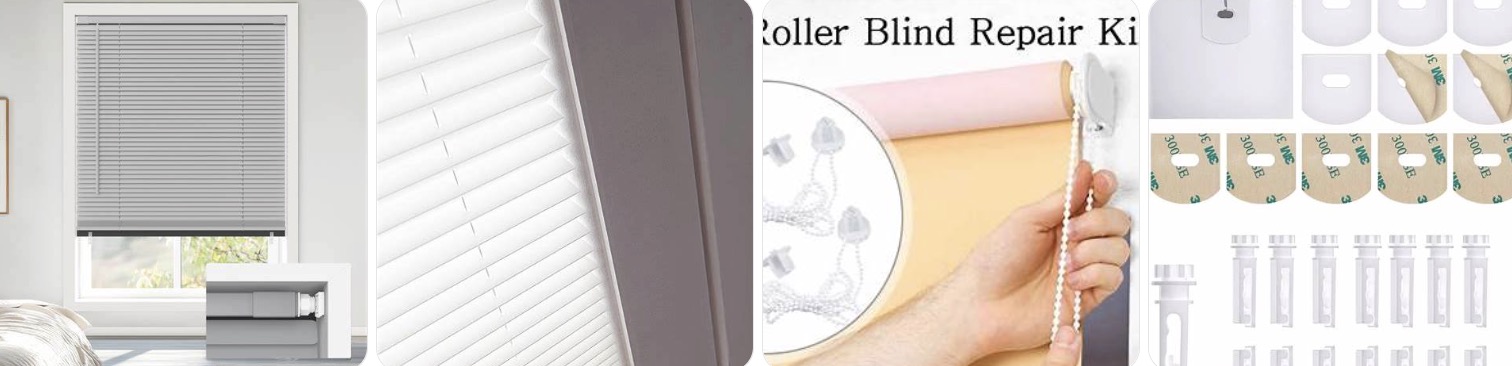
A micro blind repair kit is most useful when the problem is in the headrail hardware or cord system rather than in the full body of the blind. Because micro blinds use compact mechanisms and very slim slats, the parts that fail are often small, inexpensive, and repairable if you catch the problem early. A good micro blind repair kit may include restringing supplies, replacement cords, tilter parts, wand hooks, cord locks, ladder repair components, and small installation pieces that help restore function without replacing the full blind.
It is worth checking kit photos carefully because many products are sold under the broader mini blind category even when they work well for micro blinds too. If your repair is limited to one obvious issue, buying the exact part may be cheaper. But if the blind has a worn cord lock, a broken wand hook, and uneven slat support at the same time, a broader micro blind repair kit or mini blind repair kit can save time and make the repair more consistent. For micro blinds, matching the headrail hardware size is especially important because the mechanisms are compact and not always universal.

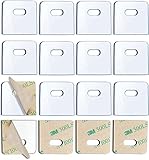
60 PCS Vertical Blind Repair Tabs Kit Clear Fixer Verticle Blinds Snap in Replacement Slats Parts Panels
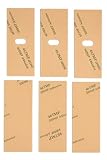
BlindDIY™ Clear Mini Blind Slat Repair Kit-Blind Repair Tabs with String Holes- Clear Blind Fixers-Horizontal Blinds Replacement Slats

35 Sets (70 Pieces) Clear Vertical Blind Repair Tabs for Replacement Slats
Signs Your Micro Blind Need Repair
- The blind will not stay up after you raise it: This often points to a worn cord lock or damaged lift cord. Checking blind cord lock replacements is a smart first step when the blind keeps slipping down.
- The narrow slats no longer tilt together: On micro blinds, uneven tilt is usually caused by a failing tilter, wand hook, or tilt rod problem rather than general wear across the whole blind.
- The bottom rail hangs lower on one side: This is a strong sign that one lift cord has stretched, slipped, or broken. Because micro slats are very slim, small alignment problems show up quickly.
- The wand turns freely but nothing happens: That usually means the wand hook or tilter mechanism has broken inside the headrail. Looking at blind tilter replacements may solve the issue.
- A few slats are bent, cracked, or out of line: Micro blind slats are delicate, so damage to only a few slats does not always mean the whole blind needs replacing.
- The cords look frayed near the top of the blind: Fraying near the headrail is often an early warning that a restringing repair is needed before the blind fails completely.
- The blind makes clicking or grinding sounds when tilting: These sounds usually come from a worn tilter gear or a misaligned headrail component rather than from the slats themselves.
- The blind stacks unevenly when raised: This can mean the ladders are twisted, one cord is slipping, or the lift system is no longer balanced across the narrow slat stack.
Tools You May Need to Repair Micro Blind
- Small screwdriver set: A precise precision screwdriver set is helpful for opening the headrail, removing end caps, and replacing compact tilter or cord-lock parts on a micro blind.
- Needle-nose pliers: A pair of needle-nose pliers makes it easier to grip small hooks, pull cords through narrow openings, and handle tiny headrail parts without damaging them.
- Replacement lift cord: If one side of the blind hangs lower or the blind will not stay up, matching mini blind lift cord is often one of the most important repair items to have on hand.
- Cord lock replacement: A worn lock is a common reason micro blinds will not hold position. Compare blind cord lock replacements if the blind slides back down after lifting.
- Tilter mechanism: If the slats will not rotate properly, a matching blind tilter replacement may be the part you need.
- Replacement wand or wand hook: A broken wand is one of the easiest repairs. Looking at blind wand replacements and wand hook replacements can help restore tilt control quickly.
- Stringing needle or restringing tool: A beading needle or similar threading tool can make it much easier to feed replacement cords through narrow slat holes and the bottom rail.
- Measuring tape: A measuring tape helps you check slat width, cord diameter, and headrail dimensions so you can match the correct repair parts.
Should You Repair or Replace Your Broken Micro Blind?
Repairing a broken micro blind usually makes sense when most of the slats are still straight and the problem is clearly limited to the cords, tilt mechanism, wand, or one small headrail part. Because micro blinds use compact hardware and thin slats, relatively minor part failures can make the entire blind seem unusable even when most of the blind is still perfectly serviceable. In that situation, replacing the failed part is usually much cheaper than replacing the whole blind, especially if you only need a new tilter, wand, cord lock, or restringing kit. Comparing a micro blind repair kit with the cost of a new blind often shows that repair is the better value.
Replacement becomes the better option when many slats are bent, the finish is badly damaged, the headrail is twisted, or several repair issues are happening at the same time. It may also make sense to replace the blind if the hardware is hard to match and the blind was a low-cost model to begin with. A quick comparison between micro blind options and the parts you need will help you decide. In many cases, though, micro blinds are very repairable when the damage is concentrated in the control hardware rather than the slat stack itself.

ONE DOZEN (12 each) ~ 1/2" MICRO Mini Blind DOUBLE SLAT Clear VALANCE CLIPS New!

SetSail Blind Duster, Window Cleaner Duster Brush with 5 Microfiber Sleeves

Rlynng 100PCS Mystery Resin Animals Blind Bag, 30 Styles Luminous Tiny Animal Miniatures Random Design, Glowing Resin Figures for Micro Landscape Dollhouse Decor Birthday Party Gift DIY Craft
Tips to Make Your Micro Blind Last Longer
- Raise and lower the blind gently: Micro blind cords and locks are small, so sudden pulling puts more strain on the system than it would on a heavier blind.
- Use the wand instead of twisting the bottom rail: Trying to tilt narrow slats by forcing the blind body can damage the tilter or wand hook much faster.
- Check the cords for early fraying: Replacing worn strings with blind string replacement kits early can prevent a full lift failure later.
- Dust the slats lightly and often: Heavy cleaning pressure can bend ultra-slim slats. A gentle duster or soft cloth is better for preserving the shape of micro blind slats.
- Do not force a stuck tilt mechanism: If the slats resist turning, inspect the tilter or wand connection before applying more pressure.
- Keep the headrail free of dirt buildup: Fine dust inside the headrail can add friction around cords and moving gears, especially on compact micro blind hardware.
- Replace small broken parts early: A worn wand hook or tilter is much cheaper to fix than a blind that has been damaged further by repeated forced use.
- Support the blind during removal or cleaning: Micro blinds are lightweight but delicate, so bending the headrail or twisting the slat stack can create repair problems that did not exist before.
Micro Blind Repairs FAQ
What usually breaks on a micro blind?
The parts that fail most often are lift cords, cord locks, tilters, wand hooks, ladder strings, and a few individual slats. On micro blinds, the compact headrail hardware usually wears out before the whole blind does.
Can I fix a micro blind that will not stay up?
Yes, in many cases. The most common cause is a worn cord lock or damaged lift cord. If the slats are still in good condition, replacing those parts is often enough to restore normal operation.
Is a micro blind repair kit worth buying?
It can be, especially when the blind has more than one small hardware issue. A micro blind repair kit is often easier than sourcing several tiny parts separately.
Why do my micro blind slats not tilt evenly?
This usually means the tilter, wand hook, or tilt rod is worn or broken. Because micro blinds have narrow slats, even a small fault in the tilt system becomes very noticeable.
Can I replace just a few damaged slats?
Yes, if you can find matching slats and the rest of the blind is still in good condition. Replacing a few bent slats can be a worthwhile repair when the headrail and cords still work properly.
How much does it usually cost to repair a micro blind?
Minor repairs such as a wand, tilter, cord lock, or restringing supplies are often relatively inexpensive, usually around $5 to $25 in parts. Larger repairs involving several headrail components can cost more, but they may still be cheaper than a full replacement.
Should I repair or replace a micro blind with many bent slats?
If only a few slats are bent, repair can still make sense. If many slats are creased, cracked, or badly mismatched, replacement is usually the better choice because the blind will remain visually uneven even after mechanical repairs.
Can micro blind parts be hard to match?
Yes, sometimes. Many parts are sold under mini blind terminology, and compact hardware sizes vary by brand. That is why it helps to remove the damaged part, compare the shape carefully, and measure before ordering.
60 PCS Vertical Blind Repair Tabs Kit Clear Fixer Verticle Blinds Snap in Replacement Slats Parts Panels

Vertical Blind Repair Vane Savers, Metal Vertical Blind Repair Tabs for Vertical Blinds Replacement Slats, White (12)