
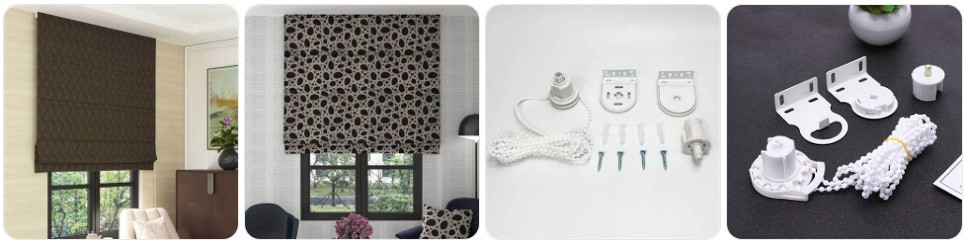
Flat Roman Blinds are a popular choice when you want a soft fabric look with a smooth front panel instead of full gathered folds, but because they rely on cords, rings, lift mechanisms, battens, headrail hardware, and a weighted bottom section, they can develop very specific repair issues over time. The quick answer is that a broken flat Roman blind often does not need a full replacement if the fabric still looks good and the problem is limited to the cord system, rings, rods, headrail mechanism, mounting hardware, or bottom bar. In many cases, replacing a worn cord lock, rethreading the lift cords, sewing on new rings, fitting a replacement chain drive, or repairing the mounting hardware is much cheaper than buying a whole new blind. If you want to compare likely parts while diagnosing the issue, it helps to look at Roman blind repair kits, Roman blind cord replacement supplies, and Roman shade parts.
Fix Common Flat Roman Blind Problems & Repair Cost
Flat Roman blind will not raise or lower smoothly: This is one of the most common flat Roman blind problems and usually points to tangled lift cords, worn cord guides, a failing headrail mechanism, or fabric sections that are no longer folding evenly across the battens. Because flat Roman blinds are meant to rise into neat, even folds, even a small cord issue can make the whole blind look crooked or bunch awkwardly. In many cases, restringing the blind or replacing a worn headrail part is enough to restore normal movement. Minor parts are often in the range of about $5 to $25, while a more involved mechanism repair can run closer to $15 to $50 depending on whether the blind uses a simple cord system or a chain-operated headrail. Looking at Roman blind cord replacement supplies and Roman shade mechanisms can help you match the most likely fix. Do not keep forcing the blind up or down if it is catching badly, because that often puts more strain on the rings, stitching, and lift system.
The blind hangs unevenly or one side sits lower: This usually means one lift cord has stretched, slipped, or broken, or one row of rings is no longer guiding the fabric evenly. On a flat Roman blind, uneven hanging is very noticeable because the front is supposed to look smooth and balanced when lowered. Restringing the blind or replacing worn rings is often enough to solve the problem without replacing the fabric panel.
The fabric folds look lumpy or no longer stack neatly: Flat Roman blinds should form clean horizontal folds when raised. If the folds are bunching, twisting, or stacking unevenly, the battens may have shifted, the rings may be pulling unevenly, or the headrail may not be lifting all cords together. This is often repairable if the fabric is still sound and the issue is mainly in the internal structure.
The chain, cord lock, or headrail control is broken: A broken control section is one of the most practical flat Roman blind repairs because the visible blind may still be in very good condition. If the blind still looks attractive but the mechanism no longer works properly, replacing the control section can be far cheaper than replacing the full blind. Comparing Roman shade chain mechanisms and Roman shade cord locks can help if the problem is clearly at the top of the blind.
Rings, rods, or stitching have come loose: Flat Roman blinds rely on discreet sewn rings and support sections to keep the lift cords aligned and the fabric folding neatly. If those small fabric-connected parts fail, the blind can still be repairable, especially if the main panel is in good condition. This is often a worthwhile repair when the blind fabric itself is decorative, expensive, or matched to the rest of the room.
Flat Roman Blind Repair Kit
A flat Roman blind repair kit is most useful when the problem is in the corded lift system, headrail hardware, rings, rods, or mounting parts rather than in the entire fabric blind panel. Because flat Roman blinds use soft fabric with hidden structural support, the visible problem is often caused by a relatively small internal part that has worn out or detached. A good repair kit may include replacement cord, rings, cord guides, small pulleys, cord locks, chain drive parts, brackets, or other hardware that helps restore smooth lifting and even folds without replacing the full blind.
It is worth checking kit photos carefully because some products are aimed at general Roman shade restringing, while others focus more on chain-operated headrails or specific mounting systems. If your flat Roman blind has only one obvious issue, buying the exact part may be cheaper. But if the blind has uneven lifting, worn cords, loose rings, and a rough headrail mechanism at the same time, a broader Flat Roman blind repair kit or Roman blind repair kit can make the repair easier and more consistent. For flat Roman blinds, matching the lift style and headrail type is just as important as matching the fabric appearance.

joytrace RV Pleated Shade Repair Kit, RV Window Shade Restringing Kit, Repair and Maintain of Day Night Pleated Shade (White)

Shappy 100 Pcs Clear Roman Curtain Rings, 55 Yards Roman Shade Cord,, White | Roman Shade Hardware Repair Replacement Kit, 8-13mm Plastic Rings, Braided Nylon Blind Cord, for Crafts and DIY

60 PCS Vertical Blind Repair Tabs Kit Clear Fixer Verticle Blinds Snap in Replacement Slats Parts Panels
Signs Your Flat Roman Blind Need Repair
- The blind rises unevenly: This often means one cord is slipping or one row of rings is no longer guiding the lift evenly. Checking Roman blind cord replacement supplies is a smart first step if one side keeps lagging behind the other.
- The folds no longer stack neatly at the top: Flat Roman blinds should fold in a clean, tailored way. If the stack looks bulky or twisted, one of the support sections, rings, or cords may be out of alignment.
- The front panel no longer hangs smooth when lowered: This often means the battens have shifted, the weighting is uneven, or the cord system is pulling the fabric out of balance.
- The chain or control section feels rough or slips: A worn mechanism at the headrail is a common repair sign, especially if the fabric panel still looks perfectly usable.
- The blind will not stay at the height you set: That usually means the lock or control mechanism is wearing out. Looking at Roman shade cord locks can help if the blind keeps slipping down.
- Rings or stitching look loose on the back of the blind: Flat Roman blinds rely on those small sewn parts to guide the cords correctly, so even one loose ring can throw off the whole lift pattern.
- The bottom edge looks crooked: This can mean the bottom bar has shifted, one cord has stretched, or the blind is no longer lifting evenly across the full width.
- The fabric still looks good, but daily operation keeps getting worse: This is one of the best times to repair a flat Roman blind before the strain damages the fabric or support stitching as well.
Tools You May Need to Repair Flat Roman Blind
- Small screwdriver set: A precision screwdriver set is useful for opening the headrail, removing brackets, and adjusting small Roman blind hardware.
- Needle-nose pliers: A pair of needle-nose pliers helps with gripping cords, handling small guides, and working with compact headrail parts without damaging them.
- Replacement blind cord: If the blind lifts unevenly or one side no longer works properly, matching Roman blind cord replacement is often one of the most important repair supplies to have ready.
- Roman blind rings: Loose or broken rings can throw off the full lift system, so comparing Roman blind rings can be useful if the cords are no longer tracking correctly.
- Cord lock or chain mechanism replacement: If the blind slips or refuses to stay in place, a matching Roman shade cord lock or Roman shade chain mechanism may be the key part you need.
- Sewing needle and strong thread: Because flat Roman blinds often need ring or stitching repairs, having a strong upholstery needle and thread set can help with fabric-connected fixes.
- Measuring tape: A measuring tape helps you confirm blind width, cord length, headrail size, and replacement part dimensions before ordering anything.
- Protected work surface: Flat Roman blind fabric can crease or mark easily, so laying it on a clean soft surface during repair helps protect the decorative front panel.
Should You Repair or Replace Your Broken Flat Roman Blind?
Repairing a broken flat Roman blind usually makes sense when the fabric still looks good and the main problem is clearly limited to the cords, rings, battens, headrail control, or mounting hardware. Because flat Roman blinds are often chosen for their decorative fabric and tailored look, keeping the original blind can be especially worthwhile when it still suits the room and only the operating system has worn out. In that situation, replacing the failed parts is usually much cheaper than replacing the entire blind, especially if you only need new cord, rings, a lock, or a chain mechanism. Comparing a Flat Roman blind repair kit with the cost of a full new blind often shows that repair is the better value.
Replacement becomes the better option when the fabric is badly faded, stained, torn, or stretched, or when the blind has several visible and mechanical problems at the same time. It can also make sense to replace the blind if the headrail is badly damaged and the fabric is no longer hanging flat and cleanly even after adjustment. A quick comparison between Flat Roman blind options and the parts you need can help you decide. In many cases, though, flat Roman blinds are very repairable when the issue is concentrated in the lift system, support structure, or headrail hardware rather than the fabric itself.
Changshade No Drill Roman Shades Cordless Blinds Blackout for Indoor Windows, Room Darkening Black Out Tension Rod No Hardware No Tools Inside Mount, Shade Size 34 Inches Wide 64 Inches High, Beige

LazBlinds Cordless Bamboo Roman Shades, 34.5x48, Highfield Teak | Privacy Blinds for Interior Windows, Room Darkening Roll Up Bamboo Blinds for Home & Patio

Boolegon Blackout Roman Shades for Indoor Windows, Linen White, Custom Size | Cordless Roman Blinds for Windows, Thermal Insulated Window Shades for Door, Bedroom, Office, Easy to Install
Tips to Make Your Flat Roman Blind Last Longer
- Raise and lower the blind evenly: Flat Roman blinds last longer when the lift cords are used smoothly rather than jerked suddenly, which helps protect the rings and headrail mechanism.
- Do not force the blind if it starts catching: If the folds are not stacking properly, inspect the cords or rings before applying more pressure.
- Keep the back rings and cord path in good condition: Replacing worn parts early with Roman blind rings or fresh cord is much cheaper than waiting for the whole lift system to fail.
- Support the fabric during cleaning: Flat Roman blinds are decorative, so rough handling can crease the front panel or strain the stitched support sections on the back.
- Check the headrail mechanism before it becomes stiff: A slipping lock or rough chain action is much easier to fix early than after it starts damaging the cords.
- Make sure the bottom bar stays properly aligned: Balanced weighting helps the blind hang flat and keeps the folds forming more evenly when raised.
- Replace small worn parts early: A loose ring or fraying cord is much cheaper to fix than a blind that has started pulling unevenly across the whole width.
- Store the blind carefully if it is removed: Folding or crushing the fabric panel while it is off the window can create creases and distort the flat front appearance that makes this style attractive.
Flat Roman Blind Repairs FAQ
What usually breaks on a flat Roman blind?
The parts that fail most often are lift cords, rings, cord locks, chain mechanisms, battens, and small mounting or headrail parts. On a flat Roman blind, the operating system usually wears out before the decorative fabric does.
Can I fix a flat Roman blind that will not raise evenly?
Yes, in many cases. The most common causes are stretched or tangled cords, loose rings, or an uneven headrail mechanism. If the fabric is still in good condition, repairing those parts is often enough to restore normal operation.
Is a flat Roman blind repair kit worth buying?
It can be, especially when the blind has more than one small hardware issue. A Flat Roman blind repair kit is often easier than sourcing cords, rings, locks, and small parts separately.
Why does my flat Roman blind hang crooked?
This usually means one lift cord has slipped, stretched, or broken, or one side of the back ring system is no longer guiding the blind evenly. Because the front panel is meant to look smooth, even small lift problems show up quickly.
Can I replace just the headrail and keep the fabric panel?
Yes, sometimes. If the fabric, rings, and support sections are still in good condition, replacing the headrail or control mechanism can be a worthwhile repair instead of replacing the entire blind.
How much does it usually cost to repair a flat Roman blind?
Minor repairs such as rings, cord, or a few small control parts are often relatively inexpensive, usually around $5 to $25 in parts. Larger repairs involving the headrail mechanism or several support sections can cost more, but they may still be cheaper than a full replacement.
Should I repair or replace a flat Roman blind with several issues?
If the fabric still looks good and the parts are easy to match, repair can still make sense. If the blind has worn controls, damaged stitching, uneven folds, and a faded or stained panel all at the same time, replacement is often the better choice.
Can flat Roman blind parts be hard to match?
Sometimes, yes. Headrail styles, chain systems, ring spacing, and cord arrangements vary, so it helps to inspect the back of the blind, measure carefully, and compare the damaged part before ordering replacements.
60 PCS Vertical Blind Repair Tabs Kit Clear Fixer Verticle Blinds Snap in Replacement Slats Parts Panels
joytrace RV Pleated Shade Repair Kit, RV Window Shade Restringing Kit, Repair and Maintain of Day Night Pleated Shade (White)
