
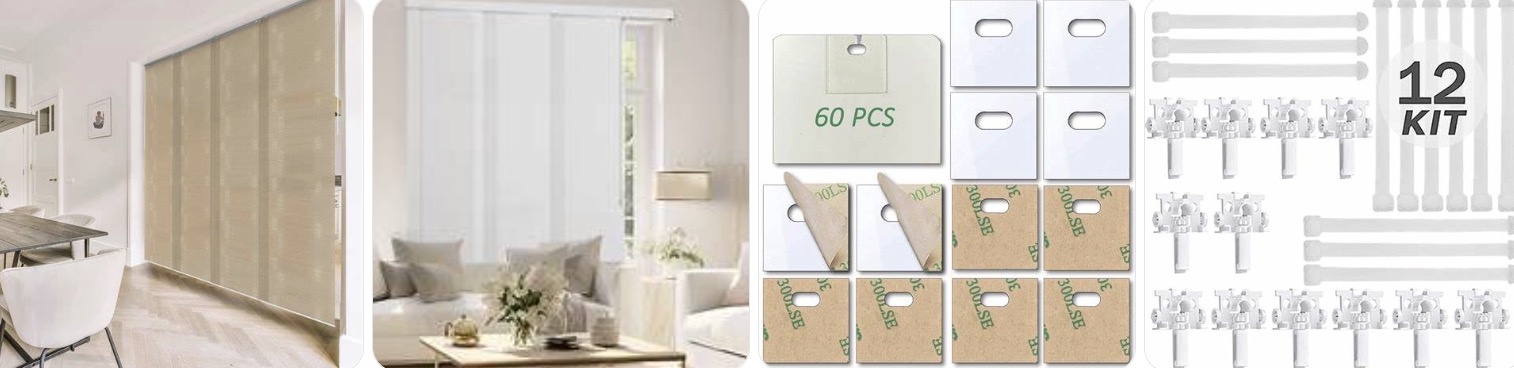
Panel Blinds are wide sliding fabric window coverings designed for large windows, patio doors, and modern room dividers, so repairs usually involve the track system, carriers, lead panel hardware, panel attachments, or support brackets rather than a standard lift cord or roller tube. The quick answer is that a broken panel blind can often be fixed for much less than a full replacement if the fabric panels are still in good condition and the problem is limited to the moving hardware. In many cases, the repair comes down to replacing a cracked carrier, reattaching a dropped panel, fixing the lead wand, restoring smooth track movement, or tightening the mounting system before more parts fail. If you want to compare likely replacement items as you troubleshoot, it helps to browse panel blind repair kit options, panel track blind carriers, and panel blind wand replacements.
Fix Common Panel Blind Problems & Repair Cost
Panel blind will not slide smoothly: This is one of the most common panel blind repairs and usually points to worn carriers, a dirty or slightly bent track, or a lead carrier that is no longer pulling the other panels evenly. Start by cleaning the track thoroughly and checking whether one runner is dragging behind the others. If a single carrier is cracked, replacing it is often enough to restore movement. Typical small-part repair costs are often in the range of about $5 to $25, while more involved hardware fixes can run around $20 to $60 depending on the size of the blind and how many runners need attention. Comparing panel track blind carriers and blind track gliders can help you match the right part. Do not force a sticking panel blind open, because that can damage multiple carriers at once.
One panel has dropped or detached from the headrail: Panel blinds often use hanger strips, attachment clips, or hook-and-loop fastening at the top of each fabric panel. If one section falls or starts leaning, the issue is often with that attachment point rather than the entire blind. Reapplying hook-and-loop material, replacing a hanger strip, or fitting a fresh clip is usually a low-cost fix, often around $5 to $20 in parts. It is worth comparing panel blind hanger replacement options and hook-and-loop tape for blinds if the panel fabric is still sound. If the top edge of the fabric is torn, reinforce that area before hanging the panel again.
The control wand is broken or disconnected: On many panel blinds, the wand controls the lead panel and helps move the whole stack neatly across the track. A broken wand or damaged wand connector can make the blind feel completely unusable even when the track and panels are otherwise fine. This repair is often straightforward, with many replacement parts costing roughly $8 to $25. Look at panel blind wand replacements and blind wand connectors if the lead panel no longer responds correctly.
The panels do not stack neatly to one side: Uneven stacking usually means one or more carriers are out of sync, the master carrier is damaged, or one panel is hanging badly because a bottom weight has gone missing. Because panel blinds are designed to slide in sequence, a single damaged runner can throw off the entire stack. Depending on the failed part, repair costs are often around $10 to $40. It may help to compare panel track master carriers and panel blind bottom weights.
The track is bent, sagging, or pulling away from the wall or ceiling: This is a more serious panel blind issue because the whole system depends on a straight, properly supported rail. Tightening the brackets may solve minor sagging, but if the track is visibly twisted or bowed, a larger repair or track replacement may be the better option. Small mounting fixes may cost under $15 in parts, while wider track-related repairs can run around $40 to $120 depending on the span and mounting method. Always check the brackets and anchors first before assuming the whole blind system needs to be replaced.
Panel Blind Repair Kit
A panel blind repair kit is most useful when the problem is clearly in the sliding hardware or panel attachment system rather than the fabric itself. Many panel blind kits focus on practical replacement items such as carriers, gliders, attachment clips, hook-and-loop strips, wand connectors, bottom weights, or small mounting pieces that help restore movement across the track. For panel blinds specifically, the best repair kits are the ones that support track operation and clean panel hanging, because those are the parts that usually wear out first on wide openings like patio doors and large windows.
It is worth checking the product photos and included parts carefully because some “panel blind” kits are closer to vertical blind hardware packs, while others are designed for true sliding panel-track systems. If your repair is limited to one obvious failed part, buying that single part may be cheaper. But if the blind has sticking runners, a dropped panel, and a worn wand connection at the same time, a broader panel blind repair kit or panel track repair parts set can save time and make the whole repair more consistent. For panel blinds, matching the track hardware matters more than buying a generic blind kit.

60 PCS Vertical Blind Repair Tabs Kit Clear Fixer Verticle Blinds Snap in Replacement Slats Parts Panels
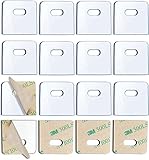
SOGEWO (16 Set/32 Pieces) Clear Vertical Blind Repair Tabs, Vertical Blinds tabs/Blind Fixers for Vertical Blinds Replacement Slats & Parts

30 Sets (60 Pcs) Vertical Blinds Replacement Slats Panels, Vertical Blind Repair Tabs Kit, Clear Apartment Blinds Replacement Fixers, Horizontal Blinds Replacement Parts
Signs Your Panel Blind Need Repair
- One panel drags behind the others: This usually means a worn runner, cracked carrier, or damaged lead mechanism. Checking panel track blind carriers is a smart first step if the stack no longer moves evenly.
- The panels bunch up unevenly when open: Panel blinds should stack neatly to one side. If they do not, one of the track components may be bent, broken, or out of sequence.
- A fabric panel keeps falling from the top: This often points to worn hanger strips, attachment clips, or fastening material rather than a problem with the full blind. Matching panel blind hanger replacements may solve it.
- The wand no longer moves the lead panel correctly: If the lead panel does not respond, the issue may be a broken wand or connector. Looking at panel blind wand replacements can help restore control.
- The track makes scraping, clicking, or grinding noises: Panel blinds should glide, not scrape. Track noise often signals debris, a bent section, or a damaged runner inside the rail.
- One panel twists more than the others: Missing bottom weights or uneven top attachment can make a panel swing or overlap badly, which then affects the movement of neighboring panels.
- The blind pulls away from the wall or ceiling: Because panel blinds often span wide openings, loose brackets or anchors can quickly turn into a bigger problem if the track is left unsupported.
- The lead panel will not overlap or close properly: Misaligned carriers or damaged overlap hardware can stop the blind from covering the opening neatly, especially on patio-door panel systems.
Tools You May Need to Repair Panel Blind
- Screwdriver set: A basic screwdriver set is useful for tightening loose brackets, removing end stops, and taking down the track if the repair involves carriers or rail hardware.
- Drill/driver: If the panel blind track is pulling away from the wall or ceiling, a cordless drill/driver helps refit brackets and secure a long track properly across a wide opening.
- Replacement carriers or gliders: A sticking or uneven panel blind often needs new panel track blind carriers so the panels can move in sequence again.
- Master carrier or lead carrier: If the first panel no longer pulls the others smoothly, the lead mechanism may be the failed part rather than the fabric sections themselves.
- Blind wand and wand connector: A snapped wand or connector is a common repair on sliding panel blinds. Compare panel blind wand replacements and wand connectors if control has been lost.
- Repair clips, hanger strips, or hook-and-loop fastening: These are helpful when a fabric panel has detached from the track. It can be useful to compare panel blind hanger replacements and hook-and-loop blind tape.
- Bottom weights or stabilizing bars: Missing weights can make a panel twist, overlap poorly, or drift out of line. A set of panel blind bottom weights may help restore even hanging.
- Vacuum with brush attachment or microfiber cloth: Cleaning the rail before replacing parts helps remove grit that can make a panel blind feel broken when the real problem is friction inside the track.
- Measuring tape: Panel blind carriers, tracks, and wands are not always universal, so a measuring tape helps you match the replacement parts more accurately.
Should You Repair or Replace Your Broken Panel Blind?
Repairing a broken panel blind usually makes sense when the fabric panels still look good and the fault is clearly limited to the track hardware, panel attachments, or lead-control components. Because panel blinds are often used on wide patio doors and large glazed openings, the fabric can stay presentable for years even while carriers, clips, or wand fittings start wearing out. In that situation, replacing the failed hardware is usually far cheaper than replacing the full blind, especially if you only need a new lead carrier, set of runners, attachment strip, or wand assembly. Comparing a panel blind repair kit with the cost of a complete new blind is often enough to show that repair is the better value.
Replacement becomes the better option when the track is badly bent, the mounting system has repeatedly failed, several carriers are broken at once, and the fabric panels are also torn, stained, faded, or hanging unevenly. It can also make sense to replace the whole blind if you cannot identify compatible hardware for an older panel-track system. A quick comparison between panel blind options and the parts you need will help you decide. In many cases, though, panel blinds are very repairable when the problem is mechanical rather than decorative.

Ameristep outdoors Mossy Oak Hunting Blinds Treestands Blinds, Mossy Oak Obsession, 21.0X4.33X4.33 US
Auscamotek Duck Hunting Pop Up Ground Blind Portable Quick Setup Lightweight Deer Blind 3-Sides Camouflage Tent

Hunt Quiet Duck Blind with Double-Sided Camo, Portable Duck Hunting Blind
Tips to Make Your Panel Blind Last Longer
- Slide the panels gently instead of yanking the lead panel: Wide panel blinds put more strain on the lead carrier and runners than smaller blinds do, so rough handling can crack the hardware over time.
- Keep the track clean: Dust and grit inside the rail can make the carriers drag. Light cleaning helps prevent premature wear and keeps the blind moving evenly.
- Check the wand connection regularly: The lead panel and wand connector do a lot of the work, so catching looseness early can prevent a bigger control repair later.
- Do not force a stuck panel: If one section jams, inspect the carrier or track first. Pulling harder can damage multiple runners and turn a simple repair into a more expensive one.
- Make sure bottom weights stay in place: Straight, balanced hanging helps the panels stack neatly and reduces twisting that can stress the upper attachments.
- Retighten loose brackets before the track sags: Because panel blinds cover wider openings, a small bracket issue can quickly affect the alignment of the whole system.
- Replace small broken parts early: A cracked runner or worn attachment clip is much cheaper to fix with panel track repair parts than a damaged track and several detached panels later.
- Support the panels during deep cleaning: When removing or handling the fabric sections, avoid bending the attachment areas at the top because that is where many panel blind repairs begin.
Panel Blind Repairs FAQ
What usually breaks on a panel blind?
The parts that fail most often are carriers, gliders, wand connectors, panel attachment strips, and mounting brackets. On panel blinds, the sliding track hardware usually wears out before the fabric panels do.
Can I fix a panel blind that will not slide?
Yes, in many cases. Start by cleaning the track and checking whether one carrier is broken or misaligned. If the rail is straight and the fabric is still in good condition, replacing a runner or lead carrier is often enough.
Is a panel blind repair kit worth buying?
It can be, especially when several small hardware parts are worn at once. A panel blind repair kit is often easier than buying clips, carriers, and connectors one by one.
Why does one panel keep falling down?
This usually means the hanger strip, top clip, or fastening section has worn out or detached. If the fabric is still intact, you can often repair the attachment point without replacing the whole blind.
Can I replace just one carrier on a panel track blind?
Yes, if you can identify the correct size and style. Replacing one broken carrier is a common repair, but if several runners are worn or the track is bent, a broader hardware repair may be the smarter choice.
How much does it usually cost to repair a panel blind?
Minor repairs such as clips, connectors, or a single carrier are often relatively inexpensive, usually around $5 to $25 in parts. Larger repairs involving the master carrier, wand assembly, or track supports can cost more, especially on wide patio-door systems.
Should I repair or replace a bent panel blind track?
If the bend is minor and caused by loose brackets, tightening and realigning the track may be enough. If the rail is visibly twisted, sagging, or causing repeated sticking, replacement is usually more reliable than trying to force the old track back into shape.
Can panel blind parts be hard to match?
Yes, especially on older or private-label systems. That is why it helps to remove the damaged part, compare photos carefully, and measure the carrier, connector, or wand before ordering new hardware.
60 PCS Vertical Blind Repair Tabs Kit Clear Fixer Verticle Blinds Snap in Replacement Slats Parts Panels
SOGEWO (16 Set/32 Pieces) Clear Vertical Blind Repair Tabs, Vertical Blinds tabs/Blind Fixers for Vertical Blinds Replacement Slats & Parts