
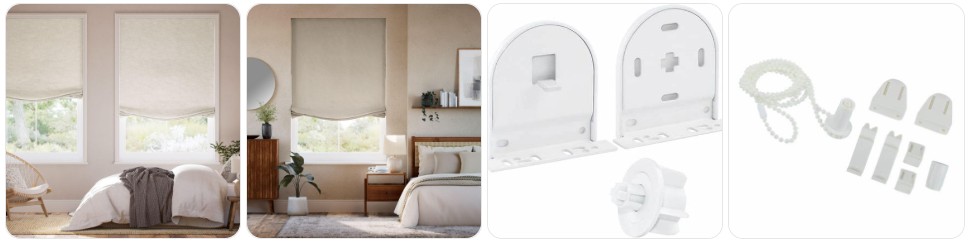
Relaxed Roman Blind repairs usually come down to a few specific issues: the bottom curve loses its shape, the lift cords stop moving evenly, the rings detach from the fabric, or the headrail no longer raises and lowers smoothly. Because this style is designed to hang with a soft center dip and a gentle relaxed edge, even a small fault can make the blind look obviously uneven. In most cases, though, you can fix a broken relaxed Roman blind by replacing worn cord, resecuring loose rings, adjusting the dowel or bottom weight, or swapping out tired hardware with parts from an Amazon search for relaxed Roman blind repair kits, Roman shade cord, or Roman shade rings. This guide explains the most common relaxed Roman blind problems, what they usually cost to repair, and when it makes more sense to replace the blind entirely.
Fix Common Relaxed Roman Blind Problems & Repair Cost
Relaxed bottom curve has gone flat or lopsided: This is one of the most common relaxed Roman blind problems because the style depends on a soft drape rather than a straight lower rail. If the center no longer dips evenly, check the bottom weight, the side spacing of the lift points, and the fabric tension first. A shifted bottom rod pocket, bent weight bar, or stretched fabric can pull one side higher than the other. In many cases, removing the blind, reopening the lower pocket, and reseating the bar restores the curve. If the original insert is damaged, replacing it with a matching Roman shade weight bar often fixes the shape. Typical DIY cost is about $10 to $30 for a replacement bar or sewing supplies, but a professional fabric alteration can run $40 to $90 depending on size and lining.
Blind raises unevenly or one side hangs lower: When a relaxed Roman blind lifts crookedly, the issue is usually a stretched or frayed cord, a misthreaded cord path, or a detached ring on the back of the blind. Because relaxed Roman blinds rely on balanced lift points to preserve the center swag, even slight cord mismatch can distort the silhouette. Take the blind down and inspect the rear rings, cord routing, and cord lock area. Replacing worn cord with Roman shade repair cord and restitching any loose rings with heavy polyester thread usually solves it. DIY cost is often $8 to $25, while a full professional restring job may cost $45 to $120 depending on width and number of lift lines.
Lift cord is broken, frayed, or jammed inside the headrail: A broken lift cord makes the blind difficult or impossible to raise safely. On relaxed Roman blinds, this often also causes the lower edge to lose its graceful drape because one side no longer supports the fabric properly. Open the headrail if possible and inspect the spool, cord lock, and pulleys. Replace damaged cord and check whether the lock is pinching or shredding it. A fresh length of lift cord for Roman shades paired with a new Roman shade cord lock can restore smooth movement. Expect a DIY parts cost of around $10 to $35. If the headrail assembly is sealed or proprietary, a pro repair can be $60 to $140.
Rear rings have pulled off the fabric: Relaxed Roman blinds often use sewn rings or guides on the back, and repeated lifting can pull them loose from lightweight or aging fabric. Once that happens, the blind may bunch awkwardly or lift in a twisted shape. The fix is to stitch the ring back onto a reinforced patch area instead of the weakened fabric alone. Many DIYers use replacement Roman shade rings for repair and upholstery thread so the stress is distributed better. If several rings have torn out, it is worth reinforcing the entire lift line. DIY cost is typically $6 to $20; fabric work by a blind or curtain specialist may cost $35 to $85.
Fabric puckers, sags, or no longer folds neatly: With relaxed Roman blinds, the folds are intentionally softer than flat Roman styles, but they should still stack in an even, graceful way when raised. If the fabric puckers badly, lining may have shrunk, dowels may be misaligned, or the blind may have been rewound with uneven cord tension. A careful rethread, light steaming, and checking the support structure can often recover the shape. If the lining is distorted or water-damaged, the repair may not last. Simple DIY correction may cost $0 to $20 if you already have supplies, but lining replacement or panel remaking can easily reach $70 to $180.
Mounting brackets feel loose or the headrail tilts forward: When the headrail is not level, a relaxed Roman blind often looks more damaged than it really is because the soft lower edge exaggerates the tilt. Check whether the brackets have loosened, the screws have stripped, or the mounting surface has deteriorated. Tightening or replacing Roman shade mounting brackets and using proper wall anchors usually solves the issue. DIY cost is about $5 to $20. If the blind fell and damaged the headrail, replacing both brackets and rail hardware can reach $30 to $80.
Relaxed Roman Blind Repair Kit
A proper relaxed Roman blind repair kit should focus on the parts that affect both operation and the blind’s signature draped bottom edge. That usually means matching lift cord, sew-on rings, cord guides, a cord lock or clutch-compatible part, and sometimes a replacement weight bar or slim insert for the lower pocket. Unlike more rigid blind styles, relaxed Roman blinds need balanced tension and well-positioned lift points, so the best kit is one that helps you restore the soft curved drop rather than just get the blind moving again. A good starting point is an Amazon search for relaxed Roman blind repair kits plus separate Roman shade string repair kits if your blind needs restringing.
If your relaxed Roman blind has a decorative fabric face with lining, it is also smart to keep a small supply of fabric-safe repair items on hand, such as heavy-duty thread, a hand-sewing needle, and replacement rings that are low-profile enough not to print through the front of the fabric. For more shape-specific repairs, a replacement Roman shade weight bar can make a bigger difference than generic hardware because it helps recover the center dip and even side drape that define the relaxed style. Choosing parts that match the original blind’s size and cord path matters more here than buying a one-size-fits-all kit.

joytrace RV Pleated Shade Repair Kit, RV Window Shade Restringing Kit, Repair and Maintain of Day Night Pleated Shade (White)

AHANDMAKER 4 Set Cord Lock Mechanism, 3 Line Idler Pulley Swivel Type Blinds Lock Replacement Brackets Roman Shade Hardware Kit for Roman Woven Wood Shades and Bamboo Window Covering
Signs Your Relaxed Roman Blind Need Repair
- The bottom edge has lost its soft center dip and now looks flat, twisted, or noticeably higher on one side, which often points to a shifted weight bar or uneven lift tension.
- The blind stacks in messy folds instead of smooth relaxed pleats, suggesting a problem with the lift cord, ring spacing, or rear support structure.
- One side rises faster than the other, which is a strong sign that a cord has stretched, frayed, or slipped out of its proper path through the Roman shade rings.
- You can see one or more rear rings hanging loose, torn away, or pulling at the lining, and this should be fixed quickly before the fabric tears further. Ignoring loose rings usually makes the repair bigger and more expensive.
- The headrail feels level by eye, but the blind still hangs crooked, which often means the issue is internal rather than the bracket position.
- The blind is harder to raise than before or slips back down after lifting, a common sign that the cord lock is wearing out.
- The lower pocket looks bulky, bent, or uneven, which can happen when the bottom insert is warped and no longer supports the relaxed shape correctly.
- The fabric face looks fine, but the back lining shows strain near stitch points, meaning the blind may still be salvageable if you reinforce it before full tear-out occurs.
Tools You May Need to Repair Relaxed Roman Blind
- A small screwdriver set for opening or adjusting the headrail and tightening bracket screws.
- Sharp fabric scissors or thread snips for removing damaged cord and trimming loose threads cleanly.
- A hand-sewing needle and upholstery thread for reattaching rings and reinforcing stress points on the back of the blind.
- Replacement sew-on Roman shade rings sized closely to the originals so the lift path stays consistent.
- Fresh Roman shade string or lift cord to replace any frayed or broken sections.
- A measuring tape to confirm cord lengths, ring spacing, and whether the bottom curve is centered properly after repair.
- A seam ripper for opening stitched pockets carefully if you need to inspect or replace the lower weight insert.
- A fabric steamer for gently relaxing puckers after restringing or restitching. Use light steam only and test on a hidden area first.
- Replacement mounting brackets or anchors if the blind is pulling forward from the wall or window frame.
Should You Repair or Replace Your Broken Relaxed Roman Blind?
You should usually repair a broken relaxed Roman blind when the fabric face is still in good condition and the problem is limited to cords, rings, the lower weight, or the headrail hardware. That is especially true if the blind was custom-made, matches other soft furnishings, or uses a fabric that would be hard to replace. In those cases, spending a modest amount on Roman shade repair parts often makes more sense than replacing the entire blind. Most mechanical repairs are relatively affordable, and a successful fix preserves the exact relaxed shape and fabric look you already chose for the room.
Replacement makes more sense when the fabric is faded, sun-damaged, water-marked, badly shrunken, or torn along several lift lines. It is also worth replacing the blind if the headrail system is proprietary and multiple parts have failed at once. With relaxed Roman blinds, appearance matters as much as function, so a blind that technically works but has lost its drape, symmetry, or front-facing finish may no longer be worth saving. If the cost of parts, fabric work, and your time approaches the price of a new relaxed Roman blind, replacement is usually the better long-term choice. If the fabric and silhouette are still recoverable, repair is often the smarter option.

Neutral Curtains Lily Cordless Relaxed Roman Window Shades, Custom Linen Blackout Roman Shades for Windows, Room Darkening Roman Blinds for Bedroom, 1 Shade, Relaxed

PQRSHASE No Drill Relaxed Roman Shades, Light Filtering Linen Soft Wave Rib Roman Blinds for Windows, Renter Friendly Cordless Window Shades for Living Room Kitchen Apartment, 34"W x 64"H, Sheer Beige
PQRSHASE No Drill Relaxed Roman Shades, Light Filtering Linen Soft Wave Rib Roman Blinds for Windows, Renter Friendly Cordless Window Shades for Living Room Kitchen Apartment, 34"W x 72"H, Sheer Beige
Tips to Make Your Relaxed Roman Blind Last Longer
- Raise and lower the blind evenly and slowly instead of tugging one cord sharply, because uneven pulling is one of the fastest ways to distort the relaxed center curve.
- Dust the back of the blind regularly, especially around the rings and cord paths, so debris does not grind into the cord lock or abrade the lift cord.
- Inspect the rear stitch points every few months and restitch any loose rings before they rip out under load.
- Keep the blind dry and ventilated if it is installed near condensation-prone windows, since moisture can distort lining and change how the lower edge drapes.
- Use light steaming rather than aggressive ironing when you need to refresh the folds, because pressing too hard can flatten the fabric and spoil the relaxed look.
- Check that the bottom insert stays centered inside its pocket, especially after cleaning or moving house, so the blind keeps its intended soft scalloped shape.
- Retighten brackets once or twice a year so the headrail stays level. A slight tilt in the rail can make a relaxed Roman blind look far more damaged than it really is.
- Replace fraying cord early with new lift cord instead of waiting for a full break that may jerk the blind and tear the fabric at the rings.
Relaxed Roman Blind Repairs FAQ
Why does my relaxed Roman blind no longer hang in a smooth curve?
This usually happens because the bottom weight has shifted, the lift cords are no longer balanced, or the fabric has stretched unevenly over time. Start by checking the lower insert pocket and the rear lift lines before assuming the blind needs full replacement.
Can I restring a relaxed Roman blind myself?
Yes, in many cases you can restring it yourself if the headrail is accessible and the fabric is still sound. Using matching Roman shade string repair kit parts helps keep the lift even, which is especially important for maintaining the relaxed bottom shape.
What is the most common repair on a relaxed Roman blind?
The most common repair is replacing worn lift cord or reattaching loose rear rings. Those two faults often cause uneven lifting, crooked hanging, and loss of the signature center dip.
Is it worth repairing a relaxed Roman blind with damaged fabric?
It depends on where the damage is. Small tears or pulled stitch points on the back may be repairable, but fading, shrinkage, or front-facing fabric damage often makes replacement the better choice because relaxed Roman blinds rely heavily on appearance.
Can a new weight bar fix a lopsided relaxed Roman blind?
Sometimes, yes. If the original insert is bent, too light, or has shifted inside the pocket, a new Roman shade weight bar replacement can restore a more even curve and better side balance.
Why does my relaxed Roman blind keep slipping down after I raise it?
That usually points to a worn or dirty cord lock in the headrail. Replacing it with a matching Roman shade cord lock is often the simplest fix.
Do relaxed Roman blind repairs cost a lot?
Not usually for basic hardware issues. Many DIY repairs cost under $35 in parts, while professional repairs tend to become expensive only when fabric reconstruction, relining, or proprietary headrail parts are involved.
What parts should I keep on hand for future relaxed Roman blind repairs?
The most useful spare parts are lift cord, sew-on rings, strong thread, a cord lock that matches your system, and sometimes a spare lower weight insert. Many homeowners start by browsing relaxed Roman blind repair kit options on Amazon and then add the exact parts their blind uses.

60 PCS Vertical Blind Repair Tabs Kit Clear Fixer Verticle Blinds Snap in Replacement Slats Parts Panels

Vertical Blinds Replacement Stem and Gear Used for Headrail, Carrier Stem Vertical Blinds Curtain Accessories(12 Sets)
