
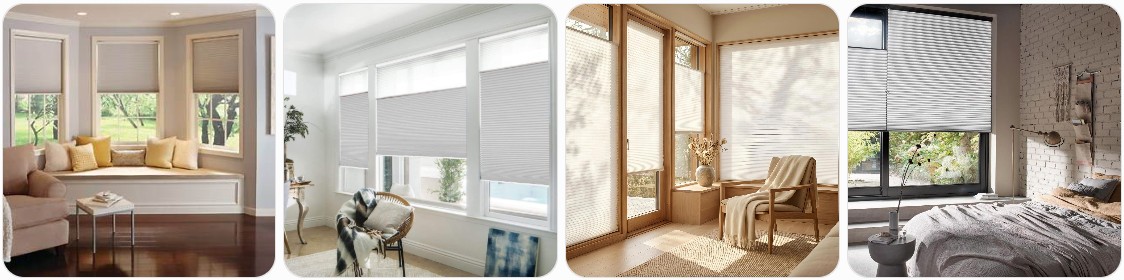
Cellular blinds are one of the best window covering choices if you want a softer look, better insulation, simple privacy, and cleaner light control without bulky curtains. This buying guide explains what cellular blinds are, how they work, what they cost, where to buy them online, how to find local stores, and what to check before ordering.
- Table of Contents:
- Cellular Blinds At a Glance
- What Are Cellular Blinds? How Cellular Blinds Work?
- Cellular Blinds Pros and Cons
- Cellular Blinds Cost
- Where to Buy Cellular Blinds Online
- How to Find Cellular Blinds Stores Near You
- What to Check Before Buying Cellular Blinds
- Cellular Blinds Installation Options
- FAQ About Cellular Blinds
Cellular Blinds At a Glance
- Best for: Bedrooms, living rooms, nurseries, offices, street-facing windows, cold rooms, hot rooms, and windows where insulation matters.
- Main benefit: The honeycomb-shaped cells trap air, helping reduce heat transfer through the window.
- Common names: Cellular blinds, cellular shades, honeycomb blinds, and honeycomb shades.
- Light control options: Light filtering, room darkening, and blackout cellular blinds are available.
- Popular upgrade: Cordless cellular blinds are popular because they look cleaner and are safer for homes with children or pets.
- Premium option: Top-down bottom-up cellular blinds let you lower the shade from the top while keeping the lower part of the window covered.
- Typical price range: About $25 to $150+ per window for ready-made or standard-size cellular blinds, and about $80 to $300+ per window for custom cellular blinds.
- Installation difficulty: Usually beginner to moderate for standard inside-mount or outside-mount blinds.
- Biggest drawback: Cellular fabric can be harder to deep clean than slatted blinds because dust can collect inside pleats and cells.
- Best buying tip: Measure carefully, choose the right opacity, and decide whether you need cordless, blackout, or top-down bottom-up operation before ordering.
What Are Cellular Blinds? How Cellular Blinds Work?
What Are Cellular Blinds?
Cellular blinds are fabric window coverings made with folded honeycomb-shaped pockets. These pockets form rows of air cells between the front and back layers of fabric. Because of this structure, cellular blinds are often chosen for insulation, comfort, privacy, and a neat modern appearance.
Unlike Venetian blinds or mini blinds, cellular blinds do not use hard slats that tilt open and closed. Instead, the fabric shade raises and lowers as one continuous piece. When the blind is lifted, the pleated fabric stacks compactly near the top of the window. When lowered, it covers the glass with a soft, uniform fabric finish.
You may also see cellular blinds called honeycomb blinds. In many shopping listings, the two terms are used almost interchangeably. If you are comparing blind styles, you can learn more about Cellular Blinds and related blind types before deciding which style fits your window best.
Cellular blinds are available in different cell sizes, fabric opacities, colors, lift systems, and mounting styles. Basic light-filtering cellular blinds soften daylight while still giving privacy. Blackout cellular blinds are made for bedrooms, nurseries, media rooms, and other areas where you want stronger light blocking. Some models also come with special upgrades like cordless lift, motorized control, side tracks, or top-down bottom-up movement.
How Cellular Blinds Work?
Cellular blinds work by using folded fabric cells to create an insulating layer between the window glass and the room. The honeycomb shape traps pockets of air inside the blind. This air barrier can help slow heat transfer, which may make a room feel more comfortable during hot or cold weather.
In winter, cellular blinds can help reduce the feeling of cold air near windows. In summer, they can help reduce some heat gain from direct sun. They are not a replacement for properly insulated windows, but they can make a noticeable comfort difference, especially on large windows, older windows, drafty rooms, and sunny exposures.
The lift system controls how the shade moves. Standard corded cellular blinds use a pull cord. Cordless cellular blinds lift and lower by gently pushing or pulling the bottom rail. Top-down bottom-up cellular blinds have a more flexible system that lets the shade open from the top, from the bottom, or both. Motorized cellular blinds use a remote, wall switch, app, or smart home system, depending on the model.
The fabric opacity controls how much light passes through. Light-filtering cellular blinds brighten the room while reducing glare and improving privacy. Room-darkening cellular blinds block more light but may still allow some glow around the edges. Blackout cellular blinds block the most light, especially when installed carefully and paired with side channels or outside-mount coverage.

BlindsAvenue Cordless Cellular Shade, White, 27" W x 72" H | Light Filtering Pull Down Blinds for Indoor Windows, Thermal Insulation, Noise Reduction Honeycomb Shades for Home Privacy

LazBlinds No Drill Cordless Cellular Shades, 22" W x 36" H, White | Blackout Fabric Protects Privacy, With Thermal Insulation & Noise Reduction, Safe Cordless Design for Kids & Pets

DEZ FURNISHINGS Cordless 1" Light Filtering Cellular Shade, 29"W x 64"H, White
Cellular Blinds Pros and Cons
Pros of Cellular Blinds
- Good insulation: Honeycomb cells trap air and help reduce heat transfer through windows.
- Soft appearance: Fabric construction gives rooms a cleaner and warmer look than hard slat blinds.
- Great privacy: Most cellular blinds provide strong privacy when fully lowered.
- Light filtering choices: Available in light-filtering, room-darkening, and blackout options.
- Cordless options: Cordless cellular blinds look neat and are a safer choice for homes with children or pets.
- Compact stack: The pleated fabric folds neatly when raised.
- Top-down bottom-up option: Excellent for bathrooms, bedrooms, and street-facing windows where you want daylight and privacy at the same time.
- Energy-conscious choice: A practical option for rooms that feel too hot, too cold, or exposed to direct sun.
- Works with many decor styles: Cellular blinds can look modern, minimal, soft, or neutral depending on color and fabric.
- Available in custom sizes: Good for unusual windows, wide windows, narrow windows, and rooms where exact fit matters.
Cons of Cellular Blinds
- Harder to deep clean: Dust can collect in pleats and cells, especially on older blinds.
- Less view control: You cannot tilt slats open like Venetian or vertical blinds.
- Fabric can stain: Kitchens, bathrooms, and high-moisture rooms may require more careful fabric selection.
- Can be damaged by pets: Cats, dogs, and children can crease, tear, or push through the fabric.
- Blackout gaps possible: Light may leak around the sides if the blind is not measured or mounted well.
- Custom models cost more: Top-down bottom-up, blackout, cordless, oversized, and motorized options can raise the price quickly.
- Not ideal for every door: Some cellular blinds may swing or move on frequently used doors unless fitted with hold-down brackets.
- Cheaper models may sag: Low-quality cellular blinds can lose shape, operate unevenly, or wear faster.
Cellular Blinds Cost: What Price Should You Expect?
Cellular blinds usually cost more than basic mini blinds but less than many premium Roman shades, custom shutters, or fully motorized blind systems. The final price depends on size, fabric quality, opacity, lift system, brand, and whether the blind is ready-made or custom made.
For a small standard window, budget cellular blinds may start around $25 to $50 per blind. Mid-range cordless cellular blinds often fall around $45 to $120 per window. Custom cellular blinds commonly range from about $80 to $300+ per window, especially if you choose blackout fabric, top-down bottom-up operation, premium colors, wide widths, or professional installation.
For whole-home projects, the total can add up quickly. For example, covering 6 standard windows with basic ready-made cellular blinds may cost around $180 to $600. Covering 6 windows with custom cordless or top-down bottom-up cellular blinds may cost around $600 to $1,800+, depending on the supplier and options selected.
Professional measuring and installation may add about $50 to $150+ per window or a flat project fee, depending on your area. Large windows, high windows, awkward mounting surfaces, bay windows, skylights, and motorized options can increase installation costs. Before ordering several blinds, it is smart to compare measurements, options, and estimated totals with a blind cost estimator so you have a clearer budget before you buy.
- Budget ready-made cellular blinds: About $25 to $60 per window.
- Mid-range cordless cellular blinds: About $45 to $120 per window.
- Blackout cellular blinds: About $50 to $180+ per window.
- Top-down bottom-up cellular blinds: About $70 to $250+ per window.
- Custom cellular blinds: About $80 to $300+ per window.
- Motorized cellular blinds: About $150 to $500+ per window.
- Professional installation: Often about $50 to $150+ per window, depending on job size and complexity.
Where to Buy Cellular Blinds Online
Amazon is a convenient place to buy cellular blinds if you want ready-made sizes, fast shipping, cordless options, blackout styles, and budget-friendly choices. It is especially useful when you already know your window measurements and can match them to standard sizes. When shopping on Amazon, look carefully at width, height, mount type, fabric opacity, color, return policy, and whether the product is truly cordless or corded.
For cellular blinds, Amazon is usually best for standard windows, rental homes, guest rooms, apartments, quick replacements, and buyers who want to compare many options in one place. You can also find related products like mounting brackets, hold-down clips, cleaning tools, and basic installation supplies. If you want a custom fit, check whether the listing allows made-to-order sizing before buying.
Useful Amazon searches include cordless cellular blinds, blackout cellular blinds, top down bottom up cellular blinds, and cellular shade brackets if you need parts or accessories.
Find Cellular Blinds from Amazon »
BlindsAvenue Cordless Cellular Shade, White, 27" W x 72" H | Light Filtering Pull Down Blinds for Indoor Windows, Thermal Insulation, Noise Reduction Honeycomb Shades for Home Privacy
LazBlinds No Drill Cordless Cellular Shades, 22" W x 36" H, White | Blackout Fabric Protects Privacy, With Thermal Insulation & Noise Reduction, Safe Cordless Design for Kids & Pets
DEZ FURNISHINGS Cordless 1" Light Filtering Cellular Shade, 29"W x 64"H, White
eBay can be useful for cellular blinds if you are looking for discounted stock, open-box products, discontinued colors, replacement parts, or specific brand models. It can also be a good place to find cellular blinds in less common sizes, but you need to read the listing carefully. Some products may be new, some may be used, and some may be returns or overstock.
When buying cellular blinds from eBay, check the exact measurements, condition, quantity, mounting hardware, shipping cost, seller rating, and return policy. Cellular blinds must fit accurately, so avoid vague listings that do not clearly show width, height, color, opacity, and mount style. If the blind is custom-cut or final sale, returns may be limited.
Find Cellular Blinds from eBay »
- Blinds.com – Good for custom cellular shades, cordless upgrades, blackout options, and made-to-measure ordering.
- SelectBlinds – Popular for custom cellular shades, top-down bottom-up options, and frequent online promotions.
- The Home Depot – Useful for ready-made and custom cellular shades, plus local pickup and installation services in many areas.
- Lowe’s – Good for comparing standard cellular shades, custom options, cordless models, and in-store measuring support.
How to Find Cellular Blinds Stores Near You
To find cellular blinds stores near you, start by searching for local blind shops, window treatment stores, home improvement stores, and custom shade installers in your area. Cellular blinds are common enough that many local retailers can supply them, but the quality, fabric selection, measuring service, and installation options can vary a lot from store to store.
A good local store should be able to show you fabric samples, explain opacity choices, measure your windows, recommend inside mount or outside mount, and help you compare cordless, blackout, and top-down bottom-up systems. This is helpful if you are buying for a main bedroom, nursery, large living room window, bay window, or any window where fit and finish are important.
You can also use a blinds buying directory or guide to compare where to buy window blinds before choosing between a local store, big-box retailer, custom blind company, or online supplier.
- Search locally: Try searches like “cellular blinds near me”, “honeycomb shades near me”, “custom blinds near me”, and “window treatment store near me”.
- Check big-box stores: Home Depot, Lowe’s, Menards, and similar stores may carry ready-made or custom cellular blinds.
- Visit a local blind showroom: Showrooms are useful when you want to feel fabric samples and compare colors in person.
- Ask about measuring: Some stores offer measuring services, which can reduce ordering mistakes.
- Ask about installation: Professional installation is helpful for wide windows, multiple rooms, and custom products.
- Compare warranties: Check whether the fabric, lift system, brackets, and cords are covered.
- Bring measurements: Even rough measurements can help the store estimate cost and available options.
- Take photos: Photos of the window frame, trim, handles, locks, and obstructions help the salesperson recommend the right mount type.
What to Check Before Buying Cellular Blinds
- Window width and height: Measure carefully in multiple places. For inside mount, use the narrowest width and shortest height. For outside mount, allow extra coverage around the glass.
- Inside mount vs outside mount: Inside mount looks cleaner inside the frame, while outside mount can improve privacy, reduce light gaps, and hide uneven trim.
- Cell size: Small cells look neat on small windows, while larger cells can suit bigger windows and may provide a stronger visual texture.
- Single cell vs double cell: Double-cell cellular blinds may provide better insulation, but they usually cost more and may have a thicker stack.
- Light filtering vs blackout: Light-filtering fabric is good for living rooms and offices. Blackout fabric is better for bedrooms, nurseries, and media rooms.
- Privacy level: Check whether silhouettes or shadows are visible at night when indoor lights are on.
- Lift system: Choose between corded, cordless, continuous loop, top-down bottom-up, or motorized operation.
- Child and pet safety: Cordless cellular blinds are usually the better choice for homes with young children or pets.
- Color and fabric sample: Colors can look different online, so order samples when possible for main rooms.
- Mounting depth: Inside-mount blinds need enough frame depth for brackets and headrail clearance.
- Obstructions: Check for window cranks, locks, handles, tiles, trim, alarm sensors, and other items that may interfere with the blind.
- Room humidity: Cellular blinds can work in many rooms, but bathrooms and kitchens need extra care because fabric can hold moisture, odors, or stains.
- Cleaning needs: If the window gets dusty or greasy, choose a fabric and color that is easier to maintain.
- Return policy: Custom cellular blinds may be non-returnable, so double-check measurements before placing the order.
- Warranty: Look for coverage on the lift mechanism, headrail, fabric defects, and hardware.
- Installation hardware: Confirm that brackets, screws, end caps, hold-down clips, and instructions are included.
- Side light gaps: Blackout cellular blinds may still allow light around the edges unless measured and mounted properly.
- Stack height: Check how much space the blind uses when fully raised, especially if you want maximum window view.
- Multiple-window consistency: If buying for several windows in one room, order matching colors, fabric, and lift systems together.
Cellular Blinds Installation Options: DIY vs Professional Fitting

Cutelec 2pcs Box Mounting Bracket for Low Profile Horizontal Blinds with 1-3/4" x 2 1/2" Headrail - White Color

Jetec 6 Pieces Mini Blind Brackets for Window Blinds,1.18x1.18 Inch | with Screws,Metal Replacement Parts,Easy DIY Installation
Cellular blinds are usually easier to install than many heavy window treatments because they are lightweight and use a simple headrail bracket system. Most standard cellular blinds can be installed with a tape measure, pencil, drill or screwdriver, level, and the mounting hardware included with the product.
DIY installation can be a good choice if your windows are standard size, easy to reach, and you are comfortable drilling into the frame, wall, or trim. It can save money and is often manageable for one or two blinds. For an inside mount, the brackets are usually fixed inside the top of the window frame. For an outside mount, the brackets are installed above or around the window opening, depending on the desired coverage.
Professional fitting is a better option if you are ordering custom cellular blinds, covering many windows, installing blackout blinds where light gaps matter, working with oversized windows, fitting blinds to bay windows, or dealing with uneven frames. A professional installer can also help avoid measurement mistakes and make sure the blinds operate smoothly.
- Choose DIY installation if: You have standard windows, basic tools, clear instructions, and confidence measuring and drilling accurately.
- Choose professional installation if: You have expensive custom blinds, wide windows, high windows, tricky trim, or several rooms to cover.
- DIY advantage: Lower cost and faster installation if you already have the tools.
- DIY drawback: Mistakes can cause crooked blinds, light gaps, damaged trim, or poor operation.
- Professional advantage: Better accuracy, cleaner finish, and less risk with custom products.
- Professional drawback: Adds labor cost and may require scheduling.
Before installing, hold the blind in place and test the position visually. Make sure the headrail is level, the fabric clears handles or locks, and the blind will not rub against the window frame. For outside mount blackout cellular blinds, add extra width and height where possible to reduce side light gaps.
FAQ About Cellular Blinds
Are cellular blinds the same as honeycomb blinds?
Yes, cellular blinds and honeycomb blinds usually refer to the same style of window covering. The name comes from the honeycomb-shaped fabric cells that trap air and help with insulation.
Are cellular blinds good for insulation?
Yes, cellular blinds are one of the better blind styles for insulation because the fabric cells create air pockets between the window and the room. They can help improve comfort in hot or cold rooms.
Do cellular blinds block heat?
Cellular blinds can help reduce heat transfer through windows, especially when fully lowered. They will not stop all heat, but they can reduce some heat gain in summer and heat loss in winter.
Are cellular blinds good for bedrooms?
Yes, cellular blinds are a strong bedroom choice. Light-filtering versions provide privacy and soft daylight, while blackout cellular blinds are better for sleeping, nurseries, shift workers, and media rooms.
Can cellular blinds be blackout?
Yes, blackout cellular blinds are available. They use darker or lined fabric to block more light, but some light may still enter around the sides unless the blinds are mounted carefully.
Are cordless cellular blinds worth it?
Cordless cellular blinds are usually worth it if you want a cleaner appearance, easier operation, and better safety for homes with children or pets. They often cost more than basic corded versions.
What are top-down bottom-up cellular blinds?
Top-down bottom-up cellular blinds can open from the top, from the bottom, or both. They are useful when you want daylight from the top of the window while keeping the lower part covered for privacy.
Are cellular blinds good for bathrooms?
Cellular blinds can work in bathrooms with good ventilation, but they are fabric blinds, so moisture is a concern. For humid bathrooms, choose moisture-tolerant materials carefully and avoid soaking the fabric.
Are cellular blinds easy to clean?
Cellular blinds are fairly easy to dust with a vacuum brush attachment, microfiber cloth, or duster. Deep cleaning is harder because dust can collect inside the pleats and cells.
Can cellular blinds be repaired?
Some cellular blind problems can be repaired, such as broken cords, loose brackets, damaged bottom rails, or faulty lift operation. Torn fabric or crushed cells may be harder to fix and may require replacement.
Do cellular blinds provide privacy at night?
Most cellular blinds provide good privacy when fully lowered, but privacy depends on fabric thickness and opacity. Light-filtering fabric may show shadows at night, while blackout fabric gives stronger privacy.
Should cellular blinds be inside mount or outside mount?
Inside mount gives a clean built-in look, while outside mount provides better coverage and can reduce side gaps. For blackout rooms or shallow window frames, outside mount is often the better choice.
How long do cellular blinds last?
Good cellular blinds can last several years with normal use. Lifespan depends on fabric quality, lift system, sun exposure, humidity, cleaning habits, and whether the blinds are handled gently.
Are cellular blinds better than roller blinds?
Cellular blinds are usually better for insulation and soft texture, while roller blinds are often simpler, easier to clean, and more minimal. The better choice depends on whether insulation, style, cleaning, or budget matters most.
Are cellular blinds expensive?
Cellular blinds are available in budget, mid-range, and premium prices. Basic ready-made cellular blinds can be affordable, but custom, blackout, cordless, top-down bottom-up, and motorized options cost more.
Summary
Cellular blinds are a practical window covering choice if you want insulation, privacy, soft light control, and a clean fabric look. Their honeycomb-shaped cells help trap air, making them especially useful for rooms that feel too hot, too cold, or exposed to direct sunlight. They are available in light-filtering, room-darkening, blackout, cordless, top-down bottom-up, and motorized styles.
For budget buyers, ready-made cellular blinds from Amazon, eBay, home improvement stores, and online blind retailers can be a good starting point. For exact fit, unusual windows, blackout bedrooms, or whole-home projects, custom cellular blinds may be worth the higher cost. Before buying, measure carefully, choose the right opacity, check the lift system, confirm mounting depth, and compare return policies. A well-chosen cellular blind can improve comfort, privacy, and appearance while giving your windows a neat, modern finish.

60 PCS Vertical Blind Repair Tabs Kit Clear Fixer Verticle Blinds Snap in Replacement Slats Parts Panels

joytrace RV Pleated Shade Repair Kit, RV Window Shade Restringing Kit, Repair and Maintain of Day Night Pleated Shade (White)
