
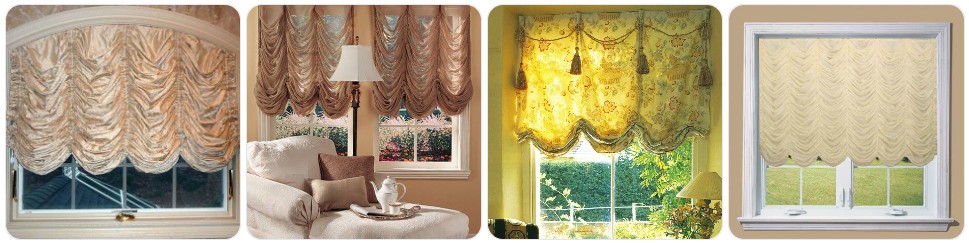
If you need to remove Austrian blinds without damaging the gathered fabric, lift cords, rings, or mounting board, the safest approach is to lower the blind gently, support the fabric evenly, and detach the headrail or mounting board without letting the soft folds drag or stretch. Austrian blinds are decorative fabric blinds with scalloped, ruched folds, so they need more careful handling than a plain roller or slatted blind because the fabric fullness, sewn rings, and lift system can be distorted if the blind is pulled down unevenly. This guide explains how to take down Austrian blinds step by step while protecting the cords, brackets, gathering, and decorative shape. If you think you may need hardware or cord components afterward, it also helps to review Austrian blind parts before you begin.
What You Need Before Removing Austrian Blind
- A stable step stool or ladder: Austrian blinds are often mounted above the window on a board, track, or headrail, so steady overhead access makes it much easier to release the brackets without pulling on the fabric folds.
- A screwdriver set: Many Austrian blinds use face-fix or top-fix brackets, screws, or a mounting board, so a screwdriver set is usually one of the most useful tools to have ready.
- Needle-nose pliers: A pair of needle-nose pliers can help if a cord guide, ring clip, or tight bracket pin needs delicate handling during removal.
- A clean bed, table, or large flat surface: Austrian blind fabric is soft, decorative, and often fuller than other blind types, so you need a clean place to lay it down without crushing the scalloped folds.
- Soft ties or fabric straps: These help you secure the gathered fabric loosely after removal. Do not compress the folds too tightly, because the Austrian shape can flatten or crease badly if tied too hard.
- A container for screws, brackets, and cord guides: Small mounting parts, cord cleats, and side guides are easy to lose once the blind is off the wall or board.
- Optional cord and hardware parts on hand: If the blind already shows signs of wear, it may help to compare roman shade cord repair kits, cord lock replacements, or roman shade rings before you start.
Austrian Blind Removal Guide
Austrian blind removal is mostly about protecting the soft gathered fabric and keeping the lift cords from tangling while you detach the top mounting hardware. Because Austrian blinds are made to drape in decorative scallops, they should never be yanked down by the bottom edge or allowed to fall under their own weight while the brackets are being released. The safest method is to lower the blind first, support the top section evenly, and move the blind to a clean flat surface as soon as it comes down so the folds keep their shape.
- Lower the Austrian blind fully or nearly fully: Bring the blind into a relaxed position so the lift cords are not holding the fabric under tension. This makes the blind easier to handle and reduces strain on the rings and cord guides.
- Tidy the folds before removal: Straighten the gathered fabric lightly with your hands so the scallops are not twisted. Austrian blinds can snag more easily when the folds are bunched unevenly.
- Inspect the top mounting style first: Look for brackets, screws, a headrail, or a wooden mounting board. Some Austrian blinds are fixed with brackets, while others are mounted more like a soft-fabric valance and blind combination.
- Support the top edge with one hand: Before undoing any screw or bracket, hold the blind near the mounting board or headrail. Do not hold the entire weight by the fabric alone, because that can stretch the top seam and distort the gathers.
- Release or unscrew one side first: If the blind is bracket-mounted, open or loosen the first bracket carefully. If it is screw-fixed, remove one side while keeping the rest supported so the blind does not swing forward suddenly.
- Move to the second side and any center supports: Wider Austrian blinds may have a center support or additional screws along the top. Remove these gradually while keeping the full width supported.
- Bring the blind down evenly: Once all brackets or screws are free, lower the blind in a controlled motion and keep the cords from snagging on the brackets, cleats, or wall hardware.
- Lay the blind flat immediately: Place the Austrian blind on a clean bed, table, or large protected surface so the fabric folds can settle without being crushed or dragged across the floor.
- Loosely gather and secure the cords: Wrap the lift cords neatly and keep them separate from the fabric folds so they do not knot or pull on the sewn rings during storage.
- Inspect the blind while it is down: Check the rings, cords, top seam, cord lock, pulleys, and mounting points for wear. If needed, compare cord repair kits, shade rings, and mounting brackets before reinstalling.

Zerodeko 6pcs Blind Cord Locks Window Blind Components for Roman and Austrian Shades Pulley Lock for Smooth Light Adjustment Secure Cord Control Home Office Bedroom Use

Yoande 10 Pcs Roman Shade Cord Pulleys White Plastic Cord Lock Mechanism Versatile Use Roman Shade Hardware Window Blind Parts for Pleated Shades Austrian Shades Bamboo Curtain Home Indoor

6 Pieces White Roman Shade Cord Lock Dual Brass Wheels Stainless Bracket
Common Problems When Taking Down Austrian Blind
- The fabric bunches unevenly during removal: Austrian blinds are built around decorative gathers, so uneven handling can make one section droop or twist more than the others. Straighten the folds before you continue.
- The lift cords tangle as the blind comes down: This is one of the most common Austrian blind problems during removal. Keep the cords loose but separate so they do not knot around the rings or fabric gathers.
- The top seam feels heavier than expected: Many Austrian blinds have more fabric fullness than standard Roman-style blinds, so the top edge can be heavier once it comes free from the brackets. Support it across the width instead of from one corner.
- A sewn ring or guide looks loose: This is often easier to spot once the blind is down. If that happens, it may help to compare roman shade rings before reinstallation.
- The bracket screws are hard to access behind the fabric: Austrian blind fabric can hide the mounting hardware more than flatter blind styles do. Move the folds gently aside instead of pulling the blind down roughly.
- The blind starts dragging on the floor: This can happen because Austrian blinds are soft and fabric-heavy. Always have a clean flat surface ready before you release the last fixing point.
- The cord lock or pulleys already look worn: Removal often reveals hardware wear that was not obvious while the blind was hanging. If needed, compare cord lock replacements and shade cord repair kits before you put it back up.
What to Do After Removing Austrian Blind
- Lay the blind flat and smooth the folds gently: Austrian blinds should not be dropped into a pile or folded sharply. Keep the scallops as neat as possible so the fabric keeps its decorative shape.
- Check the cords, rings, and top seam: This is the best time to spot frayed lift cords, loose rings, worn pulleys, or stress at the mounting line. If needed, compare cord repair kits and shade rings.
- Clean the fabric carefully if needed: Austrian blinds are more decorative than many other blind types, so take extra care with cleaning method and fabric handling before storing or rehanging them.
- Store the blind in a way that protects the gathers: Avoid compressing the fabric under heavy objects. A loosely folded or gently rolled storage method is usually better than a tight fold that can flatten the scallops.
- Keep the hardware together: Store the brackets, screws, cord cleats, and any small guides in one labeled container so reinstalling the blind is easier later.
- Decide whether to repair or replace: If removal exposed worn cords, loose rings, or a damaged top mounting area, compare Austrian blind options with the cost of replacement parts before rehanging the same blind.
- Label the blind if it came from a multi-window room: Austrian blinds are often made to suit a specific opening and fullness, so labeling helps avoid mixing them up if you take down more than one.
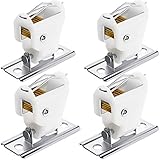
4 Pieces White Roman Shade Cord Lock Dual Brass Wheels Stainless Bracket

WHYHKJ 4pcs Roman Shade Cord Lock Austrian Shade Window Blind Lock Holds up to 3 Cords, Brown
Yoande 10 Pcs Roman Shade Cord Pulleys White Plastic Cord Lock Mechanism Versatile Use Roman Shade Hardware Window Blind Parts for Pleated Shades Austrian Shades Bamboo Curtain Home Indoor
Austrian Blind Removal FAQ
Do I need to lower Austrian blinds before removing them?
Yes. Lowering the blind into a relaxed position reduces tension on the lift cords and makes the gathered fabric easier to handle during removal.
Can Austrian blind fabric get damaged during removal?
Yes. If the blind is pulled down by the fabric, dropped unevenly, or tied too tightly afterward, the scalloped folds can stretch, flatten, or crease. It is always better to support the blind by the top edge or mounting area.
Why do the lift cords tangle when I take down an Austrian blind?
Austrian blinds use soft gathered fabric and multiple lift points, so the cords can cross or knot easily when the blind is lowered off the brackets. Wrapping the cords separately after removal helps prevent that problem.
Are Austrian blinds removed the same way as Roman blinds?
They are similar in some cases because both often use fabric lift systems and top mounting hardware, but Austrian blinds usually have more fullness and decorative gathering, which makes careful fabric handling even more important.
Should I untie or disconnect the cords before taking down the blind?
Not usually. In most cases, it is better to remove the full blind first and then inspect the cord system while the blind is lying flat on a clean surface.
What if a ring or cord guide comes loose after I remove the blind?
That is a good time to repair it, because the blind is already down and easier to work on. Small sewn components are usually much easier to inspect and fix off the window.
Can I reinstall the same Austrian blind after taking it down?
Yes, as long as the fabric, lift cords, top seam, and mounting hardware are still in good condition. Removal is also the best time to check for hidden wear before rehanging it.
What is the safest way to store Austrian blinds after removal?
The safest option is to keep the blind on a clean protected surface, with the folds gently arranged and the cords loosely wrapped. Avoid crushing the fabric or placing heavy items on top of it.
Summary
Removing Austrian blinds safely is mostly about supporting the top edge properly, lowering the blind before undoing the brackets, and protecting the gathered fabric from stretching, flattening, or tangling while the blind comes down. Once the blind is off the window, you can inspect the cords, rings, top seam, and mounting hardware, clean the blind carefully, and decide whether it is ready to go back up or needs repairs first. If the removal turns into a repair project, it also helps to review repair Austrian blinds before reinstalling the blind.

60 PCS Vertical Blind Repair Tabs Kit Clear Fixer Verticle Blinds Snap in Replacement Slats Parts Panels

30 Sets (60 Pcs) Vertical Blinds Replacement Slats Panels, Vertical Blind Repair Tabs Kit, Clear Apartment Blinds Replacement Fixers, Horizontal Blinds Replacement Parts
