
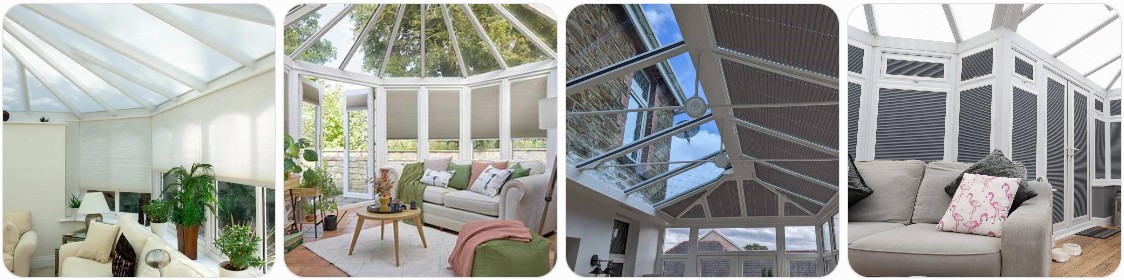
Conservatory blinds can make a bright glass room much more comfortable by reducing glare, improving privacy, softening heat, and helping the space feel usable for more of the year. This buying guide explains what conservatory blinds are, how they work, what they usually cost, where to buy them online, how to find local fitters, and what to check before ordering.
- Table of Contents:
- Conservatory Blinds At a Glance
- What Are Conservatory Blinds? How Conservatory Blinds Work?
- Conservatory Blinds Pros and Cons
- Conservatory Blinds Cost
- Where to Buy Conservatory Blinds Online
- How to Find Conservatory Blinds Stores Near You
- What to Check Before Buying Conservatory Blinds
- Conservatory Blinds Installation Options
- FAQ About Conservatory Blinds
Conservatory Blinds At a Glance
- Best for: Conservatories, sunrooms, glass extensions, garden rooms, roof glazing, angled windows, and large glazed areas that get too hot or too bright.
- Main purpose: To reduce glare, improve daytime comfort, add privacy, protect furniture from harsh sunlight, and make the room easier to use.
- Common styles: Pleated conservatory blinds, cellular conservatory blinds, roller conservatory blinds, roof blinds, vertical blinds for side windows, and motorized conservatory blinds.
- Best upgrade: Cellular or honeycomb-style conservatory blinds if insulation and heat control are important.
- Best budget option: Ready-made roller or vertical blinds for standard side windows, though roof sections usually need made-to-measure fitting.
- Typical cost range: Around $40 to $250 per basic side-window blind, $150 to $600+ per custom roof blind, and $1,000 to $5,000+ for a full conservatory depending on size, fabric, and installation.
- Installation difficulty: Side-window blinds can sometimes be DIY-friendly, but roof blinds, shaped blinds, tensioned systems, and motorized systems are usually better fitted professionally.
- Biggest buying mistake: Ordering standard blinds without checking the conservatory frame depth, roof angle, glazing bars, handles, ventilation openings, and exact measurements.
What Are Conservatory Blinds? How Conservatory Blinds Work?
What Are Conservatory Blinds?
Conservatory blinds are window coverings designed for conservatories, sunrooms, glass rooms, and similar glazed extensions. Unlike ordinary bedroom or living-room blinds, they often need to fit tall side windows, narrow frames, angled roof panels, triangular sections, roof lanterns, or unusually shaped glass areas. That is why many conservatory blinds are made-to-measure instead of bought as standard ready-made blinds.
A Conservatory Blind is usually chosen when a glass room becomes too hot in summer, too bright during the day, too exposed at night, or uncomfortable because of glare. The right conservatory blind can help soften strong sunlight, reduce UV exposure on furniture and flooring, improve privacy from neighbours, and make the room feel more finished.
Conservatory blinds are available in several styles. Pleated blinds are very common because they fit neatly into conservatory frames and can work well on roof sections. Cellular or honeycomb blinds are popular when insulation is a priority because their pocketed structure can help create an insulating layer. Roller blinds can work well on rectangular side windows, while vertical blinds may be useful for wide glazed walls or patio-style openings. Motorized options are also common for roof blinds because roof sections can be difficult to reach by hand.
How Conservatory Blinds Work?
Conservatory blinds work by covering the glass panels that allow sunlight, glare, and heat into the room. On side windows, they may operate like normal blinds, with a cord, chain, wand, cordless handle, or motorized control. On roof panels, they often use tensioned cords, side rails, special brackets, or guided systems so the blind stays in place even when fitted at an angle.
The way the blind controls light depends on the fabric and design. Light-filtering conservatory blinds soften brightness while still allowing daylight into the room. Solar fabrics reduce glare and help preserve the outside view during the day. Blackout or dim-out fabrics block more light, which can be useful if the conservatory is used as a TV room, office, guest space, or playroom. Cellular fabrics add another benefit by trapping air within the blind structure, which can improve comfort in both warm and cool conditions.
Because conservatories usually have a lot of glass, one blind rarely solves the whole problem. Many homeowners use a combination: roof blinds for overhead heat and glare, side-window blinds for privacy, and door blinds for access areas. If the room gets very hot, choosing the right roof blind fabric is often more important than choosing the cheapest side-window option. You can also compare related products such as conservatory roof blinds, cellular conservatory blinds, and motorized conservatory blinds to see which style fits your space best.

Calyx Interiors 1“ Mini Blinds, 42.5“W x 73“H, White, Light Filtering

Blackout Window Film Heat Control, Aluminum Foil Sun Blocking Privacy Window Cover, 8mm Thermal Insulation Room Darkening Shield with Suction Cups, Reusable Shade for Home
Conservatory Blinds Pros and Cons
Pros of Conservatory Blinds
- Reduces glare: Very useful if you use the conservatory for reading, working, dining, watching TV, or relaxing during bright daylight hours.
- Improves heat control: Roof and side blinds can reduce the intensity of direct sunlight and make the room feel more comfortable.
- Adds privacy: Helpful if your conservatory faces neighbours, a street, a garden path, or overlooked properties.
- Protects furniture: Helps reduce fading on sofas, rugs, flooring, plants, cushions, and other interior finishes exposed to strong sun.
- Makes the room look finished: Blinds can make a conservatory feel more like a real living space instead of a bare glass extension.
- Available for unusual shapes: Made-to-measure conservatory blinds can be designed for roof panels, angled frames, triangular sections, and narrow glazing bars.
- Good fabric choices: You can choose light-filtering, solar, dim-out, blackout, thermal, moisture-resistant, or decorative fabrics depending on the room.
- Motorized options available: Useful for high roof panels, large installations, elderly users, or smart-home setups.
Cons of Conservatory Blinds
- Can be expensive: Full conservatory blind installations often cost much more than standard window blinds because of the number of panels and custom sizing.
- Measuring can be difficult: Conservatory roofs, angled frames, handles, vents, and glazing bars make mistakes more likely.
- Professional fitting may be needed: Roof blinds and shaped blinds are harder to install than normal rectangular window blinds.
- Cheap blinds may sag: Poor-quality roof blinds can droop, wrinkle, or lose tension over time.
- Some fabrics trap heat: The wrong fabric can reduce glare but still leave the room feeling warm.
- Cleaning can be awkward: Roof blinds and high blinds collect dust but may be harder to reach.
- Repairs can be more specialized: Tension cords, clips, rails, brackets, and motor systems may require matching parts or professional service.
- Not all blinds fit every frame: Older conservatories, aluminium frames, uPVC frames, and narrow beading may need different fitting methods.
Conservatory Blinds Cost: What Price Should You Expect?
Conservatory blinds can vary widely in price because every conservatory is different. A small conservatory with only side-window blinds may be fairly affordable, while a large glass room with roof blinds, shaped panels, cellular fabric, and motorized controls can become a premium project. Before ordering, it helps to use a blind cost estimator so you can compare size, quantity, fabric type, and installation choices before requesting quotes.
As a rough guide, basic side-window conservatory blinds may cost around $40 to $150 each for simpler ready-made options. Made-to-measure side blinds often fall around $80 to $250+ per blind depending on size and fabric. Roof blinds are usually more expensive because they need stronger fittings, tension systems, shaped sizing, or professional installation. A single custom conservatory roof blind may cost around $150 to $600+, while large or unusual roof sections can cost more.
For a full conservatory, many homeowners should expect a total project cost somewhere around $1,000 to $5,000+, especially if roof blinds are included. Premium installations with motorized controls, thermal cellular fabrics, smart-home integration, or complex shaped glass can exceed that range. The final cost usually depends on the size of the conservatory, number of glass panels, blind style, fabric quality, manual vs motorized operation, and whether fitting is included.
If you are trying to keep the budget down, consider fitting blinds only where they solve the biggest problem first. For example, roof blinds may help more with heat and glare, while side-window blinds may help more with privacy. You can also compare conservatory blinds on Amazon for general pricing ideas before asking a local supplier for a made-to-measure quote.
Where to Buy Conservatory Blinds Online
Amazon can be a useful place to start if you want to compare ready-made blinds, temporary blinds, installation accessories, replacement parts, and budget-friendly options for standard conservatory side windows. It is especially helpful for rectangular windows where a standard size may fit. You can also use Amazon to compare related styles such as pleated blinds, thermal blinds, cellular shades, roller blinds, and no-drill blinds before deciding whether a custom conservatory supplier is necessary.
For conservatory roof blinds, shaped blinds, or exact-fit systems, Amazon may be better for research and accessories than final ordering. Roof sections often need custom measurements, tensioned fittings, and specialist brackets, so always check whether the product is suitable for angled glazing before buying. If you are buying side-window blinds only, look carefully at width, drop, mounting depth, bracket type, fabric opacity, return policy, and whether the blind can be trimmed or adjusted.
Find Conservatory Blinds from Amazon »
Calyx Interiors 1“ Mini Blinds, 42.5“W x 73“H, White, Light Filtering
Blackout Window Film Heat Control, Aluminum Foil Sun Blocking Privacy Window Cover, 8mm Thermal Insulation Room Darkening Shield with Suction Cups, Reusable Shade for Home
eBay can be useful for finding discounted conservatory blinds, replacement parts, roof blind accessories, brackets, tension cords, used blind parts, surplus stock, and made-to-measure sellers. It is also worth checking if you are repairing existing conservatory blinds and need clips, cord guides, mounting brackets, or old-style components that may no longer be easy to find from mainstream retailers.
When buying conservatory blinds from eBay, check the seller rating, product photos, condition, return policy, and whether the listing is for a complete blind or only a part. For made-to-measure listings, read the measuring instructions carefully before ordering because custom blinds may not be returnable if you submit the wrong size.
Find Conservatory Blinds from eBay »
- Blinds.com – Good for comparing custom blinds, shades, light-filtering options, and measuring resources for standard windows and larger glazed areas.
- Blinds 2go – Popular for made-to-measure blinds, including conservatory-friendly options such as pleated, roof, and thermal blind styles.
- Hillarys – Useful if you want an in-home measuring and fitting service rather than measuring every conservatory panel yourself.
- Thomas Sanderson – A specialist option for premium conservatory blinds, roof blinds, shaped blinds, and fitted conservatory solutions.
How to Find Conservatory Blinds Stores Near You
The easiest way to find conservatory blinds near you is to search for local blind shops, conservatory blind fitters, shade specialists, and made-to-measure window treatment companies in your area. Conservatory blinds are more specialized than basic roller blinds, so it is usually better to look for stores that mention conservatories, roof blinds, shaped blinds, pleated blinds, or made-to-measure fitting rather than only general curtains and blinds.
You can start with a local search such as “conservatory blinds near me,” “conservatory roof blinds near me,” “made to measure conservatory blinds,” or “blind fitter for conservatory roof panels.” You can also use this guide to finding places to buy window blinds if you want more buying options before choosing between online ordering and local fitting.
When comparing nearby stores, ask whether they provide a measuring visit, whether fitting is included, whether they install roof blinds, and whether they can supply replacement parts later. A good conservatory blind company should be comfortable measuring roof panels, checking glazing bars, explaining fabric choices, and telling you whether manual or motorized operation makes more sense for your room.
Before booking, check reviews and photos of previous conservatory installations. A company may be good at standard bedroom blinds but less experienced with angled roofs, shaped panels, or tensioned systems. If your conservatory gets extreme sunlight or heat, ask specifically about thermal fabrics, reflective backing, solar fabrics, and cellular options.
What to Check Before Buying Conservatory Blinds
- Measure every panel separately: Conservatory windows and roof panels may look identical but often vary slightly in width, height, angle, or frame depth.
- Check the frame material: uPVC, aluminium, timber, and older conservatory frames may require different brackets or fitting systems.
- Look at glazing bars: Roof blinds often need to fit around glazing bars, vents, handles, and structural sections.
- Decide what problem you are solving: Choose glare control, heat reduction, privacy, insulation, blackout, or decoration before choosing fabric.
- Choose the right fabric: Light-filtering fabric keeps the room bright, solar fabric reduces glare, blackout fabric blocks more light, and cellular fabric helps with insulation.
- Check roof compatibility: Not every blind can be installed at an angle. Roof blinds usually need tension, side channels, or guided hardware.
- Consider motorization: Motorized blinds are useful for high roof panels, large conservatories, and hard-to-reach glass sections.
- Check cleaning access: Roof blinds and high blinds may be difficult to dust or maintain, so choose practical fabrics and reliable hardware.
- Ask about child safety: Cordless, tensioned, or motorized controls are safer and cleaner-looking than loose cords.
- Review return rules: Made-to-measure conservatory blinds are often non-returnable unless faulty, so measurements must be correct.
- Compare warranty coverage: Look for coverage on fabric, cords, brackets, tension systems, motors, remotes, and installation work.
- Check the room direction: South-facing and west-facing conservatories usually need stronger heat and glare control than shaded rooms.
- Think about ventilation: Make sure blinds do not block windows, vents, roof openings, or door handles you use often.
- Match the room style: Conservatory blinds are highly visible, so consider colour, fabric texture, stack size, and how the blinds look from outside.
Conservatory Blinds Installation Options: DIY vs Professional Fitting

Cutelec 2pcs Box Mounting Bracket for Low Profile Horizontal Blinds with 1-3/4" x 2 1/2" Headrail - White Color

Jetec 6 Pieces Mini Blind Brackets for Window Blinds,1.18x1.18 Inch
Conservatory blind installation can be simple or difficult depending on where the blinds are going. Standard side-window roller blinds, vertical blinds, or simple pleated blinds may be possible as a DIY project if the windows are rectangular, easy to reach, and suitable for normal brackets. In that case, you need accurate measurements, a drill or no-drill fitting system, a level, suitable screws or clips, and enough frame depth for the brackets.
DIY installation is usually best for smaller side windows, budget blinds, temporary blinds, and simple privacy upgrades. It can save money, and it gives you more control over when the job is done. However, the risk is measurement error. If you drill into the wrong place, damage the frame, or order the wrong size, the saving can disappear quickly.
Professional fitting is usually the better option for roof blinds, shaped blinds, large conservatories, expensive fabrics, motorized blinds, and full-room installations. A professional fitter can measure each panel, check the frame type, recommend the correct mounting system, and make sure tensioned roof blinds do not sag. This is especially important in conservatories with angled glass, roof lanterns, high panels, or unusual glazing bars.
If you are choosing between DIY and professional fitting, think about the cost of mistakes. One side-window blind may be worth trying yourself. A full conservatory roof system is usually not the best place to learn by trial and error. For many homeowners, the best compromise is DIY side blinds and professional roof blinds.
Motorized conservatory blinds should be planned carefully. Battery-powered models may be easier to install than hardwired systems, but you still need to think about charging access, remote controls, grouping, smart-home compatibility, and where the motor sits. For a full installation, professional setup can make the system easier to use and more reliable long term.
FAQ About Conservatory Blinds
Are conservatory blinds worth it?
Yes, conservatory blinds are worth it if your conservatory gets too hot, too bright, or too exposed. They can improve comfort, reduce glare, add privacy, and make the room feel more usable throughout the day.
What type of blinds are best for a conservatory?
Pleated and cellular blinds are among the best choices for conservatories because they fit neatly, work well on shaped areas, and can help with light and temperature control. Roller or vertical blinds can also work well on standard side windows.
What are the best conservatory blinds for heat reduction?
Cellular, thermal, solar, and reflective-backed conservatory blinds are usually better for heat reduction than basic decorative fabrics. Roof blinds are especially important because overhead sunlight often causes the most heat build-up.
Can you put normal blinds in a conservatory?
You can use normal blinds on some rectangular side windows, but normal blinds are usually not suitable for angled roof panels or shaped conservatory sections. Roof areas often need tensioned or specialist conservatory blinds.
How much do conservatory blinds cost?
Basic side-window blinds may cost around $40 to $250 each, while custom roof blinds may cost around $150 to $600+ per panel. A full conservatory blind installation can range from about $1,000 to $5,000+ depending on size, style, and fitting.
Are conservatory roof blinds more expensive than side blinds?
Yes, conservatory roof blinds are usually more expensive because they need special fittings, tension systems, shaped measurements, and stronger hardware to stay secure on angled glass.
Can I install conservatory blinds myself?
You may be able to install simple side-window blinds yourself, but roof blinds, shaped blinds, and motorized blinds are usually better fitted by a professional. The more complex the conservatory, the more important accurate measuring and fitting become.
Do conservatory blinds help keep the room warm in winter?
Some conservatory blinds can help reduce heat loss, especially cellular or thermal blinds. They will not insulate like a solid wall, but they can add a helpful layer between the room and the glass.
Do conservatory blinds stop fading?
They can help reduce fading by limiting direct sunlight and UV exposure, but they may not block all UV rays unless you choose a fabric designed for stronger sun protection.
Are motorized conservatory blinds worth it?
Motorized conservatory blinds are worth considering for roof panels, high windows, large glass rooms, or anyone who wants easier daily control. They cost more, but they make hard-to-reach blinds much more practical.
What colour is best for conservatory blinds?
Light colours are popular because they reflect brightness and keep the room feeling open. Darker colours can reduce glare well but may make the room feel heavier. For heat control, fabric backing and material performance matter as much as colour.
Can conservatory blinds be repaired?
Yes, many conservatory blinds can be repaired if the issue is a broken cord, loose bracket, damaged clip, faulty tension system, or worn control part. However, older or custom systems may need matching parts from the original supplier.
Summary
Conservatory blinds are a practical upgrade for glass rooms that suffer from heat, glare, privacy problems, or harsh sunlight. The best choice depends on your conservatory shape, roof design, window sizes, fabric needs, and budget. Side-window blinds can sometimes be bought ready-made or installed DIY, but roof blinds and shaped panels usually need made-to-measure products and professional fitting. For the best result, measure carefully, choose fabric based on the main problem you want to solve, compare online options, and get local quotes before committing to a full conservatory blind installation.

60 PCS Vertical Blind Repair Tabs Kit Clear Fixer Verticle Blinds Snap in Replacement Slats Parts Panels

Vertical Blind Repair Vane Savers, 16PCS Metal Vertical Blind Repair Tabs, Vertical Blinds Repair Kit for Vertical Blinds Replacement Slats
