
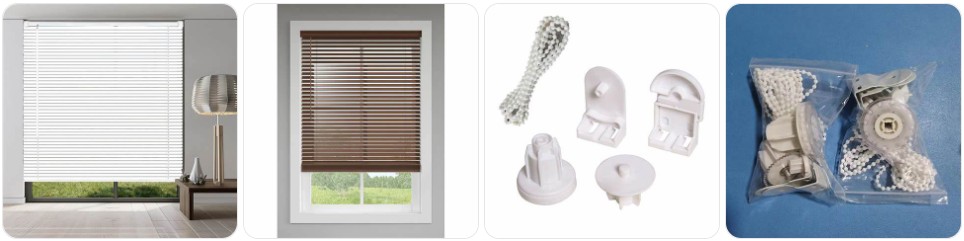
Horizontal Blind replacement parts are often all you need to fix a blind that will not tilt correctly, will not raise evenly, has broken support hardware, or has slats that keep slipping out of alignment. Instead of replacing the full blind, many common issues can be solved by matching the right hardware such as brackets, tilt mechanisms, cord locks, wands, ladders, valance clips, or a complete horizontal blind repair kit. This guide explains which parts matter most, how to identify them, when a repair makes sense, and where to shop online for the exact parts your horizontal blind needs.
Buy Horizontal Blind Parts Online
These brackets secure the headrail to the wall, ceiling, or window frame. Bent, cracked, or missing brackets can make the blind sag, sit crooked, or fall forward during operation. » find on amazon / find on ebay
The wand tilter transfers turning motion from the wand into the gear system that opens and closes horizontal slats. Replace it when the wand spins freely, sticks, clicks, or fails to tilt the slats evenly. » find on amazon / find on ebay
A broken or missing tilt wand makes daily light control awkward even when the tilter still works. Replacement wands, hooks, and sleeves restore normal operation and are one of the easiest horizontal blind fixes. » find on amazon / find on ebay
The cord lock holds the blind at the height you choose. If the blind slides down, will not stay raised, or jams while lowering, a worn cord lock is often the part that needs replacing. » find on amazon / find on ebay
Frayed, knotted, or snapped lift cords prevent a horizontal blind from raising and lowering smoothly. Re-cording the blind can restore balanced travel and is often cheaper than replacing an otherwise good headrail and slat set. » find on amazon / find on ebay
Horizontal slats sit on ladder strings or ladder tape that keeps spacing consistent across the blind. When these supports break, twist, or stretch, the slats hang unevenly and tilt action becomes noticeably sloppy. » find on amazon / find on ebay
These internal headrail parts guide lifting, support tilt components, and help distribute movement across the blind. Replacing a cracked cradle or worn drum can solve uneven lifting and rough operation on wider horizontal blinds. » find on amazon / find on ebay
Valance clips hold the decorative front cover onto the headrail. They are small, easy to lose, and often become brittle with age, causing the valance to detach or sit loose across the top. » find on amazon / find on ebay
Bottom rail parts secure cords, finish the edges, and help the blind hang neatly. Missing end caps or rail buttons can let cords slip, expose sharp edges, or leave the bottom rail visibly uneven. » find on amazon / find on ebay
A repair kit is the fastest option when you need several common pieces at once, such as brackets, wand hooks, cord parts, valance clips, or hold-down hardware. It is especially useful for older blinds with multiple small failures. » find on amazon / find on ebay
Signs You Need Replacement Parts for Your Horizontal Blind
- The slats will not tilt even though the wand still turns: This usually points to a worn tilter, stripped gear, or disconnected wand hook inside the headrail. Before replacing the whole blind, check whether a replacement wand tilter matches your headrail size.
- The blind will not stay up after you raise it: When a horizontal blind slides back down, the problem is commonly a failing cord lock rather than the slats or brackets. A new lock can often restore normal height adjustment immediately.
- One side lifts higher than the other: Uneven travel is a classic horizontal blind symptom caused by a damaged lift cord, cracked internal support part, or misrouted cord path. This is especially common on wider blinds that get raised daily.
- Several slats droop, twist, or stack badly: If the slats no longer sit level across the ladder strings, the blind may need new ladder string, ladder tape, or bottom rail buttons to restore consistent spacing and alignment.
- The valance keeps falling off the front of the headrail: That usually means the small plastic clips have become brittle or stretched. Replacing the valance clips is far cheaper than replacing the blind for a cosmetic top-rail issue.
- The blind feels loose inside the window opening: Horizontal blinds that shift, rattle, or lean forward often have bent or missing brackets. A secure set of replacement mounting brackets can stop the headrail from moving during use.
- The tilt wand is missing or cracked near the hook: This is one of the most visible failures on horizontal blinds, and it usually does not require a full repair service. A simple wand and hook replacement can make the blind feel normal again.
- You have several small failures at the same time: If the blind has loose clips, worn cord parts, and missing hardware, a horizontal blind repair kit is often the easiest and most cost-effective fix.

2pcs Low Profile Wand Tilter Mechanism with 7/32" Hexagon Shaped Gear Hook Connection for Low Rail Horizontal Wood and Faux Wood Blinds headrail

10pcs Horizontal Blinds Bottom Rail Ladder Cord Button Plug for Wood & Faux Wood Blinds and 1" Mini Blinds with a Hole 5/16"

AOOCEEPAW 17 Inches 2 Pieces Blind Wand, Vertical Replacement Parts, Tilt Replacement, Clear Rod with Hook and Grip, Plastic Opener, Long Window Stick Tilt Rod
How to Identify the Right Horizontal Blind Replacement Part
- Start with the blind type, not the room: Confirm that you are dealing with a true horizontal slat blind rather than Venetian, mini, faux wood, wood, or micro styles that only look similar. The slat width, headrail shape, and tilt system matter more than where the blind is installed.
- Measure the headrail before buying internal hardware: Tilters, cord locks, cradles, and support parts must fit the exact headrail size and profile. A part that looks right in a photo can still fail if your headrail is narrower, deeper, or shaped differently.
- Check whether your blind uses a wand tilt or cord tilt system: Horizontal blinds can look almost identical from the front but use different operating hardware. If the blind tilts with a wand, shop for wand tilter parts; if it tilts by cord, you need the matching tilt-control parts instead.
- Match the slat size before ordering ladders or clips: Slat width affects ladder spacing, valance fit, and bottom rail compatibility. Common horizontal blind slat sizes include narrow mini-blind slats and wider faux wood or wood-style slats, so measure one slat instead of guessing.
- Inspect the broken part for connection style: Wand hooks, end caps, brackets, and valance clips often vary by shape more than by name. Compare the old part’s slot, hook, snap, and mounting pattern carefully so the replacement attaches the same way.
- Use the failure point to narrow the search: If the blind drops, start with the cord lock. If the slats will not rotate, focus on the tilter. If the blind hangs loose, look at the mounting brackets. If the top cover falls off, replace the valance clips.
- Replace grouped wear parts together on older blinds: On an aging horizontal blind, it can be smart to buy a repair kit or a few related parts together, especially when brittle plastic components in the headrail have worn at the same time.
- Photograph the blind before you disassemble it: A quick photo of the headrail, wand area, bracket style, and bottom rail helps you compare listings accurately and reassemble the blind correctly after the replacement part arrives.
Should You Repair or Replace the Whole Horizontal Blind?
In many cases, you should repair a horizontal blind if the problem is limited to the hardware and the slats are still in good condition. Broken mounting brackets, worn cord locks, missing valance clips, cracked wands, and failed tilter mechanisms are all common part-level problems that can usually be fixed with inexpensive replacements. This is especially true if the blind still fits the window well, matches the room, and only has one or two operating issues. A small order such as cord lock replacements or a repair kit often makes more sense than starting over.
You should consider replacing the whole horizontal blind when the damage is structural rather than mechanical. Examples include multiple bent slats, a warped bottom rail, severe sun damage, widespread ladder failure, or a headrail that is twisted and no longer supports smooth motion. If the blind is very old and needs several internal parts at once, the total effort can outweigh the cost benefit of repair. In that case, shopping for a new horizontal blind may be the more practical option. Still, if the issue is clearly isolated, repairing is usually the smarter first step because most horizontal blind failures start with one replaceable part, not the entire blind.

LOTUS & WINDOWARE Cordless Faux Wood Blinds, 35" Wide x 60" Long, Smooth, Snow White, 2 Inch Horizontal Blinds – for Living Room, Bedroom, Interior Door Windows

Cordless Light Filtering Mini Blind, 22 x 64 in, Pearl White | Cordless Lift and Light-Filtering Control: Slat-Based Blind Construction with Adjustable Light Control.
How to Prevent Parts Damage to Horizontal Blind
- Turn the wand gently instead of forcing the slats: Horizontal blind tilters wear out faster when you twist the wand hard at the fully open or fully closed stop. A light, controlled turn reduces stress on the internal gear and hook connection.
- Raise the blind evenly and straight down from the lift cords: Pulling sideways on one cord can create uneven tension inside the headrail and wear the cord lock, drums, and support components faster than normal use.
- Keep the slats in the open position before lifting: Lifting horizontal blinds while the slats are tightly closed adds unnecessary resistance and can strain the ladders, cords, and bottom rail. Opening the slats first reduces load across the moving parts.
- Replace brittle plastic pieces before they fail completely: Small parts such as valance clips, wand hooks, and end caps often show cracking before they break. Replacing them early prevents secondary damage and dropped hardware.
- Clean dust from the headrail and slat pivots: Dust buildup can make tilt action rough and increase wear on the tilter and ladder system. A careful dry cleaning routine helps the blind move more smoothly over time.
- Do not let children or pets swing the wand or pull the bottom rail: Horizontal blinds are often damaged by repeated tugging on exposed operating parts. Protecting the wand, cords, and lower rail prevents some of the most common avoidable breakages.
- Check mounting brackets when the blind starts to wobble: A loose headrail causes extra vibration each time the blind is raised or tilted. Tightening or replacing the brackets early keeps the rest of the hardware from wearing unevenly.
- Keep a small repair kit on hand for older blinds: If you have several matching blinds in the house, storing a horizontal blind repair kit makes it easier to fix minor failures before they turn into bigger operating problems.
Horizontal Blind Parts FAQ
What is the most commonly replaced part on a horizontal blind?
The most commonly replaced parts are usually the wand tilter, cord lock, tilt wand, and mounting brackets. These parts handle the most daily movement, so they tend to wear out before the slats or headrail do.
Can I repair a horizontal blind instead of replacing it?
Yes. If the slats and headrail are still in decent condition, many horizontal blinds can be repaired with simple replacement hardware such as brackets, cord locks, wands, clips, or a repair kit.
How do I know which horizontal blind part I need?
Identify the exact failure first, then measure the headrail, slat width, and connection style of the damaged part. Matching the operating system, bracket shape, and hardware size is more reliable than buying by appearance alone.
Are mini blind parts and horizontal blind parts always interchangeable?
No. Some mini blind and horizontal blind parts look similar, but they often differ by headrail size, slat width, mounting style, and tilt mechanism. Always compare measurements and connection points before ordering.
Should I buy individual parts or a horizontal blind repair kit?
Buy individual parts if you know exactly what failed and only need one item. Choose a horizontal blind repair kit when your blind has multiple small issues or when you want backup hardware for several similar blinds.
Why does my horizontal blind keep sliding down after I raise it?
This usually means the cord lock is worn, jammed, or no longer gripping the lift cords properly. Replacing the cord lock is often the correct fix when the blind will not stay at the chosen height.
Can I replace just the tilt wand if the slats still work?
Yes. If the tilter mechanism still moves the slats correctly, you can often replace only the wand, hook, or sleeve without changing the internal tilter. This is one of the easiest horizontal blind repairs.
When is a full blind replacement the better option?
A full replacement is usually better when the blind has multiple bent slats, a warped rail, severe UV damage, widespread ladder failure, or several broken internal parts that make repair too time-consuming relative to the value of the blind.

60 PCS Vertical Blind Repair Tabs Kit Clear Fixer Verticle Blinds Snap in Replacement Slats Parts Panels

joytrace RV Pleated Shade Repair Kit, RV Window Shade Restringing Kit, Repair and Maintain of Day Night Pleated Shade (White)
