
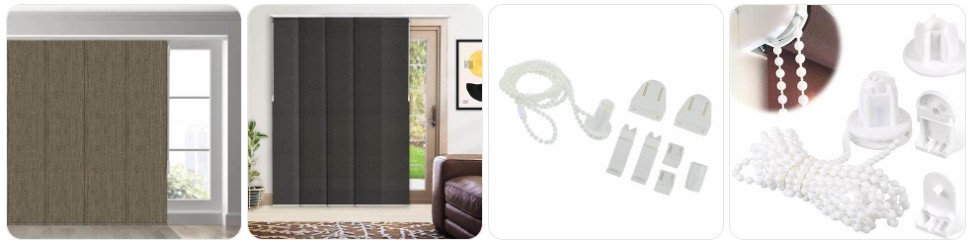
Panel Track Blind replacement parts are usually the fastest and cheapest way to fix a sliding panel system that is dragging, separating, or no longer stacking correctly. In most cases, you do not need to replace the entire treatment. Worn carriers, broken stems, damaged master carriers, loose brackets, or missing panel fasteners are often the real cause. This guide explains which Panel Track Blind replacement parts are worth buying online, how to identify the right hardware, and when a full blind replacement makes more sense than repairing the track.
Buy Panel Track Blind Parts Online
These sliding carrier bodies move each fabric panel along the rail and are one of the most commonly replaced parts when panels stick, jam, or fail to stack evenly. Match the carrier style, spacing, and hook connection carefully. » find on amazon / find on ebay
The stem or hanging hook connects each fabric panel to its carrier, so cracked or bent pieces can make a panel hang low, twist sideways, or fall out while opening. Always compare hook shape, stem length, and clip design. » find on amazon / find on ebay
The master carrier leads the opening and closing action of the whole Panel Track Blind, so damage here often causes poor traversing, bunching, or incomplete closure. Replacing it can restore the blind without changing every panel or rail part. » find on amazon / find on ebay
If the headrail sags, pulls forward, or the front cover keeps falling off, the problem is often a broken mounting bracket or missing valance clip. These small fittings matter because panel systems are wider and heavier than standard blinds. » find on amazon / find on ebay
Many Panel Track systems use hook-and-loop strips, clips, or sewn attachment points to secure the fabric panel to the carrier. When those connection points wear out, the panel can detach even though the track hardware still works normally. » find on amazon / find on ebay
A repair kit is the best starting point when you are missing several small components at once, especially carriers, stems, clips, tabs, or mounting pieces. It can save time when you are troubleshooting an older blind with mixed part failures. » find on amazon / find on ebay
Signs You Need Replacement Parts for Your Panel Track Blind
- The panels no longer stack neatly to one side: When a Panel Track Blind starts bunching unevenly instead of gliding into a tidy stack, the usual problem is a worn carrier replacement part or a damaged master carrier rather than the fabric itself.
- One panel sits lower than the others: A single low-hanging panel usually points to a cracked stem, bent hook, or broken panel hanger. This is one of the clearest part-failure symptoms on panel systems because the wide fabric makes any height difference very obvious.
- The blind drags or stops halfway across the opening: If the panels move smoothly at first but then jam at one section of the rail, check for broken carriers, internal track obstructions, or a distorted master carrier assembly before assuming the entire headrail is bad.
- The lead panel will not pull the others consistently: Panel Track Blinds rely on linked movement, so when the lead panel separates from the group, internal glide parts may be cracked or disconnected. In many cases, a targeted master carrier replacement solves it.
- The fabric panel keeps detaching from the hardware: If the panel face drops even though the track still slides, inspect the hook-and-loop strip, top attachment strip, or hanging clip. Do not replace the whole blind too quickly if the problem is only at the panel connection point.
- The track looks secure but the front cover or valance falls off: Missing clips or broken valance retainers are common on wide panel systems, especially near patio doors where the blind is used constantly. These are usually inexpensive replacements rather than a full blind failure.
- The headrail pulls away from the wall or ceiling slightly: Because Panel Track Blinds span larger openings, worn or cracked mounting brackets matter more than they do on smaller blinds. A loose bracket can make the whole system feel misaligned and unsafe over time.
- You hear clicking, grinding, or snapping during travel: Unusual noise often means a carrier wheel, internal glide piece, or linkage part has worn out. Searching for a Panel Track Blind repair kit can be the fastest fix when several small parts are aging together.

Leinuosen 12 Pieces Vertical Blind Clips Stems Replacement Parts | Vertical Blind Carrier Stems, 8 mm Head, Replacement Parts for 3-1/2 or 5 Inch Vertical Blind Vanes, Headrail Accessories

Atxbyoh 12/24 Pcs Vertical Blind Stem Replacement - White Plastic Carrier Repair Parts for Window Blinds - Capable of Fixing Broken Slats & Headrail Track Fasteners (12)

60 PCS Vertical Blind Repair Tabs Kit Clear Fixer Verticle Blinds Snap in Replacement Slats Parts Panels
How to Identify the Right Panel Track Blind Replacement Part
- Start with the track style first: Check whether your Panel Track Blind uses a wall-mounted or ceiling-mounted headrail, then count how many panel lanes are inside the rail. The number of channels affects which carriers, stems, and master carrier parts will fit correctly.
- Match the carrier body before buying anything: Remove one undamaged carrier and compare its body width, wheel shape, stem slot, and spacing to the listings you see online. On panel systems, a part that looks “close enough” often still fails because the glide geometry is slightly different.
- Inspect the lead panel hardware separately: The leading panel usually uses a different master carrier arrangement from the rest of the blind. If only the first panel behaves badly, search specifically for a lead or master carrier instead of replacing every slider in the rail.
- Measure stem length and hook orientation: Panel Track Blind hangers can look nearly identical in photos, but a small difference in drop length or clip direction can make one panel hang crooked. Compare side profile and front profile before ordering replacement stems.
- Check how the fabric attaches to the hardware: Some systems use hook-and-loop fastening, some use sewn pockets, and some rely on clip-in top tabs. If your panel is detaching from the top edge, focus on the panel attachment system rather than the moving track hardware.
- Confirm the bracket and valance design on wider spans: Panel Track Blinds over patio doors often use heavier-duty brackets and differently shaped face clips than ordinary vertical systems. If the rail sags or the valance drops, compare your bracket depth and clip shape with replacement bracket listings.
- Use a repair kit when the blind has multiple small failures: If your panel system has one broken carrier, two cracked stems, and missing clips, piecing together individual parts can take longer than buying a matched repair assortment. This is especially useful for older blinds with no visible brand label.
- Look for brand labels only after checking the hardware: Brand names help, but many Panel Track Blind systems are rebranded or sold through decorators and big-box stores. The most reliable method is still to match the actual part dimensions and shape, then use the brand only as a secondary filter.
Should You Repair or Replace the Whole Panel Track Blind?
If the fabric panels are still in good condition and the trouble is limited to the track hardware, repairing a Panel Track Blind is usually the better choice. These blinds often fail at the carriers, stems, master carrier, brackets, or panel attachment points long before the fabric wears out. That means a small order of replacement parts can restore smooth travel without the cost of replacing an entire wide-window treatment. This is especially true when only one panel hangs low, the stack no longer lines up properly, or the blind drags in one section of the rail.
You should lean toward full replacement when the headrail is badly bent, the internal track system is cracked in multiple places, the fabric panels are stained or sun-damaged, or the blind has several different failures at once and parts are no longer easy to identify. For very old or off-brand systems, a repair kit may still be worth trying first, but if the rail itself is distorted or the panel set looks dated, replacing the whole Panel Track Blind can be the more practical long-term fix.

VEVOR Panel Track Blinds, Extendable Track from 45.8 in to 86 in W, Trimmable Panel Curtains Up to 96 in H, Adjustable Vertical Panel Blinds for Sliding Doors, Patio Doors, Room Divider, Window, Gray

CHICOLOGY Panel Track Blinds, Weave White, 86"x96", Cordless, Sliding Door | 4 Fabric Panels, Fits 46–86″ Wide, Wall/Ceiling Mount, Room Divider Ready, Height Trimmable, Family Safe

GoDear Design Natural Woven Light Filtering Panel Track Blinds, Marble | Sliding Glass Doors, Patio Doors, Room Divider, Closets, Windows, Cordless, Adjustable Track, Trim to Fit, Wall/Ceiling Mount
How to Prevent Parts Damage to Panel Track Blind
- Support the lead panel during everyday use: The first panel does most of the work in a Panel Track Blind, so jerking it sideways puts extra stress on the master carrier and linked glides. Smooth, straight pulls help the opening system last much longer.
- Keep the track channel free from dust buildup: Wide sliding panel systems collect dust across the rail, especially near patio doors. A dirty channel increases drag and forces the carriers to work harder, which can shorten the life of wheels, stems, and internal glide parts.
- Do not force a panel that stops mid-travel: If one panel catches, the problem is usually a damaged carrier or a misaligned hanger, not “stiff fabric.” Forcing the blind can turn one broken slider into a full chain of damaged carriers across the track.
- Check brackets on large openings every few months: Panel Track Blinds are heavier and wider than many window coverings, so even a small bracket shift can throw the headrail out of level. Tightening a loose bracket early helps prevent sagging, drag, and carrier wear.
- Keep fabric panels hanging evenly after cleaning: If panels are removed for washing or dusting, reattach each one carefully to the correct hook or fastener position. Uneven reattachment can place extra strain on the stems and make the stack pattern look wrong during operation.
- Replace cracked stems before they break completely: A partially damaged stem may still hold the panel today, but it can twist the panel angle and overload the carrier above it. Small parts are cheaper to replace early than after they damage surrounding hardware.
- Avoid slamming panels fully open at the end stop: Repeated hard impact at the stack end can wear out the lead carrier, end stop area, and panel connectors. Gentle operation matters more on Panel Track systems because the panels are broad and carry more momentum.
- Keep a small spare-parts set for high-use doors: If your Panel Track Blind covers a patio or sliding glass door, daily traffic increases wear on carriers and attachment hardware. Keeping a basic repair kit on hand can prevent long downtime when a small part fails.
Panel Track Blind Parts FAQ
What is the most common replacement part on a Panel Track Blind?
The most commonly replaced parts are usually the carriers, hanger stems, and the master carrier because these pieces handle the sliding action every time the blind opens or closes. On heavy-use patio door installations, brackets and panel attachment strips also fail fairly often.
Can I replace one broken panel carrier without changing the whole blind?
Yes, in many cases you can replace a single damaged carrier or stem and restore normal movement. The important part is matching the replacement to your exact track style, lane count, and hanger design instead of buying a generic part that only looks similar.
Are Panel Track Blind parts the same as vertical blind parts?
Not always. Some hardware concepts are similar, but Panel Track Blinds use wider panels, different stacking patterns, and different carrier designs. That means many vertical blind parts will not fit correctly, especially master carriers, panel hooks, and track brackets.
How do I know whether I need a master carrier or just a stem?
If only one panel hangs low or falls out, the stem or hook is often the problem. If the lead panel fails to pull the rest of the panels, the stack pattern breaks down, or the blind stops opening as a group, the master carrier is more likely to be the failed part.
Is it worth buying a Panel Track Blind repair kit?
Yes, a repair kit can be a smart buy when your blind has several minor failures at once or when you are working on an older system with uncertain part identification. It is also useful for patio-door blinds where daily use makes small hardware failures more likely over time.
Can I find Panel Track Blind parts on Amazon?
Yes. Amazon can be a good place to start for Panel Track Blind parts, including carriers, brackets, stems, and repair kits. It still helps to remove one sample part first so you can compare the exact shape and size before ordering.
60 PCS Vertical Blind Repair Tabs Kit Clear Fixer Verticle Blinds Snap in Replacement Slats Parts Panels

joytrace RV Pleated Shade Repair Kit, RV Window Shade Restringing Kit, Repair and Maintain of Day Night Pleated Shade (White)
