
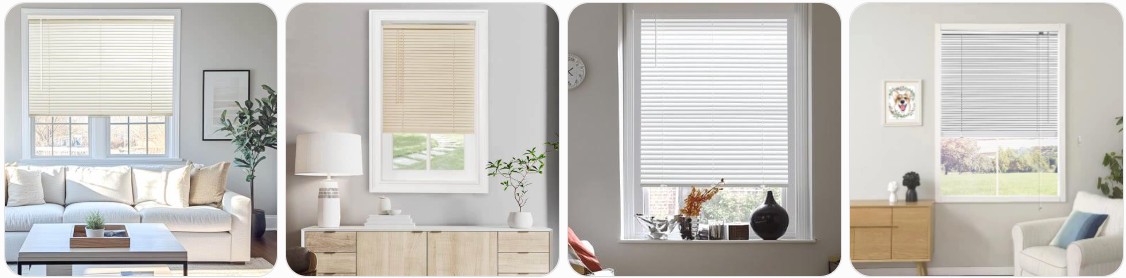
Mini blinds are one of the most affordable, practical, and easy-to-find window coverings for homes, rentals, offices, kitchens, bathrooms, bedrooms, and small windows. This guide explains what mini blinds are, how they work, where to buy them, how much they cost, what to check before ordering, and whether DIY or professional installation makes more sense.
Mini Blinds At a Glance
- Best for: Bedrooms, kitchens, bathrooms, apartments, rental homes, offices, small windows, narrow windows, and budget window covering projects.
- Typical slat size: Most mini blinds use narrow horizontal slats, commonly around 1 inch wide.
- Common materials: Vinyl, aluminum, and sometimes PVC-style synthetic materials.
- Main benefit: Mini blinds are usually affordable, lightweight, easy to install, and easy to find in standard window sizes.
- Main downside: Thin slats can bend, crease, or collect dust more easily than heavier faux wood or wood blinds.
- Light control: Good for adjustable light filtering, glare reduction, and daytime privacy, but not always ideal for complete blackout.
- Privacy level: Good when the slats are fully closed, although small light gaps may still appear between slats.
- Installation difficulty: Usually beginner-friendly if you have basic tools, accurate measurements, and the correct mounting brackets.
- Typical cost: Budget mini blinds can start around $10 to $25 per window, while better cordless or custom-sized mini blinds may cost $30 to $100+ per window.
- Best buying tip: Measure carefully before ordering because mini blinds are very size-sensitive, especially for inside-mount installation.
What Are Mini Blinds? How Mini Blinds Work?
What Are Mini Blinds?
Mini blinds are horizontal slat blinds made with narrow, lightweight slats. They are closely related to Mini Blinds and other slatted blind styles, but mini blinds are usually thinner, lighter, and more budget-friendly than larger faux wood or traditional Venetian-style blinds. Most mini blinds are made from vinyl or aluminum, which makes them practical for everyday rooms where you want simple privacy and light control without spending too much.
Mini blinds are popular because they fit many common window sizes and are widely available as ready-made products. You can use them in bedrooms, kitchens, bathrooms, laundry rooms, home offices, dorm rooms, rental properties, workshops, and basic living spaces. They are especially useful when you need a clean window covering that is affordable, easy to replace, and not overly decorative.
A typical mini blind has a headrail at the top, a bottom rail at the bottom, horizontal slats in between, ladder strings or tapes that hold the slats in position, and a control system that allows the blind to tilt, raise, and lower. Many older mini blinds use cords and a tilt wand, while newer versions often use cordless lift systems for a cleaner appearance and improved child safety.
Mini blinds are not the most luxurious window covering, but they are one of the most practical. If your main priorities are price, privacy, basic light control, and easy availability, mini blinds are often one of the first options worth considering.
How Mini Blinds Work?
Mini blinds work by using a set of horizontal slats that tilt open and closed. When the slats are tilted open, light enters the room through the gaps. When the slats are tilted closed, the blind blocks more light and gives more privacy. This makes mini blinds useful in rooms where you want to adjust sunlight during the day instead of simply raising or lowering the entire blind.
Most mini blinds have two main movements. The first is the tilt function. This may be controlled by a wand, a cord, or an internal cordless mechanism depending on the model. Turning the wand or operating the tilt control rotates the slats upward or downward. This lets you reduce glare, block direct sun, or angle the slats for privacy while still allowing some daylight into the room.
The second movement is the lift function. This raises or lowers the entire blind. Corded mini blinds use pull cords to lift the blind and lock it at different heights. Cordless mini blinds usually lift by gently pushing the bottom rail up or pulling it down. Cordless systems are now very common because they look neater and reduce exposed cord hazards.
Mini blinds can be installed as an inside mount or outside mount. Inside mount blinds sit within the window frame for a neat built-in look. Outside mount blinds are installed above or around the window opening and can provide better coverage if the window frame is shallow, uneven, or not suitable for inside mounting.
Because mini blinds are lightweight, they are usually easier to handle than heavier wood or faux wood blinds. However, that lightweight design also means the slats can bend if pulled roughly, cleaned too aggressively, or hit by pets and children.
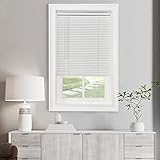
Cordless Light Filtering Mini Blinds for Indoor, 34 x 64 in, Pearl White
Cordless Light Filtering Mini Blind, 27 x 64 in, Pearl White
Cordless Light Filtering Mini Blind, 28 x 48 in, Pearl White
Mini Blinds Pros and Cons
Pros of Mini Blinds
- Affordable: Mini blinds are usually one of the lowest-cost window blind options.
- Easy to find: They are widely available online, in home improvement stores, and in many standard sizes.
- Good for rentals: They are practical for apartments, rental properties, dorm rooms, and temporary living spaces.
- Simple light control: Tilting the slats lets you manage sunlight, glare, and privacy throughout the day.
- Lightweight: Mini blinds are easy to lift, handle, install, and replace.
- Many size options: You can find narrow, short, wide, and tall options for many common windows.
- Moisture-friendly options: Vinyl and aluminum mini blinds can work well in kitchens, bathrooms, and laundry areas.
- Easy DIY installation: Most ready-made mini blinds include basic mounting brackets and screws.
- Clean, simple appearance: They suit basic interiors without drawing too much attention.
- Replaceable: If one blind gets damaged, replacing it is usually inexpensive compared with custom window treatments.
Cons of Mini Blinds
- Can bend easily: Thin slats may crease or bend if handled roughly.
- Not the most premium look: Mini blinds can look basic compared with faux wood, Roman, cellular, or custom blinds.
- Dust collects on slats: The many narrow slats can require regular dusting.
- Light gaps are common: Mini blinds reduce light, but most do not fully blackout a room.
- Cheaper versions may feel flimsy: Low-cost vinyl mini blinds can feel less durable over time.
- Corded models may be less safe: Older corded mini blinds are not ideal around young children or pets.
- Can be noisy: Lightweight aluminum or vinyl slats may rattle when windows are open or when air moves through the room.
- Limited insulation: Mini blinds do not insulate as well as cellular or honeycomb blinds.
- May not suit large windows: Very wide mini blinds can sag, feel awkward, or be harder to lift evenly.
Mini Blinds Cost: What Price Should You Expect?
Mini blinds are usually one of the most budget-friendly window blind styles. For a basic ready-made vinyl or aluminum mini blind, you can often expect to pay around $10 to $25 per window for small or standard sizes. Cordless mini blinds usually cost more, often around $20 to $60 per window depending on size, color, material, brand, and light-filtering level.
Larger mini blinds, custom-width mini blinds, specialty colors, thicker slats, room-darkening versions, and higher-quality cordless systems can cost around $50 to $100+ per window. If you need professional measuring and installation, the total cost can increase by another $50 to $150+ per window depending on your area, the installer, and the number of blinds being fitted.
For a whole room, a basic mini blind project may cost around $40 to $150 if you are covering two to four standard windows yourself. A larger whole-home project using cordless mini blinds may cost several hundred dollars, especially if you have many windows or need custom sizes.
The biggest cost factors are size, material, lift system, mounting type, brand, and whether you install them yourself. If you are comparing multiple windows, it is helpful to use a blind cost estimator before ordering so you can budget for the blinds, possible upgrades, and installation.
Here is a general mini blind price guide:
- Basic vinyl mini blinds: Around $10 to $30 per window.
- Basic aluminum mini blinds: Around $15 to $40 per window.
- Cordless mini blinds: Around $20 to $70 per window.
- Room-darkening mini blinds: Around $25 to $80 per window.
- Custom-size mini blinds: Around $50 to $150+ per window.
- Professional installation: Often around $50 to $150+ per window or a project-based minimum charge.
Where to Buy Mini Blinds Online
Amazon is one of the easiest places to shop for mini blinds because you can quickly compare sizes, colors, cordless options, vinyl mini blinds, aluminum mini blinds, room-darkening mini blinds, and budget multi-window options. It is especially useful if you need standard sizes fast or want to compare many customer reviews before buying.
When shopping for mini blinds on Amazon, pay close attention to the exact width and length. Many mini blinds are listed by nominal width, actual width, or inside-mount width. Read the product description carefully so you know whether the blind will arrive slightly narrower than the listed size. This is common for inside-mount blinds because the manufacturer may deduct a small amount for clearance.
Amazon is also a good place to find related items such as cordless mini blinds, aluminum mini blinds, vinyl mini blinds, replacement brackets, hold-down brackets, blind cleaners, and installation tools. If you are replacing old mini blinds, try to match the old width, drop, mounting type, and headrail style as closely as possible.
Find Mini Blinds from Amazon »
Cordless Light Filtering Mini Blinds for Indoor, 34 x 64 in, Pearl White
Cordless Light Filtering Mini Blind, 27 x 64 in, Pearl White
Cordless Light Filtering Mini Blind, 28 x 48 in, Pearl White
eBay can be useful for finding mini blinds, especially if you are looking for discounted stock, bulk lots, discontinued sizes, older replacement blinds, or specific brands that may no longer be available in local stores. You may also find open-box mini blinds, new old stock, and sellers offering multiple blinds in the same size.
When buying mini blinds from eBay, check the condition carefully. Look for listings marked new, unused, open box, or used. If the blind is used, ask whether the slats are bent, whether all brackets are included, whether the tilt mechanism works, and whether the lift system works smoothly. For mini blinds, missing brackets or damaged slats can make a cheap listing less useful.
Also check shipping costs. Mini blinds can be long and awkward to ship, so a low item price may not always be the best deal after delivery fees. For standard sizes, compare the eBay total price against Amazon or a home improvement store before buying.
- The Home Depot – A good option for standard mini blinds, cordless mini blinds, in-store pickup, and home installation services.
- Lowe’s – Useful for comparing ready-made mini blinds, custom ordering options, and basic installation supplies.
- Walmart – Often has budget-friendly vinyl mini blinds for rentals, dorms, apartments, and quick replacements.
- Blinds.com – Better if you want custom sizes, more finish choices, and made-to-measure mini blind options.
How to Find Mini Blinds Stores Near You
Finding mini blinds near you is usually easy because they are one of the most common window covering types sold in home improvement stores, hardware stores, department stores, and local blind shops. Start by checking large home improvement retailers in your area, especially if you need a standard-size mini blind quickly. Stores like these often carry common widths and lengths in white, off-white, gray, and sometimes aluminum finishes.
If you need a custom size, a local blinds store may be a better choice. Local blind shops can measure your windows, recommend inside or outside mounting, order exact sizes, and sometimes install the blinds for you. This is useful if your windows are not standard sizes, your frames are shallow, or you are buying blinds for multiple rooms.
You can also use online maps to search for terms like “mini blinds near me,” “window blinds store near me,” “custom blinds near me,” “blind installation near me,” or “window treatment store near me.” Before visiting, call ahead and ask if they stock mini blinds specifically. Some stores focus more on roller shades, curtains, shutters, or custom blinds and may not carry basic mini blinds in-store.
For a broader guide to finding local blind sellers, installers, and online buying options, check this guide on where to buy window blinds. It can help you compare online stores, local shops, and home improvement retailers before deciding where to order.
When choosing a local mini blinds store, ask these questions:
- Do you carry ready-made mini blinds or only custom orders?
- Do you stock cordless mini blinds?
- Can you cut mini blinds to width in-store?
- Do you offer measuring services?
- Do you install mini blinds?
- Are mounting brackets and screws included?
- What is the return policy if the blind does not fit?
- Do you carry replacement parts for mini blinds?
What to Check Before Buying Mini Blinds
- Window width: Measure the window width carefully at the top, middle, and bottom. Use the narrowest measurement for inside mounts.
- Window height: Measure the drop from the top of the frame to the sill or to the point where you want the blind to end.
- Inside vs outside mount: Decide whether the blind will sit inside the frame or cover the outside of the window opening.
- Frame depth: Check that your window frame is deep enough for an inside mount headrail.
- Actual blind width: Read the product details to see whether the blind is sold by actual size or nominal size.
- Slat material: Choose vinyl for budget use, aluminum for a slightly cleaner and more durable feel, or room-darkening options if you want better light reduction.
- Lift type: Consider cordless mini blinds if you want a cleaner look and fewer exposed cords.
- Tilt control: Check whether the blind uses a wand, cord tilt, or cordless tilt system.
- Room use: Use moisture-resistant materials in bathrooms, kitchens, laundry rooms, and humid spaces.
- Color: White and neutral colors are easiest to match, but darker mini blinds may show dust more clearly.
- Privacy needs: For street-facing rooms, choose blinds that close tightly and overlap the window opening properly.
- Light control: Mini blinds are good for adjustable light, but they are usually not the best choice for complete blackout.
- Pet and child safety: Avoid exposed cords around young children and pets whenever possible.
- Included hardware: Make sure brackets, screws, valance clips, hold-down brackets, and instructions are included if you need them.
- Return policy: Confirm the return policy before ordering, especially for custom-size mini blinds.
- Cleaning needs: Remember that mini blinds have many narrow slats, so they may need regular dusting.
- Replacement match: If replacing old blinds, match the old width, length, mount style, color, and headrail as closely as possible.
Mini Blinds Installation Options: DIY vs Professional Fitting

Cutelec 2pcs Box Mounting Bracket for Low Profile Horizontal Blinds with 1-3/4" x 2 1/2" Headrail - White Color

Jetec 6 Pieces Mini Blind Brackets for Window Blinds,1.18x1.18 Inch
Mini blinds are usually one of the easier blind types to install yourself. Most ready-made mini blinds come with a headrail, brackets, screws, and basic instructions. If you are comfortable using a tape measure, pencil, screwdriver, drill, and level, you can usually install a standard mini blind without hiring a professional.
For DIY installation, the most important step is measuring correctly. A mini blind that is too wide may not fit inside the frame, while a blind that is too narrow may leave large side gaps. For outside mounts, you need enough overlap on both sides of the window to improve privacy and light coverage.
Inside-mount installation usually looks cleaner because the blind sits inside the window frame. This is a good choice when your frame is deep enough and the window is square. Outside-mount installation is better when the frame is shallow, uneven, damaged, or when you want the blind to cover more of the wall around the window.
Professional fitting may be worth it if you are installing many mini blinds, working with awkward windows, replacing blinds in a rental property, or buying custom-size blinds. A professional installer can measure accurately, choose the correct mounting position, install the brackets securely, and make sure the blinds lift and tilt correctly.
DIY installation is best when:
- You are installing one or two standard-size mini blinds.
- Your windows are easy to reach.
- You already have basic tools.
- You are comfortable measuring and drilling.
- You want to save money on labor.
Professional installation is better when:
- You are fitting mini blinds throughout a whole home or office.
- Your windows are unusually shaped, very wide, or hard to reach.
- You need a precise custom fit.
- You are not comfortable drilling into frames, walls, or tile.
- You want the installer to handle measuring, ordering, and fitting.
A basic DIY mini blind installation usually takes around 15 to 30 minutes per window once you understand the process. Professional installation can be faster for multi-window projects because installers already have the tools, experience, and measuring method.
FAQ About Mini Blinds
Are mini blinds the same as Venetian blinds?
Mini blinds are a type of horizontal slat blind, similar to Venetian blinds, but they usually have narrower slats. Many mini blinds use 1-inch slats, while standard Venetian blinds may have wider slats and may come in heavier materials like wood or faux wood.
Are mini blinds good for bedrooms?
Mini blinds can work well in bedrooms if you want affordable privacy and adjustable light control. However, they may not fully darken the room because small light gaps can appear between the slats and around the sides.
Are mini blinds good for bathrooms?
Vinyl and aluminum mini blinds can be good for bathrooms because they handle moisture better than fabric or real wood. Make sure the blind is suitable for humid rooms and clean it regularly to prevent dust and moisture buildup.
Do mini blinds block light completely?
Most mini blinds reduce light but do not block it completely. Even when closed, light can pass through small gaps between the slats, along the sides, and near the headrail. For full darkness, blackout roller shades or blackout cellular shades are usually better.
Are cordless mini blinds worth it?
Yes, cordless mini blinds are often worth it because they look cleaner, are easier to operate, and remove exposed lift cords. They are especially useful in homes with children or pets.
Can mini blinds be cut to size?
Some mini blinds can be cut to width by certain retailers or with the right tools, but not all models are designed for trimming. Always check the product details or ask the store before buying if you need a custom width.
How do I measure for mini blinds?
For inside mount, measure the width inside the window frame at the top, middle, and bottom, then use the narrowest measurement. For outside mount, measure the area you want to cover and add extra width on both sides for better privacy and light control.
Are vinyl or aluminum mini blinds better?
Vinyl mini blinds are usually cheaper and flexible, while aluminum mini blinds often feel slightly sturdier and cleaner. Vinyl is good for budget use, while aluminum may be better if you want a sharper look and improved slat durability.
Why do mini blind slats bend so easily?
Mini blinds use thin, lightweight slats to keep costs low and operation easy. Because the slats are narrow and light, they can bend if pulled, twisted, hit, or cleaned too roughly.
Can I install mini blinds myself?
Yes, most mini blinds are DIY-friendly. You usually need a tape measure, pencil, drill or screwdriver, level, and the included brackets. The hardest part is measuring accurately before installation.
How long do mini blinds last?
Basic mini blinds may last a few years with normal use, while better-quality cordless or aluminum mini blinds may last longer. Their lifespan depends on the material, daily use, cleaning method, sun exposure, and whether the slats are handled carefully.
Are mini blinds good for rental properties?
Mini blinds are very common in rental properties because they are affordable, easy to replace, and available in standard sizes. Cordless versions are usually a better choice for a cleaner and safer setup.
Summary
Mini blinds are a practical choice if you want affordable privacy, simple light control, and easy installation. They are especially useful for apartments, rental homes, offices, kitchens, bathrooms, laundry rooms, and standard windows where function matters more than a high-end decorative look.
The biggest advantages of mini blinds are price, availability, and convenience. You can buy them from Amazon, eBay, home improvement stores, local blind shops, and custom blind retailers. Basic mini blinds may cost as little as $10 to $30 per window, while cordless, room-darkening, aluminum, or custom-size versions can cost much more.
Before buying, measure carefully, choose the right mount type, check the actual product size, and decide whether corded or cordless operation is better for your room. If you want a budget-friendly window covering that is easy to replace and simple to use, mini blinds are still one of the most reliable options.

60 PCS Vertical Blind Repair Tabs Kit Clear Fixer Verticle Blinds Snap in Replacement Slats Parts Panels

Vertical Blind Repair Vane Savers, 16PCS Metal Vertical Blind Repair Tabs, Vertical Blinds Repair Kit for Vertical Blinds Replacement Slats
