
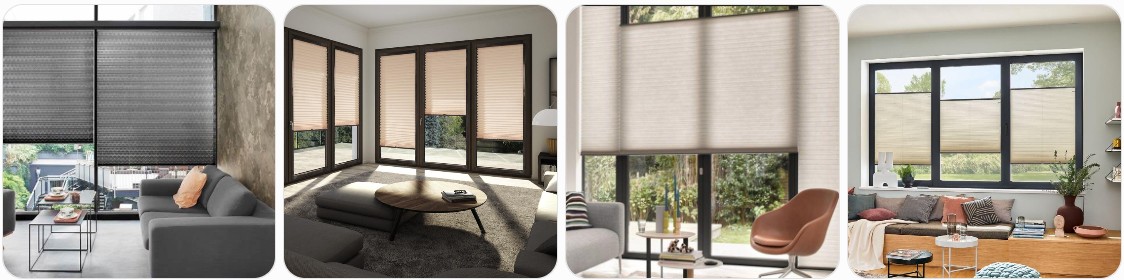
Pleated blinds are a neat, soft-looking window covering choice for homeowners who want filtered light, compact stacking, and a cleaner fabric look than many heavy curtains or slatted blinds. This guide explains what pleated blinds are, how they work, what they cost, where to buy them online, how to find local stores, and what to check before ordering.
- Table of Contents:
- Pleated Blinds At a Glance
- What Are Pleated Blinds? How Pleated Blinds Work?
- Pleated Blinds Pros and Cons
- Pleated Blinds Cost
- Where to Buy Pleated Blinds Online
- How to Find Pleated Blinds Stores Near You
- What to Check Before Buying Pleated Blinds
- Pleated Blinds Installation Options
- FAQ About Pleated Blinds
Pleated Blinds At a Glance
- Best for: Bedrooms, living rooms, home offices, conservatories, small windows, narrow recesses, tilt-and-turn windows, and rooms where you want soft filtered light.
- Main look: A single sheet of fabric folded into crisp accordion-style pleats that stack neatly when raised.
- Light control: Usually light-filtering, dim-out, privacy, or blackout depending on the fabric you choose.
- Privacy level: Good daytime privacy with light-filtering fabrics, stronger privacy with dim-out or blackout fabrics.
- Insulation: Better than very thin roller blinds, but usually not as insulating as cellular or honeycomb blinds unless the fabric is specially designed.
- Common controls: Corded, cordless, tensioned, top-down bottom-up, no-drill, clip-fit, and motorized systems.
- Typical price range: About $20 to $80 per ready-made blind, $60 to $250+ per custom pleated blind, and more for specialty shapes, premium fabrics, or motorized options.
- Biggest advantage: Clean folded fabric appearance with compact stacking and softer light than many slatted blinds.
- Biggest drawback: Pleats can collect dust, cheaper fabric can crease poorly over time, and low-quality cord systems may become uneven.
- Best buying tip: Measure carefully, choose the right fabric opacity, and check whether the blind is made for inside mount, outside mount, no-drill fitting, skylight fitting, or conservatory use.
What Are Pleated Blinds? How Pleated Blinds Work?
What Are Pleated Blinds?
Pleated blinds are fabric window blinds made from a single piece of folded material. The fabric is pressed into sharp, repeated pleats so it opens and closes like an accordion. When the blind is raised, the folds compress into a compact stack near the top of the window. When lowered, the fabric stretches down to cover the glass while keeping its folded texture visible.
A Pleated Blind is usually chosen when you want a softer look than Venetian blinds, a more decorative finish than plain roller blinds, and a slimmer stack than many Roman blinds. They are especially popular for smaller rooms, conservatories, patio doors with framed glass, skylights, and modern windows where bulky coverings may look too heavy.
Pleated blinds are available in several fabric types. Light-filtering pleated blinds soften sunlight and reduce glare while keeping the room bright. Dim-out pleated blinds block more light and improve privacy. Blackout pleated blinds are designed for bedrooms, nurseries, and media rooms where stronger light blocking is needed. Some pleated blinds also come with reflective backing to help reduce heat gain in sunny rooms.
It is also important to understand the difference between pleated blinds and cellular blinds. Pleated blinds usually use a single folded layer of fabric. Cellular blinds, also called honeycomb blinds, use a pocketed honeycomb structure that traps air and improves insulation. Pleated blinds are often slimmer and simpler, while cellular blinds are usually better for energy efficiency.
How Pleated Blinds Work?
Pleated blinds work by raising, lowering, and compressing folded fabric along guide cords, rails, or tension lines. Most standard pleated blinds have a headrail at the top, a bottom rail at the base, and cords running through small holes in the fabric. When you pull the cord or lift the bottom rail, the fabric folds upward. When you lower it, the fabric extends while the pleats keep their shape.
Corded pleated blinds use a pull cord or cord lock to hold the blind at the chosen height. Cordless pleated blinds are operated by gently lifting or lowering the bottom rail by hand. Tensioned pleated blinds use side cords or wire guides to keep the fabric close to the window, which is helpful on doors, roof windows, conservatories, and tilt-and-turn windows.
Some pleated blinds also come in top-down bottom-up designs. These allow you to lower the blind from the top, raise it from the bottom, or position it somewhere in the middle of the window. This is useful when you want privacy at eye level but still want daylight coming through the upper part of the glass.
Motorized pleated blinds use a small motor inside the rail and may be controlled by a remote, wall switch, app, or smart-home system. They are usually more expensive, but they are useful for high windows, skylights, large conservatories, or rooms where you want scheduled opening and closing.
If you are shopping online, compare fabric opacity, exact width, drop length, mounting method, control type, and whether the blind includes brackets, screws, side guides, handles, or no-drill fittings. For basic replacement or budget-friendly shopping, you can browse pleated blinds on Amazon to compare common ready-made styles, sizes, and fabric options.

Window Blinds Cordless No Drill Cut to Size Clip On Stick On Self Adhesive Temporary Blinds Pleated Paper Blinds for Windows Doors Shades for Home Nursery Bedroom Kitchen Bathroom

DEZ FURNISHINGS Cordless 1" Light Filtering Pleated Shade, Fabric, 36"W x 64"H, White

BlindsAvenue Cordless Cellular Shade, White, 35" W x 48" H
Pleated Blinds Pros and Cons
Pros of Pleated Blinds
- Neat folded look: Pleated fabric gives the window a clean, decorative finish without looking too bulky.
- Compact stack: The fabric folds tightly when raised, so it does not take up much space at the top of the window.
- Soft light filtering: Light-filtering fabrics reduce harsh glare while keeping the room bright and comfortable.
- Good for narrow windows: Pleated blinds work well on small windows, slim recesses, conservatory panels, and specialty glass areas.
- Many fitting styles: You can find standard, no-drill, clip-fit, tensioned, skylight, conservatory, and top-down bottom-up options.
- Lightweight design: Most pleated blinds are not heavy, making them easier to fit than some wood, faux wood, or heavy fabric blinds.
- Good privacy options: Dim-out and blackout fabrics can provide strong privacy for bedrooms and street-facing rooms.
- Modern appearance: They suit minimalist, contemporary, Scandinavian, and soft neutral interiors.
- Useful on doors: Tensioned or perfect-fit pleated blinds can stay close to the glass on glazed doors.
- Available in many colors: White, cream, grey, beige, charcoal, and patterned fabrics are commonly available.
Cons of Pleated Blinds
- Not always the best insulation: Standard single-layer pleated blinds usually insulate less than cellular or honeycomb blinds.
- Pleats can collect dust: The folded fabric can hold dust along the ridges and may need regular cleaning.
- Cheaper fabrics may sag: Low-quality fabric can lose crispness, stretch unevenly, or look tired over time.
- Not ideal for very wet rooms: Some fabric pleated blinds are not suitable for damp bathrooms unless specified as moisture-resistant.
- Limited tilt control: Unlike Venetian blinds, pleated blinds do not have adjustable slats for precise angle control.
- Can be harder to deep clean: Fabric stains are usually more difficult to clean than marks on vinyl or aluminum blinds.
- Control cords can wear: Corded versions may become uneven, jammed, or frayed if used heavily.
- Custom sizes cost more: Made-to-measure pleated blinds can be much more expensive than ready-made options.
- Blackout depends on fit: Even blackout pleated fabric may allow side light gaps if the blind is not fitted correctly.
Pleated Blinds Cost: What Price Should You Expect?
Pleated blinds can be affordable or expensive depending on size, fabric quality, mounting system, control type, and whether you choose ready-made or custom-made blinds. Basic ready-made pleated blinds for small or standard windows may cost around $20 to $80 each. Mid-range pleated blinds with better fabric, cordless operation, or improved privacy fabric often cost around $50 to $150 per blind. Custom pleated blinds usually cost around $60 to $250+ per window, with larger sizes, blackout fabrics, top-down bottom-up controls, specialty fittings, and premium brands increasing the total.
For larger windows, conservatories, skylights, or unusual shapes, the price can climb quickly because the blind may need stronger rails, side tension, exact sizing, specialist brackets, or professional measuring. Motorized pleated blinds are usually the most expensive option and may cost $150 to $500+ per blind depending on size, motor type, power source, and control system.
If you are budgeting for several rooms, it helps to separate the cost into four parts: the blind itself, shipping, measuring, and installation. DIY installation can save money, but professional fitting may be worth it for large windows, multiple blinds, roof windows, or made-to-measure orders where a measuring mistake can be expensive. You can also use a blind cost estimator to compare possible pricing by size, quantity, blind type, and installation option before ordering.
As a rough guide, expect these common price ranges:
- Budget ready-made pleated blinds: $20 to $60 per blind.
- Better ready-made pleated blinds: $50 to $120 per blind.
- Custom pleated blinds: $60 to $250+ per blind.
- Top-down bottom-up pleated blinds: $80 to $250+ per blind.
- Blackout pleated blinds: $50 to $200+ per blind depending on size and fit.
- Skylight or conservatory pleated blinds: $80 to $300+ per blind.
- Motorized pleated blinds: $150 to $500+ per blind.
- Professional installation: Often $40 to $150+ per window depending on location, complexity, and installer minimum charges.
Where to Buy Pleated Blinds Online
Amazon is a convenient place to start if you want ready-made pleated blinds, temporary pleated shades, light-filtering options, blackout pleated shades, or budget-friendly no-drill styles. The main advantage is that you can compare several sizes, colors, control types, reviews, and delivery options in one place. This is useful if your window fits a common size and you do not need a made-to-measure product.
When buying pleated blinds from Amazon, check the actual product title and size chart carefully. Many listings use similar wording, but some are temporary paper pleated shades, some are fabric pleated blinds, and some are cellular shades that look similar but are built differently. Also check whether the blind is cordless, corded, adhesive, clip-on, inside mount, outside mount, blackout, or light-filtering before ordering.
Amazon can be a good choice for renters, quick privacy fixes, guest rooms, dorm rooms, small bedrooms, and budget projects. For long-term main-room use, pay extra attention to review photos, mounting hardware, fabric thickness, return policy, and whether the blind can be trimmed or adjusted.
Find Pleated Blinds from Amazon »
Window Blinds Cordless No Drill Cut to Size Clip On Stick On Self Adhesive Temporary Blinds Pleated Paper Blinds for Windows Doors Shades for Home Nursery Bedroom Kitchen Bathroom
DEZ FURNISHINGS Cordless 1" Light Filtering Pleated Shade, Fabric, 36"W x 64"H, White
BlindsAvenue Cordless Cellular Shade, White, 35" W x 48" H
eBay is useful if you want discounted pleated blinds, discontinued colors, replacement pleated blind parts, specialty fittings, or custom sellers offering made-to-measure options. You may also find deals on new open-box blinds, spare brackets, tension cords, handles, and conservatory blind components. Because eBay listings vary widely, always check seller ratings, item condition, return policy, delivery cost, and exact measurements.
When buying pleated blinds on eBay, avoid guessing based only on the photo. Measure your window first, then compare width, drop, rail style, bracket type, control side, and fabric type. If the listing is used or open-box, ask whether all brackets, screws, end caps, handles, side guides, and installation instructions are included. This matters because missing hardware can make a cheap blind less useful.
Find Pleated Blinds from eBay »
- Blinds.com – Good for custom pleated shades, made-to-measure options, fabric choices, and more detailed ordering support.
- SelectBlinds – Useful for comparing custom light-filtering, blackout, cordless, and specialty blind options.
- Blindsgalore – Good for shoppers who want custom window treatments, swatches, and a wider range of fabric choices.
- The Home Depot – Useful for ready-made blinds, measuring help, installation services, and local pickup options in some areas.
How to Find Pleated Blinds Stores Near You
To find pleated blinds stores near you, start by searching for local window treatment shops, blind showrooms, home improvement stores, curtain and blind installers, and made-to-measure blind companies in your area. Search terms like “pleated blinds near me,” “custom pleated blinds near me,” “window blind store near me,” “conservatory blinds near me,” or “blind installation near me” can help you find nearby options.
Local stores are especially helpful if you want to feel the fabric, compare opacity levels, check colors in real light, or order custom sizes. Photos online can make pleated fabric look thicker, lighter, darker, or more textured than it really is. A showroom lets you compare light-filtering, dim-out, blackout, reflective, and moisture-resistant materials before buying.
You can also use this guide to finding places that sell window blinds to compare online stores, local retailers, home improvement chains, and specialist blind suppliers. This is useful if you are not sure whether you need a budget ready-made blind, a custom pleated blind, or a professional measuring and fitting service.
Before visiting a local store, measure your window width and height, take photos of the window frame, note whether you want inside mount or outside mount, and check whether anything may block the blind, such as handles, locks, tiles, trim, or inward-opening windows. If you are buying for a conservatory, skylight, or door, bring close-up photos of the frame because the fitting system may matter more than the fabric.
When comparing local stores, ask these questions: Do they sell true pleated blinds or mainly cellular shades? Do they offer free measuring? Are samples available? Can they fit no-drill or tensioned systems? Do they offer blackout fabric? What is the warranty? Do they handle repairs or replacement parts later? These answers can help you avoid buying a blind that looks right but does not fit or operate correctly.
What to Check Before Buying Pleated Blinds
- Exact window measurements: Measure width and height in more than one place because windows are not always perfectly square.
- Inside mount or outside mount: Inside mount gives a neat built-in look, while outside mount can cover light gaps and make the window look larger.
- Recess depth: Check whether your window recess is deep enough for the headrail, brackets, and operating clearance.
- Fabric opacity: Choose light-filtering for soft daylight, dim-out for stronger privacy, or blackout for bedrooms and sleep spaces.
- Room conditions: Avoid standard fabric pleated blinds in very damp bathrooms unless the product is suitable for moisture-prone rooms.
- Control type: Compare corded, cordless, tensioned, top-down bottom-up, wand, and motorized options based on safety and convenience.
- Child and pet safety: Cordless pleated blinds are usually safer and cleaner-looking than blinds with loose operating cords.
- Mounting hardware: Check whether brackets, screws, clips, handles, side guides, and installation instructions are included.
- Window handles: Make sure handles, locks, vents, and tiles will not block the blind when it moves.
- Stack height: Check how much space the folded blind uses when raised, especially on short windows.
- Color in real lighting: Order a sample if possible because pleated fabric can look different in daylight, warm bulbs, and evening light.
- Blackout side gaps: Remember that blackout fabric does not always mean complete darkness if light leaks around the sides.
- Cleaning needs: Consider how easily the fabric will collect dust and whether it can be vacuumed or spot cleaned.
- Return policy: Ready-made blinds may be returnable, but custom pleated blinds are often non-returnable unless faulty.
- Warranty: Check coverage for cords, rails, brackets, fabric defects, motors, and installation if fitted professionally.
- Replacement parts: Look for brands or suppliers that can provide brackets, handles, cord locks, end caps, or tension parts later.
- Delivery size limits: Large blinds may have higher shipping costs or require special handling.
- DIY difficulty: Simple ready-made blinds are usually easier to install than skylight, conservatory, shaped, or motorized pleated blinds.
Pleated Blinds Installation Options: DIY vs Professional Fitting

Cutelec 2pcs Box Mounting Bracket for Low Profile Horizontal Blinds with 1-3/4" x 2 1/2" Headrail - White Color

Jetec 6 Pieces Mini Blind Brackets for Window Blinds,1.18x1.18 Inch
Pleated blinds can often be installed as a DIY project, especially if you are fitting a standard blind to a simple rectangular window. Most basic pleated blinds use brackets attached to the wall, ceiling, or inside of the window recess. Once the brackets are fitted, the headrail clips into place and the blind is tested to make sure it raises and lowers evenly.
DIY installation is usually best for standard ready-made pleated blinds, small windows, basic inside mounts, and budget projects where you are comfortable drilling, measuring, leveling, and following instructions. You will usually need a tape measure, pencil, drill, screwdriver, level, screws, wall plugs, and possibly a step ladder. Some no-drill pleated blinds use adhesive strips, clips, tension brackets, or frame-mounted systems instead of screws.
Professional fitting is a better choice when the blinds are expensive, custom-sized, very wide, unusually shaped, fitted to skylights, installed in a conservatory, or mounted on doors with special frames. A professional installer can measure accurately, check the mounting surface, choose the correct fixings, reduce light gaps, and prevent common problems like crooked rails, uneven tension, and rubbing fabric.
For renters, no-drill pleated blinds may be the easiest option because they can provide privacy without making holes in the wall or frame. However, no-drill systems still need the right surface and correct measurements. Adhesive styles may not work well on dusty, textured, damp, or uneven surfaces, while clip-fit systems usually require compatible window frames.
Here is a simple comparison:
- DIY installation is best if: The window is standard, the blind is ready-made, the surface is easy to drill, and you are confident with basic tools.
- Professional fitting is best if: The blind is custom, expensive, motorized, fitted to a roof window, or installed across multiple windows.
- No-drill fitting is best if: You rent, want a temporary solution, or do not want to damage the window frame or wall.
- Tensioned fitting is best if: The blind is on a door, skylight, conservatory panel, or tilt-and-turn window where the fabric needs to stay close to the glass.
After installation, test the blind several times. Raise it fully, lower it fully, stop it halfway, and check whether the fabric stacks evenly. If the bottom rail tilts, the cords feel tight, or the fabric rubs against the frame, adjust the brackets or tension before using the blind daily.
FAQ About Pleated Blinds
Are pleated blinds the same as cellular blinds?
No. Pleated blinds usually use one folded layer of fabric, while cellular blinds use honeycomb-shaped pockets that trap air. Cellular blinds are usually better for insulation, while pleated blinds are often slimmer and simpler.
Are pleated blinds good for bedrooms?
Yes, pleated blinds can work well in bedrooms if you choose dim-out or blackout fabric. For better darkness, consider outside mount fitting or side channels to reduce light gaps around the edges.
Do pleated blinds block light completely?
Only blackout pleated blinds are designed to block strong light, and even then, some light may leak around the sides if the blind is not fitted closely. Light-filtering pleated blinds soften light but do not make the room dark.
Are pleated blinds good for privacy?
Yes, pleated blinds can provide good privacy, especially with dim-out or blackout fabrics. Light-filtering fabrics usually give daytime privacy but may show shadows at night when indoor lights are on.
Can pleated blinds be cordless?
Yes. Many pleated blinds are available in cordless designs. Cordless pleated blinds are cleaner-looking and are usually safer for homes with children or pets.
Can pleated blinds be fitted without drilling?
Yes. Some pleated blinds use no-drill clips, adhesive strips, tension brackets, or frame-mounted systems. Always check that the no-drill system is compatible with your window frame before buying.
Are pleated blinds suitable for bathrooms?
They can be used in bathrooms only if the fabric and hardware are suitable for moisture. Standard fabric pleated blinds may absorb dampness, stain, or lose shape in very humid rooms.
Are pleated blinds easy to clean?
They are fairly easy to dust with a soft brush, microfiber duster, or vacuum brush attachment. Stains can be harder to remove because pleated blinds are fabric, so avoid harsh scrubbing or soaking unless the manufacturer allows it.
Do pleated blinds help with heat?
They can reduce glare and soften sunlight, and reflective-backed fabrics may help reduce heat gain. However, standard pleated blinds are usually less insulating than cellular or honeycomb blinds.
Can pleated blinds be used on skylights?
Yes, but skylight pleated blinds usually need side tracks, tension cords, or a special roof-window frame system so the fabric stays in place instead of hanging away from the glass.
Can pleated blinds be cut to size?
Some ready-made pleated blinds can be trimmed, but many cannot. Always check the product instructions before cutting because trimming the rail or fabric incorrectly can ruin the blind.
Why are my pleated blinds hanging unevenly?
Uneven hanging is often caused by cord tension problems, a crooked bracket, worn cord, damaged rail, or fabric that is not stacking evenly. Check the brackets first, then inspect the cords and tension system.
Are pleated blinds better than roller blinds?
They are better if you want a folded fabric look, compact stacking, or a softer decorative finish. Roller blinds may be better if you want a simpler flat fabric panel, easier cleaning, or a more basic budget option.
Are pleated blinds expensive?
Basic ready-made pleated blinds can be affordable, often starting around $20 to $80. Custom, blackout, top-down bottom-up, skylight, conservatory, and motorized pleated blinds cost more.
How long do pleated blinds last?
Good pleated blinds can last several years with careful use. Lifespan depends on fabric quality, cord system, sun exposure, humidity, cleaning habits, and how often the blind is operated.
Summary
Pleated blinds are a smart choice if you want a slim, folded fabric blind that softens daylight, stacks neatly, and works well on many window types. They are especially useful for bedrooms, living rooms, offices, conservatories, doors, and smaller windows where bulky coverings may look too heavy. Basic ready-made pleated blinds can be budget-friendly, while custom, blackout, top-down bottom-up, skylight, and motorized versions cost more.
Before buying pleated blinds, measure carefully, choose the right fabric opacity, check the mounting style, and decide whether DIY or professional installation makes more sense. If you want a quick and affordable option, Amazon and eBay are useful places to compare ready-made pleated blinds. If you need a perfect fit, unusual size, specialty frame system, or premium fabric, a custom blind supplier or local window treatment store is usually the better choice.

60 PCS Vertical Blind Repair Tabs Kit Clear Fixer Verticle Blinds Snap in Replacement Slats Parts Panels

Vertical Blind Repair Vane Savers, 16PCS Metal Vertical Blind Repair Tabs, Vertical Blinds Repair Kit for Vertical Blinds Replacement Slats
