
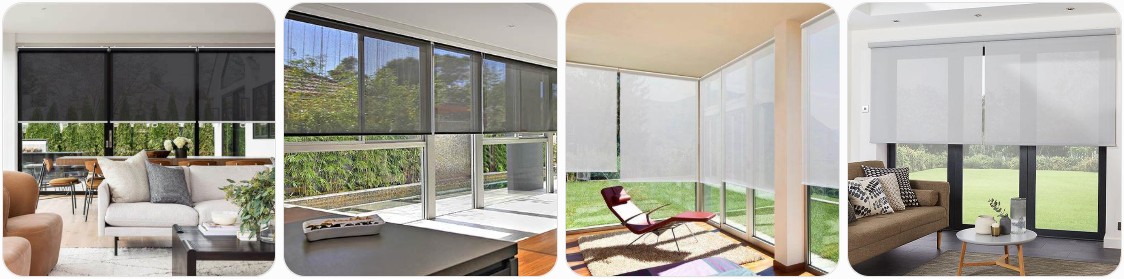
Screen blinds are a smart choice if you want to reduce glare, soften harsh sunlight, and keep a daytime view through your windows without making the room feel dark. This buying guide explains how screen blinds work, what they cost, where to buy them, and what to check before ordering online or from a local blinds store.
- Table of Contents:
- Screen Blinds At a Glance
- What Are Screen Blinds? How Screen Blinds Work?
- Screen Blinds Pros and Cons
- Screen Blinds Cost
- Where to Buy Screen Blinds Online
- How to Find Screen Blinds Stores Near You
- What to Check Before Buying Screen Blinds
- Screen Blinds Installation Options
- FAQ About Screen Blinds
Screen Blinds At a Glance
- Best for: Bright living rooms, offices, sun-facing windows, patio doors, kitchens, dining rooms, and rooms where glare is a problem.
- Main purpose: Screen blinds reduce glare, filter UV rays, cut some heat, and preserve outward visibility during the day.
- Look and style: Clean, modern, minimal, and usually similar to roller shades, but made with open-weave screen fabric.
- Privacy level: Good daytime privacy in many situations, but limited night privacy when lights are on indoors.
- Light control: Excellent for glare reduction and soft daylight, but not designed for total blackout.
- Common openness levels: 1%, 3%, 5%, and 10% openness, depending on how much view, light, and privacy you want.
- Typical operation: Chain-operated, cordless spring roller, crank-operated, motorized, or smart-home controlled.
- Indoor or outdoor use: Indoor screen blinds are common for windows, while exterior screen blinds are used for patios, porches, pergolas, and outdoor shade areas.
- Average price range: Around $30–$120 for many ready-made indoor screen blinds, $100–$400+ for custom indoor screen shades, and $250–$1,500+ for larger motorized or exterior screen blind systems.
- Best buying tip: Choose the openness factor carefully because it affects view, glare control, heat control, and privacy more than many buyers expect.
What Are Screen Blinds? How Screen Blinds Work?
What Are Screen Blinds?
Screen blinds are window coverings made from a woven mesh-style fabric instead of solid blackout fabric, wood slats, or vinyl vanes. They are also commonly called solar screen shades, solar roller shades, sunscreen blinds, or mesh roller blinds. Their main job is to filter sunlight rather than block it completely.
The key feature of screen blinds is the open-weave fabric. Tiny gaps in the fabric allow some light and visibility to pass through while reducing glare, softening bright sun, and helping protect furniture, flooring, screens, and artwork from harsh UV exposure. Because of this, screen blinds are especially useful in rooms with strong daytime sun, computer screens, televisions, or large glass windows.
If you are comparing different blind types, screen blinds are most closely related to Screen Blinds because they use a mesh-style material to filter sunlight while keeping a cleaner, more open view than many privacy or blackout blinds.
Most screen blinds look similar to roller blinds because the screen fabric rolls up around a tube at the top of the window. The difference is the fabric performance. A standard roller blind may be decorative, blackout, light-filtering, or privacy-focused, while a screen blind is specifically designed for glare reduction, heat control, and daytime visibility.
You can also find different versions depending on where you want to use them. Indoor screen blinds are usually fitted inside the window recess, outside the window frame, or across a patio door. Outdoor screen blinds are made with stronger weather-resistant materials and may include side channels, cable guides, zip tracks, weighted bottom rails, or crank/motor systems for patios and exterior openings.
For basic product comparisons, you can browse screen blinds on Amazon, solar screen shades, or outdoor screen blinds to see common styles, sizes, colors, and mounting options.
How Screen Blinds Work?
Screen blinds work by using a woven fabric with an openness factor. The openness factor tells you how open the weave is. A lower percentage means a tighter weave, more glare reduction, more daytime privacy, and less view-through. A higher percentage means a more open weave, more view, more natural light, and usually less privacy.
- 1% openness: Strong glare reduction, stronger daytime privacy, less view outside, and better sun control.
- 3% openness: A popular middle-ground option for reducing glare while keeping some outdoor visibility.
- 5% openness: Good outward view and soft light control, often used in living rooms and offices.
- 10% openness: More visibility and daylight, but less glare control and less privacy than tighter fabrics.
When the blind is lowered during the day, the mesh fabric filters direct sunlight before it fully enters the room. This helps reduce eye strain, screen glare, fading, and heat build-up. You still get a more open feeling than with blackout blinds because you can often see outside through the fabric, especially when it is brighter outside than inside.
At night, screen blinds behave differently. When the room is lit and it is darker outside, people outside may be able to see in more easily. That is why screen blinds are often paired with curtains, blackout roller blinds, privacy blinds, or dual roller systems in bedrooms, bathrooms, and street-facing rooms.
Screen blinds can be operated in several ways. A chain control is common and budget-friendly. Cordless screen blinds offer a cleaner and safer look. Crank-operated screen blinds are often used outdoors. Motorized screen blinds are useful for large windows, hard-to-reach windows, smart homes, offices, and patios where convenience matters.

AOSKY Blackout Cordless Roller Shade for Indoor Windows, 23"W x 72"H, Black | Black Out Window Shade with Spring System, Thermal Insulated UV-blocking Fabric, Room Darkening Pull Down Blind for Home Door

100% Blackout Blind Magnetic Window Cover,Cuttable Black Out Curtain 118x57 | No Drill,Portable Window Shade with Strong Magnet and Hook&Loop Tape,DIY Black Out Curtains For Bedroom,RV,Nursery,Media Room

Black Out Window Cover Portable Blacout Curtains for Bedroom Guard Blinds | Window Shades Blackout Blinds No Drill Blackout Shade Adhesive Thermal Temporary Darkening Kitchen Travel Skylight RV 40x57in
Screen Blinds Pros and Cons
Pros of Screen Blinds
- Excellent glare control: Great for rooms with TVs, laptops, monitors, and strong afternoon sun.
- Preserves outdoor view: Lets you see outside during the day better than many solid blinds.
- Modern appearance: Clean roller-style design works well in homes, apartments, offices, and commercial spaces.
- Helps reduce heat: Filters direct sunlight before it fully enters the room.
- UV protection: Helps reduce fading on furniture, flooring, rugs, and artwork.
- Good for large windows: Works well on wide windows, glass doors, sunrooms, and open-plan living areas.
- Many openness choices: You can choose tighter or more open fabric depending on your privacy and view needs.
- Available in motorized options: Useful for tall windows, multiple windows, smart homes, and patios.
- Easy to coordinate: Neutral screen fabrics blend well with many interior styles.
- Indoor and outdoor versions available: You can use screen blinds for windows, porches, pergolas, balconies, and exterior shade areas.
Cons of Screen Blinds
- Not blackout: Screen blinds reduce brightness but do not fully darken a room.
- Weak night privacy: People may see inside when indoor lights are on at night.
- Openness can be confusing: Choosing the wrong percentage can leave you with too much glare or not enough view.
- Less decorative than Roman blinds: Screen blinds are practical and modern, but not soft or fabric-rich.
- Can be costly when custom-made: Large, motorized, or exterior screen blinds can become expensive.
- Outdoor versions need stronger hardware: Exterior use may require side channels, guide wires, heavier brackets, or professional installation.
- Not ideal for bathrooms without backup privacy: Unless paired with another privacy layer, they may not be suitable for full privacy areas.
- Light gaps can appear: Inside-mount screen blinds may leave small side gaps like regular roller shades.
Screen Blinds Cost: What Price Should You Expect?
Screen blinds can be affordable or expensive depending on size, fabric openness, indoor vs outdoor use, control type, brand, and whether you choose ready-made or custom sizing. For a quick estimate before shopping, you can use a blind cost estimator to compare approximate pricing by size, blind type, quantity, upgrades, and installation.
For small to medium indoor windows, ready-made screen blinds often start around $30 to $120 per blind. These are usually basic manual roller-style screen blinds in standard sizes. They are a good option if your window size matches the available product dimensions and you do not need a premium fabric or custom fit.
Custom indoor screen blinds usually cost more, often around $100 to $400+ per window. The price rises when you choose larger widths, premium solar fabrics, cassette headrails, cordless controls, designer colors, side channels, or exact made-to-measure sizing. Custom sizing is often worth it for visible living room windows, wide windows, office spaces, and rooms where a clean fit matters.
Motorized screen blinds can range from about $200 to $800+ per blind depending on size, motor type, battery vs hardwired power, remote controls, wall switches, app controls, and smart-home compatibility. For very large glass areas, multiple motorized blinds, or commercial-grade systems, the cost can go higher.
Outdoor screen blinds usually cost more than indoor screen blinds because they need stronger fabric, weather-resistant hardware, heavier bottom rails, guide systems, and more durable controls. Basic exterior roll-up sun shades may start around $60 to $200, while custom outdoor screen blinds, zip track systems, and motorized patio screen blinds can cost around $250 to $1,500+ per opening.
- Budget indoor screen blinds: Around $30–$80 each for standard sizes.
- Mid-range indoor screen blinds: Around $80–$200 each for better fabric, cordless controls, or larger sizes.
- Custom indoor screen blinds: Around $100–$400+ each depending on size and fabric.
- Motorized screen blinds: Around $200–$800+ each depending on motor and control system.
- Outdoor screen blinds: Around $60–$1,500+ depending on whether they are basic roll-up shades or custom exterior systems.
- Professional installation: Often around $50–$150+ per blind or more for large exterior systems, depending on local labor rates and complexity.
Where to Buy Screen Blinds Online
Amazon is a convenient place to start if you want ready-made screen blinds, solar roller shades, outdoor sun shades, or basic roll-up screen shades. The main benefit is quick comparison. You can compare sizes, openness levels, colors, mounting styles, customer photos, and reviews before deciding. Amazon is especially useful for standard-size indoor windows, patios, rental-friendly solutions, and simple DIY projects.
When buying screen blinds from Amazon, pay close attention to the product title and description. Some listings use terms like solar shade, screen shade, roller shade, patio sun shade, outdoor roller shade, privacy shade, or UV blocking shade. Make sure the product is actually made with screen-style open-weave fabric if your goal is glare reduction with outward visibility. Also check whether the blind is designed for indoor use, outdoor use, or both.
Before ordering, measure the window width and height carefully, check whether the blind is inside mount or outside mount, and read how the seller calculates the final fabric width. On some roller-style blinds, the total bracket-to-bracket width is wider than the fabric width, which can create side gaps if you do not account for it.
Find Screen Blinds from Amazon »
AOSKY Blackout Cordless Roller Shade for Indoor Windows, 23"W x 72"H, Black | Black Out Window Shade with Spring System, Thermal Insulated UV-blocking Fabric, Room Darkening Pull Down Blind for Home Door
100% Blackout Blind Magnetic Window Cover,Cuttable Black Out Curtain 118x57 | No Drill,Portable Window Shade with Strong Magnet and Hook&Loop Tape,DIY Black Out Curtains For Bedroom,RV,Nursery,Media Room
Black Out Window Cover Portable Blacout Curtains for Bedroom Guard Blinds | Window Shades Blackout Blinds No Drill Blackout Shade Adhesive Thermal Temporary Darkening Kitchen Travel Skylight RV 40x57in
eBay can be useful if you are looking for discounted screen blinds, replacement screen blind parts, discontinued styles, open-box products, custom sellers, or outdoor screen shade systems. You may also find roller shade brackets, clutch mechanisms, chains, bead cords, replacement tubes, hem bars, and parts for screen blinds that are no longer sold by the original retailer.
When buying screen blinds from eBay, check the seller rating, return policy, product condition, and exact measurements. If the listing is used, open-box, or custom-made, confirm whether all mounting brackets, screws, chains, remotes, guides, and installation parts are included. For motorized screen blinds, ask whether the motor, charger, remote, and programming instructions are included before buying.
Find Screen Blinds from eBay »
- Blinds.com – Good for custom solar shades, made-to-measure screen shades, fabric openness options, color samples, and professional-style ordering.
- SelectBlinds – Useful for custom screen roller shades, cordless options, light-filtering solar fabrics, and home measuring guides.
- The Home Depot – Good for ready-made solar shades, patio sun shades, installation services, and in-store pickup options in many areas.
- Lowe’s – Useful for indoor solar shades, outdoor roller shades, replacement hardware, and local measuring or installation services.
How to Find Screen Blinds Stores Near You
Finding screen blinds locally can be a good idea if you want to see fabric samples in person, compare openness levels, check color accuracy, or ask about professional measuring and installation. Screen blind fabric can look different online than it does in your room, especially when sunlight passes through it, so seeing samples can help you avoid choosing fabric that is too dark, too transparent, or too reflective.
Start by searching for local window treatment stores, blind shops, home improvement stores, shade dealers, and custom drapery or blinds companies. You can also use this guide to finding window blinds stores to compare buying options before deciding whether to shop locally or online.
When contacting a nearby store, ask specifically for screen blinds, solar screen shades, solar roller shades, or sunscreen roller blinds. Some stores may not use the phrase “screen blinds” even though they sell the same product under another name. If you need exterior blinds, mention outdoor screen shades, patio screen blinds, exterior solar shades, or zip screen systems.
For the best local quote, provide your window width, height, mounting preference, number of windows, room type, and whether you need daytime glare control, heat reduction, privacy, or outdoor shading. Ask the store if they offer fabric samples, in-home measuring, installation, warranty coverage, motorization, and replacement parts.
- Search for “screen blinds near me,” “solar shades near me,” “solar screen shades near me,” and “outdoor screen blinds near me.”
- Visit local blind showrooms to compare 1%, 3%, 5%, and 10% openness fabrics.
- Ask whether they sell indoor, outdoor, cordless, motorized, or smart screen blinds.
- Bring window measurements, photos, and notes about sun direction before visiting.
- Ask for a written quote that separates product cost, measuring cost, installation cost, and upgrade cost.
- Check whether the store can service or repair the blind later if a chain, clutch, motor, or bracket fails.
What to Check Before Buying Screen Blinds
- Openness factor: Decide whether you want 1%, 3%, 5%, or 10% openness. Lower openness gives more glare control and privacy; higher openness gives more view and daylight.
- Daytime vs nighttime privacy: Screen blinds are usually better for daytime privacy than nighttime privacy, so consider pairing them with curtains or blackout blinds if needed.
- Indoor or outdoor rating: Do not use indoor-only screen blinds outside unless the product is designed for weather, wind, and moisture exposure.
- Exact measurement rules: Check whether the listed width is fabric width, total bracket width, or finished blind width.
- Inside mount depth: Make sure your window recess is deep enough for the roller tube, brackets, cassette, or headrail.
- Outside mount coverage: Add extra width and height if you want better side coverage and fewer light gaps.
- Fabric color: Darker screen fabrics often improve outward view, while lighter fabrics can reflect more heat and look brighter from inside.
- Control type: Choose chain, cordless, crank, motorized, or smart control based on window size, safety needs, and convenience.
- Child safety: For homes with children or pets, consider cordless or motorized screen blinds instead of exposed looped chains.
- Mounting hardware: Confirm that brackets, screws, clips, tension devices, guide wires, or side channels are included.
- Return policy: Custom screen blinds may not be returnable, so double-check measurements before ordering.
- Cleaning requirements: Screen fabric can collect dust, so check whether it can be vacuumed, wiped, or lightly cleaned with mild soap.
- Wind exposure: For outdoor use, choose guided, secured, or exterior-rated systems instead of loose indoor-style roller shades.
- Motor and power source: For motorized screen blinds, check whether the motor is battery-powered, rechargeable, solar-powered, plug-in, or hardwired.
- Warranty: Look for coverage on fabric, brackets, clutch mechanisms, motors, remotes, and exterior hardware if applicable.
Screen Blinds Installation Options: DIY vs Professional Fitting

Cutelec 2pcs Box Mounting Bracket for Low Profile Horizontal Blinds with 1-3/4" x 2 1/2" Headrail - White Color

Jetec 6 Pieces Mini Blind Brackets for Window Blinds,1.18x1.18 Inch | with Screws,Metal Replacement Parts,Easy DIY Installation
Screen blinds can be installed DIY or professionally, depending on the size of the window, the mounting surface, the control type, and whether the blind is for indoor or outdoor use. Small ready-made indoor screen blinds are usually manageable for a careful DIY installer. Large exterior screen blinds, motorized blinds, and multi-window projects are often better handled by a professional.
DIY installation is most practical when you are fitting a standard-size indoor screen blind to a regular window frame. You usually need a tape measure, pencil, level, drill, screwdriver, wall anchors if needed, and the brackets supplied with the blind. The most important step is accurate measuring. A blind that is even slightly too wide may not fit inside the recess, while a blind that is too narrow may leave large side gaps.
Professional fitting is worth considering for wide windows, tall windows, patio doors, exterior screen systems, hard-to-reach windows, motorized blinds, and homes where the mounting surface is tile, brick, concrete, metal, or uneven trim. A professional installer can also help align multiple blinds across one wall so the top rails and bottom bars look consistent.
- DIY installation is best for: Standard indoor screen blinds, simple roller systems, small and medium windows, basic outside mounts, and budget projects.
- Professional installation is best for: Large screen blinds, exterior screen blinds, motorized blinds, high windows, patio openings, commercial spaces, and multi-window installs.
- DIY advantage: Lower cost and faster installation if you are comfortable measuring and drilling.
- DIY disadvantage: Mistakes can cause crooked blinds, poor rolling, gaps, or damaged brackets.
- Professional advantage: Better fit, cleaner finish, proper anchoring, and fewer measurement mistakes.
- Professional disadvantage: Adds labor cost and may require scheduling a measuring or fitting appointment.
For indoor screen blinds, decide first between inside mount and outside mount. Inside mount gives a clean built-in look, but it needs enough recess depth and may show small light gaps. Outside mount covers more glass and trim, which can improve glare control and privacy, but it is more visible on the wall or window frame.
For outdoor screen blinds, installation is more important because wind and weather affect performance. Exterior blinds may need stronger anchors, side guides, cable guides, bottom locks, wall brackets, or roof/ceiling mounting. If the blind is motorized, wiring, charging access, weather protection, and remote programming also need to be considered.
FAQ About Screen Blinds
Are screen blinds the same as solar shades?
In many cases, yes. Screen blinds are often called solar shades, solar screen shades, sunscreen blinds, or solar roller shades. The main idea is the same: they use woven screen fabric to reduce glare and sunlight while keeping some outward view during the day.
Do screen blinds provide privacy at night?
Screen blinds usually do not provide strong privacy at night. When lights are on inside and it is dark outside, people may be able to see through the fabric from outside. For night privacy, pair screen blinds with curtains, blackout blinds, privacy shades, or a second roller blind layer.
What openness percentage is best for screen blinds?
For strong glare control and better daytime privacy, 1% or 3% openness is usually better. For a clearer outdoor view and more daylight, 5% or 10% openness may be better. A 3% or 5% screen fabric is often a practical middle-ground for many homes.
Can screen blinds block heat?
Screen blinds can help reduce heat by filtering direct sunlight before it fully enters the room. They will not insulate like cellular blinds or block heat like some exterior shade systems, but they can make sunny rooms more comfortable, especially on south-facing or west-facing windows.
Are screen blinds good for bedrooms?
Screen blinds can work in bedrooms if your main goal is daytime glare control, but they are not ideal as the only window covering if you need darkness or night privacy. For bedrooms, consider combining screen blinds with blackout curtains, blackout roller blinds, or dual roller blinds.
Are screen blinds good for offices?
Yes, screen blinds are excellent for offices because they reduce glare on computer screens while keeping the room bright. They are especially useful for workspaces with large windows, glass walls, or strong afternoon sun.
Can you see through screen blinds?
During the day, you can usually see out through screen blinds, especially with higher openness fabrics like 5% or 10%. The view is more limited with tighter fabrics like 1% or 3%. Visibility also depends on fabric color, lighting, and how bright it is outside.
What color screen blinds are best?
Darker screen fabrics usually give a clearer outward view and reduce glare well. Lighter screen fabrics can look brighter indoors and may reflect more sunlight, but they may reduce the clarity of the outside view. Neutral colors like white, beige, gray, charcoal, and black are common.
Can screen blinds be used outdoors?
Yes, but only if the product is designed for outdoor use. Outdoor screen blinds need weather-resistant fabric, stronger brackets, secure bottom rails, and sometimes guide wires or side channels. Indoor screen blinds should not be used outdoors unless the manufacturer says they are suitable for exterior use.
Are motorized screen blinds worth it?
Motorized screen blinds are worth it for large windows, tall windows, multiple blinds, patio doors, offices, and smart homes. They cost more than manual blinds, but they make daily use easier and can help you control sunlight throughout the day without adjusting each blind by hand.
How do you clean screen blinds?
Most screen blinds can be cleaned with a soft brush attachment on a vacuum, a microfiber cloth, or a light wipe with mild soap and water. Avoid harsh chemicals, scrubbing pads, and soaking the roller mechanism. Always check the manufacturer’s cleaning instructions first.
Do screen blinds stop furniture from fading?
Screen blinds can help reduce UV exposure and harsh sunlight, which may slow fading on furniture, flooring, rugs, and artwork. They do not eliminate all UV or sun damage, but they are a practical choice for rooms where fading is a concern.
Summary
Screen blinds are a practical and modern option for reducing glare, filtering sunlight, improving daytime comfort, and keeping an outward view. They are especially useful in living rooms, offices, kitchens, sunrooms, and large glass areas where brightness and heat are a problem. The most important buying decision is the openness factor because it affects privacy, view, glare control, and light levels.
For budget projects, ready-made screen blinds from Amazon, eBay, or home improvement stores may be enough. For a better fit, more fabric choices, motorization, or large windows, custom screen blinds from a specialist retailer may be worth the extra cost. If you need outdoor screen blinds or motorized systems, consider professional measuring and installation to avoid fit, safety, and durability problems.

60 PCS Vertical Blind Repair Tabs Kit Clear Fixer Verticle Blinds Snap in Replacement Slats Parts Panels

Vertical Blinds Replacement Stem and Gear Used for Headrail, Carrier Stem Vertical Blinds Curtain Accessories(12 Sets)
