
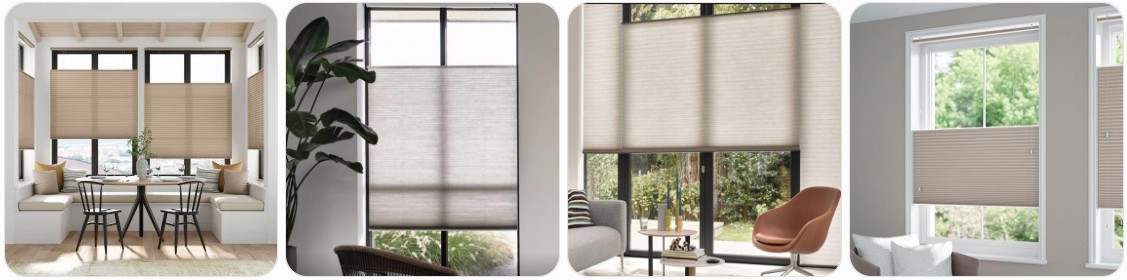
Top-down blinds are one of the best choices when you want privacy without making a room feel dark. Instead of only lifting from the bottom like standard blinds, they can lower from the top so daylight comes in above eye level while the lower part of the window stays covered. This buying guide explains how top-down blinds work, what they cost, where to buy them, and what to check before ordering.
- Table of Contents:
- Top-down Blinds At a Glance
- What Are Top-down Blinds? How Top-down Blinds Work?
- Top-down Blinds Pros and Cons
- Top-down Blinds Cost
- Where to Buy Top-down Blinds Online
- How to Find Top-down Blinds Stores Near You
- What to Check Before Buying Top-down Blinds
- Top-down Blinds Installation Options
- FAQ About Top-down Blinds
Top-down Blinds At a Glance
- Best for: Bedrooms, bathrooms, street-facing windows, apartments, living rooms, home offices, and rooms where privacy and daylight both matter.
- Main benefit: Lets natural light enter from the top of the window while keeping the lower part covered for privacy.
- Common styles: Cellular shades, honeycomb blinds, pleated shades, Roman shades, and some custom fabric blinds.
- Typical operation: The top rail lowers downward while the bottom rail can stay in place or lift upward, depending on the model.
- Most flexible option: Top-down bottom-up blinds, because they can open from the top, bottom, or both at the same time.
- Privacy level: Very good for rooms facing sidewalks, neighbours, roads, patios, and shared outdoor spaces.
- Light control: Good for soft daylight, but blackout performance depends on the fabric and side gaps.
- Price range: Usually around $35 to $250+ per window, depending on size, fabric, brand, lift system, and whether the blind is ready-made or custom.
- Installation difficulty: Moderate for DIY if the blind is correctly measured; professional installation is useful for wide windows, multiple rooms, or custom orders.
- Possible downside: More moving parts than a basic blind, so measuring, installation, and mechanism quality matter more.
What Are Top-down Blinds? How Top-down Blinds Work?
What Are Top-down Blinds?
Top-down blinds are window coverings designed to lower from the top of the window instead of only opening from the bottom. The idea is simple: you can uncover the upper part of the glass to bring in daylight while keeping the lower part covered for privacy. This makes them especially useful in bedrooms, bathrooms, ground-floor rooms, apartments, and homes close to neighbours or sidewalks.
Most people use the phrase “top-down blinds” to describe top-down shades or top-down bottom-up shades. They are most commonly found in cellular, honeycomb, pleated, and soft fabric styles. On a standard blind, the bottom rail moves upward when you open it. On a top-down blind, the top rail can move downward too, giving you more control over which part of the window is exposed.
If you are comparing blind types before buying, the closest category for this article is Top-down Blinds. This style is less about the material itself and more about the way the blind operates. A top-down feature can be combined with different materials, but it is most common on cellular shades because the fabric folds neatly and works well with two movable rails.
Top-down blinds are popular because they solve a common problem: full privacy often makes a room too dark, while open blinds can expose too much of the room. With top-down operation, you can cover the lower half of the window and still let daylight enter through the top. That is why they are often chosen for front rooms, bathrooms, nurseries, bedrooms, and offices where you want natural light without feeling exposed.
How Top-down Blinds Work?
Top-down blinds work by using a movable top rail. Instead of the top of the blind being fixed permanently at the headrail, the fabric or shade can be lowered from the top. On many models, the blind also has a separate bottom rail, so the bottom can lift upward like a normal shade. This is known as a top-down bottom-up blind.
In a basic top-down setup, you pull or push the top rail downward to open the upper part of the window. The lower section of the blind stays in place, covering the part of the glass where people could see into the room. In a top-down bottom-up setup, you can also raise the lower rail upward. This gives you several positions: fully closed, open from the top, open from the bottom, open in the middle, or fully raised.
Many modern top-down blinds are cordless. Cordless models are usually operated by gently pushing or pulling the rails by hand. Some custom versions may use continuous cord loops, side tracks, remote controls, or motorized systems. Cordless top-down cellular shades are especially popular because they look clean, reduce visible cords, and are easier to use in everyday rooms.
The fabric choice affects how the blind performs. Light-filtering top-down blinds soften daylight and keep rooms bright, while blackout top-down blinds are better for bedrooms and media rooms. Cellular top-down blinds can also help with insulation because their honeycomb pockets trap air between the room and the window. However, even blackout versions may allow a little light through side gaps or around the movable rails, so exact fit is important.
If you want to compare products while shopping, you can browse top-down blinds on Amazon, top-down bottom-up cellular shades, or cordless top-down bottom-up blinds to see the different styles, fabrics, and sizes available.

LazBlinds No Drill Cordless Cellular Shades, 34" W x 48" H, White

SUNFREE Top Down Bottom Up Cellular Shades 22" W x 36" H, White

LazBlinds No Drill Cordless Cellular Shades, 35" W x 64" H, White
Top-down Blinds Pros and Cons
Pros of Top-down Blinds
- Excellent daytime privacy: Covers the lower window area while still allowing light from above.
- Better natural light control: Helps brighten rooms without fully exposing the interior.
- Great for street-facing windows: Useful for homes near sidewalks, roads, neighbours, and shared spaces.
- Flexible positioning: Top-down bottom-up models can open from the top, bottom, or both.
- Clean modern look: Cordless cellular versions look neat and simple on the window.
- Good bedroom option: Lets morning light in while keeping the bed area more private.
- Useful for bathrooms: Allows ventilation and daylight while keeping the lower glass covered.
- Can improve comfort: Cellular versions may help reduce heat transfer and soften glare.
- Works well with curtains: Can be layered behind drapes for extra privacy, insulation, or style.
- Available in custom sizes: Many retailers offer made-to-measure options for awkward windows.
Cons of Top-down Blinds
- Usually costs more: More expensive than basic roller, mini, or standard cellular blinds.
- More moving parts: Rails, cords, tension systems, or lift mechanisms can wear over time.
- Accurate measuring matters: Poor measurements can cause gaps, rubbing, or uneven operation.
- Not always fully blackout: Light can leak around side edges, rails, or mounting gaps.
- Limited cheap ready-made options: Many better-quality versions are custom or semi-custom.
- Can be trickier to install: Wider blinds and cordless systems need careful leveling.
- Repairs may be harder: Some top-down mechanisms are brand-specific and not easy to restring.
- Not ideal for every window: Very narrow, shallow, or unusually shaped windows may need special products.
- Fabric can stain: Light-coloured cellular or pleated fabrics may show dust or marks over time.
- Cheap models may sag: Low-quality rails or weak tension can cause uneven movement.
Top-down Blinds Cost: What Price Should You Expect?
Top-down blinds usually cost more than basic blinds because the lift system is more advanced. A simple ready-made top-down cellular shade may start around $35 to $75 per window for smaller standard sizes. Mid-range cordless top-down bottom-up shades often cost around $70 to $150 per window. Custom top-down blinds can range from about $120 to $300+ per window, especially if you choose large sizes, blackout fabric, premium colours, double-cell insulation, motorization, or professional installation.
For a single average bedroom or bathroom window, a realistic budget is usually around $60 to $180 for the blind itself. For a living room, wide window, or custom-sized opening, the price can move closer to $150 to $350+. If you are covering several windows, the total can add up quickly, so measure every window first and compare ready-made sizes against custom quotes.
The biggest cost factors are width, height, fabric type, lift system, and brand. Cellular top-down blinds are usually one of the most common choices because they are lightweight and easy to operate. Blackout top-down cellular shades usually cost more than light-filtering ones. Cordless systems may also cost more than basic corded options, but many buyers prefer them for safety, appearance, and convenience.
Installation can add another $30 to $100+ per window depending on your area, the installer, and the difficulty of the job. Whole-home installation may be priced per window or as a project. Professional measuring may also cost extra, although some local blind stores include measuring when you order through them.
Before ordering, it is a good idea to estimate your total based on window size, quantity, installation, and upgrades. You can use the Blind Cost Estimator to get a rough idea of how much your blinds may cost before comparing online and local prices.
- Budget ready-made top-down blinds: Around $35 to $75 per window.
- Mid-range cordless top-down blinds: Around $70 to $150 per window.
- Custom top-down bottom-up blinds: Around $120 to $300+ per window.
- Blackout or premium cellular versions: Often around $100 to $350+ per window.
- Motorized top-down blinds: Can cost $250 to $600+ per window depending on features.
- Professional installation: Often around $30 to $100+ per window, depending on local pricing.
Where to Buy Top-down Blinds Online
Amazon is one of the easiest places to start if you want ready-made or semi-custom top-down blinds. It is especially useful for comparing cordless cellular shades, light-filtering top-down bottom-up shades, blackout cellular shades, and no-drill options. When shopping on Amazon, pay close attention to the exact measurement instructions. Some listings use width-by-height sizing, while others deduct a small amount automatically for inside mounts.
For top-down blinds, do not buy only by colour or price. Check whether the product is truly “top-down bottom-up” and not just a standard cordless shade. Look at the mount type, depth requirements, actual fabric width, return policy, and whether the shade is light-filtering or blackout. For bedrooms, nurseries, and media rooms, search specifically for blackout top-down bottom-up cellular shades. For living rooms and bathrooms, light-filtering top-down bottom-up shades may be a better fit.
Find Top-down Blinds from Amazon »
LazBlinds No Drill Cordless Cellular Shades, 34" W x 48" H, White
SUNFREE Top Down Bottom Up Cellular Shades 22" W x 36" H, White
LazBlinds No Drill Cordless Cellular Shades, 35" W x 64" H, White
eBay can be useful for discounted top-down blinds, discontinued colours, open-box products, replacement shades, and custom blind sellers. It is worth checking if you need a less common size or want to compare prices against Amazon and custom blind websites. However, read the listing carefully because some products may be used, surplus, open-box, or non-returnable if made to measure.
When buying top-down blinds on eBay, confirm the exact size, condition, colour, fabric type, mounting hardware, and whether brackets are included. For custom listings, message the seller before ordering if you are unsure about deductions, inside mount depth, or measurement rules. Also check whether the listing is for one blind, a pair, or a multi-pack.
Find Top-down Blinds from eBay »
- Blinds.com – Good for custom top-down bottom-up cellular shades, light-filtering fabrics, blackout fabrics, and made-to-measure options.
- SelectBlinds – Popular for custom cellular shades, cordless lift options, and frequent promotions on top-down bottom-up styles.
- The Home Depot – Useful for ready-made and custom order cellular shades, plus local pickup and installation services in many areas.
- Lowe’s – Offers custom and standard window shades, including cordless cellular and top-down bottom-up options from major brands.
How to Find Top-down Blinds Stores Near You
Finding top-down blinds locally is a good idea if you want to see fabric samples, compare privacy levels, or get help with measuring. Search for terms like “top-down bottom-up blinds near me,” “cellular shades near me,” “custom blinds store near me,” or “window treatment showroom near me.” Local blind shops often carry sample books and can explain the difference between light-filtering, room-darkening, blackout, single-cell, and double-cell fabrics.
A local store can also help if your windows are unusually wide, shallow, tall, angled, or difficult to measure. This matters with top-down blinds because the mechanism needs to sit level and operate smoothly. If the window frame is out of square or too shallow for an inside mount, the store may recommend an outside mount, spacer blocks, extension brackets, or a different blind style.
You can also use a broader buying guide like where to buy window blinds to compare online stores, local showrooms, hardware stores, and custom blind suppliers. For top-down blinds specifically, it helps to ask whether the store offers measuring, installation, warranty support, replacement brackets, and restringing or repair services.
When visiting a store, bring your rough window measurements and photos of the window frame. Take pictures from straight on and from the side so the salesperson can see the trim depth, handles, locks, tiles, or obstructions. If privacy is your main goal, ask to see how the fabric looks in daylight and whether people can see shadows through it at night.
- Search locally: Try “top-down bottom-up shades near me,” “cellular blinds near me,” and “custom blinds showroom near me.”
- Check hardware stores: Larger home improvement stores may offer both ready-made and custom top-down options.
- Visit blind showrooms: Best for fabric samples, colour matching, custom sizing, and installation advice.
- Ask about measuring: Professional measuring can prevent costly mistakes on custom orders.
- Ask about installation: Useful for wide windows, many windows, or homes with tricky trim.
- Compare warranty terms: Top-down mechanisms should have clear warranty coverage.
What to Check Before Buying Top-down Blinds
- Correct blind type: Make sure the product says “top-down,” “top-down bottom-up,” or “TDBU.” A normal cordless shade is not the same thing.
- Inside or outside mount: Decide whether the blind will fit inside the window frame or cover the frame from outside.
- Window depth: Inside mount top-down blinds need enough frame depth for the headrail and brackets.
- Exact measurements: Measure width and height in multiple places. Use the retailer’s measuring instructions before ordering.
- Deduction rules: Some custom sellers deduct width for inside mounts; others ask you to make the deduction yourself.
- Light-filtering vs blackout: Light-filtering is better for soft daylight; blackout is better for sleeping and media rooms.
- Privacy at night: Some light-filtering fabrics may show shadows when lights are on indoors.
- Cellular fabric type: Single-cell is usually cheaper; double-cell may offer better insulation and sound softening.
- Lift system: Cordless systems look cleaner, while cord loop or motorized systems may be better for large or hard-to-reach windows.
- Rail colour: Check the colour of the headrail, bottom rail, and moving middle rail so it matches your trim and fabric.
- Side gaps: Inside mount shades usually have small side gaps. This matters if you need blackout performance.
- Hardware included: Confirm that brackets, screws, handles, and installation instructions are included.
- Return policy: Custom top-down blinds may not be returnable if you measure incorrectly.
- Warranty: Look for coverage on cords, rails, lift systems, and fabric defects.
- Cleaning needs: Cellular and pleated fabrics can trap dust, so check whether the fabric can be vacuumed or spot cleaned.
- Room humidity: Bathrooms and kitchens need fabrics that can handle moisture better than delicate paper-like materials.
- Child and pet safety: Cordless top-down blinds are usually a better choice where children or pets are present.
- Window handles and locks: Make sure the blind will not hit crank handles, security sensors, locks, or tile trim.
- Colour samples: If possible, order samples first because online colours can look different in your room.
- Installation confidence: If you are unsure about drilling, leveling, or measuring, consider professional fitting.
Top-down Blinds Installation Options: DIY vs Professional Fitting

Top-down blinds can be installed by a careful DIY homeowner, but they require more attention than basic temporary blinds. The brackets must be level, the headrail must click in securely, and the blind must move evenly from both the top and bottom. If the headrail is not straight, the moving rails may drift, rub, or sit unevenly.
DIY installation is usually best for standard-size windows, lightweight cordless cellular shades, and simple inside mounts. You will usually need a tape measure, pencil, drill or screwdriver, level, step ladder, and the included brackets. Before drilling, hold the blind in place and confirm that it clears handles, locks, tiles, and trim. For an inside mount, check that the bracket placement gives the blind enough room to move without scraping the sides.
Professional fitting is worth considering for expensive custom top-down blinds, large windows, bay windows, tall windows, multiple rooms, or shallow frames where the mount choice is not obvious. A professional installer can also help with outside mounts, spacer blocks, uneven frames, and consistent alignment across several windows in the same room.
The biggest advantage of DIY is cost savings. The biggest risk is measuring or mounting incorrectly, especially with custom blinds that cannot be returned. The biggest advantage of professional installation is accuracy and convenience. The downside is the added labour cost, which can make a multi-window project significantly more expensive.
- DIY installation is best when: The window is standard, the blind is lightweight, the frame is square, and you are comfortable drilling and leveling.
- Professional installation is best when: The blinds are custom, expensive, wide, heavy, motorized, or being installed across several windows.
- Inside mount: Looks cleaner and sits within the frame, but requires enough depth and accurate measurements.
- Outside mount: Covers more of the frame and can reduce light gaps, but it changes the look of the window.
- No-drill options: Useful for renters, but not all top-down blinds are available in no-drill versions.
- Motorized options: May require extra setup, charging access, remote pairing, or smart-home configuration.
If you install top-down blinds yourself, test the movement several times before finishing the job. Lower the top rail, raise the bottom rail, close the blind fully, and check whether the rails sit level. If something looks uneven, fix the bracket alignment before daily use. Forcing a misaligned top-down blind can damage the cord system or tension mechanism.
FAQ About Top-down Blinds
Are top-down blinds the same as top-down bottom-up blinds?
Not always. A top-down blind can lower from the top, while a top-down bottom-up blind can lower from the top and raise from the bottom. Most shoppers prefer top-down bottom-up blinds because they give the most flexible privacy and light control.
What rooms are best for top-down blinds?
Top-down blinds are best for bedrooms, bathrooms, living rooms, home offices, nurseries, and street-facing rooms. They are especially useful anywhere you want daylight from the top of the window while keeping the lower part private.
Are top-down blinds good for privacy?
Yes, top-down blinds are very good for privacy because they let you cover the lower part of the window where people are most likely to see inside. They are a strong choice for ground-floor windows, apartments, bathrooms, and homes close to neighbours.
Do top-down blinds block light?
Top-down blinds can block or filter light depending on the fabric. Light-filtering versions soften daylight, while blackout versions block more light. However, small side gaps or rail gaps may still allow some light through, especially with inside mount shades.
Are top-down blinds expensive?
Top-down blinds usually cost more than basic blinds because they have a more advanced lift system. Budget versions may start around $35 to $75 per window, while custom top-down bottom-up cellular shades can cost $120 to $300+ per window.
What is the best material for top-down blinds?
Cellular or honeycomb fabric is one of the best materials for top-down blinds because it folds neatly, operates smoothly, and can help with insulation. Light-filtering cellular fabric is good for daytime brightness, while blackout cellular fabric is better for bedrooms.
Can top-down blinds be cordless?
Yes, many top-down blinds are cordless. Cordless top-down bottom-up cellular shades are popular because they look cleaner, are easier to operate, and reduce exposed cords around children and pets.
Can I install top-down blinds myself?
Yes, you can install many top-down blinds yourself if you measure carefully and mount the brackets level. DIY installation works best for standard windows and lightweight cordless shades. For large, custom, or expensive blinds, professional installation may be safer.
Are top-down blinds good for bathrooms?
Top-down blinds can be excellent for bathrooms because they allow daylight from the top while keeping the lower glass covered. Choose moisture-tolerant materials and avoid delicate fabrics in bathrooms with heavy humidity or poor ventilation.
Do top-down blinds help with insulation?
Top-down cellular blinds can help with insulation because the honeycomb pockets trap air near the window. They will not replace proper window insulation, but they can make rooms feel more comfortable than thin basic blinds.
Can top-down blinds be blackout?
Yes, top-down blinds are available with blackout fabrics. They are useful for bedrooms and nurseries, but you should still expect possible light gaps along the sides or around the rails unless the blind is fitted very carefully.
Are top-down blinds hard to clean?
They are not hard to clean, but cellular and pleated fabrics can collect dust in the folds. Use a vacuum brush attachment, microfiber duster, or gentle spot cleaning according to the manufacturer’s instructions.
Can I buy top-down blinds on Amazon?
Yes, Amazon sells ready-made and semi-custom top-down blinds, especially cordless cellular shades. Always check the size, mount type, fabric type, return policy, and whether the listing is truly top-down bottom-up before ordering.
Are top-down blinds better than regular blinds?
Top-down blinds are better if you need privacy and daylight at the same time. Regular blinds may be cheaper and simpler, but they usually do not offer the same ability to open only the upper part of the window.
Why do top-down blinds become uneven?
Top-down blinds can become uneven because of incorrect installation, uneven pulling, worn cords, weak tension, or a rail that is not level. If the blind is new, check the brackets and make sure the headrail is installed straight.
Summary
Top-down blinds are a smart choice when you want natural light, privacy, and flexible window coverage in one product. They are especially useful for bedrooms, bathrooms, apartments, street-facing rooms, and any window where fully open blinds feel too exposed. The most popular versions are cordless top-down bottom-up cellular shades because they are clean-looking, practical, and available in light-filtering or blackout fabrics.
Expect to pay more than you would for basic blinds, with many top-down blinds costing around $35 to $250+ per window depending on size, material, and customization. Before buying, check the measurements, mount type, fabric opacity, lift system, warranty, and return policy. Amazon and eBay are useful for quick comparisons, while custom blind websites and local stores are better for exact sizing, premium fabrics, and professional help. If privacy and daylight are both priorities, top-down blinds are one of the most practical blind styles to consider.

60 PCS Vertical Blind Repair Tabs Kit Clear Fixer Verticle Blinds Snap in Replacement Slats Parts Panels

30 Sets (60 Pcs) Vertical Blinds Replacement Slats Panels, Vertical Blind Repair Tabs Kit, Clear Apartment Blinds Replacement Fixers, Horizontal Blinds Replacement Parts
