
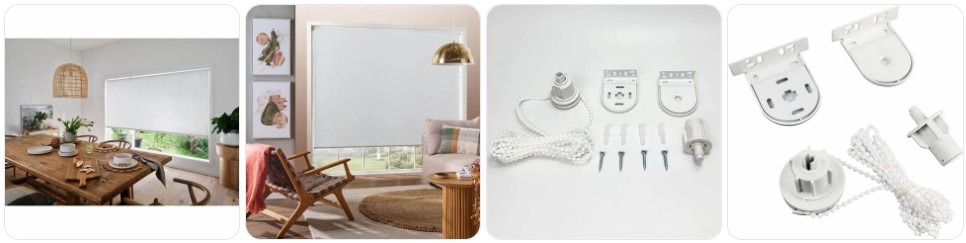
Roller Blinds are one of the most repair-friendly blind types because many problems come from a small number of working parts rather than from the whole blind itself. The quick answer is that a broken roller blind often does not need full replacement if the fabric is still in good condition and the issue is limited to the clutch, spring mechanism, chain, brackets, idle end, pull control, or bottom bar. In many cases, you can restore smooth operation by replacing a worn sidewinder, fitting a new chain, correcting a loose bracket, or swapping out a damaged end plug before the blind starts rolling unevenly. If you want to compare likely repair items while troubleshooting, it helps to browse roller blind repair kits, roller shade clutch replacements, and roller blind bead chain replacements.
Fix Common Roller Blind Problems & Repair Cost
Roller blind will not roll up or down properly: This is one of the most common roller blind problems and usually points to a worn clutch, weak spring, damaged chain, or a tube connection that is no longer gripping correctly. Start by checking whether the chain still engages the sidewinder smoothly or whether the blind feels loose and slips under its own weight. If the blind still looks good otherwise, the repair may be as simple as replacing the chain or clutch instead of the whole blind. Smaller fixes are often in the range of about $5 to $25 in parts, while a more complete bracket-and-clutch repair can cost around $15 to $40 depending on the blind size and hardware style. It helps to compare roller shade clutch replacements, bead chain replacements, and roller blind repair kits. Do not keep yanking the chain if the blind is sticking, because that can crack the clutch or strip the mechanism faster.
The blind rolls unevenly or tracks to one side: When a roller blind starts telescoping or winding more on one side than the other, the problem is often a bracket alignment issue, a tube that is not sitting squarely, or fabric that started wrapping unevenly after repeated use. If you catch it early, a simple realignment or bracket adjustment can solve it. If the end plug or idle-end fitting is loose, that part may need to be replaced before the fabric begins rubbing the brackets or fraying at the edges. Smaller alignment-related fixes are often inexpensive, but letting the problem continue can eventually damage both the fabric and the operating hardware.
The chain spins but the blind does not move: This usually means the clutch is turning but the drive connection inside the blind is worn, cracked, or slipping. On many roller blinds, that points to a damaged clutch insert, tube adapter, or internal drive wheel rather than a problem with the chain itself. This type of repair is often much cheaper than replacing the full blind because the visible fabric and tube may still be in good condition.
The blind drops too quickly or will not stay in position: If the blind slides down by itself or will not stop where you leave it, the clutch or spring-assisted mechanism is usually worn. This is especially common on older roller blinds that have had frequent daily use. Replacing the clutch or control end is often the right fix and is usually far more affordable than ordering a completely new blind.
The brackets or mounts feel loose: Roller blinds put repeated directional pressure on the control side during everyday operation, so loose or slightly bent brackets can quickly turn into a bigger problem. Tightening the screws may solve a minor issue, but if the bracket is visibly distorted or the blind no longer sits level, replacing the bracket is usually the safer long-term choice. Always check the mounting hardware first before assuming the fabric or full blind system has failed.
Roller Blind Repair Kit
A roller blind repair kit is most useful when the problem is in the operating hardware rather than in the blind fabric itself. Many roller blind kits include practical replacement parts such as a clutch, chain, idle end, brackets, connectors, and small fittings that help restore normal rolling action without replacing the full blind. For roller blinds specifically, the most useful kits are the ones that match your tube size and operating style, because a blind that looks simple from the outside still depends on the correct control-end and idle-end hardware to work properly.
It is worth checking the product photos carefully because some kits are sold as general roller shade repair parts, while others are designed for specific tube diameters or bracket profiles. If your issue is clearly limited to one failed part, buying that exact replacement may be cheaper. But if the blind has a worn clutch, rough chain, and loose bracket at the same time, a broader roller blind repair kit or roller shade replacement parts kit can save time and make the repair more consistent. For roller blinds, matching the tube size and clutch shape matters more than buying a generic “universal” kit.

Rollerhouses RHSA38-A 38mm Metal Roller Blind Fittings Repair Parts Kit Brackets Heavy Duty 1.5 Inch/Rollease Skyline Roller Shade Mounting Brackets
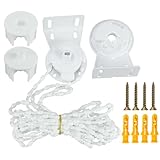
Roller Blind Shade Metal Core Clutch Bracket Repair Kit 38mm
Signs Your Roller Blind Need Repair
- The blind slips down after you stop pulling the chain: This usually means the clutch is worn and no longer holding the tube in position. Checking roller shade clutch replacements is a smart first step.
- The chain skips, jumps, or feels rough: A damaged chain or worn clutch sprocket can make operation jerky and unreliable. In many cases, a bead chain replacement is the easiest fix.
- The blind rolls unevenly to one side: Roller blinds should wind evenly on the tube. If the fabric starts tracking left or right, the brackets, idle end, or fabric wrap may need attention.
- The blind stops partway or refuses to move: This often points to a clutch, spring, or drive insert problem rather than a fabric problem.
- The fabric edges start rubbing or fraying near the brackets: That usually means the blind is no longer sitting squarely and needs to be realigned before the fabric gets damaged further.
- The bracket flexes during operation: Roller blinds put repeated pressure on the control side, so a loose or bending bracket is a real repair warning, not just a cosmetic issue.
- The chain turns but nothing happens: This is a strong sign that the internal drive connection is slipping or broken.
- The blind suddenly feels heavier or harder to control: That can point to friction in the tube, a worn clutch, or a mounting issue that is making the blind work harder than it should.
Tools You May Need to Repair Roller Blind
- Screwdriver set: A basic screwdriver set is useful for removing brackets, tightening mounts, and replacing the clutch or idle end.
- Needle-nose pliers: A pair of needle-nose pliers can help with small connectors, tight bracket tabs, and control-side fittings.
- Replacement clutch: If the blind slips, drops, or no longer holds position, a matching roller shade clutch replacement is often the most important repair part to have on hand.
- Replacement chain: A rough or cracked loop can often be fixed with a roller blind bead chain replacement.
- Mounting brackets: If the blind no longer sits level or the control side moves during operation, comparing roller shade mounting brackets can help restore stable support.
- Drive adapter or idle end: A slipping or uneven blind may need a new drive adapter or idle-end fitting rather than a full new blind.
- Measuring tape: A measuring tape helps you match tube diameter, bracket spacing, and replacement parts more accurately.
- Step stool or ladder: A stable step stool helps if you need to take the blind down, inspect the brackets closely, or reinstall the blind safely after repair.
Should You Repair or Replace Your Broken Roller Blind?
Repairing a broken roller blind usually makes sense when the fabric is still in good condition and the fault is clearly limited to the control hardware, bracket system, or one end of the tube. Because roller blinds use relatively simple operating parts, a failure that makes the blind seem completely unusable is often caused by one small component such as the clutch, chain, bracket, or idle end. In that situation, replacing the failed part is usually much cheaper than replacing the whole blind, especially if you only need a new chain, clutch, or fitting. Comparing a roller blind repair kit with the cost of a full new blind often shows that repair is the better value.
Replacement becomes the better option when the fabric is badly frayed, stained, stretched, or no longer wrapping evenly even after the hardware has been checked. It can also make sense to replace the blind if several parts are worn at once and the total repair cost starts getting close to the price of a new one. A quick comparison between roller blind options and the parts you need will help you decide. In many cases, though, roller blinds are very repairable when the problem is mechanical rather than fabric-related.
LazBlinds 100% Blackout Roller Shades, 36"x72", Black

AOSKY Blackout Cordless Roller Shade for Indoor Windows, 23"W x 72"H, White

AOSKY Cordless Blackout Roller Shades, 34" W x 72" H, Black
Tips to Make Your Roller Blind Last Longer
- Pull the chain straight down: Roller blind clutches wear faster when the chain is tugged outward at an angle instead of operated in a straight line.
- Do not force a sticking blind: If the blind resists movement, inspect the clutch, chain, or brackets before pulling harder.
- Keep the brackets tight: Small mounting problems can quickly turn into uneven rolling and fabric edge damage on a roller blind.
- Replace worn chains early: A rough chain is much cheaper to fix than a damaged clutch, so swapping it out early can prevent a bigger repair later.
- Keep dust away from the control end: Dust buildup around the clutch and chain path can make the blind feel rough and create avoidable wear over time.
- Do not let the blind snap upward repeatedly: Fast, uncontrolled movement can strain the tube, fittings, and control mechanism.
- Check the fabric wrap regularly: If the blind starts winding unevenly, correct it early before the edges rub and fray.
- Use matching replacement parts: A close-looking part is not always the right one, so matching the tube size and hardware profile is the best way to avoid repeat problems.
Roller Blind Repairs FAQ
What usually breaks on a roller blind?
The parts that fail most often are the clutch, chain, brackets, idle end, and small drive fittings inside the tube. On roller blinds, these operating parts usually wear out before the fabric does.
Can I fix a roller blind that will not stay up?
Yes, in many cases. The most common cause is a worn clutch or control-side mechanism. If the fabric is still in good condition, replacing that part is often enough to restore normal operation.
Is a roller blind repair kit worth buying?
It can be, especially when the blind has more than one small hardware issue. A roller blind repair kit is often easier than sourcing a clutch, chain, bracket, and end fitting separately.
Why does my roller blind chain turn but the blind does not move?
This usually means the chain is still turning the mechanism, but the internal drive connection has failed. A worn adapter, slipping insert, or broken clutch connection is often the real problem.
Can I replace just the chain on a roller blind?
Yes, if the clutch itself is still in good condition and the problem is limited to the chain loop. This is one of the simplest and cheapest roller blind repairs.
How much does it usually cost to repair a roller blind?
Minor repairs such as a chain, clutch, or bracket are often relatively inexpensive, usually around $5 to $25 in parts. Larger repairs involving several connected components can cost more, but they are often still cheaper than replacing the full blind.
Should I repair or replace a roller blind with frayed edges?
If the fraying is minor and caused by poor alignment, repair may still make sense if you correct the hardware issue first. If the fabric is badly damaged across a large area, replacement is usually the better choice.
Can roller blind parts be hard to match?
Yes, sometimes. Tube diameter, clutch shape, bracket profile, and chain style can vary by brand, so it helps to remove the damaged part and compare it carefully before ordering a replacement.

60 PCS Vertical Blind Repair Tabs Kit Clear Fixer Verticle Blinds Snap in Replacement Slats Parts Panels
SOGEWO (16 Set/32 Pieces) Clear Vertical Blind Repair Tabs, Vertical Blinds tabs/Blind Fixers for Vertical Blinds Replacement Slats & Parts
