
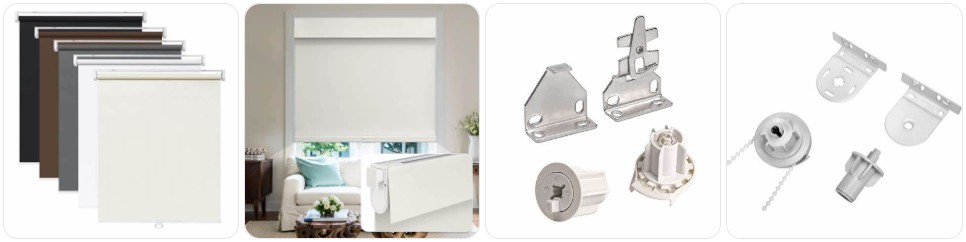
Roller Blind replacement parts are often all you need to get a faulty shade working smoothly again without replacing the full window covering. If your roller blind slips, will not retract evenly, has a broken chain, or no longer sits securely in its brackets, the issue is usually a worn clutch, idle end, bracket, tube insert, or bottom bar component rather than the fabric itself.
Buy Roller Blind Parts Online
The clutch is the main control unit that drives the tube when you pull the chain. If the blind slips, jams, clicks, or refuses to stay at the chosen height, a worn clutch is one of the most common replacement parts. » find on amazon / find on ebay
A cracked, stretched, or disconnected bead chain can make daily operation rough or impossible. Replacing the chain is usually a quick fix when the clutch still works but the loop has snapped, binds unevenly, or no longer grips properly. » find on amazon / find on ebay
The idle end supports the opposite side of the tube and keeps the blind level in the brackets. If the shade tilts, drops from one side, or feels loose at the non-control end, this small part may be worn. » find on amazon / find on ebay
Bent, cracked, or mismatched brackets can prevent the roller tube from seating correctly, even when the internal parts are fine. New brackets are essential if the blind pops out, rubs the frame, or was rehung with the wrong hardware. » find on amazon / find on ebay
This part connects the clutch or spring assembly to the roller tube. If the blind turns inconsistently, free-spins, or the internal mechanism no longer grips the tube, a missing or damaged insert is often the hidden problem. » find on amazon / find on ebay
Bottom bar end caps help keep the lower rail neat, balanced, and less likely to scrape the side channels or frame. Replace them when the bar becomes sharp, uneven, noisy, or starts damaging the blind fabric edges. » find on amazon / find on ebay
A repair kit is the best option when you are unsure which small component failed or you want several spares at once. Many kits include brackets, clutches, chains, connectors, and end plugs for common roller blind repairs. » find on amazon / find on ebay
Signs You Need Replacement Parts for Your Roller Blind
- The chain moves but the fabric does not roll properly: This usually points to a stripped clutch, a loose tube insert, or an internal drive adapter that no longer grips the roller tube correctly. A replacement roller blind clutch is often the first part to check.
- The blind drops too fast or will not hold its position: When a roller shade slides down by itself, the control side is often worn. On chain-operated models, the clutch may be failing; on spring rollers, the internal spring assembly may have lost tension or broken.
- One side keeps slipping out of the bracket: A damaged idle end, bent bracket, or mismatched mounting set can stop the tube from locking into place. This is especially common after removal, repainting, or reinstalling the blind with reused hardware.
- The roller blind hangs unevenly from left to right: If the tube no longer sits level, inspect the idle pin, bracket alignment, and tube insert before blaming the fabric. A tilted roller usually starts with a support-side hardware issue rather than a cloth issue.
- The chain loop is cracked, disconnected, or skipping teeth: Beaded chains wear out over time, especially in kitchens, bathrooms, or sunny windows. Replacing the loop or chain connector is usually cheaper and faster than changing the complete blind.
- The fabric telescopes to one side while rolling up: Slight tracking problems can come from installation, but sudden side-drift often appears after a bent bracket, damaged end plug, or loose tube adapter changes how the roller tube sits under tension.
- The blind makes clicking or grinding noises during use: Roller blinds are usually simple and quiet. New noises often mean the clutch gears are worn, the bracket is rubbing, or the tube insert is partially split and rotating unevenly inside the barrel.
- The bottom bar feels loose, sharp, or unbalanced: Missing bottom rail end caps can make the blind look unfinished and allow the lower bar to catch the frame or wear the fabric edges. Small trim pieces matter more on roller blinds than many people expect.
- The blind was cut down or modified and now uses the wrong hardware: DIY trimming can leave the original clutch, insert, or bracket set slightly mismatched to the smaller tube. In that case, a full roller blind repair kit can be the easiest fix.

Luanxu Universal Roller Shade Clutch for 1 1/2" (38mm) Tube with Metal Bracket & Bead Chain, Roller Blind Replacement Spare Repair Parts, Metal Core, Long Service Life, Heavy Duty, Max Load 8KG

Rollease R16 Roller Shade Clutch for 1.5" Tube, White

Universal Replacement Installation Accessories for Indoor/Outdoor Sunshade and Roller Blinds(Crodless Bracket)
How to Identify the Right Roller Blind Replacement Part
- Start with the control side first: If your roller blind is chain operated, remove it carefully and inspect the clutch shape, tooth profile, and bracket-fit style. The correct replacement must match the way the clutch locks into the bracket, not just the tube width.
- Measure the roller tube before buying anything: Roller blind parts are commonly sized around the outside diameter of the tube, such as 25mm, 28mm, 32mm, or 38mm. A clutch or idle end made for the wrong tube size will feel loose or refuse to seat properly.
- Check whether the blind is chain operated or spring loaded: These systems use different internal parts. A spring roller needs a compatible spring mechanism, while a chain roller needs a clutch, chain loop, and often a matching tube insert or drive adapter.
- Look closely at the idle end pin design: Some idle ends use a simple round pin, while others use stepped, retractable, or spring-loaded pins. Matching the non-control side is just as important as matching the clutch because the wrong idle end can make the blind sit crooked.
- Match the bracket style to the part, not just to the blind brand: Many roller blinds use visually similar brackets with slightly different slot shapes or locking tabs. Compare the old bracket opening, depth, and screw-hole layout before ordering replacements online.
- Inspect the tube insert for cracks or spinning marks: If the clutch seems fine but the blind still free-spins, the insert between the mechanism and tube may be split. That part is easy to miss because it sits hidden inside the roller barrel.
- Photograph the old hardware before disposal: Take clear photos of the clutch side, idle end, bracket pair, chain connector, and tube measurement. This makes it much easier to compare listings for roller blind parts on Amazon or marketplace kits without guessing.
- Buy a kit when several small parts look worn: If the chain, clutch, and bracket area all show wear, it is usually smarter to buy a coordinated repair kit than mix separate parts from different sellers. That reduces fit issues and speeds up the repair.
Should You Repair or Replace the Whole Roller Blind?
In many cases, repairing a roller blind makes more sense than replacing the whole unit. If the fabric is still clean, straight, and not fraying at the edges, a new clutch, chain, idle end, or bracket set can restore smooth operation for a fraction of the price of a new blind. This is especially true for blackout, screen, or custom-cut roller blinds where the fabric panel is still in good condition but one side of the mechanism has failed. Small parts such as a replacement clutch or beaded chain loop are often enough to solve the issue.
You should consider replacing the whole roller blind when the fabric is badly creased, the bottom bar is bent, the tube is warped, or the blind has repeated tracking problems caused by poor original construction. It is also worth replacing the full unit if the correct spare parts are unavailable or if several components are failing at once. For heavily worn shades, comparing a repair kit with a full new roller blind can help you decide which option gives better long-term value.
LazBlinds 100% Blackout Roller Shades, 36"x72", Black | No tools No Drill Cordless Blinds for Windows, Thermal Insulated UV Protection Privacy Window Shades

AOSKY Cordless Blackout Roller Shades, 34" W x 72" H, Black | Cordless Free-Stop Design, Built-in Valance, Thermal Insulated Fabric, UV Protection for Home & Office

AOSKY Blackout Cordless Roller Shade for Indoor Windows, 23"W x 72"H, White | Black Out Window Shade with Spring System, Thermal Insulated UV-blocking Fabric, Room Darkening Pull Down Blind for Home Door
How to Prevent Parts Damage to Roller Blind
- Pull the chain straight down instead of at an angle: Side-pulling places extra stress on the clutch gears and bracket opening. Over time, angled use can wear the control mechanism faster and cause the roller tube to sit unevenly during operation.
- Stop forcing the blind once it reaches its limit: Roller blinds should roll smoothly to their upper and lower stopping points. Repeatedly yanking the chain after the blind is fully raised or lowered can crack the clutch housing or strip the internal drive.
- Keep the brackets firmly secured to the wall or frame: Even a small amount of bracket movement can throw the roller tube out of line. Check screws occasionally, especially on wide blinds or blackout rollers that carry more fabric weight.
- Clean dust from the control side and tube ends: Built-up dust can work into the clutch area and make the chain feel rough or noisy. Wiping the bracket area and exposed hardware lightly helps reduce wear on moving plastic parts.
- Do not let the chain twist around itself: Twisted loops can bind inside the clutch and accelerate wear on the sprocket teeth. If your loop is already distorted, replacing it early with a new beaded chain is usually cheaper than waiting for the clutch to fail too.
- Re-seat the blind properly after painting or cleaning: Roller blinds are often removed during decorating, then reinstalled with the tube not fully locked into the brackets. Always check that both ends click or settle into place correctly before regular use resumes.
- Avoid storing removed roller blinds under pressure: If the tube is crushed, bent, or has heavy items stacked on it, internal inserts and idle ends can deform. That kind of damage often shows up later as wobble, slipping, or uneven rolling.
- Use a matching repair kit for older blinds: On aging shades, replacing only one worn piece can leave another weak part ready to fail next. A coordinated roller blind repair kit can help keep the whole mechanism working more evenly.
Roller Blind Parts FAQ
What is the most common roller blind part to fail?
The clutch mechanism is usually the first part to wear out on a chain-operated roller blind. It handles the repeated pulling motion every day, so when the blind starts slipping, clicking, or refusing to stay at a set height, the clutch is often the main culprit.
Can I replace a roller blind chain without replacing the whole blind?
Yes. If the blind still rolls correctly and the control mechanism is intact, replacing only the beaded chain is often enough. Check the loop length and bead size before ordering a replacement roller blind chain.
How do I know what size roller blind clutch I need?
Measure the outside diameter of the roller tube and compare the shape of the old clutch where it fits into the bracket. Most replacement listings are sized by tube diameter, so this measurement is more important than estimating by blind width alone.
Are roller blind brackets universal?
No. Some look similar, but slot shapes, locking tabs, depth, and clutch fit can differ. It is best to compare the original bracket pair directly or buy a matching kit that includes both the brackets and the internal control parts.
Why does my roller blind fall down by itself after I raise it?
That usually means the clutch is worn or the internal spring system has failed, depending on the blind type. On chain-operated models, the control side is the first place to inspect for replacement parts.
Should I buy individual roller blind parts or a repair kit?
Buy individual parts when you are confident only one piece has failed, such as a chain or idle end. Choose a roller blind repair kit when several pieces are worn, the blind is older, or you want a better chance of getting compatible parts in one order.

60 PCS Vertical Blind Repair Tabs Kit Clear Fixer Verticle Blinds Snap in Replacement Slats Parts Panels

joytrace RV Pleated Shade Repair Kit, RV Window Shade Restringing Kit, Repair and Maintain of Day Night Pleated Shade (White)

I am working on a 25 year old condo. The roller blind needs a new clutch but it is obsolete. I am hoping to find a replacement or a substitute clutch but need help in identifying the old clutch.
The tube O.D. is 1 7/16″. The clutch has external metal tabs extending from each end, the shaft has 11 splines, and the wheel has 28 notches. The mounting bracket is stamped steel with nylon inserts. the insert has a slot the accepts the metal tab on the clutch.
ChatGPT thought it is an old Rollease, but Rollease thinks it is an old Louvolite. Louvolet doesn’t respond. Chat says both companies made similar parts in the late 1900’s to early 2000’s, which fit the time frame of the condo.