
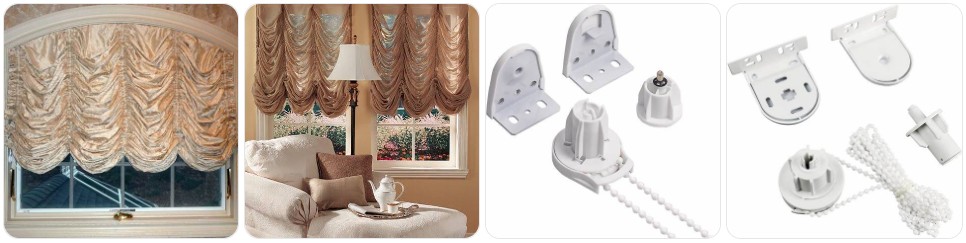
If you are looking for Austrian Blind replacement parts, the quick answer is that most repairs involve the lifting system and support hardware rather than the fabric itself. Austrian blinds use soft gathered material that forms scalloped swags, so the parts that fail most often are lift cords, rings, cord guides, pulleys, cord locks, mounting brackets, and bottom-weight support pieces. In many cases, you can restore smooth operation by replacing one worn component instead of changing the whole blind, especially if the fabric is still in good condition and the swags remain evenly shaped.
Buy Austrian Blind Parts Online
The lift cord is the part that gathers and raises the soft fabric into its trademark scalloped swags. Frayed, stretched, or snapped cords can make one side hang lower than the other or stop the blind from lifting at all. » find on amazon / find on ebay
Austrian blinds depend on multiple sewn rings on the rear fabric panels so the cords can travel upward cleanly and pull the swags into shape. Broken, detached, or missing rings often cause crooked lifts, bunching, or sagging sections. » find on amazon / find on ebay
Small pulleys or cord guides at the headrail direct each lift cord toward the operating side. When they crack or jam, the blind may feel stiff, lift unevenly, or wear cords prematurely because the fabric weight no longer moves smoothly. » find on amazon / find on ebay
The cord lock holds the blind at the chosen height once the swags are raised. If it slips, fails to grip, or releases unpredictably, the Austrian blind can drop suddenly and lose its decorative gathered profile. » find on amazon / find on ebay
The brackets support the headrail and keep the blind level across the window. Bent or missing brackets can throw the whole blind off balance, making the swags look uneven and putting extra strain on cords, guides, and locks. » find on amazon / find on ebay
Austrian blinds often need lower-edge weight support so the fabric hangs properly when lowered and gathers neatly when raised. Missing weights can leave the hem floppy, distort the scalloped shape, and make the folds appear twisted or irregular. » find on amazon / find on ebay
A repair kit is the most practical option when your Austrian blind has multiple worn parts at once. Kits usually bundle cord, rings, guides, locks, and hardware so you can rebuild the lifting system and restore the gathered swags in one repair. » find on amazon / find on ebay
Signs You Need Replacement Parts for Your Austrian Blind
- One swag hangs lower than the others: Austrian blinds are supposed to form balanced scalloped folds across the width. If one section consistently droops, the cause is often a stretched lift cord, missing rear ring, or damaged pulley rather than a fabric problem. Replacing the worn lift cord or ring usually restores the shape.
- The gathered folds no longer rise evenly: If the blind bunches more on one side, the lift paths at the back may no longer be moving at the same rate. This is especially common on Austrian blinds because the fabric has more fullness and more stitching points than flatter Roman styles.
- The blind slips down after you raise it: A failing cord lock is a classic Austrian blind issue because the heavy gathered fabric puts extra load on the holding mechanism. If the blind will not stay at height, inspect the lock before assuming the whole blind is worn out.
- You hear rubbing or feel resistance while lifting: Austrian blinds should glide with steady tension. Grinding, snagging, or jerky movement usually points to cracked cord guides, worn pulleys, or cords rubbing through old rings at the back of the blind.
- The fabric back has loose or detached rings: Since Austrian blinds rely on multiple vertical lift lines, even one missing ring can distort a full section of scallops. This is one of the most visible and repairable faults, and replacement blind rings are usually inexpensive.
- The bottom edge looks limp instead of softly shaped: If the hem no longer hangs with enough structure when lowered, missing bottom weights or a displaced weight bar may be the reason. Austrian blinds need that lower support to create graceful drape rather than a collapsed edge.
- The headrail sits unevenly above the window: A bent bracket or loose mounting point can throw off the whole operating line, making the blind appear twisted and causing the swags to pull unevenly from side to side.
- Several small faults are happening together: When you have frayed cords, loose rings, and slipping operation all at once, it usually makes more sense to use an Austrian blind repair kit than buying each small piece separately.

Zerodeko 6pcs Blind Cord Locks Window Blind Components for Roman and Austrian Shades Pulley Lock for Smooth Light Adjustment Secure Cord Control Home Office Bedroom Use

Yoande 10 Pcs Roman Shade Cord Pulleys White Plastic Cord Lock Mechanism Versatile Use Roman Shade Hardware Window Blind Parts for Pleated Shades Austrian Shades Bamboo Curtain Home Indoor

6 Pieces White Roman Shade Cord Lock Dual Brass Wheels Stainless Bracket
How to Identify the Right Austrian Blind Replacement Part
- Start at the back of the fabric first: Austrian blinds hide most of their working parts behind the decorative front, so check the rear lift lines, sewn rings, and cord routes before ordering anything. If the swags look wrong but the headrail still lifts, the failed part is often behind the fabric, not inside the rail.
- Count how many lift lines the blind uses: A narrow Austrian blind may use fewer vertical cord paths than a wide one, while fuller blinds can have many more rings and guides than you expect. Matching the number of cords, rings, and guide points helps you avoid ordering an incomplete repair set.
- Match the part to the symptom, not just the style: If the blind drops by itself, focus on the cord lock. If one scallop hangs low, focus on the specific cord path, rear ring, or pulley serving that section. If the hem looks weak, check the bottom weights rather than the operating side.
- Check whether your blind uses Roman-style hardware: Many Austrian blinds use parts sold under Roman blind hardware categories, especially cord locks, pulleys, guides, and brackets. That means searches like Roman blind cord lock or Roman blind pulley can often produce the correct replacement pieces.
- Compare ring size and sewing style carefully: Austrian blinds depend on smooth cord travel, so ring size matters more than many DIY users expect. Choose rings with a diameter and profile close to the originals, especially if the fabric is delicate or lined.
- Measure the headrail mounting points before buying brackets: Because Austrian blinds are fabric-heavy, bracket alignment matters. Measure spacing, bracket depth, and fixing style so the headrail stays level and does not twist when the blind is raised.
- Inspect the bottom edge for hidden weight supports: Some Austrian blinds use sewn-in weights, while others use a slim bar or insert. If the folds look soft but the lower line looks unstable, identifying the exact weight system can solve the problem faster than replacing the cord system.
- Choose a repair kit when several parts are visibly tired: On older Austrian blinds, isolated fixes can turn into repeated repairs. If the cords are faded, the rings are brittle, and the lock feels weak, a combined repair kit is often the smartest and most consistent solution.
Should You Repair or Replace the Whole Austrian Blind?
In many cases, it is worth repairing an Austrian blind because the most common failures are in the operating hardware rather than the decorative fabric. If the material is still attractive, the lining is intact, and the scalloped shape returns when you manually arrange the folds, replacing parts such as lift cord, blind rings, or a cord lock is usually far cheaper than replacing the whole blind. This is especially true for custom Austrian blinds made with quality fabric, trim, or lining that would be expensive to reproduce.
You should think more seriously about full replacement when the fabric is sun-damaged, the lining has perished, multiple stitched channels are tearing away, or the blind has gone badly out of shape across most of its width. Austrian blinds are decorative by nature, so once the material itself loses body or the swags no longer form properly even after hardware repairs, replacing the full unit may make more sense. Still, when the structure is basically sound, a well-chosen repair kit can often give the blind a second life without sacrificing the original style.
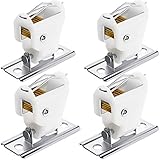
4 Pieces White Roman Shade Cord Lock Dual Brass Wheels Stainless Bracket

WHYHKJ 4pcs Roman Shade Cord Lock Austrian Shade Window Blind Lock Holds up to 3 Cords, Brown
Yoande 10 Pcs Roman Shade Cord Pulleys White Plastic Cord Lock Mechanism Versatile Use Roman Shade Hardware Window Blind Parts for Pleated Shades Austrian Shades Bamboo Curtain Home Indoor
How to Prevent Parts Damage to Austrian Blind
- Raise the blind slowly and keep the swags balanced: Austrian blinds have more fullness than flat fabric blinds, so quick or uneven pulling puts extra stress on individual lift lines. A steady pull helps the cords, pulleys, and rear rings share the load more evenly.
- Do not let one side carry the whole weight: If you always tug from an angle or jerk the operating cord sideways, one cord path can wear faster than the others. That is how Austrian blinds end up with a single low scallop or a twisted gathered section.
- Rearrange the folds occasionally after lowering: The decorative swags on Austrian blinds can trap tension if the fabric dries in a compressed position. Gently dressing the folds by hand helps reduce strain on the rear rings and keeps the lift lines from pulling against stubborn bunching.
- Keep dust out of the headrail and cord paths: Dust buildup inside guides and pulleys increases friction, which is a bigger issue on Austrian blinds because the gathered fabric is heavier than simpler blinds. A light clean around the operating hardware can extend the life of cords and locks.
- Check sewn rings before they fail completely: On Austrian blinds, loose stitching at one ring can quickly distort an entire column of fabric. Reinforcing a weak ring early is much easier than repairing torn fabric after the ring has pulled away under load.
- Protect the blind from prolonged dampness and harsh sun: Austrian blinds often use decorative fabrics and linings that can shrink, stiffen, or weaken over time. When the fabric changes shape, the hardware starts working under uneven tension and parts wear faster.
- Make sure the bottom edge keeps its weight support: If a weight insert slips out or the hem loses structure, the blind will not lower smoothly and the swags may pull awkwardly during lifting. Replacing missing bottom weights early can prevent wider operating problems.
- Use a repair kit before small wear becomes a full failure: When you spot early fraying or brittle rings, replacing parts proactively with an Austrian blind repair kit is often the best way to preserve the blind’s shape and extend its life.
Austrian Blind Parts FAQ
What parts usually fail first on an Austrian blind?
The parts that usually fail first are the lift cords, sewn rings, cord guides, pulleys, and cord lock. Austrian blinds place constant load on these parts because the gathered fabric is heavier and fuller than a flat blind, so wear usually appears in the lifting system before the fabric itself fails.
Can I use Roman blind parts on an Austrian blind?
Yes, very often you can. Many Austrian blinds use Roman-style hardware for the operating system, especially for cord locks, pulleys, guides, and brackets. That is why Amazon searches such as Roman blind parts can be useful when exact Austrian listings are limited.
Why does one side of my Austrian blind hang lower than the other?
This usually means one lift path is no longer working correctly. A stretched cord, detached rear ring, cracked pulley, or snagged guide can stop one section from rising at the same speed as the rest, which makes one scallop or swag hang visibly lower.
Is it better to buy individual parts or a repair kit?
If only one part is clearly broken, buying that single piece may be enough. But if the blind is older and has several symptoms such as slipping, frayed cords, and brittle rings, an Austrian blind repair kit is usually better value and gives you more consistent results.
Do Austrian blinds need bottom weights?
Many do, or they use some form of lower-edge support. Bottom weights or inserts help the fabric hang properly when lowered and help the swags gather more neatly when raised. Without that support, the lower edge can look limp or uneven.
When should I replace the whole Austrian blind instead of the parts?
You should consider full replacement when the fabric is badly faded, the lining is breaking down, multiple stitched channels are tearing, or the blind no longer forms proper swags even after hardware repairs. If the fabric still looks good, replacing parts is usually the more cost-effective option.

60 PCS Vertical Blind Repair Tabs Kit Clear Fixer Verticle Blinds Snap in Replacement Slats Parts Panels

30 Sets (60 Pcs) Vertical Blinds Replacement Slats Panels, Vertical Blind Repair Tabs Kit, Clear Apartment Blinds Replacement Fixers, Horizontal Blinds Replacement Parts
