
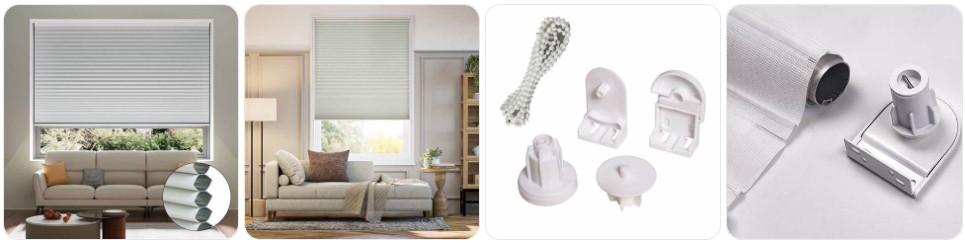
Honeycomb Blinds are known for their soft pleated look, insulating air pockets, and light weight, but those same features also mean small hardware failures can stop the shade from lifting evenly or hanging properly. The good news is that many common issues can be fixed with the right replacement part rather than replacing the entire shade. In this guide, you will learn which Honeycomb Blind parts fail most often, how to identify the correct replacement, when a repair kit makes sense, and where to buy parts like cord locks, mounting brackets, and repair kits online.
Buy Honeycomb Blind Parts Online
This part grips and releases the lift cords so the shade stays at the height you set. When it wears out, the blind may slide down, refuse to lock, or feel rough and inconsistent during lifting. » find on amazon / find on ebay
Mounting brackets hold the headrail securely in place inside or outside the window frame. Bent, cracked, or missing brackets can make the shade sag, rattle, or fall forward when you raise and lower it. » find on amazon / find on ebay
Pull handles attach to the bottom rail on cordless Honeycomb Blinds so you can raise and lower them without crushing the pleated cells. Replacing a broken handle also helps reduce direct fabric grabbing and long-term wear. » find on amazon / find on ebay
These small plastic pieces protect the ends of the bottom rail and help guide cords neatly through the rail. If they crack or disappear, the rail can scrape, cords can rub badly, and the shade may hang unevenly. » find on amazon / find on ebay
Inside the headrail, lift spools help wind and distribute cord tension across the shade. Damaged spools often cause one side to rise faster than the other, which is a classic Honeycomb Blind problem. » find on amazon / find on ebay
Honeycomb fabrics rely on small guide holes and inserts to keep lift cords aligned through the cells. When guides crack or grommets wear out, cords can fray, catch, or start pulling the pleats out of shape. » find on amazon / find on ebay
On loop-operated Honeycomb Blinds, the tensioner keeps the bead chain taut and safer to use while helping the clutch run smoothly. A missing or broken tensioner can make the chain jump or twist. » find on amazon / find on ebay
A repair kit usually bundles restring cord, cord guides, handles, end caps, and small installation pieces for common fixes. It is the easiest option when you have several minor failures or need backup parts before starting repairs. » find on amazon / find on ebay
Signs You Need Replacement Parts for Your Honeycomb Blind
- The cells collapse unevenly when the shade is raised: Honeycomb fabrics are supposed to stack in a neat, even bundle. If one side compresses tighter than the other, the issue is often a worn spool, damaged guide, or stretched lift cord rather than the fabric panel itself.
- The blind will not stay at the selected height: When a Honeycomb Blind slowly slides down after you lift it, the cord lock is one of the first parts to inspect. A slipping lock usually means the internal gripping surface has worn out.
- One side rises faster than the other: This is one of the most common cellular shade failures. Uneven lifting almost always points to tension imbalance, often caused by a broken spool, frayed cord, or missing guide component inside the headrail or bottom rail.
- The bottom rail hangs crooked even after resetting the shade: A tilted bottom rail on a Honeycomb Blind usually means one cord path is dragging or one internal lift component is no longer matching the other side. Replacing worn cord guides or end caps often solves it.
- The cordless handle has snapped off or loosened: On cordless styles, people often grab the fabric instead of the rail when the handle breaks. That quickly crushes the pleats, so replacing the handle early is cheaper than damaging the visible cells.
- The bead chain slips, twists, or jumps on loop-operated shades: If your chain-driven Honeycomb Blind feels rough or skips under load, inspect the tensioner and clutch area. Replacing a worn chain tensioner can restore smoother operation.
- The cords look fuzzy where they pass through the cells: Fraying near the guide holes often means the internal guides or grommets are cracked. Do not ignore this, because once a cord snaps, the shade can drop unevenly and become much harder to restring.
- The headrail feels secure but the shade front tilts forward: That usually means the mounting brackets are bent, cracked, or not fully locking the rail. On lightweight cellular shades, even a small bracket failure can make the whole blind feel unstable.
- The bottom rail ends are exposed or scraping: Missing end caps on a Honeycomb Blind can lead to cord wear, rough movement, and a more obvious side-to-side imbalance over time.
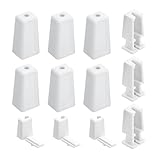
3 Pack Blind Cord Stop Replacement Kit for Hunter Douglas Honeycomb Shades

YXYYXY 3 Pack 3/8 Inch Duette Honeycomb Shade Mounting Brackets | Fits for Hunter Douglas Pull Cord Duette Honeycomb Shades, Repair Brackets for Broken Worn Window Blind Mount Hardware

YXYYXY Cord Stop Housing and Knob Compatible with Hunter Douglas, Blinds Replacement Parts Fits Classic Duette Honeycomb Shades & Applause Window Treatments (1 Piece Set,White)
How to Identify the Right Honeycomb Blind Replacement Part
- Match the operating style first: Start by checking whether your Honeycomb Blind is cordless, standard lift cord, top-down bottom-up, or continuous loop. A cordless handle, a cord lock, and a loop tensioner are not interchangeable parts, even if the shades look similar from the front.
- Check whether it is truly a honeycomb or cellular design: The correct parts usually depend on the blind having air-pocket cells rather than a simple pleated fabric panel. If the shade has visible cell openings from the side, search using terms like cellular shade parts as well as Honeycomb Blind parts.
- Measure the headrail before buying hardware: Brackets, cord locks, and internal lift pieces often vary by headrail size. Measure the width and height of the metal headrail channel and compare it to listing photos, because a part that is only slightly off may not clip or slide into place.
- Inspect how the cords route through the fabric cells: On Honeycomb Blinds, cord paths pass through specific guide holes and bottom-rail inserts. If the cords run through side channels, center guides, or multiple rows for top-down bottom-up operation, you need a part designed for that exact routing layout.
- Count the lift points across the width: Wider Honeycomb Blinds often use more than two lift points, which affects spool and restring compatibility. If your shade lifts from two, three, or more cord paths, buy replacement parts that match that internal distribution.
- Look at the bottom rail hardware, not just the top: End caps, rail shoes, handles, and cord retainers on the bottom rail are frequently the real failure point. A shade that looks like it has a headrail problem may only need new end caps or guides.
- Use repair kits when several small pieces are missing: If your Honeycomb Blind has a worn cord, missing end caps, and a damaged handle, a repair kit is usually smarter than ordering each item separately and hoping all dimensions match.
- Compare the part shape visually before ordering: Many Honeycomb Blind parts are molded plastic pieces with small tabs, slots, or curved channels. Even when two listings have the same name, the safer choice is the one whose photo matches your original part almost exactly.
Should You Repair or Replace the Whole Honeycomb Blind?
In many cases, repairing a Honeycomb Blind is the better value because the fabric body often remains usable long after a small internal part fails. A bad cord lock, broken handle, missing end cap, or worn bracket is usually a focused hardware problem, and replacing a low-cost part can bring the shade back to normal operation. This is especially true when the cells are still clean, the pleats are not badly crushed, and the headrail is straight. For common fixes, it often makes sense to start with a Honeycomb Blind repair kit, new mounting brackets, or a replacement cord lock before spending money on a full new shade.
You should lean toward full replacement when the fabric cells are torn across multiple rows, the shade has severe sun damage, the internal lift system has failed in several places at once, or the blind is a specialty top-down bottom-up model with extensive restringing needs. Honeycomb fabrics depend on clean pleat structure and even tension, so once the cells are badly crushed or the rails are bent, repairs become less worthwhile. If the blind is old and you are already replacing several major parts, buying a new Honeycomb Blind may be the simpler long-term choice.

BlindsAvenue Cordless Cellular Shade, White, 27" W x 72" H | Light Filtering Pull Down Blinds for Indoor Windows, Thermal Insulation, Noise Reduction Honeycomb Shades for Home Privacy

LazBlinds No Drill Cordless Cellular Shades, 22" W x 36" H, White | Blackout Fabric Protects Privacy, With Thermal Insulation & Noise Reduction, Safe Cordless Design for Kids & Pets
BlindsAvenue Cordless Cellular Shade, White, 35" W x 48" H | Light Filtering Pull Down Blinds for Indoor Windows, Thermal Insulation, Noise Reduction Honeycomb Shades for Home Privacy
How to Prevent Parts Damage to Honeycomb Blind
- Lift the shade from the rail, not the fabric cells: Honeycomb material looks durable, but the pleated pockets crush easily when grabbed in the middle. Using the bottom rail or installed handle reduces strain on the guides, cords, and pleat structure.
- Keep the blind level every time you operate it: If one side starts moving faster, stop and correct it early. Continuing to force an uneven Honeycomb Blind puts extra tension on one spool and one cord path, which is how many internal parts fail.
- Replace broken handles immediately on cordless models: Once the handle is gone, people naturally pinch the fabric to move the shade. Installing a new cellular shade handle is a simple way to prevent crushed cells and stretched bottom-rail hardware.
- Do not let frayed cords continue rubbing through the guide holes: On Honeycomb Blinds, the cord travels through repeated contact points inside the cells. A slightly fuzzy cord is an early warning that a guide or grommet may need replacement before the lift system fails completely.
- Dust the cells and headrail gently instead of scrubbing: Heavy wiping can distort the pleats, while aggressive cleaning around the headrail can disturb clips and guides. A light vacuum with a brush attachment is usually the safer maintenance method.
- Make sure brackets stay tight and fully engaged: Loose brackets allow the headrail to shift when the shade is raised. That small movement can create misalignment over time, especially on wider Honeycomb Blinds with multiple lift points.
- Secure loop chains with the proper tensioner: If your shade uses a continuous loop, always keep the tensioner mounted correctly. A loose chain can twist, slap the wall, or run at a bad angle, which wears the clutch and chain faster.
- Lower the blind fully once in a while to check stack shape: A distorted stack, one-sided compression, or twisted bottom rail often appears before a total failure. Catching those signs early makes it easier to replace a small part instead of rebuilding the whole blind.
Honeycomb Blind Parts FAQ
Are Honeycomb Blind parts the same as cellular shade parts?
Usually, yes. Honeycomb Blinds are commonly sold under the name cellular shades, so many replacement listings use both terms. It is smart to search both phrases, such as cellular shade parts and Honeycomb Blind parts, then compare the photos and measurements carefully.
What is the most common Honeycomb Blind part to fail?
The most common failures are cord locks, lift cords, internal spools, mounting brackets, and bottom-rail handles on cordless models. Which one fails first usually depends on how often the blind is used and whether it has started lifting unevenly.
Can I fix a Honeycomb Blind that will not stay up?
Yes, in many cases. A Honeycomb Blind that will not stay raised often has a worn cord lock or a lift system problem rather than ruined fabric. Replacing the lock or using a repair kit is often enough to restore normal use.
Why does my Honeycomb Blind lift crooked?
A crooked lift usually means the tension is uneven from side to side. Common causes include a damaged spool, frayed cord, worn guide, missing end cap, or a bottom rail that is no longer routing the cords correctly.
Do I need the brand name to buy the right replacement part?
Not always, but it helps. Many Honeycomb Blind parts are chosen more by shape, size, and operating style than by brand alone. If you do not know the manufacturer, measure the headrail, study the old part, and match the design visually before ordering.
When should I buy a repair kit instead of a single part?
A repair kit makes the most sense when several small components are worn or missing at the same time, or when you are not fully certain which minor hardware piece failed first. It is also useful for older shades that may need a restring and hardware refresh together.
Can damaged Honeycomb Blind fabric be repaired with replacement parts?
Only up to a point. Replacement parts can solve lifting, locking, bracket, and alignment problems, but they cannot fully restore severely torn, crushed, or sun-brittle cells. When the fabric body is failing across multiple sections, full shade replacement is usually the better option.

60 PCS Vertical Blind Repair Tabs Kit Clear Fixer Verticle Blinds Snap in Replacement Slats Parts Panels

joytrace RV Pleated Shade Repair Kit, RV Window Shade Restringing Kit, Repair and Maintain of Day Night Pleated Shade (White)
