
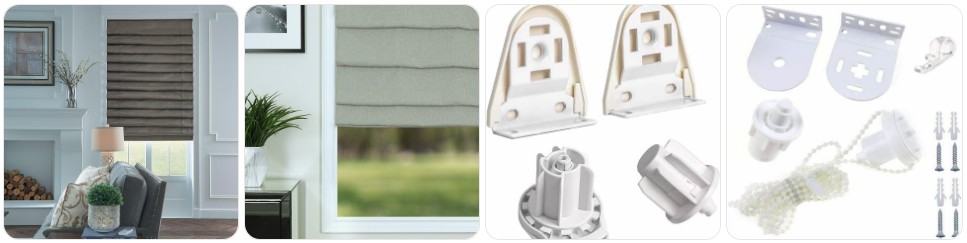
Hobbled Roman Blind replacement parts usually let you fix sagging loops, uneven folds, slipping lift cords, and worn headrail hardware without replacing the full shade. This guide explains which parts commonly fail on hobbled Roman blinds, how to identify the right replacements, where to buy them, and when a simple repair makes more sense than ordering a whole new blind.
Buy Hobbled Roman Blind Parts Online
Lift cord is one of the most common replacement items because hobbled Roman blinds depend on multiple cords moving evenly to keep the loops stacked correctly. Frayed, stretched, or broken cord can cause drooping sections, uneven raising, and poor fold formation. » find on amazon / find on ebay
Small guide rings stitched to the rear fabric lining help each cord travel vertically through the blind. On a hobbled Roman blind, damaged or missing rings often distort the cascading loops, create dragging points, and place extra strain on neighboring cords and seams. » find on amazon / find on ebay
The cord lock holds the blind at the chosen height once you stop pulling. When it wears out, a hobbled Roman blind may slide back down, stop locking securely, or need repeated tugging to stay level, especially on heavier fabric styles with deep loops. » find on amazon / find on ebay
Pulleys or guide wheels inside the headrail route lift cords toward the operating side. If one cracks or jams, the hobbled sections can rise unevenly, one loop may lag behind the others, and the blind may feel rough or noisy during operation. » find on amazon / find on ebay
Support rods keep each hobbled section structured so the blind forms consistent soft loops instead of collapsing into loose fabric. Bent, missing, or snapped rods usually show up as one section bulging differently, twisting sideways, or refusing to stack neatly when raised. » find on amazon / find on ebay
While not part of the folding system itself, brackets and clips matter because a slightly loose headrail changes how the fabric hangs. On a hobbled Roman blind, poor mounting can exaggerate loop imbalance, side drift, and rubbing near the operating end. » find on amazon / find on ebay
A repair kit is often the fastest option when you need several small components at once, such as cords, rings, cord guides, and replacement hardware. It is especially useful for older hobbled Roman blinds where multiple wear points fail at the same time. » find on amazon / find on ebay
Signs You Need Replacement Parts for Your Hobbled Roman Blind
- The soft loops look uneven from one panel section to the next: A hobbled Roman blind should keep its signature cascading folds even when fully lowered. If one swag looks flatter, tighter, or lower than the rest, a stretched lift cord, missing ring, or bent support rod is usually the real cause.
- One side rises faster than the other: When you pull the blind up, both sides should travel together so the hobbled folds stack symmetrically. If one side races ahead, inspect the rear cord path, sewn rings, and the headrail pulley route before buying a full replacement blind.
- The blind will not hold its height anymore: A worn cord lock often shows up first on heavier hobbled Roman blinds because the layered fabric puts more load on the mechanism. Replacing the lock can be cheaper than replacing the entire shade, and you can compare Roman blind cord lock options on Amazon.
- The folds bunch into bulky lumps instead of rounded cascades: This is more specific to hobbled Roman blinds than flat Roman styles. It usually means one or more horizontal rods are damaged, misplaced, or no longer sitting straight inside the sewn channels.
- You hear clicking, grinding, or dragging from the headrail: Internal pulleys and guides should move smoothly. A rough sound during lifting often means a pulley wheel is worn or a cord has started rubbing against a damaged guide instead of tracking cleanly.
- The rear cords rub through the lining fabric: Hobbled Roman blinds use repeated lifting cycles that place stress at the ring points. If the lining is tearing around the ring positions, replace the failed rings and any rough cord sections before the problem spreads into the fabric body.
- The blind sags in the center even though the mounting is level: On wider hobbled Roman blinds, missing support hardware or a shifted rod can let the middle loops collapse more than the ends. This is often a parts issue rather than a measurement issue.
- The blind was working before cleaning or rehanging, but now the loops no longer form correctly: Reinstallation can disturb rods, cords, or bracket alignment. Check the headrail clips and rear support layout first, or use a Roman blind repair kit if several small components were lost during handling.

6 Pieces White Roman Shade Cord Lock Dual Brass Wheels Stainless Bracket

RLECS 2pcs Roman Shade Cord Lock Holds up to 3 Cords Roman Shade Window Blind Lock

Jetec 4 Pieces Roman Shade Cord Pulley Plastic Cord Lock Mechanism
How to Identify the Right Hobbled Roman Blind Replacement Part
- Start with the fold style first: Make sure your blind is truly hobbled Roman rather than flat, relaxed, or standard Roman. A hobbled Roman keeps visible rounded loops even when lowered, so it often needs more support rods and more precise cord spacing than flatter Roman designs.
- Count how many lift lines run up the back: Before ordering cords, rings, or pulleys, look at the rear of the blind and note how many vertical lift paths there are. Wider hobbled Roman blinds usually have three, four, or more cord runs, and each run must match the existing routing layout.
- Measure the rod pocket spacing: On a hobbled Roman blind, the distance between stitched rod pockets affects how deep the loops appear. If you are replacing rods, do not guess. Measure the existing channel width and visible span so the new rod supports the same cascading profile.
- Check whether the failed part is sewn in or housed in the headrail: Rings and rod inserts are usually fabric-side parts, while pulleys and cord locks sit inside or near the headrail. Identifying where the failure happens during lifting helps you avoid ordering the wrong hardware first.
- Match the cord thickness closely: Hobbled Roman blinds can become hard to raise if replacement cord is too thick for the pulley route, but overly thin cord may wear faster and slip oddly through the lock. You can compare lift cord sizes on Amazon before restringing.
- Inspect the back for missing rings, not just broken ones: Sometimes the blind looks uneven simply because one ring has detached from the lining. On a hobbled style, a single missing ring can distort an entire column of folds, making the damage appear bigger than it really is.
- Take photos of the raised and lowered positions: The way a hobbled Roman blind behaves while fully down versus partially stacked tells you a lot. If the shape looks fine lowered but twists while raising, that usually points more toward a cord path or pulley problem than a rod issue.
- Consider a kit when several weak points show up together: Older hobbled Roman blinds often need cords, rings, and guides at the same time because all of them have seen the same wear cycles. In those cases, a repair kit can save time compared with sourcing each tiny component separately.
Should You Repair or Replace the Whole Hobbled Roman Blind?
Repairing usually makes sense when the fabric face is still attractive, the lining is mostly intact, and the problem is limited to operating hardware such as a worn cord lock, frayed lift cord, broken ring, or damaged support rod. That is especially true with hobbled Roman blinds because their decorative looped appearance often comes from fabric that would be expensive to duplicate. If the blind still fits the room and the headrail is sound, replacing a few internal parts can restore the signature cascading look for much less than buying a new custom blind.
Replacing the whole blind becomes the better choice when the fabric has sun damage, multiple stitched ring locations are tearing out, the lining is brittle, or the loops are misshapen across most of the width because the blind body itself has lost structure. A severely aged hobbled Roman blind can still be repaired, but once both the fabric system and the hardware system are failing together, it is usually smarter to compare a repair kit or hardware set with the cost of a complete Hobbled Roman blind replacement and choose the option that gives you a longer service life.

ARLO BLINDS Bamboo Roman Shades w/Valance 30" W x 74" H, Tuscan
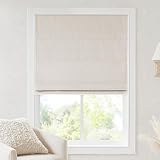
Madison Park Roman Shade, Blackout Blinds Thermal Insulated, 35x64 Linen

Boolegon Blackout Roman Shades for Indoor Windows, Linen White, Custom Size
How to Prevent Parts Damage to Hobbled Roman Blind
- Raise and lower the blind evenly every time: Hobbled Roman blinds rely on synchronized cord movement to keep the cascading loops balanced. Pulling at an angle or yanking from one side places uneven tension across the rear cord runs, which can wear rings, distort loops, and shorten pulley life.
- Do not leave the loops half-caught on furniture or window handles: Because hobbled Roman blinds project forward more than flat Roman styles, the lower folds can snag easily. Repeated snagging can bend support rods, tug stitched rings loose, and gradually pull one section out of shape.
- Dust the back hardware as well as the front fabric: The front looks decorative, but the real wear points are usually behind the blind. Keeping cords, rings, and the headrail route cleaner reduces abrasion, especially on blinds with lined fabric and deeper hobbled folds.
- Watch for sunlight damage near the rear ring lines: On older hobbled Roman blinds, UV exposure can weaken the lining where the rings are sewn. Once the stitching area becomes brittle, the cord path starts tearing through the fabric instead of gliding normally.
- Replace worn cord early instead of waiting for a full break: A slightly fuzzy or flattened lift cord often gives warning before failure. Swapping it early helps protect the cord lock and pulleys too, and you can check replacement Roman blind cord options on Amazon.
- Keep the headrail mounted tightly and square: Even a small tilt in the rail can make a hobbled Roman blind hang heavier on one side, which changes how the loops stack. Periodically check brackets and clips so the blind is supported evenly across its width.
- Avoid over-compressing the folds when the blind is fully raised: Forcing the stack tighter than it naturally wants to sit can crush the rods and strain the top fold area. Hobbled Roman blinds need room for their fuller layered profile, so gentle operation matters more than with flatter styles.
- Store removed blinds flat and supported during decorating or cleaning: If a hobbled Roman blind is left folded awkwardly off the window, the rods and stitched loop structure can twist. Proper storage prevents the exact shape memory problems that later look like mysterious hardware failure.
Hobbled Roman Blind Parts FAQ
What replacement part fails most often on a hobbled Roman blind?
The lift cord is usually the first part to wear out because hobbled Roman blinds use repeated cord movement to maintain their layered loops. Sewn rings and cord locks are also common failure points, especially on heavier blinds with thick fabric and lining.
Can I use standard Roman blind parts on a hobbled Roman blind?
Sometimes yes, but not always. Basic items like lift cord, rings, cord locks, and some pulleys may overlap with standard Roman blind hardware. The difference is that a hobbled Roman blind is more sensitive to spacing, support, and even lifting, so part size and placement matter more.
Why does my hobbled Roman blind lose its looped shape even when the fabric is fine?
That usually points to a parts problem rather than a fabric problem. Missing rings, bent support rods, uneven cord tension, or a damaged pulley route can all flatten or distort the signature hobbled cascades while the visible front fabric still looks usable.
Do I need to replace all the cords at once?
If one cord has snapped and the others are the same age, replacing all of them is often the safer long-term choice. Mixed old and new cords can stretch differently, and on a hobbled Roman blind that difference may show up as uneven lifting and irregular loop depth.
Is a repair kit worth buying for a hobbled Roman blind?
Yes, especially when the blind has several small failures at once or when you are not yet sure which single component is causing the issue. A repair kit can be a practical choice if you need cords, rings, and hardware together instead of ordering each part separately.
How do I know if the blind should be replaced instead of repaired?
If the lining is tearing in multiple places, the fabric is sun-damaged, many ring positions have failed, and the blind no longer forms consistent hobbled loops across most of its width, full replacement is usually the better option. If the fabric is still sound, parts replacement is often enough.
Where can I buy Hobbled Roman Blind replacement parts online?
You can usually find cords, rings, cord locks, brackets, rods, and repair kits through online marketplaces. For quick browsing, try Amazon search results for Hobbled Roman blind parts or compare availability on eBay.

60 PCS Vertical Blind Repair Tabs Kit Clear Fixer Verticle Blinds Snap in Replacement Slats Parts Panels
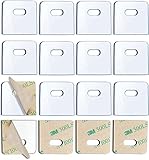
SOGEWO (16 Set/32 Pieces) Clear Vertical Blind Repair Tabs, Vertical Blinds tabs/Blind Fixers for Vertical Blinds Replacement Slats & Parts
