
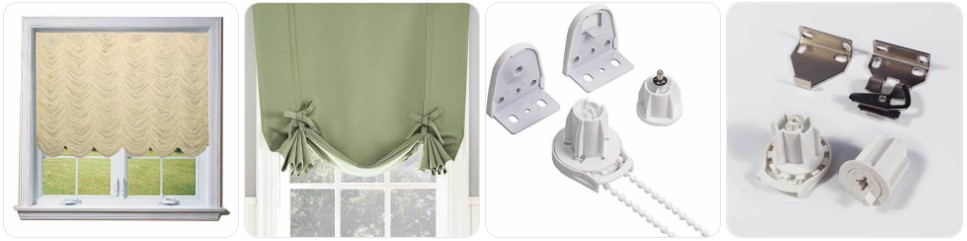
Balloon Blind replacement parts are usually worth buying before you replace the full shade, because many problems come from the lifting hardware rather than the decorative fabric itself. Balloon blinds create soft gathered poufs, so they rely on cords, rings, guides, and support hardware working together in the right positions. If your blind lifts unevenly, sags into one side, loses its rounded shape, or no longer stays up, the fix is often a small part such as a cord lock, ring, pulley, or lift cord. This guide explains the most useful Balloon Blind replacement parts, how to identify the right one, when to repair instead of replace, and where to shop for items like Balloon blind parts on Amazon without guessing.
Buy Balloon Blind Parts Online
Lift cord is the most common wear item on a Balloon Blind because it threads through multiple rings and does all the raising work. Frayed, stretched, or snapped cord causes uneven poufs, sloppy stacking, and blinds that refuse to stay level. » find on amazon / find on ebay
A worn cord lock lets the blind drift downward after you raise it, which is especially noticeable on Balloon Blinds because the gathered fabric loses its intended depth and symmetry. Replacing the lock often restores reliable height control without changing the whole headrail. » find on amazon / find on ebay
Balloon Blinds depend on properly spaced sew-on rings to guide each lift line and shape the draped scallops correctly. Missing or cracked rings can make one pouf hang lower than the others and put extra stress on the remaining cords. » find on amazon / find on ebay
Some Balloon Blind systems use small pulleys or cord guides at the top board to redirect several lift cords into one operating line. When they seize or crack, the blind can feel rough, noisy, or much heavier on one side during lifting. » find on amazon / find on ebay
Loose or bent mounting brackets can make a Balloon Blind hang forward or sit unevenly across the top, which distorts the decorative gathered shape below. New brackets help keep the board straight and the folds balanced from left to right. » find on amazon / find on ebay
The bottom operating end of a Balloon Blind often uses a condenser or tassel to keep multiple lift cords tidy. If it breaks, the cords can separate, tangle, or lift unevenly, making the blind harder to control and less attractive. » find on amazon / find on ebay
A repair kit is the best option when your Balloon Blind has several small failures at once, such as worn cord, missing rings, and tired cord guides. Kits can save time by giving you matching core hardware for one complete refresh. » find on amazon / find on ebay
Signs You Need Replacement Parts for Your Balloon Blind
- The bottom poufs no longer look evenly rounded: Balloon Blinds are supposed to create balanced gathered sections. If one side droops or one balloon looks flatter than the others, a missing shade ring or stretched lift cord is often the real problem.
- The blind lifts higher on one side than the other: When a Balloon Blind climbs crookedly, the issue is commonly a cord path failure, cracked guide, or ring position problem. Uneven lift is rarely just cosmetic; it usually means the hardware is no longer sharing the fabric weight correctly.
- The gathered fabric collapses when you raise it: If the blind used to form full rounded swags but now bunches into a lumpy stack, check for worn rings, frayed cords, or a slipping cord lock. The shape depends on controlled tension at several points, not just the fabric sewing.
- The blind slowly slides down after you set the height: A Balloon Blind that will not stay raised normally needs a new cord lock or a fresh operating cord. This is one of the clearest signs that replacement hardware will help more than cleaning or re-dressing the folds.
- You feel scraping or snagging during operation: Balloon Blinds should move with steady resistance, not sharp jerks. Snagging often points to damaged pulley wheels, rough guides, or cord abrasion at the top board, and continued use can quickly break the remaining lines.
- The center swag looks normal but the outer edges sag: That pattern usually means the outer lift lines are no longer taking tension evenly. Check the side rings, edge guides, and outer cord runs before assuming the whole blind is worn out.
- You can see loose cords behind the fabric lining: On Balloon Blinds, hidden lift lines should stay neatly routed. If cords begin hanging loose or drifting behind the shade, replacing the affected guides, pulls, or ring attachments is usually the safest fix before the cords tangle permanently.

Leinuosen 12 Pieces Vertical Blind Clips Stems Replacement Parts | Vertical Blind Carrier Stems, 8 mm Head, Replacement Parts for 3-1/2 or 5 Inch Vertical Blind Vanes, Headrail Accessories

60 PCS Vertical Blind Repair Tabs Kit Clear Fixer Verticle Blinds Snap in Replacement Slats Parts Panels
Maitys 12 Pieces Blinds Wand Replacement Hardware Repair | Window Wand Tip for Broken Horizontal Vertical Blinds Replacement Parts for Interior Windows
How to Identify the Right Balloon Blind Replacement Part
- Start with the lift style first: Balloon Blinds are often confused with Roman shades, but the hardware layout matters more than the name. Check whether your blind uses multiple rear lift cords joining into one pull cord, because that tells you to shop for Roman or Balloon style repair parts rather than slat-blind hardware.
- Count the cord lines before buying: A narrow Balloon Blind may use fewer lift lines than a wide one, and the number of cords usually matches the number of key guide paths and lower shaping points. If you buy a repair kit, make sure it supports the same number of lift runs your blind already uses.
- Inspect the ring spacing on the back of the fabric: Balloon Blinds use ring placement to control where the fabric gathers into rounded poufs. If you are replacing rings, measure the distance between rows and edge positions so the new hardware preserves the original drape instead of flattening the balloons.
- Check whether the top uses pulleys or simple cord guides: Some Balloon Blinds route cords through small pulleys fixed to a wood board, while others use low-profile guides. Matching that detail matters because a pulley-based blind can wear badly if you substitute the wrong guide type.
- Match the cord diameter, not just the color: Balloon Blind lift cords must move cleanly through rings and locks without slipping. A cord that is too thick can drag, while one that is too thin may slip through the lock or wear faster under the concentrated fabric load.
- Examine the mounting method at the top board: If the blind is mounted on a board with brackets, take one bracket off and compare its shape before ordering. Balloon Blinds often need the board to sit straight and close to level, so a near-match bracket can still distort the finished swags.
- Look at where the shape fails during lifting: If the rounded sections disappear only on one side, prioritize edge rings or the outer lift path. If the whole blind slides down together, the cord lock or operating cord is the more likely replacement part.
Should You Repair or Replace the Whole Balloon Blind?
Repairing a Balloon Blind usually makes sense when the fabric is still attractive, the lining is intact, and the gathered shape returns once you manually arrange the folds. In that situation, the problem is commonly mechanical: worn lift cord, broken rings, a failing cord lock, or tired top guides. Replacing those parts is far cheaper than ordering a new custom treatment, especially if the blind uses a fabric you still love. Small items such as lift cord, sew-on rings, and a repair kit can often restore function without changing the look of the room.
Replacing the full Balloon Blind is usually the better choice when the fabric is sun-faded, the lining has dry rot, several stitch lines have failed, or the decorative fullness is gone even after the hardware is corrected. Because Balloon Blinds are more fabric-dependent than many other window coverings, there is a point where new hardware will not fix sagging caused by worn textile structure. If the shade no longer forms attractive poufs even with correct tension, moving up to a new Balloon blind may be more practical than rebuilding every component.
LazBlinds No Drill Cordless Cellular Shades, 29" W × 36" H, White | Light Filtering Honeycomb Shades Thermal Insulation Noise Reduction Glare Control Blinds for Windows

NICETOWN Thermal Insulated Blackout Short Curtain - Bathroom Curtain Gray Tie Up Shade for Small Window, Window Valance Balloon Roman Blind (Rod Pocket Panel, 46 inches W x 63 inches L)

Boolegon No Drill No Tools Roller Shades for Windows, Blackout Linen Fabric, Cordless Roller Blinds, Thermal Insulated UV Protection Window Shades for Home,Bedroom,Office, Blackout Brown,Custom Size
How to Prevent Parts Damage to Balloon Blind
- Raise the blind evenly every time: Balloon Blinds put decorative pressure on several lift lines at once, so jerking one side faster than the other twists the gathering pattern and overloads individual rings. Use a smooth, centered pull to protect the hidden lift system.
- Do not leave the blind half-caught in a twisted pouf shape: If one balloon fold is trapped behind another, the cord tension becomes uneven and can pull side rings out of alignment. Reset the fabric gently before the next lift instead of forcing it upward.
- Keep the rear rings and cord paths free of dust buildup: Fabric shades collect lint at the back, and Balloon Blind cords slide through several contact points. Light vacuuming and gentle dust removal reduce friction that can fray cords or make top guides wear faster.
- Avoid overloading the bottom edge with added trim or ornaments: Balloon Blinds already rely on carefully balanced weight distribution. Extra tassels, clips, or decorative additions can change how the swags form and place too much strain on the outer lift lines.
- Protect the fabric from moisture and long-term sun damage: When lining and face fabric weaken, the stitching that holds shade rings can loosen even if the hardware is still good. On Balloon Blinds, weak fabric can destroy good parts by changing how weight transfers into the lift system.
- Replace fraying cord early instead of waiting for a full break: A worn cord often rubs harder through the next ring and guide in line. Swapping it early with a matching replacement lift cord is cheaper than repairing multiple failed parts later.
- Check bracket tightness after cleaning or redecorating: Balloon Blinds need a level top mounting point to keep their soft gathered sections balanced. If the board shifts even slightly, the swags can become uneven and force the lift hardware to work against the fabric shape.
Balloon Blind Parts FAQ
What replacement part fails most often on a Balloon Blind?
The lift cord is usually the first part to wear out because it runs through multiple rings and carries the operating load every time the blind is raised. On older shades, sew-on rings and cord locks are also common failure points.
Can I use Roman shade parts on a Balloon Blind?
Often yes, especially for lift cord, cord locks, pulleys, guides, and sew-on rings, because Balloon Blinds and Roman-style shades use similar lift systems. It is still smart to compare dimensions and cord routing before buying a Roman shade repair kit.
Why does my Balloon Blind still look uneven after I changed the cord?
If the new cord fixed movement but not the shape, the problem may be ring placement, stretched fabric, uneven bracket mounting, or a worn cord lock that does not hold equal tension. Balloon Blinds depend on both working hardware and the original gathered fabric geometry.
Do I need to replace all the rings if only one broke?
Not always, but if the blind is older and several rings feel brittle, replacing the full set is often better. A single new ring beside multiple aging rings can leave you repairing the same blind again very soon.
Is a Balloon Blind repair kit better than buying parts one by one?
A repair kit is usually better when the blind has more than one small issue, such as frayed cord, missing rings, and worn guides. Buying individual parts makes more sense when you know the exact failure and the rest of the lift system is still in good condition.
When should I replace the whole Balloon Blind instead of the parts?
Replace the whole blind when the fabric is heavily faded, the lining has deteriorated, several stitched ring points are tearing out, or the gathered poufs no longer form properly even after the hardware has been corrected. In that case, a new Balloon blind is usually the more reliable long-term fix.
60 PCS Vertical Blind Repair Tabs Kit Clear Fixer Verticle Blinds Snap in Replacement Slats Parts Panels

joytrace RV Pleated Shade Repair Kit, RV Window Shade Restringing Kit, Repair and Maintain of Day Night Pleated Shade (White)
