Window blinds in United States of America are easy to buy online, from big-box home improvement stores, custom blind specialists, local showrooms, and professional installers. For most homes, the best option depends on whether you want budget ready-made blinds, made-to-measure blinds, motorized smart blinds, or full-service measuring and installation. This guide covers the main blind types, average U.S. pricing, where to buy, installation and repair options, and how to find a window blinds store near you. For more general buying locations, you can also check this helpful guide on where to buy window blinds.
- Table of Contents:
- Window Blinds Availability in United States of America/Cost
- Where to Buy Window Blinds in United States of America
- Window Blinds Installation & Repair United States of America
- Window Blinds in United States of America Near Me Finder
- United States of America Buying Guide & Installation/Repair Tips
- FAQ About Window Blinds in United States of America
Types of Window Blinds Available in United States of America & Average Cost
Window blinds are widely available across United States of America, from affordable off-the-shelf vinyl mini blinds sold at hardware stores to custom wood, faux wood, cellular, roller, and motorized systems ordered online or through local design showrooms. In the U.S., basic prefabricated blinds are usually the cheapest option, while custom blinds, smart blinds, and professional installation increase the total cost. For a classic adjustable slat option, many U.S. homeowners still choose a Venetian Blind style because it works well for bedrooms, living rooms, rental units, offices, and street-facing windows.
- Mini Blinds: Mini blinds are one of the most affordable window blind types in United States of America. They are commonly sold in vinyl or aluminum at stores such as Walmart, Home Depot, Lowe’s, Target, and Amazon. They are popular for rental homes, apartments, dorm rooms, basements, and budget bedroom updates. Average U.S. cost is usually around $10 to $60 per window for basic ready-made blinds, while better-quality aluminum mini blinds may cost $25 to $100 per window depending on size.
- Faux Wood Blinds: Faux wood blinds are very common in United States of America because they look similar to real wood but handle humidity better. They are especially useful in kitchens, bathrooms, laundry rooms, coastal homes, and humid southern states such as Florida, Louisiana, Georgia, and Texas. Average U.S. cost is often around $30 to $150 per window for standard sizes, while custom faux wood blinds may range from $80 to $250+ per window.
- Wood Blinds: Real wood blinds are popular in U.S. homes where a warmer, more traditional, or premium look is preferred. They are often used in living rooms, dining rooms, home offices, and primary bedrooms. Wood blinds are lighter than faux wood but may not be ideal for high-moisture rooms. Average U.S. cost is usually around $75 to $300 per window, with custom hardwood options costing more for wide windows or specialty stains.
- Venetian Blinds: Venetian blinds are horizontal slat blinds that can be tilted for privacy and light control. In United States of America, the term may refer to aluminum, vinyl, faux wood, or wood slat blinds. They are easy to find at national retailers and are a practical choice for bedrooms, offices, rental units, and street-facing windows. Average U.S. cost ranges from about $20 to $200 per window depending on material, slat width, and whether the blinds are custom-sized.
- Vertical Blinds: Vertical blinds are widely used in United States of America for sliding glass doors, patio doors, balcony doors, and wide windows. They are common in apartments, condos, sunrooms, and homes with large rear-facing glass doors. Vinyl vertical blinds are usually the cheapest, while fabric and custom vertical systems cost more. Average U.S. cost is commonly around $50 to $250 for a standard patio door, with custom or premium materials costing more.
- Roller Blinds / Roller Shades: Roller blinds are popular in modern U.S. homes because they have a clean, simple look and are available in light-filtering, blackout, solar, and privacy fabrics. They are often used in bedrooms, media rooms, offices, nurseries, and large sunny windows. Average U.S. cost is usually around $25 to $200 per window for standard options, while custom blackout or solar roller shades may cost $100 to $400+ per window.
- Cellular / Honeycomb Blinds: Cellular blinds are a strong choice in United States of America for energy-conscious homeowners because their honeycomb design helps trap air near the window. They are useful in colder northern states, hot desert states, and rooms with drafty windows. They are available in light-filtering, blackout, cordless, top-down/bottom-up, and motorized styles. Average U.S. cost is often around $50 to $300 per window, with premium custom cellular shades costing $150 to $500+ per window.
- Roman Blinds / Roman Shades: Roman blinds are fabric window treatments that fold neatly when raised. In the U.S., they are often chosen for bedrooms, formal dining rooms, living rooms, and traditional interiors where a softer look is preferred. They can be ordered in many fabrics, linings, and blackout options. Average U.S. cost is commonly around $75 to $350 per window, while designer fabrics and custom sizes may cost $300 to $800+ per window.
- Bamboo / Woven Wood Blinds: Bamboo and woven wood blinds are popular in United States of America for coastal, farmhouse, boho, tropical, and natural interior styles. They are common in living rooms, sunrooms, breakfast nooks, and casual bedrooms. Privacy liners or blackout liners are often needed if the room faces a street or neighbor. Average U.S. cost is usually around $60 to $300 per window, with custom woven wood shades costing more.
- Blackout Blinds: Blackout blinds are popular in U.S. bedrooms, nurseries, shift-worker rooms, home theaters, and city apartments with streetlights outside. They may be roller shades, cellular shades, Roman shades, or blinds with room-darkening liners. Average U.S. cost usually ranges from $40 to $250 per window for common sizes, while custom blackout systems may cost $150 to $500+ per window.
- Motorized / Smart Blinds: Motorized blinds are increasingly popular in United States of America, especially for high windows, large windows, smart homes, luxury remodels, and rooms where daily light control matters. Battery-powered options are easier to retrofit, while hardwired systems may require an electrician. Average U.S. cost often starts around $150 to $400 per window for simpler motorized shades and can reach $500 to $1,000+ per window for premium custom smart blinds, depending on size, motor type, fabric, remote control, and smart-home integration.
- No-Drill Blinds: No-drill blinds are becoming more common in U.S. apartments, dorms, condos, and rental homes where tenants may not want to put screws into the trim or wall. They are typically sold as tension-fit, adhesive, or bracket-free shades. Average U.S. cost is usually around $25 to $150 per window, depending on size and style.
For smaller DIY jobs, you can also compare ready-made options such as cordless window blinds on Amazon, faux wood window blinds, and blackout roller blinds before choosing a custom quote.
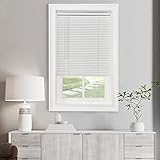
Cordless Light Filtering Mini Blinds for Indoor, 34 x 64 in, Pearl White | Cordless Lift and Light-Filtering Control: Slat-Based Blind Construction with Adjustable Light Control.

LOTUS & WINDOWARE Cordless Faux Wood Blinds, 35" Wide x 60" Long, Smooth, Snow White, 2 Inch Horizontal Blinds – for Living Room, Bedroom, Interior Door Windows
Where to Buy Window Blinds in United States of America (Online Stores and Local Shops)
In United States of America, you can buy window blinds from national home improvement chains, online custom blind companies, design showrooms, department stores, and local window treatment dealers. Big-box stores are best for quick, affordable blinds, while custom blind websites and showroom-based companies are better if you need exact sizing, premium materials, designer fabrics, or professional measuring and installation.
- Blinds.com
- Blinds.com Official Website
- Contact: 800-505-1905
- Hours: Customer support hours may vary, but Blinds.com commonly lists support 7 days a week with weekday and weekend hours on its contact pages.
- The Home Depot
- The Home Depot Window Blinds
- Contact: Use your local Home Depot store number or call general customer support through the website. Installation service is available through Home Depot Services in many U.S. areas.
- Hours: Store hours vary by location, but many U.S. Home Depot stores are open daily with extended morning and evening hours.
- Lowe’s
- Lowe’s Window Blinds
- Contact: 1-877-GO-LOWES (1-877-465-6937); for installation questions, Lowe’s also lists 1-888-516-1010.
- Hours: Store hours vary by location, but many U.S. Lowe’s stores are open daily with morning-to-evening hours.
- SelectBlinds
- SelectBlinds Official Website
- Contact: 888-257-1840
- Hours: Online ordering is available 24/7; phone and chat support hours may vary.
- Budget Blinds
- Budget Blinds Official Website
- Contact: 866-590-6341 or use the local franchise finder by ZIP code.
- Hours: Hours vary by local franchise because Budget Blinds operates through local U.S. franchise locations.
- The Shade Store
- The Shade Store Official Website
- Contact: 800-754-1455;
- Hours: Showroom hours vary by city and state; online design help and showroom appointments are available through the website.
- Blinds To Go
- Blinds To Go Official Website
- Contact: Use the store locator or online consultation form for your nearest showroom.
- Hours: Store hours vary by showroom location in the United States.
- Wayfair
- Wayfair Blinds and Shades
- Contact: Use Wayfair customer service through your online account or the website help center.
- Hours: Online ordering is available 24/7; customer support hours vary.
- Amazon
- Amazon Window Blinds Search
- Contact: Use Amazon customer service through your account order page.
- Hours: Online shopping is available 24/7; delivery speed depends on seller, location, and Prime availability.
- Walmart
- Walmart Window Blinds
- Contact: Use the Walmart website, app, or local store phone number.
- Hours: Store hours vary by location; online ordering is available 24/7.
- Target
- Target Window Blinds
- Contact: Use Target customer service or your local store listing.
- Hours: Store hours vary by location; online ordering is available 24/7.
Window Blinds Installation & Repair Services in United States of America
Window blind installation and repair services in United States of America are available through national retailers, local franchises, independent handymen, window treatment specialists, and repair-parts suppliers. For simple inside-mount blinds, many homeowners install them themselves. For custom blinds, oversized windows, sliding doors, motorized shades, high windows, or whole-house projects, professional measuring and installation can prevent costly sizing mistakes.
- The Home Depot Blinds Installation
- Home Depot Blinds Installation Service
- Contact: Use the Home Depot Services page or your local store to request blinds measuring and installation.
- Hours: Service appointment availability varies by ZIP code and local provider schedule.
- Lowe’s Blinds, Shades & Shutters Installation
- Lowe’s Blinds Installation Service
- Contact: 1-888-516-1010 for installation questions; 1-877-GO-LOWES for general support.
- Hours: Appointment availability varies by local installer and project location.
- Blinds.com Professional Measure & Install
- Blinds.com Measuring and Installation Help
- Contact: 800-505-1905;
- Hours: Customer service hours are commonly listed as Monday to Friday 9 AM–9 PM EST and Saturday to Sunday 10 AM–7 PM EST, but check the website for the latest schedule.
- Budget Blinds Local Franchise Service
- Budget Blinds Local Service Finder
- Contact: 866-590-6341 or use the ZIP code finder to locate your local franchise.
- Hours: Varies by franchise location. Repairs are usually handled by the Budget Blinds franchise that originally sold or installed the product.
- The Shade Store Measurement and Installation
- The Shade Store Customer Service
- Contact: 800-754-1455;
- Hours: Showroom and appointment hours vary by U.S. city; contact the nearest showroom or book through the website.
- Blinds To Go Measure and Install Services
- Blinds To Go Measure and Install Services
- Contact: Use the online appointment system or call your nearest Blinds To Go showroom.
- Hours: Appointment times and showroom hours vary by location.
- Fix My Blinds
- 615 Conrad St., Colorado Springs, CO 80915
- Contact:
- Hours: Monday-Friday, 8 AM-4 PM MT. Office and warehouse are closed to the public; purchases are made through the website.
- Angi
- Angi Home Service Pros
- Contact: 1-888-819-ANGI
- Hours: Angi lists representative phone support Monday-Friday, 8 AM-8 PM EST; local blind installer availability varies.
- HomeAdvisor
- HomeAdvisor Window Blind Installers Near You
- Contact: Use the online matching form to find local installers in your ZIP code.
- Hours: Installer hours vary by local contractor.
Window Blinds in United States of America Near Me Finder
To find window blinds in United States of America near you, start with your ZIP code because availability, installation coverage, delivery speed, and showroom access vary a lot between U.S. cities, suburbs, and rural areas. Search terms like window blinds store near me, custom blinds near me, blind repair near me, window shade installer near me, and motorized blinds installer near me usually bring up local dealers, big-box stores, and independent installers. If you live in a major metro area such as New York City, Los Angeles, Chicago, Houston, Phoenix, Philadelphia, San Antonio, San Diego, Dallas, Austin, San Jose, Jacksonville, or Seattle, you will usually have more custom showroom options. If you live in a smaller town, big-box retailers, online custom blind companies, and local handymen may be the most practical choice.
Before choosing a nearby blinds store or installer in United States of America, check recent Google reviews, confirm whether they measure before ordering, ask whether old blind removal is included, and verify if they install products purchased elsewhere. Many installers only install blinds they sell, while handymen may install Amazon, Home Depot, Lowe’s, Walmart, or Wayfair blinds as long as the measurements and hardware are correct.
United States of America Buying Guide & Installation/Repair Tips
- Measure in inches, not feet: Most U.S. window blind retailers ask for measurements in inches, usually width first and height second. For inside-mount blinds, measure the inside width at the top, middle, and bottom of the window opening, then use the narrowest width. For height, measure left, center, and right, then follow the retailer’s instructions.
- Decide between inside mount and outside mount before ordering: Inside-mount blinds sit inside the window frame and look cleaner, but they require enough mounting depth. Outside-mount blinds attach to the wall or trim and are better for shallow frames, uneven windows, extra privacy, or blocking more light around the edges.
- Check U.S. cordless safety standards: Cordless blinds are now the safer and more common choice in United States of America, especially for homes with children or pets. If you are replacing older corded blinds, consider cordless, wand-control, motorized, or continuous-loop systems with proper tension devices.
- Use faux wood in humid U.S. climates: In humid states such as Florida, Louisiana, Mississippi, Alabama, Georgia, South Carolina, and coastal Texas, faux wood or PVC blinds usually handle moisture better than real wood. Real wood can warp if used in bathrooms, laundry rooms, or damp coastal homes.
- Use cellular shades for energy concerns: If you live in a cold northern state or a hot state with high cooling bills, cellular shades can be a smart upgrade. They are especially useful for older windows, drafty bedrooms, sunny west-facing windows, and rooms where comfort matters.
- Choose blackout blinds carefully for bedrooms: In U.S. cities with streetlights, traffic lights, neighbors, or early sunrise exposure, blackout roller shades or blackout cellular shades are usually better than standard slatted blinds. For the darkest result, outside mount or side channels may reduce light gaps.
- Compare ready-made vs custom before spending more: Ready-made blinds from Home Depot, Lowe’s, Walmart, Target, IKEA, and Amazon can work well if your windows are standard sizes. Custom blinds are worth considering for unusual window sizes, very wide windows, premium rooms, or whole-house matching.
- Budget more for professional installation in large U.S. homes: A few small blinds may be easy to install yourself, but whole-house installation can take several hours. Professional installation is especially useful for high windows, sliding doors, motorized blinds, bay windows, and very wide shades.
- Ask if old-blind removal is included: In United States of America, some installers include removal of old blinds, while others charge extra. If you are replacing a whole house of blinds, disposal fees can add up, so confirm this before accepting the quote.
- Use local showrooms for premium rooms: For living rooms, dining rooms, primary bedrooms, and street-facing windows, visiting a local showroom can help you compare real fabric, slat color, opacity, and texture. Online photos can look different under U.S. home lighting conditions.
- Order samples before custom blinds: Many U.S. online blind retailers offer free or low-cost samples. This is especially important for white, gray, beige, woven wood, and blackout fabrics because undertones can look different next to your paint color, flooring, and furniture.
- Check return rules before buying custom sizes: Many custom blinds in United States of America cannot be returned unless there is a defect or fit guarantee. Before ordering, double-check measurements, mounting depth, color, lift type, room-darkening level, and production time.
- Think about HOA and condo rules: Some U.S. condo buildings, apartment communities, and homeowners associations require white or neutral window coverings facing the street. Check rules before ordering colored blinds, bamboo shades, or visible blackout liners.
- For rental homes, choose no-drill or low-cost replacements: If you rent in United States of America, confirm with your landlord before drilling into trim or walls. Tension shades, no-drill blinds, temporary paper shades, or inexpensive mini blinds may be better for apartments and dorms.
- Repair before replacing expensive blinds: If your blind is custom, motorized, or part of a matching whole-house set, repair may be cheaper than replacement. Common U.S. repair parts include tilt mechanisms, cord locks, valance clips, wand tippers, ladder strings, carriers, clutches, brackets, and mounting hardware.
- Match brand parts when possible: Blind repair parts are not always universal. Before ordering replacement parts, identify the brand, headrail shape, slat size, clutch type, cord diameter, and mounting bracket style. Taking clear photos can help repair suppliers or local shops match the correct part.
- Be careful with motorized blind repairs: Battery-powered motorized blinds may only need charging, battery replacement, remote pairing, or limit reset. Hardwired motorized blinds may require a professional installer or electrician. Do not open electrical components unless you know what you are doing.
- Compare at least two quotes for custom projects: For whole-house blinds in United States of America, prices can vary widely between big-box installation, online custom retailers, local dealers, and luxury showrooms. Get at least two quotes and compare product quality, warranty, measuring service, installation, and lead time.
- Buy extra brackets and clips when possible: If you are ordering replacement blinds online, consider adding spare mounting brackets, valance clips, hold-down brackets, or chain tensioners. These small parts are easy to lose during installation and may be harder to match later.
- Consider smart-home compatibility before buying motorized blinds: If you use Alexa, Google Home, Apple Home, SmartThings, or another platform in United States of America, confirm whether the blinds require a separate bridge, hub, app, remote, or subscription. Battery life and charging access also matter for tall windows.
FAQ About Window Blinds in United States of America
Where is the best place to buy window blinds in United States of America?
The best place depends on your budget and project. For affordable ready-made blinds, Home Depot, Lowe’s, Walmart, Target, IKEA, Amazon, and Wayfair are common choices. For custom blinds, Blinds.com, SelectBlinds, Budget Blinds, The Shade Store, Blinds To Go, and local window treatment dealers are better options.
How much do window blinds cost in United States of America?
Basic ready-made blinds can cost around $10 to $100 per window, while custom blinds often range from about $70 to $600+ per window depending on size, material, and features. Professionally installed projects often cost more, especially for custom, motorized, or whole-house window treatments.
How much does professional blind installation cost in United States of America?
Professional blind installation in the U.S. varies by window count, product type, installer, and location. Simple installations may be priced per window or by project, while custom projects can include measuring, product cost, installation labor, removal, and disposal. For large jobs, it is best to get a written quote before ordering.
Can I install window blinds myself in United States of America?
Yes. Many ready-made blinds sold in United States of America are designed for DIY installation and include brackets, screws, and instructions. DIY installation is easiest for small standard windows. Professional help is better for high windows, sliding doors, very wide blinds, motorized blinds, and expensive custom products.
Are cordless blinds required in United States of America?
Cordless blinds are now the standard safer option for many residential window coverings sold in United States of America. They are strongly recommended for homes with children and pets. If you still use older corded blinds, consider replacing them with cordless, wand-control, motorized, or properly tensioned systems.
What blinds are best for U.S. apartments and rental homes?
For U.S. apartments and rentals, inexpensive vinyl mini blinds, faux wood blinds, no-drill shades, and temporary paper shades are practical choices. Before drilling into trim or walls, check your lease or ask your landlord. Some apartments require white or neutral window coverings facing outside.
What blinds are best for hot U.S. states?
For hot states such as Arizona, Nevada, Texas, Florida, and Southern California, solar shades, cellular shades, blackout roller shades, and light-colored blinds can help reduce glare and heat. West-facing and south-facing windows usually need better heat and light control than shaded windows.
What blinds are best for cold U.S. states?
For colder states, cellular or honeycomb shades are often a good choice because they add insulation at the window. They are useful in bedrooms, living rooms, older homes, and drafty windows. Blackout cellular shades can also help with both privacy and room comfort.
Are faux wood blinds better than real wood blinds in United States of America?
Faux wood blinds are usually better for bathrooms, kitchens, laundry rooms, and humid climates because they resist moisture better. Real wood blinds are lighter and have a more natural premium look, but they can be more expensive and may not be ideal for high-humidity rooms.
Where can I repair window blinds in United States of America?
You can repair blinds through local window treatment shops, the original retailer, Budget Blinds franchises, handyman services, or online parts suppliers such as Fix My Blinds. For custom blinds, contact the original seller first because they may have the exact parts or warranty information.
Is it cheaper to repair or replace window blinds in United States of America?
For cheap mini blinds, replacement is often cheaper than repair. For custom blinds, faux wood blinds, vertical blinds, woven wood shades, cellular shades, and motorized blinds, repair may be more cost-effective if the fabric, slats, or headrail are still in good condition.
Can Home Depot or Lowe’s install blinds bought elsewhere?
Policies may vary by location and service program. In many cases, big-box installation services are tied to products purchased through that retailer. If you already bought blinds from Amazon, Wayfair, Walmart, or another store, a local handyman or independent installer may be more flexible.
How do I find custom blinds near me in United States of America?
Search Google Maps for custom blinds near me, window treatment showroom near me, blinds installer near me, or blind repair near me. Add your city or ZIP code for better results. Also check local reviews, photos, warranty details, and whether the company offers in-home measuring.
What are the best blinds for privacy in U.S. street-facing homes?
For street-facing windows, faux wood blinds, Venetian blinds, cellular shades, blackout roller shades, and top-down/bottom-up shades are good privacy options. Top-down/bottom-up shades are especially useful because they let light in from the top while blocking the lower part of the window.
What blinds are best for sliding glass doors in United States of America?
Vertical blinds are still one of the most common choices for U.S. sliding glass doors because they open side-to-side. Other options include vertical cellular shades, panel track blinds, sliding woven panels, and custom drapery-style window treatments.
Should I buy blinds online or from a local U.S. showroom?
Buy online if you are comfortable measuring and installing, or if you want lower prices and lots of choices. Use a local showroom if you want design help, physical samples, professional measuring, premium fabrics, or a full-service installation experience.
Summary
Window blinds in United States of America are widely available through big-box stores, online custom blind retailers, local showrooms, franchise installers, and repair specialists. Budget buyers can choose mini blinds, faux wood blinds, vertical blinds, and ready-made roller shades from retailers such as Home Depot, Lowe’s, Walmart, Target, Wayfair, and Amazon. Homeowners who want better fit, premium materials, smart controls, blackout performance, or full-service installation can compare Blinds.com, SelectBlinds, Budget Blinds, The Shade Store, Blinds To Go, and local window treatment companies. For repairs, start with the original seller, then check local blind repair shops, handyman services, or parts suppliers such as Fix My Blinds. The most important buying step is accurate measurement: decide on inside mount or outside mount, check depth requirements, order samples when possible, and confirm return, warranty, and installation policies before purchasing.

60 PCS Vertical Blind Repair Tabs Kit Clear Fixer Verticle Blinds Snap in Replacement Slats Parts Panels

joytrace RV Pleated Shade Repair Kit, RV Window Shade Restringing Kit, Repair and Maintain of Day Night Pleated Shade (White)
