
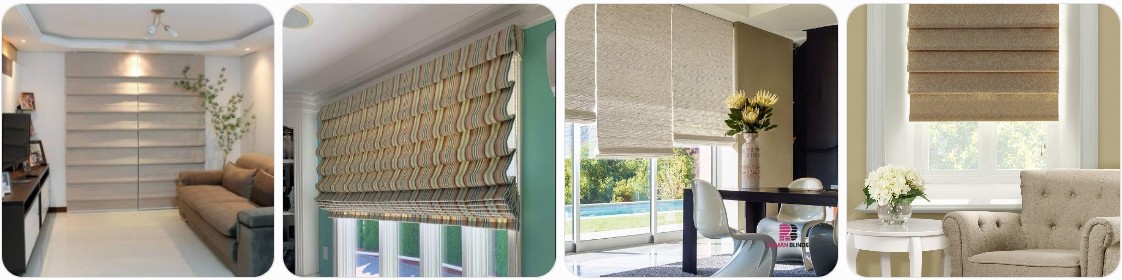
Cascading Roman blinds are a soft, decorative window treatment that combines the neat operation of Roman blinds with fuller layered folds. This buying guide explains how they work, what they cost, where to buy them online, how to find local stores, and what to check before ordering so you can choose the right style, fabric, size, and installation option for your home.
- Table of Contents:
- Cascading Roman Blinds At a Glance
- What Are Cascading Roman Blinds? How Cascading Roman Blinds Work?
- Cascading Roman Blinds Pros and Cons
- Cascading Roman Blinds Cost
- Where to Buy Cascading Roman Blinds Online
- How to Find Cascading Roman Blinds Stores Near You
- What to Check Before Buying Cascading Roman Blinds
- Cascading Roman Blinds Installation Options
- FAQ About Cascading Roman Blinds
Cascading Roman Blinds At a Glance
- Best for: Living rooms, bedrooms, dining rooms, formal spaces, bay windows, reading rooms, and any room where you want a soft fabric window treatment with a more elegant finish.
- Style: Layered, full, decorative, traditional, tailored, and softer than flat Roman blinds.
- How they look: The fabric forms visible horizontal folds or cascades, even when the blind is lowered, giving the window more texture and depth.
- Light control: Depends on fabric choice. Light-filtering fabric softens daylight, privacy lining improves screening, and blackout lining helps darken bedrooms.
- Privacy: Good when fully lowered, especially with privacy or blackout lining.
- Average cost: Around $60 to $250+ per blind for ready-made or semi-custom styles, and about $200 to $700+ per window for custom-made cascading Roman blinds depending on size, fabric, lining, controls, and installation.
- Installation difficulty: Moderate for DIY if the blind is ready-made and the window is straightforward; professional fitting is better for large, heavy, lined, or made-to-measure blinds.
- Main advantage: They give windows a soft, high-end, decorated look without using full-length curtains.
- Main drawback: They can be more expensive and bulkier than roller blinds, flat Roman blinds, or simple cellular shades.
What Are Cascading Roman Blinds? How Cascading Roman Blinds Work?
What Are Cascading Roman Blinds?
Cascading Roman blinds are a decorative type of Cascading Roman Blinds designed with soft horizontal folds that stack in a layered way. Unlike flat Roman blinds, which sit smoother when lowered, cascading Roman blinds keep a fuller folded appearance. This gives the window a richer fabric look and makes the blind feel more like a tailored soft furnishing rather than a plain window covering.
They are often chosen when appearance matters as much as privacy or light control. For example, they work well in bedrooms, formal living rooms, dining rooms, guest rooms, boutique-style interiors, and traditional spaces where a plain roller shade may look too simple. The cascading folds can also help patterned fabrics look more decorative, although very busy prints may not always line up perfectly across each fold.
The main thing that separates cascading Roman blinds from standard Roman blinds is the layered fold structure. When the blind is lowered, the folds still create depth. When raised, the fabric gathers into a soft stack near the top of the window. This makes them a good choice if you want a blind that looks attractive both open and closed.
How Cascading Roman Blinds Work?
Cascading Roman blinds work by lifting fabric panels through a system of cords, rings, tapes, rods, or sewn channels on the back of the blind. When the lift system is pulled or operated, the lower section rises first and the fabric folds upward into overlapping layers. The more structured the blind is, the neater the folds usually look.
Most cascading Roman blinds use one of several control options. Traditional versions may use a cord lock system, but many modern versions use a chain loop, cordless lift, or motorized mechanism. Cordless and motorized options are often preferred for child safety, cleaner styling, and easier operation on larger windows.
The way the blind performs depends heavily on the fabric and lining. A lightweight linen-style fabric gives a relaxed soft look, while thicker woven fabric creates fuller folds. Blackout lining helps block more light, interlining adds body and insulation, and privacy lining improves screening from outside. If the blind is too thin, the folds may look limp. If the blind is too thick, the stack can become bulky at the top.
If you are comparing products online, look for terms such as cascading Roman shade, hobbled Roman shade, soft fold Roman shade, looped Roman shade, or waterfall Roman blind. Some retailers use these names slightly differently, but they generally describe Roman-style fabric blinds with visible layered folds.

ARLO BLINDS Bamboo Roman Shades w/Valance 30" W x 74" H, Tuscan

Boolegon Blackout Roman Shades for Indoor Windows, Linen White, Custom Size
ARLO BLINDS Bamboo Roman Shades w/Valance 34" W x 60" H, Tuscan
Cascading Roman Blinds Pros and Cons
Pros of Cascading Roman Blinds
- Soft, elegant, high-end appearance.
- More decorative than flat Roman blinds.
- Good choice for bedrooms, living rooms, and dining rooms.
- Works well with textured, plain, linen-look, velvet, or patterned fabrics.
- Can be made with privacy, thermal, or blackout lining.
- Creates a finished look without needing curtains.
- Available in custom sizes for unusual windows.
- Can soften hard rooms with lots of glass, wood, tile, or plain walls.
- Looks attractive when raised because the folds stack decoratively.
- Can be paired with side curtains for a layered designer look.
Cons of Cascading Roman Blinds
- Usually more expensive than roller blinds.
- Fabric stack can block part of the window when raised.
- Not ideal for very damp bathrooms unless made with suitable fabric.
- Can collect dust in the folds.
- May need professional cleaning depending on fabric and lining.
- Large sizes can feel heavy to lift.
- Cheap versions may sag or fold unevenly.
- Not the best choice if you want maximum clear glass at the top of the window.
- Patterns may be interrupted by the folds.
- Custom orders may be harder to return if the measurements are wrong.
Cascading Roman Blinds Cost: What Price Should You Expect?
Cascading Roman blinds usually cost more than basic roller blinds because they use more fabric, more stitching, a more decorative fold structure, and often a better lining. The final price depends on width, height, fabric quality, lining type, control system, whether the blind is ready-made or custom, and whether you choose DIY or professional installation.
As a rough guide, small ready-made or semi-custom cascading Roman blinds may start around $60 to $120 per blind. Mid-range options often fall between $120 and $300 per blind. Custom-made cascading Roman blinds with premium fabric, blackout lining, interlining, cordless controls, or professional fitting can cost around $300 to $700+ per window. Very large windows, bay windows, designer fabrics, and motorized lift systems can push the price higher.
If you are still planning your budget, use a blind cost estimator before ordering. It can help you think through size, quantity, blind type, upgrades, and installation costs before you compare quotes.
- Budget range: About $60 to $150 per blind for basic ready-made or simple online options.
- Mid-range: About $150 to $350 per blind for better fabric, lining, and more size choices.
- Custom range: About $300 to $700+ per window for made-to-measure fabric, lining, and professional finish.
- Motorized range: Often $400 to $1,000+ per window depending on size, motor, power type, and brand.
- Installation cost: Often around $50 to $150+ per window, depending on your area and job complexity.
Where to Buy Cascading Roman Blinds Online
Amazon is useful if you want to compare ready-made Roman shades, soft-fold Roman shades, hobbled Roman shades, cordless Roman shades, blackout Roman blinds, and basic installation accessories in one place. When searching for cascading Roman blinds on Amazon, try more than one keyword because some sellers list them as “hobbled Roman shades,” “waterfall Roman shades,” or “soft fold Roman shades” instead of using the exact phrase “cascading Roman blinds.”
For the best results, check the width and height carefully, read the fabric description, confirm whether the shade is lined, and look closely at customer photos. Cascading Roman blinds rely on fabric structure, so real customer images can be more useful than studio photos. If the product is cordless, also check whether it uses a spring-loaded system, a continuous loop, or another lift design.
You can also browse cascading Roman blinds on Amazon if you want to compare different fabric colors, cordless styles, blackout options, and related Roman shade products.
Find Cascading Roman Blinds from Amazon »
ARLO BLINDS Bamboo Roman Shades w/Valance 30" W x 74" H, Tuscan
Boolegon Blackout Roman Shades for Indoor Windows, Linen White, Custom Size
ARLO BLINDS Bamboo Roman Shades w/Valance 34" W x 60" H, Tuscan
eBay can be a good place to look for discounted Roman blinds, discontinued fabric styles, second-hand custom shades, surplus stock, and hard-to-find sizes. It is especially useful if you are trying to match an existing blind or replace one shade in a room without buying a full new set. Search for cascading Roman blinds, hobbled Roman shades, soft fold Roman shades, and custom Roman blinds to see more options.
Before buying from eBay, check whether the blind is new, used, custom-made, or cut to size. Confirm the exact measurements, mounting type, bracket availability, fabric condition, and whether all hardware is included. If the listing shows only one blind, make sure it is enough for your window or room before ordering.
Find Cascading Roman Blinds from eBay »
- Blinds.com – Good for custom Roman shades, fabric choices, liners, measurement guidance, and made-to-order window treatments.
- SelectBlinds – Good for custom Roman shade options, cordless upgrades, blackout lining, and online measuring support.
- The Shade Store – Good for premium custom Roman shades, designer fabrics, showroom support, and professional measuring or installation options.
- Budget Blinds – Good for local consultation, measuring, custom Roman shades, and professional installation through local franchise locations.
How to Find Cascading Roman Blinds Stores Near You
The easiest way to find cascading Roman blinds near you is to search for local window treatment stores, custom blind shops, curtain makers, upholstery workrooms, and interior design showrooms. Because cascading Roman blinds are more fabric-based than many standard blinds, some of the best local options may be listed as curtain shops or custom drapery stores rather than basic blind retailers.
Start by searching for terms like “custom Roman blinds near me,” “Roman shades near me,” “hobbled Roman shades near me,” “soft fold Roman blinds near me,” and “window treatment store near me.” You can also use a local buying guide for where to buy window blinds to compare different store types before choosing between online ordering, big-box retailers, and local custom shops.
When you contact a local store, ask whether they offer cascading, hobbled, waterfall, or soft-fold Roman blind styles. Also ask if they provide fabric samples, in-home measuring, blackout lining, cordless controls, motorization, and installation. A good local store should be able to explain how deep the folds will be, how much window glass the blind will cover when raised, and whether the fabric you like is suitable for the style.
If you want a high-end result, local stores can be better than guessing online because they can measure your windows, recommend fabric weight, and explain mounting options. For simple windows and standard sizes, online buying may be enough. For bay windows, wide windows, heavy fabrics, or whole-room projects, local professional help can prevent expensive measuring mistakes.
What to Check Before Buying Cascading Roman Blinds
- Exact window measurements: Measure width and height carefully. For inside mount, measure inside the frame at several points. For outside mount, decide how much extra overlap you want for privacy and light control.
- Inside mount vs outside mount: Inside mount looks cleaner inside the recess, but outside mount can hide uneven frames and reduce side light gaps.
- Fold depth: Cascading Roman blinds have fuller folds, so check how much space the fabric stack will take when raised.
- Fabric weight: Medium-weight fabric usually works well. Very thin fabric may look limp, while very thick fabric may stack bulky.
- Lining type: Choose unlined for a lighter look, privacy lining for better screening, thermal lining for comfort, and blackout lining for bedrooms.
- Pattern placement: Large patterns may be interrupted by the folds. Plain, textured, striped, or small-scale patterns often work better.
- Control system: Compare corded, chain loop, cordless, and motorized options. Cordless or motorized styles are usually better for homes with children or pets.
- Room humidity: Avoid delicate fabrics in damp bathrooms, laundry rooms, or steamy kitchens unless the product is designed for those conditions.
- Cleaning method: Check whether the fabric can be spot-cleaned, vacuumed, professionally cleaned, or removed from the headrail.
- Mounting hardware: Make sure brackets, screws, cleats, or headrail parts are included before ordering.
- Return policy: Ready-made blinds may be returnable, but custom cascading Roman blinds usually have limited returns unless there is a manufacturing defect.
- Sample availability: Order fabric samples if color, texture, or light filtering matters. Fabric can look very different in natural light compared with product photos.
- Blind weight: Large lined Roman blinds can be heavy, so check whether the control system is suitable for the size.
- Window use: If you open the window often, make sure the blind will not interfere with handles, locks, tilt-in sashes, or window cranks.
- Top stack clearance: If you want maximum daylight when raised, measure how much of the glass the folded stack will cover.
Cascading Roman Blinds Installation Options: DIY vs Professional Fitting

Cutelec 2pcs Box Mounting Bracket for Low Profile Horizontal Blinds with 1-3/4" x 2 1/2" Headrail - White Color

Jetec 6 Pieces Mini Blind Brackets for Window Blinds,1.18x1.18 Inch
Cascading Roman blinds can be installed as a DIY project if the blind is not too large, the wall or frame is easy to drill into, and the product comes with clear brackets and instructions. Most DIY installations involve measuring, marking bracket positions, drilling pilot holes, attaching brackets, clipping or securing the headrail, and testing the blind movement.
DIY installation is usually best for standard windows, lightweight ready-made blinds, outside mounts, and people who are comfortable using a drill, level, tape measure, screwdriver, wall anchors, and step ladder. It can save money, especially if you are installing several blinds. However, the measuring must be accurate. A small mistake can make the blind look uneven, leave side gaps, or prevent the headrail from fitting properly.
Professional fitting is usually better for custom cascading Roman blinds, wide windows, tall windows, bay windows, heavy lined blinds, inside mounts with tight clearances, and motorized systems. A professional installer can position the brackets correctly, deal with uneven frames, secure heavy blinds safely, and make sure the folds lift evenly.
If the blind is expensive or made to measure, professional installation can be worth the extra cost. Cascading Roman blinds are more decorative than basic roller blinds, so a crooked headrail or uneven fold stack is more noticeable. For one simple window, DIY may be fine. For a full room, premium fabric, or custom order, professional fitting often gives a cleaner final result.
- Choose DIY if: The blind is lightweight, the window is simple, you have the right tools, and you are confident measuring and drilling.
- Choose professional fitting if: The blind is large, expensive, custom-made, motorized, lined, or being installed across several windows.
- DIY tools often needed: Tape measure, pencil, drill, screwdriver, level, step ladder, wall anchors, and the brackets supplied with the blind.
- Professional advantage: Better measuring accuracy, cleaner mounting, safer fitting for heavy blinds, and fewer problems with uneven folds.
FAQ About Cascading Roman Blinds
Are cascading Roman blinds the same as hobbled Roman shades?
They are very similar. Many retailers use “cascading Roman blinds,” “hobbled Roman shades,” “soft fold Roman shades,” and “waterfall Roman blinds” to describe fabric Roman blinds with visible layered folds. Exact construction can vary by brand, so check product photos and descriptions before ordering.
Do cascading Roman blinds block out light?
They can block a good amount of light if you choose blackout lining, but the fabric style itself is not automatically blackout. Light can still enter around the sides, top, and bottom unless the blind is measured and mounted carefully.
Are cascading Roman blinds good for bedrooms?
Yes, they can be excellent for bedrooms because they look soft and cozy. For sleeping comfort, choose blackout lining, an outside mount for better overlap, and a fabric that is not too sheer.
Are cascading Roman blinds expensive?
They are usually more expensive than basic roller blinds because they use more fabric and require more detailed construction. Ready-made options may be affordable, but custom cascading Roman blinds with premium fabric, lining, and installation can cost several hundred dollars per window.
Can I install cascading Roman blinds myself?
Yes, you can install them yourself if the blind is standard size, not too heavy, and supplied with clear brackets. Professional installation is better for custom, large, lined, bay window, or motorized blinds.
Do cascading Roman blinds take up window space when raised?
Yes. Because the fabric folds stack at the top, cascading Roman blinds can cover part of the glass even when raised. If you want maximum daylight, check the top stack size before ordering.
What fabric is best for cascading Roman blinds?
Medium-weight fabrics usually work best because they hold the folds without becoming too bulky. Linen-look fabric, cotton blends, textured weaves, velvet-style fabrics, and plain decorative fabrics are common choices.
Are cascading Roman blinds safe for children and pets?
They can be safe if you choose cordless or motorized controls. Avoid exposed long cords in homes with young children or pets, and follow the manufacturer’s safety instructions for cord cleats, tensioners, and installation height.
Can cascading Roman blinds be used in bathrooms?
They are not usually the best choice for very humid bathrooms unless the fabric and lining are suitable for moisture. In damp rooms, moisture-resistant roller, faux wood, or PVC blinds may be more practical.
How do you clean cascading Roman blinds?
Most cascading Roman blinds can be dusted with a vacuum brush attachment or gently spot-cleaned, depending on the fabric. Some custom fabric blinds may require professional cleaning, especially if they are lined or interlined.
Should cascading Roman blinds be inside mount or outside mount?
Inside mount gives a neat built-in look, but outside mount often improves privacy and light control because it overlaps the window frame. Outside mount can also hide uneven frames and reduce light gaps.
Are cascading Roman blinds better than flat Roman blinds?
They are better if you want a fuller, more decorative, traditional look. Flat Roman blinds are better if you want a cleaner, simpler style or if you want patterned fabric to display with fewer interruptions.
Summary
Cascading Roman blinds are a stylish choice when you want soft fabric folds, better decoration, and a warmer finished look than basic blinds. They work especially well in bedrooms, living rooms, dining rooms, and formal spaces. The main things to compare are fabric weight, lining, size, fold depth, control system, installation method, and return policy. Ready-made options can be affordable, but custom cascading Roman blinds cost more because they require precise measuring, more fabric, and better construction. If you want a polished result, order fabric samples, measure carefully, compare online and local stores, and consider professional fitting for larger or premium blinds.

60 PCS Vertical Blind Repair Tabs Kit Clear Fixer Verticle Blinds Snap in Replacement Slats Parts Panels

Vertical Blind Repair Vane Savers, 16PCS Metal Vertical Blind Repair Tabs, Vertical Blinds Repair Kit for Vertical Blinds Replacement Slats
