
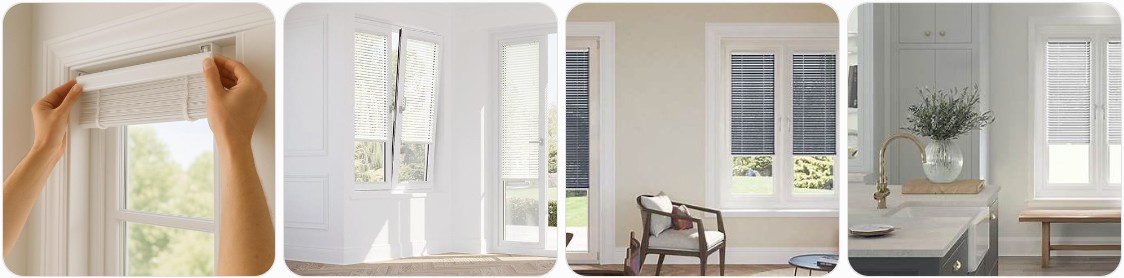
Clip-fit blinds are a practical choice if you want a neat, made-to-measure window covering without drilling into the wall, frame, or surrounding trim. This guide explains how clip-fit blinds work, what they cost, where to buy them online, what to check before ordering, and whether DIY fitting is realistic for your windows.
- Table of Contents:
- Clip-fit Blinds At a Glance
- What Are Clip-fit Blinds? How Clip-fit Blinds Work?
- Clip-fit Blinds Pros and Cons
- Clip-fit Blinds Cost
- Where to Buy Clip-fit Blinds Online
- How to Find Clip-fit Blinds Stores Near You
- What to Check Before Buying Clip-fit Blinds
- Clip-fit Blinds Installation Options
- FAQ About Clip-fit Blinds
Clip-fit Blinds At a Glance
- Best for: uPVC windows, glazed doors, conservatories, tilt-and-turn windows, rental homes, and rooms where you want a clean no-drill finish.
- Main benefit: Clip-fit blinds attach using clips or brackets that slide into the window beading or frame area, so you usually do not need screws, wall plugs, or drilling.
- Common styles: Clip-fit roller blinds, clip-fit pleated blinds, clip-fit Venetian blinds, clip-fit blackout blinds, and clip-fit thermal blinds.
- Typical cost: Around $25 to $90 per small or medium window for basic ready-made options, and around $60 to $180+ per window for made-to-measure clip-fit blinds.
- Installation difficulty: Usually easy for DIY buyers, but accurate measuring is very important because the blind must fit the glass/frame area closely.
- Biggest downside: Not every window is compatible. Some frames, shallow beadings, unusual seals, old wooden windows, or metal frames may not accept clip-fit brackets properly.
- Good for renters: Yes, because many clip-fit blinds avoid permanent holes, although you should still check your rental agreement and make sure the clips will not mark the frame.
- Best buying tip: Measure the visible glass, check bead depth, confirm frame compatibility, and order samples before choosing color, fabric, or finish.
What Are Clip-fit Blinds? How Clip-fit Blinds Work?
What Are Clip-fit Blinds?
Clip-fit blinds are window blinds designed to attach directly to the window or door frame using a clip-in fitting system instead of traditional screw-mounted brackets. They are often used on uPVC windows, glazed doors, conservatories, patio doors, French doors, and tilt-and-turn windows where a standard blind rail may look bulky or interfere with how the window opens.
Unlike standard blinds that usually mount above the window recess, inside the recess, or on the wall, clip-fit blinds sit close to the glass. This gives them a more integrated look and helps them move with the window or door. For example, if you install clip-fit blinds on a glazed door, the blind stays attached to the door when you open and close it.
Clip-fit blinds are closely related to no-drill and frame-mounted blind systems. If you are comparing similar styles, you can also browse the Clip-fit Blinds category for related guides and repair information.
Many buyers choose clip-fit blinds because they want a cleaner appearance than stick-on temporary blinds, but they do not want to drill holes for standard brackets. They are especially useful in homes where the window trim is narrow, the frame is uPVC, or the window opens inward and would clash with a normal blind.
How Clip-fit Blinds Work?
Clip-fit blinds work by using small clips, brackets, or tension-style fittings that secure the blind frame or rail to the window beading or frame edge. The exact system depends on the brand and blind type, but the basic idea is similar: the blind attaches close to the glass without needing screws.
For many clip-fit systems, small metal or plastic clips slide between the glass and the rubber gasket or into the beading around the window. The blind frame, cassette, or side rails then snap onto those clips. This creates a fitted blind that sits neatly within the window area. Some designs use side channels to keep the fabric or slats controlled, while others use a simple top rail with a bottom bar.
Clip-fit blinds can come in different operating styles. Pleated clip-fit blinds usually fold into a compact stack when raised. Venetian clip-fit blinds use slats that tilt open and closed for light control. Roller-style clip-fit blinds roll around a tube or cassette. Blackout clip-fit blinds use room-darkening fabric and may include side channels to reduce light gaps.
The most important part of how clip-fit blinds work is compatibility. They are not universal for every window. They usually perform best on modern uPVC windows or doors with suitable rubber seals, enough bead depth, and a frame shape that allows the clips to hold securely. If the frame is too shallow, curved, damaged, or unusually shaped, the clips may not sit properly.
If you are shopping online, it helps to compare products such as clip-fit blinds on Amazon, no-drill blinds for windows, and clip-on blinds for doors so you can see which mounting style matches your window.
20 PCS Hidden Channel Valance Clips, 1-7/8 Inch Blind Clips for Valance with a Groove in The Back

Leinuosen 12 Pieces Vertical Blind Clips Stems Replacement Parts

10 PCS 1-7/8 Inches Plastic Valance Clips - Replacement Clips for Window Blinds, Fits Wooden Valances
Clip-fit Blinds Pros and Cons
Pros of Clip-fit Blinds
- No drilling needed: Great when you do not want holes in the wall, frame, trim, or window surround.
- Clean fitted look: The blind sits close to the glass, which can look neater than a standard wall-mounted blind.
- Good for doors: Works well on glazed doors because the blind moves with the door instead of swinging separately.
- Rental-friendly option: Often suitable for renters because installation is usually removable and less permanent.
- Easy DIY fitting: Many clip-fit blinds can be installed with basic hand pressure and no power tools.
- Reduces blind movement: Side channels or frame fitting can help keep the blind stable when opening windows or doors.
- Good for conservatories: Useful where many glazed panels need a neat and consistent finish.
- Available in several styles: You can find clip-fit pleated, Venetian, blackout, thermal, and light-filtering options.
- Less bulky: The fitted design often looks slimmer than standard headrails and brackets.
- Can improve privacy: Since the blind sits close to the glass, it can provide better coverage than some loose-hanging blinds.
Cons of Clip-fit Blinds
- Window compatibility matters: Not every frame, bead, seal, or glazing style will accept clip-fit brackets.
- Measuring must be accurate: Small measuring mistakes can cause poor fit, gaps, rubbing, or installation problems.
- Limited for old windows: Older wooden frames, metal frames, or damaged frames may not suit clip-fit systems.
- Can cost more than basic blinds: Made-to-measure clip-fit blinds are often pricier than cheap ready-made roller blinds.
- Fewer style choices: You may have fewer fabric, size, and finish options compared with standard blinds.
- Not always ideal for very large windows: Oversized glazing may need stronger or professionally fitted systems.
- May not block all light: Some clip-fit blinds still allow light gaps around the frame, especially if poorly measured.
- Clips can be brand-specific: Replacement brackets or parts may be harder to match later.
- Can interfere with handles: Window handles, vents, locks, and seals can affect fit and operation.
- Cheaper models may feel flimsy: Low-cost clip systems may not hold as firmly as premium made-to-measure frames.
Clip-fit Blinds Cost: What Price Should You Expect?
Clip-fit blinds usually cost more than basic temporary blinds but less than many premium custom shutters or motorized window coverings. For a small or medium window, basic clip-fit or no-drill blinds may start around $25 to $60 per blind. Better quality ready-made options often fall around $40 to $100 per blind, depending on size, fabric, brand, and mounting style.
Made-to-measure clip-fit blinds are typically more expensive because they are built to your window measurements. Expect around $60 to $180 per window for many custom clip-fit styles, with larger conservatory windows, patio doors, blackout fabrics, thermal fabrics, and premium finishes costing more. For multiple windows, the total project can quickly reach $300 to $1,000+, especially if you are covering a conservatory, sunroom, or several glazed doors.
Professional measuring or fitting can add extra cost. If you hire a local installer, basic fitting may add around $25 to $75 per blind, while larger jobs may be quoted as a project price. The benefit of professional fitting is that the installer can check whether your frame accepts the clip system before ordering, which reduces the risk of buying the wrong size.
Before ordering, it is smart to estimate the total using a tool such as the blind cost estimator. This can help you compare blind size, quantity, material level, upgrades, and installation costs before you commit to a purchase.
Price is affected by several details: window size, fabric quality, whether the blind is pleated or Venetian, whether it includes a frame or side channels, whether it is blackout or light-filtering, and whether the product is ready-made or custom. If you are buying online, compare several searches such as clip-fit blackout blinds, clip-fit pleated blinds, and no-drill cellular shades to understand the price range for the exact style you want.
Where to Buy Clip-fit Blinds Online
Amazon can be a useful place to start when buying clip-fit blinds because you can compare no-drill systems, clip-on door blinds, temporary clip-mounted shades, blackout options, and related mounting accessories in one place. When searching Amazon, do not only type “clip-fit blinds.” Also try related phrases such as “clip on blinds for windows,” “no drill blinds,” “clip fit blinds for doors,” “perfect fit blinds,” and “no drill blackout shades.” Different sellers use different product names for similar fitting systems.
When buying clip-fit blinds from Amazon, read the product description carefully. Check whether the blind clips into the window beading, clamps onto the frame, attaches with tension, uses adhesive, or mounts with a no-drill bracket. These are not always the same thing. A true clip-fit blind should fit securely without standard screw brackets, but some listings may use “no drill” loosely.
Also check the sizing instructions before ordering. Clip-fit blinds are more sensitive to measuring errors than standard blinds because they sit close to the glass or frame. Look for listings that provide clear measurement diagrams, frame compatibility notes, return policies, and customer photos. If the listing does not explain bead depth, frame type, or mounting method, it may be risky for uPVC windows or glazed doors.
Find Clip-fit Blinds from Amazon »
20 PCS Hidden Channel Valance Clips, 1-7/8 Inch Blind Clips for Valance with a Groove in The Back
Leinuosen 12 Pieces Vertical Blind Clips Stems Replacement Parts
10 PCS 1-7/8 Inches Plastic Valance Clips - Replacement Clips for Window Blinds, Fits Wooden Valances
eBay is another place to look for clip-fit blinds, especially if you want replacement clips, discontinued fittings, budget no-drill blinds, or made-to-measure sellers offering custom sizes. eBay can be useful when you already know the product type you need and want to compare different sellers, but you should be extra careful with measurements and compatibility.
When shopping on eBay, look closely at seller feedback, shipping location, handling time, and whether the blinds are ready-made or made to order. For custom clip-fit blinds, check whether returns are accepted, because many made-to-measure products cannot be returned unless they arrive faulty. If buying replacement parts, compare the clip shape and bracket size with your existing blind before ordering.
Find Clip-fit Blinds from eBay »
- Blinds.com – Good for comparing custom blind styles, measuring guides, and made-to-measure options, although exact clip-fit availability may vary by product and region.
- Blinds 2go – Popular for made-to-measure blinds, including no-drill and perfect-fit style products in markets where available.
- 247 Blinds – Useful for clip-fit and no-drill blind styles, especially for uPVC windows, doors, and conservatory-style glazing.
- SelectBlinds – Worth checking for no-tools, no-drill, and easy-install blind options if you are comparing similar products in the U.S.
How to Find Clip-fit Blinds Stores Near You
Finding clip-fit blinds locally can be a good idea if you are unsure whether your windows are compatible. A local blinds shop, window treatment showroom, or mobile measuring service can inspect your frame, check bead depth, and confirm whether a clip-fit system will work before you order.
Start by searching for phrases like “clip-fit blinds near me,” “no drill blinds near me,” “perfect fit blinds near me,” “uPVC window blinds near me,” “conservatory blinds near me,” or “made to measure blinds near me.” Because different brands use different names, searching only for “clip-fit blinds” may miss shops that sell the same style under “perfect fit,” “no drill,” “snap fit,” or “frame fit” blinds.
You can also use this window blinds buying guide to compare places to shop, then check local stores, independent blind fitters, big-box home improvement stores, and online made-to-measure companies that offer local installation.
When calling a local store, ask specific questions instead of asking generally whether they sell blinds. Ask whether they sell no-drill blinds for uPVC windows, whether they offer clip-in frame systems, whether they measure bead depth, and whether they can fit blinds on glazed doors or tilt-and-turn windows. If you have conservatory windows, patio doors, French doors, or inward-opening windows, mention that at the start.
Before visiting the store, take photos of your window frame, handle position, rubber seals, and window beading. Measure the glass width and height roughly, but do not rely only on your own measurements for custom orders unless the seller gives clear instructions. A professional measure may save money in the long run because clip-fit blinds need a precise fit.
What to Check Before Buying Clip-fit Blinds
- Window frame type: Confirm whether your window is uPVC, aluminium, wood, composite, or metal, because not every clip-fit system works on every frame.
- Bead depth: Many clip-fit blinds need enough space between the glass and frame beading for clips to slide in securely.
- Rubber seal condition: Old, stiff, damaged, or unusual seals may make the clips harder to fit.
- Glass size: Measure the visible glass width and height carefully if the blind sits close to the pane.
- Frame obstructions: Check handles, locks, vents, trickle vents, hinges, and opening mechanisms that could interfere with the blind.
- Window operation: Make sure the blind will not stop the window or door from opening, closing, tilting, or locking properly.
- Blind style: Decide whether you need pleated, Venetian, roller, blackout, light-filtering, privacy, or thermal clip-fit blinds.
- Light gaps: If you need bedroom-level darkness, look for blackout fabrics and side channels rather than basic light-filtering designs.
- Moisture resistance: For bathrooms, kitchens, and utility rooms, choose moisture-tolerant materials and avoid fabrics that may stain easily.
- Color samples: Order fabric or slat samples when possible because online photos can look different in real room lighting.
- Control system: Check whether the blind uses tabs, handles, cords, cordless controls, tilt wands, or tensioned side rails.
- Child safety: Cordless or tensioned systems are usually better where children or pets are present.
- Return policy: Custom clip-fit blinds may not be returnable if you measure incorrectly.
- Replacement parts: Check whether spare clips, brackets, handles, or side rails are available from the seller.
- Installation instructions: Avoid listings that do not clearly show how the blind clips onto the window.
- Reviews with photos: Customer photos can help you see how the blind actually fits on real frames.
- Brand compatibility: Do not assume clips from one brand will fit another brand’s blind system.
- Warranty: A good warranty is helpful because clip fittings, tension cords, and moving parts can wear over time.
Clip-fit Blinds Installation Options: DIY vs Professional Fitting

Cutelec 2pcs Box Mounting Bracket for Low Profile Horizontal Blinds with 1-3/4" x 2 1/2" Headrail - White Color

Jetec 6 Pieces Mini Blind Brackets for Window Blinds,1.18x1.18 Inch
Clip-fit blinds are often marketed as DIY-friendly because they usually do not require drilling, wall plugs, screws, or heavy tools. For simple windows with suitable uPVC frames, many homeowners can install them by following the supplied instructions. The process usually involves cleaning the frame, inserting the clips into the correct positions, snapping on the blind frame or rail, and testing the operation.
DIY installation makes sense if your windows are standard, the product has clear measuring instructions, and you are comfortable checking fit before fully attaching everything. It is also useful if you are buying one or two blinds and want to save on labour. Basic tools may include a tape measure, pencil, soft cloth, plastic card, small screwdriver, and level, although many clip-fit systems need very little equipment.
However, professional fitting is worth considering if you are ordering custom clip-fit blinds for several windows, conservatory panels, large glazed doors, or unusual frame shapes. A professional can check bead depth, gasket condition, handle clearance, and whether the window will still open correctly after installation. This is especially helpful because a measurement mistake can make a custom blind unusable.
For DIY fitting, take your time during measuring. Measure each window individually, even if they look the same. Do not assume all panes in a conservatory or room are identical. Measure width and height in multiple places, follow the seller’s instructions exactly, and make sure you know whether they want glass size, recess size, frame size, or finished blind size.
For professional fitting, ask whether the quote includes measuring, supply, installation, call-out fees, and aftercare. Also ask what happens if the fitter measures incorrectly. A good installer should be able to explain the clip system clearly and tell you if your windows are not suitable before ordering.
In general, choose DIY if the product is simple, affordable, and returnable. Choose professional fitting if the blinds are custom, expensive, large, or being installed across many windows. Clip-fit blinds are easy in theory, but the best results still depend on accurate sizing and compatible frames.
FAQ About Clip-fit Blinds
Are clip-fit blinds the same as no-drill blinds?
Clip-fit blinds are a type of no-drill blind, but not all no-drill blinds are clip-fit blinds. Some no-drill blinds use tension, adhesive strips, clamps, or twist-fit brackets, while clip-fit blinds usually attach with clips that fit into or around the window frame or beading.
Do clip-fit blinds work on all windows?
No. Clip-fit blinds work best on compatible uPVC windows and glazed doors with suitable beading, seals, and frame depth. They may not work well on older wooden frames, unusual aluminium frames, damaged seals, shallow beadings, or windows with awkward handles and vents.
Are clip-fit blinds good for rental homes?
Yes, clip-fit blinds can be a good choice for rentals because they usually avoid drilling holes. However, renters should still check the lease, avoid forcing clips into delicate frames, and make sure the blind can be removed without marking or damaging the window.
Can clip-fit blinds be used on doors?
Yes, clip-fit blinds are often used on glazed doors, French doors, patio doors, and conservatory doors. Because the blind attaches close to the glass, it can move with the door and stay neater than a loose standard blind.
Are clip-fit blinds easy to install yourself?
Many clip-fit blinds are easy to install yourself if your window is compatible and your measurements are accurate. The hardest part is usually measuring correctly and confirming that the clips fit your frame, not the actual installation.
Do clip-fit blinds damage window frames?
Good-quality clip-fit blinds should not damage suitable frames when installed correctly. However, forcing clips into the wrong frame, using poor-quality fittings, or repeatedly removing and reinstalling the blind may cause marks, pressure points, or seal damage.
Can clip-fit blinds block out light completely?
Some clip-fit blackout blinds can block a lot of light, especially when they include side channels, but they may not create total darkness. Small light gaps can still appear around frames, handles, or edges depending on the design and fit.
What is the best room for clip-fit blinds?
Clip-fit blinds are especially useful in conservatories, kitchens, bathrooms, glazed doors, tilt-and-turn windows, and rooms where you want a neat no-drill finish. The best fabric depends on whether you need privacy, moisture resistance, blackout, or thermal insulation.
How much do clip-fit blinds cost?
Basic clip-fit blinds may cost around $25 to $90 per window, while made-to-measure clip-fit blinds often cost around $60 to $180+ per window. Larger sizes, blackout fabrics, thermal materials, premium frames, and professional fitting can increase the total cost.
Should I buy ready-made or made-to-measure clip-fit blinds?
Ready-made clip-fit blinds are cheaper if your window matches standard sizes, but made-to-measure blinds usually fit better. Since clip-fit blinds sit close to the glass or frame, custom sizing is often the better choice for a clean result.
Can I cut clip-fit blinds to size?
Some simple blind types can be trimmed, but many clip-fit systems should not be cut unless the manufacturer specifically allows it. Cutting the blind may damage the frame, fabric, side channels, or operating mechanism.
What should I search for if I cannot find clip-fit blinds?
Try searching for no-drill blinds, clip-on blinds, perfect fit blinds, snap-fit blinds, frame-fit blinds, uPVC window blinds, conservatory blinds, and no-drill door blinds. Sellers often use different names for similar fitting systems.
Summary
Clip-fit blinds are a smart option when you want a neat, close-to-glass window covering without drilling into your wall or frame. They are especially useful for uPVC windows, glazed doors, conservatories, and rental-friendly upgrades. The main advantages are easy installation, a clean fitted appearance, and reduced blind movement, while the main drawbacks are window compatibility, measuring accuracy, and potentially higher custom pricing.
Before buying, check your frame type, bead depth, handle clearance, blind style, fabric choice, return policy, and whether replacement parts are available. Amazon and eBay are useful for comparing clip-fit and no-drill options, while specialist blind retailers may be better for made-to-measure products and professional fitting. For the best result, measure carefully, order samples where possible, and choose a clip-fit system that matches your exact window style.

60 PCS Vertical Blind Repair Tabs Kit Clear Fixer Verticle Blinds Snap in Replacement Slats Parts Panels

Vertical Blind Repair Vane Savers, 16PCS Metal Vertical Blind Repair Tabs, Vertical Blinds Repair Kit for Vertical Blinds Replacement Slats
