
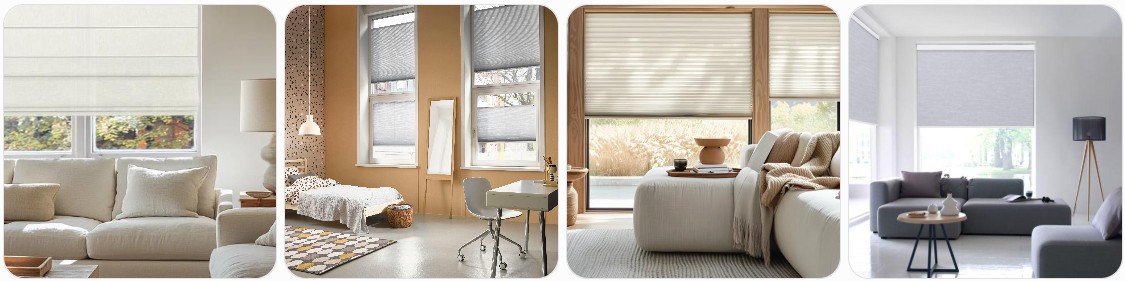
Cordless blinds are one of the easiest window covering upgrades for homes, rentals, apartments, nurseries, bedrooms, offices, and everyday living spaces. They remove dangling cords, look cleaner on the window, and are available in many styles including mini blinds, faux wood blinds, roller shades, cellular shades, blackout blinds, and light-filtering designs.
- Table of Contents:
- Cordless Blinds At a Glance
- What Are Cordless Blinds? How Cordless Blinds Work?
- Cordless Blinds Pros and Cons
- Cordless Blinds Cost
- Where to Buy Cordless Blinds Online
- How to Find Cordless Blinds Stores Near You
- What to Check Before Buying Cordless Blinds
- Cordless Blinds Installation Options
- FAQ About Cordless Blinds
Cordless Blinds At a Glance
- Best for: Homes with children, pets, clean modern interiors, rental homes, bedrooms, kitchens, living rooms, offices, and windows where dangling cords look messy or unsafe.
- Main feature: Cordless blinds raise, lower, tilt, or adjust without long exposed pull cords.
- Common styles: Cordless mini blinds, cordless faux wood blinds, cordless cellular shades, cordless roller shades, cordless blackout blinds, cordless Roman shades, and cordless top-down bottom-up shades.
- Typical price range: Around $15 to $60 per standard ready-made blind, $60 to $200+ for larger or better-quality options, and $150 to $500+ per window for custom or premium cordless blinds.
- Biggest benefit: Cleaner look and improved child/pet safety compared with traditional corded blinds.
- Biggest drawback: The internal spring or lift mechanism can wear out, and some cordless blinds are harder to repair than simple corded blinds.
- Installation difficulty: Usually easy to moderate for standard windows, but wide, tall, heavy, or custom blinds may be better installed professionally.
- Good rooms to use them in: Bedrooms, nurseries, kids’ rooms, living rooms, kitchens, home offices, rental properties, and high-traffic spaces.
- Best buying tip: Measure carefully, choose the correct mount type, check the lift mechanism, and read reviews about smooth operation before buying.
What Are Cordless Blinds? How Cordless Blinds Work?
What Are Cordless Blinds?
Cordless Blinds are window blinds or shades that operate without the long hanging cords commonly found on older blind systems. Instead of pulling a cord to raise or lower the blind, you usually lift or pull the bottom rail by hand. Some cordless designs also use hidden internal cords, spring tension, wand controls, push-button systems, or motorized controls depending on the blind type.
The term “cordless blinds” does not describe only one style of blind. It describes the control system. That means you can find cordless versions of many popular window coverings, including mini blinds, Venetian-style horizontal blinds, faux wood blinds, cellular shades, roller shades, Roman shades, pleated shades, blackout blinds, and even top-down bottom-up shades.
The main reason people choose cordless blinds is safety and appearance. With no long exposed cord hanging beside the window, the blind looks cleaner and is generally safer around children and pets. Cordless blinds are also popular in modern homes because the window area looks less cluttered, especially when several windows are fitted in the same room.
Cordless blinds are especially useful in nurseries, kids’ bedrooms, playrooms, living rooms, rental units, and homes where pets may pull or chew cords. They are also a good choice when you want a simple, everyday blind that is easy to operate without dealing with tangled cords.
How Cordless Blinds Work?
Most cordless blinds work with a built-in tension or spring-assisted lift system inside the headrail or lower rail. When you gently push the bottom rail upward, the internal mechanism helps the blind rise and stay in place. When you pull the bottom rail downward, the mechanism releases and lets the blind lower smoothly. The goal is to make the blind easy to move while keeping it balanced at the height you choose.
For cordless horizontal blinds, the slats may still tilt using a wand, a hidden tilt system, or a small control on the headrail. Raising and lowering is usually done by moving the bottom rail. For cordless cellular shades, the entire shade stack moves up and down as you guide the bottom rail. For cordless roller shades, the fabric rolls around a tube, and the cordless spring mechanism controls how the shade lifts or retracts.
Some cordless blinds are “free stop” designs, meaning they stop wherever you leave them. Others require a gentle pull, push, or tug to engage the mechanism. Higher-quality cordless blinds usually feel smoother, stay more level, and require less effort. Cheaper options may still work fine, but they can feel stiff, uneven, or less durable over time.
There are also cordless top-down bottom-up blinds. These allow you to lower the blind from the top, raise it from the bottom, or position the shade in the middle of the window. This is useful when you want privacy on the lower part of the window while still allowing natural light from above.
Motorized blinds are sometimes described as cordless because they do not use pull cords either. However, motorized blinds are a separate upgrade. They use a motor, remote, wall switch, app, or smart-home system instead of manual hand movement.

LOTUS & WINDOWARE Cordless Faux Wood Blinds, 35" Wide x 60" Long, Smooth, Snow White, 2 Inch Horizontal Blinds – for Living Room, Bedroom, Interior Door Windows
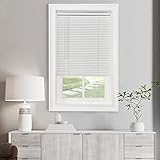
Cordless Light Filtering Mini Blinds for Indoor, 34 x 64 in, Pearl White | Cordless Lift and Light-Filtering Control: Slat-Based Blind Construction with Adjustable Light Control.
Cordless Blinds Pros and Cons
Pros of Cordless Blinds
- No dangling cords: Cleaner look and less clutter around the window.
- Better for child safety: A safer option for nurseries, kids’ rooms, and family spaces.
- Pet-friendly design: No hanging cord for cats or dogs to pull, chew, or tangle.
- Modern appearance: Looks neater than traditional corded blinds.
- Easy daily use: Push up or pull down the bottom rail on many models.
- Available in many styles: Mini, faux wood, cellular, roller, blackout, Roman, and more.
- Good for rentals: Simple, clean, and widely available in ready-made sizes.
- Less cord damage: No external lift cord to fray, knot, or snap.
- Works well on multiple windows: Creates a consistent, tidy look across a room.
- Improves window aesthetics: Especially useful for front-facing rooms and modern interiors.
Cons of Cordless Blinds
- Mechanism can wear out: Internal springs and tension systems may weaken over time.
- Harder to repair: Some cordless lift systems are not as simple to restring or fix.
- Can be stiff at first: Some blinds require a break-in period or careful handling.
- Not ideal for very high windows: You must reach the bottom rail unless using a motorized option.
- May cost more: Cordless versions can be more expensive than basic corded blinds.
- Cheap models may sag: Lower-quality blinds can raise unevenly or lose tension.
- Limited adjustment on some styles: Not all cordless blinds offer the same tilt or positioning control.
- Return issues with custom sizes: Made-to-measure cordless blinds may be harder to return.
- Heavy blinds can be harder to lift: Wide faux wood or large blackout shades may require more effort.
- Not all windows fit standard sizes: Unusual windows may need custom cordless blinds.
Cordless Blinds Cost: What Price Should You Expect?
Cordless blinds can be affordable or expensive depending on size, material, style, brand, and whether the blind is ready-made or custom. Basic cordless mini blinds are usually the cheapest option, while cordless cellular shades, faux wood blinds, Roman shades, blackout shades, and top-down bottom-up designs usually cost more.
For a small or standard-size window, budget cordless blinds often start around $15 to $35 each. Mid-range cordless blinds usually cost around $35 to $100 per window, especially for better materials, stronger headrails, or room-darkening fabrics. Custom cordless blinds often range from about $100 to $300+ per window, while premium or motorized cordless options can cost $300 to $700+ per window depending on features.
If you are buying for a whole room, the total cost rises quickly. For example, three standard cordless blinds may cost around $60 to $250 depending on style. A full house with 10 to 15 cordless blinds may cost anywhere from a few hundred dollars for basic ready-made blinds to several thousand dollars for custom or professionally installed products.
You can also use a blind cost estimator to plan a rough budget before you order. This is helpful because cordless blind pricing changes based on window size, blind type, quantity, installation, material level, and upgrades such as blackout fabric or valances.
- Basic cordless mini blinds: About $15 to $40 per window.
- Cordless vinyl or aluminum blinds: About $20 to $60 per window.
- Cordless faux wood blinds: About $35 to $120 per window.
- Cordless cellular shades: About $35 to $150 per window.
- Cordless blackout blinds or shades: About $40 to $180 per window.
- Cordless Roman shades: About $60 to $250+ per window.
- Custom cordless blinds: About $100 to $300+ per window.
- Motorized cordless blinds: About $150 to $700+ per window.
- Professional installation: Often around $50 to $150+ per window or priced as a project minimum.
The cheapest option is usually ready-made cordless mini blinds from a large retailer. The best value for many homes is often cordless faux wood blinds or cordless cellular shades, because they balance price, appearance, privacy, and everyday function. The most expensive options are usually custom, oversized, designer, blackout, smart, or motorized cordless blinds.
Where to Buy Cordless Blinds Online
Amazon is one of the easiest places to compare cordless blinds because you can quickly browse many sizes, styles, colors, materials, reviews, and price ranges in one place. This is especially useful if you are buying standard-size cordless mini blinds, cordless faux wood blinds, cordless cellular shades, cordless roller shades, or blackout cordless blinds.
When buying cordless blinds from Amazon, pay close attention to the exact width and height. Some blinds are listed by actual blind size, while others may have a small deduction for inside mounting. Read the product description carefully so you know whether the listed width is the exact product width or the window opening size it is designed to fit.
Amazon is also useful if you need several cordless blinds in the same size or color. You can compare multi-pack options, check customer photos, and look for comments about whether the blinds raise evenly, install easily, and block enough light. For bedrooms, search for cordless blackout blinds or room-darkening cordless shades. For living rooms, light-filtering cordless cellular shades or faux wood blinds may be more suitable.
Good Amazon searches to compare include cordless blinds, cordless faux wood blinds, cordless cellular shades, cordless blackout blinds, and cordless mini blinds.
Find Cordless Blinds from Amazon »
LOTUS & WINDOWARE Cordless Faux Wood Blinds, 35" Wide x 60" Long, Smooth, Snow White, 2 Inch Horizontal Blinds – for Living Room, Bedroom, Interior Door Windows
Cordless Light Filtering Mini Blinds for Indoor, 34 x 64 in, Pearl White | Cordless Lift and Light-Filtering Control: Slat-Based Blind Construction with Adjustable Light Control.
eBay can be another good place to look for cordless blinds, especially if you want discounted blinds, open-box products, discontinued colors, replacement blinds that match an older set, or deals from home improvement sellers. You may also find new cordless blinds from retail liquidators, custom blind sellers, and smaller window covering shops.
When buying cordless blinds from eBay, check the seller rating, return policy, shipping cost, and whether the blind is new, used, open-box, or custom-made. Be extra careful with size because many blind listings are not returnable once opened or installed. If you are matching an existing blind, compare the color name, slat size, headrail style, and mount type before ordering.
Find Cordless Blinds from eBay »
- Home Depot – Good for cordless faux wood blinds, cellular shades, mini blinds, in-store pickup, and installation services.
- Lowe’s – Useful for ready-made cordless blinds, custom order options, and measuring or installation help.
- Blinds.com – Strong option for custom cordless blinds, made-to-measure shades, and style-specific ordering.
- SelectBlinds – Good for custom cordless cellular shades, roller shades, Roman shades, and top-down bottom-up options.
How to Find Cordless Blinds Stores Near You
Finding cordless blinds locally is a good idea if you want to see the color, material, lift system, and finish before buying. Online photos are helpful, but blinds can look different in person depending on fabric texture, slat finish, lighting, and room color. A local store also lets you test how smoothly the cordless mechanism raises and lowers.
Start with nearby home improvement stores, window treatment shops, flooring and interior stores, department stores, and custom blind installers. Large retailers may stock standard-size cordless blinds that you can take home the same day. Local blind companies may offer measuring, custom ordering, and professional installation.
You can also use a window covering directory or buying guide to compare places to buy window blinds before deciding whether to shop online or locally. This helps you compare big-box retailers, online sellers, custom blind companies, and local installation providers.
When searching online, use terms like “cordless blinds near me,” “cordless faux wood blinds near me,” “custom cordless blinds near me,” “window blinds store near me,” “blind installation near me,” or “cordless cellular shades near me.” If you need installation, include your city name and the word “installer” or “installation.”
- Search local stores: Look for home improvement stores, blind shops, and custom window treatment companies.
- Check store inventory: Make sure the size and color you need are available before visiting.
- Ask about samples: Fabric and slat samples help you match paint, flooring, trim, and furniture.
- Test the lift system: Raise and lower the blind in store if possible.
- Ask about measuring: Some local shops offer measuring services before ordering custom blinds.
- Compare installation fees: Professional fitting can be worth it for wide or expensive cordless blinds.
- Check return rules: Ready-made blinds may be returnable, but custom blinds often are not.
- Bring measurements: Take window width, height, depth, and photos when visiting a store.
What to Check Before Buying Cordless Blinds
- Window width: Measure the inside width at the top, middle, and bottom of the window opening.
- Window height: Measure from the top of the opening to the sill in more than one place.
- Mount type: Decide whether you want inside mount or outside mount before ordering.
- Window depth: Inside-mount blinds need enough recess depth for the headrail and brackets.
- Actual blind size: Check whether the seller lists product size or window opening size.
- Lift quality: Read reviews about whether the cordless mechanism is smooth, balanced, and durable.
- Blind weight: Large faux wood cordless blinds can be heavier than cellular or mini blinds.
- Light control: Choose light-filtering, room-darkening, or blackout depending on the room.
- Privacy level: Street-facing rooms and bathrooms usually need stronger privacy coverage.
- Material: Vinyl is budget-friendly, faux wood looks classic, cellular fabric adds insulation, and roller fabric gives a clean modern look.
- Room conditions: Bathrooms and kitchens need materials that handle moisture better.
- Color and finish: Match trim, wall color, flooring, furniture, or existing blinds.
- Slat size: Faux wood and Venetian-style cordless blinds may come in different slat widths.
- Headrail style: Check if the headrail is visible, covered, decorative, or compatible with a valance.
- Return policy: Confirm return rules before opening, trimming, or installing the blinds.
- Warranty: Look for warranty coverage on the lift mechanism, headrail, and materials.
- Installation hardware: Make sure brackets, screws, clips, and instructions are included.
- Cleaning needs: Faux wood and vinyl wipe clean easily, while fabric shades may need more careful dusting.
- Safety claims: Cordless is usually safer than corded, but still check installation and product instructions.
- Long-term repairability: Some cordless blinds are easier to replace than repair if the mechanism fails.
Cordless Blinds Installation Options: DIY vs Professional Fitting

Cutelec 2pcs Box Mounting Bracket for Low Profile Horizontal Blinds with 1-3/4" x 2 1/2" Headrail - White Color

Jetec 6 Pieces Mini Blind Brackets for Window Blinds,1.18x1.18 Inch | with Screws,Metal Replacement Parts,Easy DIY Installation
Cordless blinds can often be installed as a DIY project, especially when you are fitting standard-size blinds on ordinary windows. Most ready-made cordless blinds include brackets, screws, and basic installation instructions. If you can measure accurately, use a drill or screwdriver, and keep the brackets level, installing basic cordless blinds is usually manageable.
DIY installation is most suitable for small to medium windows, lightweight blinds, rental-friendly updates, and simple inside or outside mounts. It can save money because you avoid labor charges. However, it does require careful measuring. A cordless blind that is slightly too wide may not fit inside the window frame, while one that is too narrow may leave light gaps and look unfinished.
Professional installation is better when the blinds are expensive, custom-made, very wide, heavy, motorized, mounted high, or installed across many windows. A professional installer can measure accurately, position brackets correctly, handle uneven walls or frames, and reduce the risk of damaging the blind during installation.
If you are buying custom cordless blinds, professional measuring may be worth considering before you place the order. Custom blinds are often non-returnable, so a measuring error can be expensive. For whole-home projects, installation services may also save time and help ensure every blind lines up properly.
- Choose DIY installation if: The blinds are standard size, lightweight, inexpensive, easy to reach, and you are comfortable with basic tools.
- Choose professional fitting if: The blinds are custom, oversized, heavy, motorized, expensive, or installed in difficult locations.
- DIY cost: Usually free if you already have tools, or about $10 to $50 for basic tools and hardware.
- Professional installation cost: Often about $50 to $150+ per window, or a flat project fee depending on the installer.
- Best DIY tools: Tape measure, pencil, level, drill, screwdriver, step ladder, wall anchors, and safety glasses.
- Most common DIY mistake: Measuring only once or ignoring window depth for inside-mount blinds.
- Most common installation issue: Brackets not level, causing the cordless blind to raise unevenly.
For inside mount installation, the brackets are placed inside the window frame for a neat built-in look. This is ideal when the window recess is deep enough and the frame is square. For outside mount installation, the blind is mounted above or around the window opening. This is better when you want more coverage, need to hide trim issues, or want to reduce light gaps.
After installation, test the cordless blind several times. Raise it slowly, lower it evenly, and check whether it stays level. If it pulls to one side, the brackets may be uneven, the blind may not be seated correctly, or the internal tension may need gentle resetting according to the manufacturer’s instructions.
FAQ About Cordless Blinds
Are cordless blinds worth buying?
Yes, cordless blinds are worth buying if you want a cleaner look, easier everyday operation, and a safer option around children or pets. They usually cost a little more than basic corded blinds, but the safety and appearance benefits make them a strong choice for many homes.
Are cordless blinds safer than corded blinds?
Cordless blinds are generally considered safer because they remove long dangling pull cords. This makes them a better option for nurseries, kids’ rooms, playrooms, and homes with pets. They still need to be installed properly and used according to the manufacturer’s instructions.
How do you raise and lower cordless blinds?
Most cordless blinds are raised by gently pushing the bottom rail upward and lowered by pulling the bottom rail downward. Some styles use a spring, tension system, wand, button, or motorized control depending on the design.
Do cordless blinds break easily?
Good-quality cordless blinds can last for years, but cheaper models may wear out faster. The most common problem is the internal lift or spring mechanism losing tension, causing the blind to sag, raise unevenly, or stop holding its position.
Can cordless blinds be repaired?
Some cordless blinds can be repaired, but many internal cordless mechanisms are harder to fix than traditional corded systems. If the blind is inexpensive, replacing it may be easier than repairing it. For custom or premium cordless blinds, check the warranty or contact the manufacturer.
Why won’t my cordless blinds go up?
A cordless blind may stop going up because the internal spring has lost tension, the blind is not seated correctly in the brackets, the mechanism is jammed, or the blind has been pulled unevenly. Try gently lowering it fully, then raising it slowly and evenly. If that fails, check the manufacturer’s reset instructions.
Why do my cordless blinds look uneven?
Cordless blinds can look uneven if one side is lifted faster than the other, the brackets are not level, the blind is not properly clipped into the headrail, or the internal tension is unbalanced. Reinstalling the blind level and operating it from the center of the bottom rail may help.
Are cordless blinds good for bedrooms?
Yes, cordless blinds are good for bedrooms, especially if you choose room-darkening or blackout cordless blinds. Cordless cellular shades, blackout roller shades, and faux wood blinds are popular bedroom choices depending on how much darkness and privacy you need.
Are cordless blinds good for bathrooms?
Cordless blinds can work well in bathrooms if you choose moisture-resistant materials. Vinyl, PVC, aluminum, and faux wood cordless blinds are usually better bathroom choices than fabric shades because they handle humidity more easily.
Are cordless cellular shades better than cordless mini blinds?
Cordless cellular shades are usually better for insulation, softness, and energy efficiency, while cordless mini blinds are usually cheaper and easier to wipe clean. The better option depends on your budget, room style, privacy needs, and whether insulation matters.
Can you cut cordless blinds to size?
Some cordless blinds can be cut or trimmed, but not all. Cutting the wrong type can damage the lift mechanism, slats, fabric, or headrail. Always check the product instructions before trimming, and avoid cutting custom cordless blinds unless the manufacturer specifically allows it.
Do cordless blinds cost more than regular blinds?
Usually yes. Cordless blinds often cost more than basic corded blinds because they include a built-in lift or tension mechanism. However, basic cordless mini blinds can still be very affordable, especially in standard sizes.
Are cordless blinds hard to install?
Most standard cordless blinds are not hard to install if you measure carefully and follow the instructions. The job becomes more difficult with wide blinds, heavy faux wood blinds, high windows, uneven frames, or custom products.
What type of cordless blinds are best?
The best type depends on the room. Cordless faux wood blinds are good for a classic look and easy cleaning. Cordless cellular shades are good for insulation. Cordless blackout shades are best for bedrooms. Cordless mini blinds are best for budget-friendly coverage.
Can cordless blinds be motorized?
Yes, some cordless blinds are motorized. Motorized blinds remove manual cords and can be controlled by remote, wall switch, app, timer, or smart-home system. They cost more than standard manual cordless blinds but are useful for hard-to-reach windows.
Summary
Cordless blinds are a practical upgrade if you want safer, cleaner-looking, and easier-to-use window coverings. They are available in many styles, including mini blinds, faux wood blinds, cellular shades, roller shades, blackout shades, and Roman shades. Basic cordless blinds can be affordable, while custom, oversized, blackout, top-down bottom-up, and motorized options cost more.
The most important things to check before buying are window measurements, mount type, material, light control, privacy level, lift quality, warranty, and return policy. Amazon and eBay are useful for comparing prices online, while local blind stores and home improvement retailers are better if you want to see samples or arrange professional installation. For most homes, cordless blinds offer a strong mix of safety, style, convenience, and value.

60 PCS Vertical Blind Repair Tabs Kit Clear Fixer Verticle Blinds Snap in Replacement Slats Parts Panels

joytrace RV Pleated Shade Repair Kit, RV Window Shade Restringing Kit, Repair and Maintain of Day Night Pleated Shade (White)
