
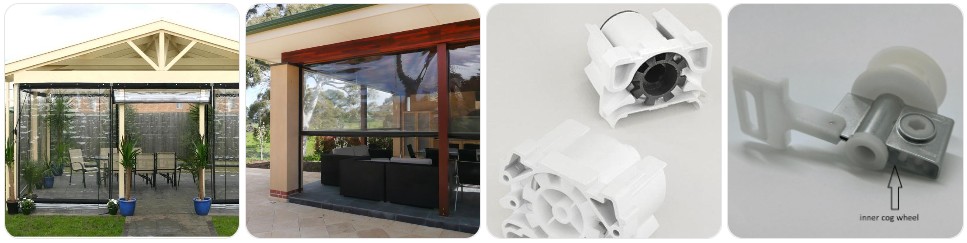
Bistro Blinds are often used on patios, verandas, cafés, pergolas, and outdoor entertaining areas, which means repairs usually involve clear or mesh outdoor blind material, straps, zips, crank gear, bottom bars, guide channels, eyelets, anchors, or weather-exposed mounting hardware rather than delicate indoor blind components. The quick answer is that a broken bistro blind can often be repaired for much less than a full replacement if the main sheet material is still in decent condition and the problem is limited to one part of the operating system. In many cases, the fix comes down to replacing worn straps, repairing a torn eyelet, swapping a broken crank handle, tightening brackets, replacing tie-down hardware, or correcting guide-track issues before the blind becomes harder to use. If you want to compare likely repair items while troubleshooting, it helps to browse outdoor blind repair kits, outdoor blind parts, and awning crank handle replacements.
Fix Common Bistro Blind Problems & Repair Cost
The bistro blind will not roll up or down smoothly: This is one of the most common bistro blind repairs and usually points to worn straps, a damaged crank gearbox, a misaligned roller, or friction in the side guides. Outdoor bistro blinds often collect dust, moisture, and slight frame movement over time, so even a small alignment problem can make the blind feel heavy or jerky. In many cases, cleaning the guides, checking the bottom bar alignment, and replacing one worn operating part is enough to restore smoother movement. Minor hardware repairs are often in the range of about $10 to $40 in parts, while a more involved crank or guide-system repair can cost more depending on width and hardware type. It helps to compare awning crank handle replacements and outdoor blind repair kits. Do not force a sticking bistro blind, because that can tear the material or bend the bottom bar.
The clear PVC or mesh panel has torn around an eyelet or fixing point: Bistro blinds often fail first at their stress points, especially around eyelets, tie-down straps, zips, or anchor points near the bottom. If the main blind panel is still usable, reinforcing the damaged section and replacing the fastening hardware is often cheaper than replacing the entire blind. Eyelet repairs, patch materials, and fresh tie-down fittings are usually relatively low-cost, often around $10 to $35 in parts depending on the size of the damaged section. If the tear has spread across the viewing area or along a long seam, replacement may be the better choice.
The crank handle, strap, or winding mechanism is broken: Many bistro blinds rely on manual winding hardware or pull-strap systems, and once that operating part fails, the blind may suddenly feel unusable even if the panel material is still in good condition. Replacing the crank, strap, or associated gear is often one of the more practical repairs, and many of these parts are relatively affordable. Comparing crank handle replacements and roller strap replacements can help if the blind body itself is still sound.
The blind flaps, rattles, or will not stay secure at the bottom: On a bistro blind, loose bottom fastening usually means worn straps, missing anchors, damaged turn buttons, stretched bungees, or a bottom bar that is no longer sitting squarely. This is especially common after wind exposure. If the blind still rolls correctly, replacing the lower securing hardware is often enough to make it usable again.
The side channels or zip edges are not tracking properly: For channel-guided or zip-style bistro blinds, rough movement often means the blind edge is no longer feeding straight, the guide has collected debris, or one side of the blind is under uneven tension. This is a very bistro-specific repair issue because it affects weather protection and outdoor usability just as much as basic movement.
Bistro Blind Repair Kit
A bistro blind repair kit is most useful when the problem is in the operating hardware, tie-down system, or outdoor fixing points rather than across the entire blind panel. Because bistro blinds are exposed to wind, moisture, sunlight, and temperature changes, the parts that fail are often the ones handling stress at the edges and bottom of the blind rather than the whole panel at once. A good bistro blind repair kit may include straps, clips, anchors, brackets, eyelet-style repair hardware, handle components, or small outdoor blind fittings that help restore safe operation without replacing the full unit.
It is worth checking product photos carefully because some kits are sold more broadly under outdoor blind, café blind, patio blind, or awning hardware terms. If your repair involves only one failed part, buying that specific item may be cheaper. But if the blind has a loose bottom fastening, rough winding action, and worn mounting hardware at the same time, a broader outdoor blind repair kit or a combination of crank replacements, strap replacements, and turn-button fasteners can make the repair more consistent. For bistro blinds, matching outdoor-grade hardware matters just as much as getting the right size.

60 PCS Vertical Blind Repair Tabs Kit Clear Fixer Verticle Blinds Snap in Replacement Slats Parts Panels

ZNBSIXP 60 PCS Vertical Blind Repair Tabs Kit, Clear Strong Adhesive PVC Fixers & Vertical Blinds Replacement Slats, Blind Fixer Tabs Invisible Snap in Repair Patches, Easy DIY Fix No Tools Needed

35 Sets (70 Pieces) Clear Vertical Blind Repair Tabs for Replacement Slats
Signs Your Bistro Blind Need Repair
- The blind is suddenly much harder to wind or pull: This often points to worn operating hardware, guide friction, or a crank problem rather than a full blind failure. Checking crank handle replacements is often a smart first step.
- The clear or mesh panel is tearing near the edges or eyelets: On a bistro blind, damage often starts at the high-stress fixing points rather than in the center of the panel.
- The bottom edge no longer fastens tightly: That usually means worn straps, missing fasteners, or damaged bottom-bar hardware. Comparing turn-button fasteners or outdoor tie-down parts may help.
- The blind rattles or flaps more than before: Bistro blinds should sit securely when fastened, so extra movement is often an early sign that the securing hardware needs attention.
- One side of the blind tracks differently from the other: On zip-style or guided bistro blinds, uneven movement usually means one side is misaligned or one guide is obstructed.
- The crank turns but the blind does not move correctly: That can mean the gear, strap, or rolling mechanism has worn out even if the blind panel still looks fine.
- Brackets or mounting points look rusty, bent, or loose: Because bistro blinds are used outdoors, weather-exposed hardware can wear faster than many indoor blind fittings.
- The blind will not stay straight when lowered: A twisted bottom bar, uneven tension, or failing side support can make the blind hang crooked and put more strain on the panel edges.
Tools You May Need to Repair Bistro Blind
- Screwdriver set: A screwdriver set is useful for tightening outdoor brackets, removing covers, and replacing crank or bottom-fastening hardware on a bistro blind.
- Drill/driver: A cordless drill/driver helps refit loose mounting points, replace anchors, and secure outdoor hardware more firmly on patios, pergolas, or verandas.
- Needle-nose pliers: A pair of needle-nose pliers is handy for clips, eyelet fittings, spring hardware, and tight outdoor fasteners.
- Replacement crank handle: If the blind will not wind correctly, a matching awning crank handle replacement may be one of the most important parts to have.
- Replacement strap or winding tape: A worn strap is a common outdoor blind failure, so checking roller strap replacements can help restore smoother operation.
- Outdoor fasteners or turn buttons: If the bottom of the bistro blind will not stay secure, comparing turn-button fasteners or similar outdoor blind fixings can help.
- Measuring tape: A measuring tape helps you match replacement straps, brackets, crank arms, and fastening positions accurately.
- Soft cloth and mild cleaner: A microfiber cloth helps remove dirt from guides, brackets, and the blind surface before you reinstall repaired parts.
Should You Repair or Replace Your Broken Bistro Blind?
Repairing a broken bistro blind usually makes sense when the main clear PVC or mesh panel is still usable and the issue is clearly limited to the crank, straps, edge fixings, brackets, guide hardware, or bottom securing system. Because bistro blinds are often large outdoor blinds, even one failed part can make the whole unit feel broken when the main blind material is still serviceable. In that situation, replacing the failed part is usually much cheaper than replacing the whole blind, especially if you only need a new crank handle, strap, eyelet fitting, bracket, or bottom fastening. Comparing an outdoor blind repair kit with the price of a full new blind often shows that repair is the better value.
Replacement becomes the better option when the main panel is badly cracked, deeply yellowed, torn across a large viewing area, or when multiple structural parts have failed at once after weather exposure. It may also make sense to replace the full blind if the mounting frame is no longer square or the guide system is too worn to operate safely. A quick comparison between bistro blind options and the parts you need can help you decide. In many cases, though, bistro blinds are worth repairing when the main outdoor panel is still in reasonable condition and the problem is mainly in the hardware.

Bistro Double Blind Mystery (Baker Street Bistro Mysteries)

Calyx INTERIORS Room Darkening Vinyl Mini Blinds, Cordless, 1" Slat, 23.5" W x 60" H, White. Inside Mount in Windows 23.75" and Greater; Indoor Window Shades

Holiday
Tips to Make Your Bistro Blind Last Longer
- Use the blind gently in windy conditions: Outdoor bistro blinds take more strain from wind than indoor blinds do, so forcing them during gusty weather can damage straps, zips, and bottom fasteners.
- Keep the guides and hardware clean: Dirt and debris in the guides can make the blind feel much rougher to operate and can wear the edges faster.
- Check fasteners and bottom anchors regularly: Small outdoor fittings loosen over time, and catching that early can prevent bigger tearing problems at the edge of the blind.
- Replace a worn strap or crank early: It is usually much cheaper to replace one crank part or strap replacement than to keep using a system that is already straining the blind.
- Do not leave a loose bottom edge flapping repeatedly: That puts extra stress on eyelets, zips, and fixing points and is one of the fastest ways to turn a small hardware issue into a torn panel.
- Clean clear PVC carefully: Avoid harsh scrubbing or strong chemicals on clear sections, because scratching or clouding the panel makes the blind look older even when the hardware still works.
- Watch for rust or corrosion on exposed hardware: Outdoor blind brackets and fixings can wear faster than indoor blind parts, especially in damp or coastal conditions.
- Fix small edge tears early: A minor tear near a strap or eyelet is much easier to control before it spreads into the main blind panel.
Bistro Blind Repairs FAQ
What usually breaks on a bistro blind?
The parts that fail most often are straps, crank handles, bottom fasteners, eyelet areas, mounting brackets, and guide-related hardware. On bistro blinds, the outdoor fixing points and operating parts usually wear out before the full panel needs replacing.
Can I fix a bistro blind that is hard to wind?
Yes, in many cases. The most common causes are worn crank hardware, misaligned guides, dirt buildup, or a roller system that is no longer moving smoothly. If the panel is still in good shape, repairing the hardware is often enough.
Is a bistro blind repair kit worth buying?
It can be, especially when the blind has more than one small outdoor hardware issue. An outdoor blind repair kit is often easier than sourcing straps, fasteners, and handle parts separately.
Why does my bistro blind flap or rattle so much?
This usually means the bottom securing system is worn, loose, or missing parts. If the blind is not being held firmly at the bottom edge, wind movement will quickly put extra stress on the panel and fittings.
Can I replace just the crank handle or strap?
Yes, if the rest of the blind is still working properly and the issue is limited to that operating part. Replacing one worn crank or strap is a common and often worthwhile repair.
How much does it usually cost to repair a bistro blind?
Minor repairs such as straps, fasteners, eyelet hardware, or crank parts are often relatively inexpensive, usually around $10 to $40 in parts depending on what needs replacing. Larger repairs involving guide systems or multiple outdoor fittings can cost more, but they are still often cheaper than a full replacement.
Should I repair or replace a bistro blind with a torn clear panel?
If the tear is small and limited to an edge or fixing point, repair may still make sense. If the clear panel is cracked, deeply yellowed, or torn across a large section, replacement is usually the better option.
Can bistro blind parts be hard to match?
Yes, sometimes. Outdoor bistro blinds vary in crank style, strap size, guide design, and fastening hardware, so it helps to measure and compare the original part before ordering replacements.
60 PCS Vertical Blind Repair Tabs Kit Clear Fixer Verticle Blinds Snap in Replacement Slats Parts Panels

joytrace RV Pleated Shade Repair Kit, RV Window Shade Restringing Kit, Repair and Maintain of Day Night Pleated Shade (White)
