
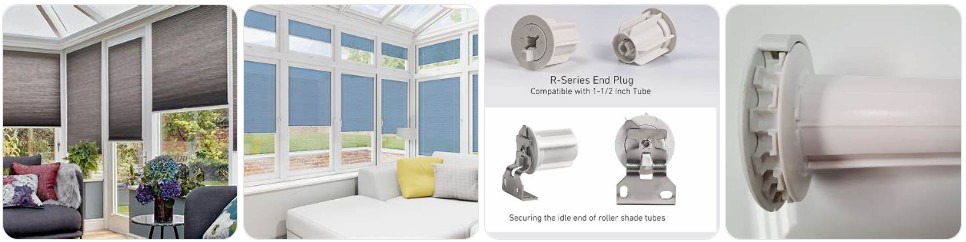
Conservatory Blinds are usually installed in bright, high-heat spaces where strong sunlight, temperature swings, and frequent window use put extra strain on the blind fabric, cords, clips, rails, and support systems. The quick answer is that a broken conservatory blind can often be repaired for much less than a full replacement if the fabric is still in good condition and the problem is limited to the control hardware, support wires, roof-window fittings, side guides, or fixing points. In many cases, the repair comes down to replacing a worn cord, correcting a loose tension wire, refitting a slipped pleated panel, changing a broken handle or clip, or tightening the frame-mounted hardware before the blind starts sagging, catching, or twisting. If you want to compare useful supplies while troubleshooting, it helps to browse conservatory blind repair kits, pleated shade repair parts, and window shade string repair kits.
Fix Common Conservatory Blind Problems & Repair Cost
The conservatory blind sags or hangs away from the window or roof panel: This is one of the most common conservatory blind problems because the blind often relies on tensioned wires, side guides, or frame-mounted supports to stay neat against the glass. When those supports loosen, the blind can start drooping, bowing, or pulling away from the frame, especially in hot conservatory conditions. In many cases, the fix involves tightening or replacing the guide wires, refitting the support clips, or correcting the mounting points rather than replacing the full blind. Minor repairs such as new clips, wire, or fixing parts are often in the range of about $5 to $25 in supplies, while a more involved repair using several support parts can run around $15 to $50 depending on blind size and style. Comparing pleated shade repair parts, shade string repair kits, and blind mounting clips can help narrow down the repair. Do not keep forcing a conservatory blind that is already sagging out of line, because that can stretch the fabric and distort the operating rails.
The blind will not stay in position or slips back down: If the blind slides back after you move it, the problem is often a worn tension system, frayed cord, tired spring balance, or a support section that is no longer holding firmly under the conservatory’s heat and glare conditions. This is often repairable if the fabric still looks good and the rails are still sound. The final cost usually depends on whether the fault is one simple control part or several related pieces that have worn together.
The fabric bunches, wrinkles, or folds unevenly: Conservatory blinds, especially pleated and roof-style systems, need the cords, wires, and moving rails to stay balanced so the fabric stacks neatly. If the fabric starts bunching badly, one side droops, or the folds no longer look even, the cause is often an uneven cord path, a loose guide wire, a damaged clip, or a rail that is no longer traveling smoothly. If the fabric itself is still in decent condition, repairing the support system is usually far cheaper than replacing the full blind.
The handle, pull tab, or operating rail has loosened or broken: Many conservatory blinds are moved by a handle or a sliding rail, especially on roof or shaped-window systems. If that operating point cracks, loosens, or separates from the blind, the whole blind can become difficult to move even when the rest of the system still works. Reattaching or replacing that operating section is often one of the more manageable conservatory blind repairs.
The side wires or guide cords are frayed or loose: On many conservatory blinds, the side wires or guide cords help keep the blind close to the glass and moving in a controlled line. When they fray, loosen, or slip out of place, the blind can start drifting, sagging, or catching during operation. Replacing them early often prevents more serious damage to the blind fabric and rails.
Conservatory Blind Repair Kit
A conservatory blind repair kit is most useful when the problem is in the guide system, moving rail, fixing clips, support wires, or internal cords rather than in the visible blind fabric itself. Because conservatory blinds are often exposed to stronger sunlight and wider temperature changes than indoor blinds, the parts that fail are often the smaller control and support components rather than the fabric first. A good conservatory blind repair kit may include replacement cord, wire, tension parts, support clips, fixing brackets, handle parts, or small rail accessories that help restore smooth travel and a neater fit against the window or roof panel.
It is worth checking kit contents carefully because many compatible items are sold under broader terms such as pleated shade hardware, roof blind parts, or window shade string repair rather than under the exact phrase “conservatory blind.” If the issue is limited to one obvious fault, such as a loose wire or broken clip, buying the single correct part may be cheaper. But if the blind is already sagging, slipping, and bunching badly, a broader conservatory blind repair kit or pleated shade repair parts set can make the repair much more consistent. For conservatory blinds, the real goal is restoring neat guided movement and a close fit to the glazing rather than just replacing one visible piece.

60 PCS Vertical Blind Repair Tabs Kit Clear Fixer Verticle Blinds Snap in Replacement Slats Parts Panels

ZNBSIXP 60 PCS Vertical Blind Repair Tabs Kit, Clear Strong Adhesive PVC Fixers & Vertical Blinds Replacement Slats, Blind Fixer Tabs Invisible Snap in Repair Patches, Easy DIY Fix No Tools Needed

35 Sets (70 Pieces) Clear Vertical Blind Repair Tabs for Replacement Slats
Signs Your Conservatory Blind Need Repair
- The blind hangs away from the glass or roof panel: This usually means the support wires, clips, or guide system are no longer holding the blind neatly in place. Checking blind mounting clips or shade string repair kits is often a useful first step.
- The blind slips or will not stay where you leave it: On a conservatory blind, that often points to worn tension hardware, stretched cords, or a support system that is no longer balanced.
- The fabric bunches badly instead of stacking neatly: This is one of the clearest warning signs because the blind may still move while already losing the clean shape conservatory blinds are supposed to keep against the glazing.
- One or more guide wires look loose or frayed: Frayed side wires or guide cords are a strong sign that the blind needs attention before the movement becomes more uneven or the fabric starts rubbing.
- The handle or operating rail feels loose: On many conservatory blinds, the moving rail is the main operating point, so looseness there can quickly make the blind awkward or unstable to use.
- The blind sags more on one side: This often means the side guidance or tension support is no longer balanced and needs repair before the fabric shape starts to suffer permanently.
- The blind feels rough or jerky when moving: Conservatory blinds should travel smoothly. If the motion becomes stiff, one of the cords, guides, or support rails may be under strain.
- The pleats or folds look compressed or skewed on one side: That often means the guidance system is no longer balanced, even if the blind still looks acceptable when fully closed.
Tools You May Need to Repair Conservatory Blind
- Measuring tape: A measuring tape helps you check blind width, drop, wire length, guide spacing, and replacement part sizing before ordering anything.
- Small screwdriver set: A precision screwdriver set is useful for removing clips, adjusting brackets, opening rail sections, or replacing compact conservatory blind hardware.
- Needle-nose pliers: A pair of needle-nose pliers helps when gripping small support wires, pulling cord through narrow openings, or handling tight hardware safely.
- Replacement string or cord: If the blind is hanging unevenly or slipping, comparing shade string repair kits is often one of the most important steps.
- Guide wire or side support cord: If the blind is drifting away from the glass, a fresh guide line or matching pleated shade repair part set may be the most important item to have on hand.
- Replacement handle or rail accessory: If the moving rail or handle has cracked, compare window shade handle replacements before trying to keep operating the blind by pulling the fabric.
- Fabric-safe scissors: A pair of fabric scissors can help trim replacement cord or tidy loose threads neatly during repair.
- Soft work surface or towel: Conservatory pleated or roof-style blinds are easier to repair when laid flat on a clean protected surface so the fabric does not get crushed or marked during the job.
Should You Repair or Replace Your Broken Conservatory Blind?
Repairing a broken conservatory blind usually makes sense when the visible fabric still looks attractive and the problem is clearly limited to the cords, guide wires, rails, handles, clips, or support hardware. Because conservatory blinds often cover large glazed areas and are chosen to control glare and heat, it is often worth repairing one that still suits the space if the main issue is mechanical rather than cosmetic. In that situation, replacing the failed part is usually much cheaper than replacing the whole blind, especially if all you need is a conservatory blind repair kit, new string, new support clips, or a replacement handle or rail part.
Replacement becomes the better option when the fabric is badly faded, brittle, torn, heat-damaged, or permanently misshapen, the rails are damaged in several places, or the blind has multiple mechanical failures at once. It may also make sense to replace the full blind if the fitting system is very old and the combined cost of repairs starts getting close to the price of a new unit. A quick comparison between Conservatory blind options and the parts you need can help you decide. In many cases, though, conservatory blinds are worth repairing when the fabric is still presentable and the main problem is in the support system or operating hardware.

GhostBlind Runner 26" 6-Panel Ground Hunting Blind and Accessories, Ideal for Turkey and Deer Hunting

Window Opener Blinds Adjustable Opening Stick | Adjustable Window Opener Rod for Kitchen Bedroom School Apartment Dormitory Living Room Attic Commercial

Blackout Roller Blinds No Drill Thermal Insulation & Privacy Suction Cup Portable Shades for Bedroom & Conservatory, Easy Install Retractable Design, Light Blocking, Energy Efficient
Tips to Make Your Conservatory Blind Last Longer
- Move the blind gently and evenly: Conservatory blinds depend on balanced guided movement, so rough handling puts more strain on the wires, cords, and rails than many standard indoor blinds.
- Do not ignore early sagging: Small alignment problems are often the first sign that one side of the support system is starting to fail. Fixing them early is usually much easier than waiting until the blind bows badly.
- Check the side guidance and clips periodically: Because the blind’s shape depends on those supports working evenly, visible looseness should be repaired before it turns into bigger fabric wear.
- Keep the movement path clear: If the blind catches or rubs while moving, stop and inspect it rather than forcing it further. Extra pressure can distort the pleats or stretch the guide system.
- Support the blind evenly when removing it for cleaning: Conservatory blinds can lose their neat rail alignment if handled roughly while off the window or roof frame.
- Clean the fabric carefully: Aggressive cleaning or crushing the fabric can affect the shape of pleats or folds and make the blind stack unevenly.
- Replace worn parts before they damage the fabric: A new wire, guide cord, handle, or clip is much cheaper than trying to correct a blind whose fabric has already been pulled out of shape.
- Store removed blinds flat and protected: If the blind comes down for repair, protect the fabric, rails, and support hardware so it can be reinstalled without fresh damage.
Conservatory Blind Repairs FAQ
What usually breaks on a conservatory blind?
The parts that fail most often are guide wires, support cords, moving rail hardware, clips, handles, and small fixing parts. On conservatory blinds, the system that keeps the blind close to the glazing and moving evenly is usually the first thing to wear out.
Can I fix a conservatory blind that no longer hangs neatly?
Yes, in many cases. If the fabric still looks good, the usual causes are loose guide wires, worn clips, slipping tension, or uneven support hardware. Fixing that system is often enough to restore the proper shape and movement.
Is a conservatory blind repair kit worth buying?
It can be, especially when the blind has more than one small guidance or operating issue. A conservatory blind repair kit is often easier than sourcing several separate clips, cords, or fixing parts one at a time.
Why does my conservatory blind keep sagging?
This usually means the guide wires, clips, or support balance are failing. Because conservatory blinds rely on neat guided movement and close positioning to the glass, even a small imbalance becomes very noticeable.
Can I replace just the strings or guide wires on a conservatory blind?
Yes, if those are the only clearly failed parts and the rest of the blind is still sound. Replacing them early can also prevent extra strain on the rest of the blind’s support structure.
How much does it usually cost to repair a conservatory blind?
Minor repairs such as string, guide wires, clips, or small handle-part replacement are often relatively inexpensive, usually around $5 to $25 in parts. Larger repairs involving several support points or rail hardware can cost more, but they are still often cheaper than replacing the full blind.
Should I repair or replace a conservatory blind with visible fabric damage?
If the damage is minor and the main issue is still mechanical, repair can still be worthwhile. If the fabric is badly heat-damaged, torn, faded, or misshapen, replacement may be the better long-term option.
Can conservatory blind parts be hard to match?
Sometimes, yes. Many compatible parts are sold under pleated shade, roof blind, or window shade hardware rather than under the exact conservatory label, so it helps to compare measurements and the support layout before ordering.
60 PCS Vertical Blind Repair Tabs Kit Clear Fixer Verticle Blinds Snap in Replacement Slats Parts Panels

Vertical Blinds Replacement Stem and Gear Used for Headrail, Carrier Stem Vertical Blinds Curtain Accessories(12 Sets)