
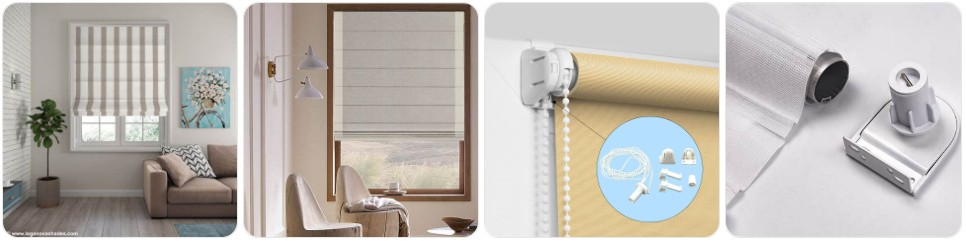
Cascading Roman Blinds combine the soft, decorative look of Roman blinds with layered folds that keep a fuller, more structured appearance even when the blind is partly raised. The quick answer is that a broken cascading Roman blind often does not need full replacement if the fabric is still in good condition and the problem is limited to the cord system, rings, lift tape, dowels, headrail, cord lock, or mounting hardware. In many cases, you can restore smooth lifting and even folds by replacing worn rings, restringing the blind, repairing a failed cord lock, or correcting a twisted dowel before the fabric starts hanging unevenly. If you want to compare likely repair parts while troubleshooting, it helps to browse Roman blind repair kits, Roman blind cord locks, and Roman shade replacement rings.
Fix Common Cascading Roman Blind Problems & Repair Cost
Cascading Roman blind will not raise or lower smoothly: This is one of the most common cascading Roman blind problems and usually points to tangled lift cords, worn rings, a damaged cord lock, or a headrail mechanism that is no longer feeding the cords evenly. Start by checking whether one cord is dragging, fraying, or pulling tighter than the others. If the fabric folds still look good, a restringing job or a replacement cord lock is often enough to restore normal movement. Small-part repairs are often in the range of about $5 to $25, while a more involved restringing or headrail repair can run around $15 to $50 depending on the size of the blind and how many components need attention. It helps to compare Roman blind cord locks and Roman shade lift cord before assuming the whole blind is worn out. Do not keep pulling on a sticking cascading Roman blind, because that can snap a cord or distort the fold pattern.
The folds look uneven or one side hangs lower: Cascading Roman blinds depend on balanced cords and evenly spaced support points to keep their layered folds looking neat. If one side hangs lower, the problem is often a stretched or broken cord, a detached ring, or a slipped dowel pocket rather than a fabric flaw. Replacing rings, checking the support dowels, or restringing the blind is usually a repairable issue, often around $5 to $30 in parts. If the fabric is still in good shape, it is worth comparing Roman shade replacement rings and Roman blind repair kits. If the fold pockets have torn, reinforce or repair them before using the blind again.
The blind will not stay up: On a cascading Roman blind, this usually means the cord lock is failing or the cord has worn too smooth to grip correctly. A worn lock can let the fabric drop gradually or suddenly, which quickly spoils the fold line and puts extra strain on the lower rings. This repair is often straightforward, with many replacement parts costing roughly $5 to $20. Comparing Roman blind cord lock replacements and blind cord replacement kits can help you identify a suitable fix.
The fabric stack looks bulky, twisted, or out of shape when raised: Cascading Roman blinds are meant to retain a fuller layered appearance, but if the stack suddenly looks twisted or asymmetrical, the problem is often a misaligned dowel, detached ring line, or a cord path that is no longer pulling straight. Depending on the exact failed part, repairs often cost around $10 to $35. It may help to compare Roman blind repair kits and replacement rings.
The headrail or mounting brackets feel loose: This is a more serious cascading Roman blind issue because the whole blind depends on a stable headrail to raise evenly. Tightening the brackets may solve a minor problem, but if the rail is cracked, pulling away, or twisting under the blind’s weight, replacing the mounting hardware may be the more reliable option. Small bracket fixes may cost under $15 in parts, while wider headrail-related repairs can run around $20 to $60 depending on the mounting style. Always check the brackets and wall fixings first before assuming the fabric blind itself is beyond repair.
Cascading Roman Blind Repair Kit
A cascading Roman blind repair kit is most useful when the problem is in the lift system, support points, or headrail hardware rather than in the visible fabric itself. Many Roman blind repair kits include practical replacement parts such as lift cord, cord locks, rings, cleats, eyelets, and small fittings that help restore even lifting and better fold formation. For cascading Roman blinds specifically, the most useful kits are the ones that support balanced lifting and even layered folds, because those are the details that make this style look decorative rather than messy when raised.
It is worth checking the included parts carefully because some products sold as Roman blind repair kits are meant for basic flat Roman shades rather than fuller cascading styles. If your issue is limited to one obvious failed part, buying that exact piece may be cheaper. But if the blind has uneven folds, a slipping cord lock, and worn rings at the same time, a broader Roman blind repair kit or Roman shade replacement parts set can save time and make the repair more consistent. For cascading Roman blinds, matching the cord path and ring layout matters more than buying a generic shade kit.

joytrace RV Pleated Shade Repair Kit, RV Window Shade Restringing Kit, Repair and Maintain of Day Night Pleated Shade (White)
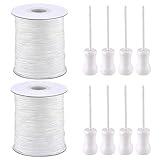
SAYAYA 2 Roll 1.8mm Braided Nylon Lift Shade Cord with 8 Pieces Wood Pendants 110 Yards Replacement Curtain String Kit for Aluminum Blinds Repair, Roman Shades, Gardening & DIY Craft Projects (White)

XJVSS RV Blinds Repair Kit for Camper Window, RV Window Shades Restringing Cord Threading Tool, Day & Night Pleated Shade String Repair Kit for RVs Campers, Car Accessories (White)
Signs Your Cascading Roman Blind Need Repair
- One side of the blind hangs lower than the other: This usually means a worn cord, detached ring, or uneven pull through the headrail. Checking Roman shade replacement rings is a smart first step if the folds no longer sit evenly.
- The folds no longer stack neatly when raised: Cascading Roman blinds should form full, even layers. If the folds bunch awkwardly, one of the cords, dowels, or support pockets may be out of line.
- The blind slips down after you raise it: This often points to a worn cord lock rather than a problem with the fabric. Matching Roman blind cord lock replacements may solve it.
- The cords look frayed or rough: If the lift cords are visibly worn, they can fail suddenly and ruin the fold balance. Replacing them early is usually much cheaper than fixing extra damage later.
- The fabric bulges or twists in the middle: Cascading Roman blinds should fold in a balanced way. Twisting usually means one line of support is no longer working correctly.
- The blind feels harder to lift than usual: Increased resistance often means cord friction, worn rings, or a headrail issue rather than normal aging of the fabric.
- A ring, stitch line, or dowel pocket has pulled away: Small attachment failures quickly affect the whole fold pattern on a cascading Roman blind, so they are worth fixing early.
- The headrail pulls away from the window or feels loose: Because cascading Roman blinds can be heavier than flat styles, loose brackets or fixings can quickly turn into a larger repair.
Tools You May Need to Repair Cascading Roman Blind
- Screwdriver set: A basic screwdriver set is useful for tightening brackets, removing the headrail, and opening up the mounting points if the repair involves hardware or a cord lock.
- Needle and strong thread: A strong sewing repair set is useful if a ring line, dowel pocket, or stitch point has come loose on the back of the blind.
- Replacement lift cord: A sticking or uneven cascading Roman blind often needs new Roman shade lift cord so the blind can raise evenly again.
- Cord lock replacement: If the blind will not stay up, a matching Roman blind cord lock is often one of the most important parts to have on hand.
- Replacement rings or eyelets: Detached or worn rings are a common reason the folds stop forming properly. Compare Roman shade replacement rings if one lift line is no longer feeding correctly.
- Fabric glue or hem repair tape: If the fabric support area has started coming loose, fabric glue or hem repair tape can help with minor reinforcement before sewing.
- Scissors and measuring tape: A sharp pair of scissors and a measuring tape help you cut replacement cord accurately and match ring spacing more precisely.
- Step stool or ladder: A stable step stool helps if you need to take down the blind, inspect the headrail, or refit the mounting brackets safely.
Should You Repair or Replace Your Broken Cascading Roman Blind?
Repairing a broken cascading Roman blind usually makes sense when the fabric still looks good and the fault is clearly limited to the lift cords, rings, cord lock, dowels, or headrail hardware. Because cascading Roman blinds are chosen partly for their decorative folds and soft furnished look, the fabric often stays attractive long after the operating parts begin to wear. In that situation, replacing the failed hardware is usually far cheaper than replacing the whole blind, especially if you only need a new cord lock, fresh lift cord, a few rings, or a small repair kit. Comparing a Roman blind repair kit with the price of a full new blind often makes repair the better value.
Replacement becomes the better option when the fabric is stained, sun-faded, badly torn, or the fold structure is distorted in several places at once. It can also make sense to replace the whole blind if the headrail is failing, multiple stitch lines are damaged, and the fabric no longer hangs neatly even after adjustment. A quick comparison between cascading Roman blind options and the specific parts you need will help you decide. In many cases, though, cascading Roman blinds are very repairable when the problem is mechanical rather than decorative.

StangH No Drill Roman Shades for Indoor Windows, Magnetic Floral Bird Velvet Cordless Roman Blind Privacy Room Darkening Vintage Window Covering for Bedroom, Green, W 26 x L 64, 1 Panel

ARLO BLINDS Bamboo Roman Shades w/Valance 30" W x 74" H, Tuscan | Semi-Sheer Cordless Bamboo Blinds for Interior Windows, Light Filtering - Real Natural Bamboo Material and Bottom Rail

Boolegon Blackout Roman Shades for Indoor Windows, Linen White, Custom Size | Cordless Roman Blinds for Windows, Thermal Insulated Window Shades for Door, Bedroom, Office, Easy to Install
Tips to Make Your Cascading Roman Blind Last Longer
- Raise and lower the blind gently: Cascading Roman blinds rely on balanced cord movement, so rough pulling can stretch one side faster than the other and spoil the fold pattern.
- Keep the cords straight and untangled: Twisted or snagged lift cords add friction and can make the folds rise unevenly over time.
- Check the rings and stitch points regularly: Small attachment points do a lot of work on a cascading Roman blind, and catching looseness early can prevent a larger repair later.
- Do not force a sticking blind: If the blind resists movement, inspect the headrail, rings, or cords first. Pulling harder can snap a cord or pull a ring off the fabric.
- Support the fabric during deep cleaning: Because the blind uses layered folds, rough handling during cleaning can distort the cascades and strain the back support lines.
- Retighten loose brackets before the headrail shifts: A small bracket problem can quickly affect the alignment of the whole blind, especially on heavier fabric styles.
- Replace worn cords and rings early: A damaged part is much cheaper to fix with Roman shade replacement parts than a blind that has dropped unevenly and damaged its fold structure.
- Keep the blind dusted and dry: Dust buildup and moisture can affect how the fabric folds and how smoothly the cords move through the back of the blind.
Cascading Roman Blind Repairs FAQ
What usually breaks on a cascading Roman blind?
The parts that fail most often are lift cords, cord locks, rings, dowel supports, and headrail fittings. On cascading Roman blinds, the operating hardware usually wears out before the main fabric does.
Can I fix a cascading Roman blind that will not raise properly?
Yes, in many cases. Start by checking whether one cord is frayed, one ring has detached, or the cord lock is no longer feeding the cords evenly. If the fabric is still in good condition, replacing those parts is often enough.
Is a cascading Roman blind repair kit worth buying?
It can be, especially when several small parts are worn at once. A Roman blind repair kit is often easier than buying rings, cord, and lock parts one by one.
Why does one side of my cascading Roman blind hang lower?
This usually means one cord has stretched, one ring has come loose, or the blind is no longer lifting evenly through the headrail. Because cascading Roman blinds rely on balanced folds, even a small imbalance becomes very noticeable.
Can I replace just the cords on a cascading Roman blind?
Yes, if the rest of the blind is still in good condition. Restringing is one of the most common repairs for Roman-style blinds and can restore normal operation when the cords are the main problem.
How much does it usually cost to repair a cascading Roman blind?
Minor repairs such as rings, cord, or a cord lock are often relatively inexpensive, usually around $5 to $25 in parts. Larger repairs involving several support points or headrail hardware can cost more, but they are often still cheaper than replacing the full blind.
Should I repair or replace a cascading Roman blind with torn fabric pockets?
If the damage is limited and the fabric still looks good, repair can still make sense, especially if the torn area can be reinforced neatly. If several pockets are torn or the fabric is already badly worn, replacement is usually the better choice.
Can cascading Roman blind parts be hard to match?
Yes, especially if the blind is older or custom made. That is why it helps to inspect the cord layout, ring size, and headrail hardware carefully before ordering any replacement parts.

60 PCS Vertical Blind Repair Tabs Kit Clear Fixer Verticle Blinds Snap in Replacement Slats Parts Panels
joytrace RV Pleated Shade Repair Kit, RV Window Shade Restringing Kit, Repair and Maintain of Day Night Pleated Shade (White)
