
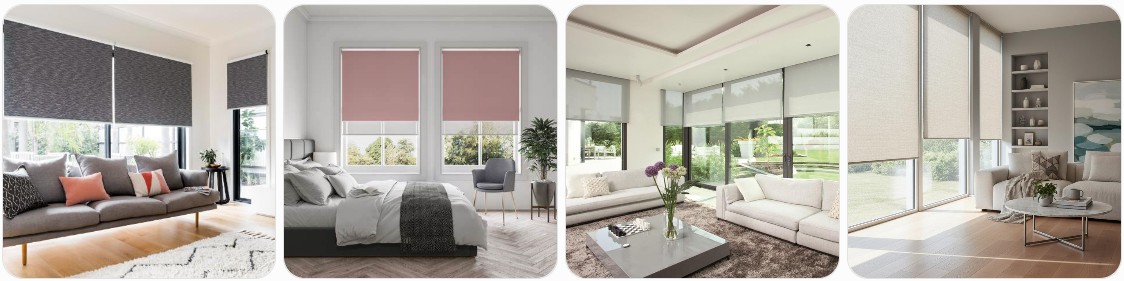
Roller blinds are one of the easiest window coverings to buy, fit, and live with because they use a simple roll-up fabric design that works in bedrooms, kitchens, living rooms, offices, bathrooms, rentals, and modern homes. This guide explains what roller blinds are, how they work, their pros and cons, expected costs, where to buy them online, how to find local stores, and what to check before ordering.
- Table of Contents:
- Roller Blinds At a Glance
- What Are Roller Blinds? How Roller Blinds Work?
- Roller Blinds Pros and Cons
- Roller Blinds Cost
- Where to Buy Roller Blinds Online
- How to Find Roller Blinds Stores Near You
- What to Check Before Buying Roller Blinds
- Roller Blinds Installation Options
- FAQ About Roller Blinds
Roller Blinds At a Glance
- Best for: Bedrooms, kitchens, bathrooms, living rooms, home offices, rentals, small windows, and modern interiors.
- Main benefit: Simple fabric coverage that rolls neatly onto a tube when opened.
- Light control: Available in light-filtering, blackout, sunscreen, thermal, privacy, and moisture-resistant fabrics.
- Typical price range: Around $15 to $80 per standard ready-made blind, $60 to $250+ for custom roller blinds, and $150 to $600+ for motorized versions.
- Installation difficulty: Easy to moderate for DIY, depending on window size, wall material, bracket placement, and whether the blind is inside-mounted or outside-mounted.
- Common controls: Chain loop, spring-loaded cordless mechanism, wand control, remote motor, rechargeable motor, or smart home compatible motor.
- Best feature: Clean appearance with fewer visible parts than slatted blinds, making them easy to match with many room styles.
- Biggest downside: Standard roller blinds do not let you tilt slats for adjustable light like Venetian or vertical blinds.
- Good for privacy? Yes, especially blackout, privacy, and opaque fabrics; sunscreen fabrics are better for daytime glare control than night privacy.
- Easy to maintain? Usually yes. Most roller blinds only need light dusting, spot cleaning, and occasional chain or bracket checks.
What Are Roller Blinds? How Roller Blinds Work?
What Are Roller Blinds?
Roller blinds are fabric window coverings made from a flat sheet of material attached to a round tube at the top of the window. When you raise the blind, the fabric wraps around the tube. When you lower it, the fabric unrolls down the window to block light, increase privacy, reduce glare, or improve comfort.
A Roller Blind is one of the simplest blind styles because it does not use multiple slats, vanes, folds, or panels. Instead, the look is clean and flat when lowered, and compact when raised. This is why roller blinds are popular in modern homes, apartments, offices, rental properties, kitchens, bathrooms, nurseries, bedrooms, and media rooms.
Roller blinds come in many fabric types. A basic light-filtering roller blind softens daylight without making the room completely dark. A blackout roller blind blocks far more light and is usually preferred for bedrooms, nurseries, shift-worker rooms, and TV rooms. A sunscreen or solar roller blind reduces glare while helping preserve the outside view during the day. Moisture-resistant roller blinds are better for bathrooms, laundry rooms, and kitchens where steam or splashes may be an issue.
The biggest reason people choose roller blinds is simplicity. They look neat, they are easy to operate, they suit many window sizes, and they are widely available in ready-made and custom sizes. You can buy plain white roller blinds for a minimal look, textured fabric roller blinds for warmth, patterned roller blinds for decoration, or motorized roller blinds for convenience.
How Roller Blinds Work?
Roller blinds work by rolling fabric around a cylindrical tube. The tube sits inside brackets mounted either inside the window recess, above the window frame, or on the wall outside the frame. The blind moves up and down when the tube rotates.
Most affordable roller blinds use a chain control. Pulling one side of the chain rotates the tube in one direction and raises the fabric. Pulling the other side rotates the tube the opposite way and lowers the fabric. Many chain-operated roller blinds include a chain tensioner or safety device to keep the loop secured, especially in homes with children or pets.
Cordless roller blinds usually use a spring mechanism inside the tube. You gently pull the bottom rail to lower the blind, then pull or guide it to raise it. These are popular when you want a cleaner look without a hanging chain. However, the spring tension must be set correctly so the blind does not shoot up too quickly or stop halfway.
Motorized roller blinds use a small motor inside the roller tube. They may run on batteries, rechargeable battery packs, plug-in power, or hardwired power. You can control them with a remote, wall switch, phone app, smart home hub, timer, or voice assistant, depending on the model. Motorized roller blinds cost more, but they are very useful for tall windows, wide windows, hard-to-reach windows, media rooms, bedrooms, and smart homes.
Roller blinds can also be installed in different roll directions. A standard roll places the fabric close to the glass, which helps reduce side gaps and gives better privacy. A reverse roll lets the fabric roll over the front of the tube, which can help clear handles, window locks, tiles, or trim, but it may create a slightly bigger gap near the glass.
When shopping, it helps to look for related parts and accessories such as roller blind chain replacements, roller blind brackets, and blackout roller blinds if you are repairing, upgrading, or replacing existing blinds.

AOSKY Cordless Blackout Roller Shades, 34" W x 72" H, Black | Cordless Free-Stop Design, Built-in Valance, Thermal Insulated Fabric, UV Protection for Home & Office
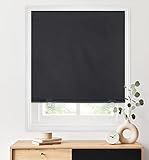
LazBlinds 100% Blackout Roller Shades, 36"x72", Black | No tools No Drill Cordless Blinds for Windows, Thermal Insulated UV Protection Privacy Window Shades

AOSKY Blackout Cordless Roller Shade for Indoor Windows, 23"W x 72"H, White | Black Out Window Shade with Spring System, Thermal Insulated UV-blocking Fabric, Room Darkening Pull Down Blind for Home Door
Roller Blinds Pros and Cons
Pros of Roller Blinds
- Clean modern look: Roller blinds sit flat against the window and suit simple, modern, minimalist, and practical interiors.
- Easy to use: The basic up-and-down operation is simple for most rooms and most users.
- Wide fabric choice: You can choose blackout, sheer, light-filtering, thermal, solar, waterproof, textured, patterned, or plain fabrics.
- Good for small rooms: They do not take up much visual space, so they work well in compact bedrooms, bathrooms, and offices.
- Affordable options: Ready-made roller blinds are often cheaper than many custom Roman, cellular, or plantation-style window treatments.
- Good blackout choice: Blackout roller blinds are a popular budget-friendly option for bedrooms and nurseries.
- Easy to clean: Most roller blinds only need dusting or light spot cleaning, depending on the fabric.
- DIY-friendly: Many standard roller blinds can be installed with basic tools if you measure carefully.
- Works with motors: Roller blinds are one of the most common blind styles for motorized and smart upgrades.
- Space-saving: When raised, the fabric rolls tightly onto the tube instead of stacking into bulky folds.
Cons of Roller Blinds
- No slat tilt: You cannot angle the fabric for fine light control like you can with Venetian blinds.
- Side gaps: Inside-mounted roller blinds can leave small gaps along the sides, especially with blackout fabrics.
- Not always decorative: Plain roller blinds may look too simple in formal rooms unless you choose a richer fabric or add curtains.
- Chain wear: Chain mechanisms can wear, loosen, or break over time, especially on cheaper models.
- Fabric can mark: Some fabrics may stain, crease, fray, or show water marks if cleaned roughly.
- Cheap models may roll unevenly: Low-quality tubes or poor installation can cause the fabric to track to one side.
- Limited insulation: Standard roller blinds do not insulate as well as cellular or honeycomb blinds.
- Privacy depends on fabric: Solar and sheer roller blinds may not give enough privacy at night when lights are on indoors.
Roller Blinds Cost: What Price Should You Expect?
Roller blinds can be very affordable or fairly expensive depending on size, fabric, brand, control system, and whether you choose ready-made, made-to-measure, or motorized blinds. A basic ready-made roller blind for a small or average window may cost around $15 to $50. Better quality ready-made blackout or moisture-resistant roller blinds often cost around $30 to $100 per blind.
Custom roller blinds usually cost more because they are made to your exact window measurements. For a standard custom roller blind, expect roughly $60 to $250+ per window. Larger windows, premium fabrics, cassette headrails, side channels, thermal backing, printed fabrics, or designer materials can increase the price. Motorized roller blinds commonly start around $150 to $300 per window and can rise to $600+ for larger, smart, hardwired, or premium systems.
Professional measurement and installation can add another $50 to $150+ per window, depending on your area, the number of blinds, wall type, window height, and installer pricing. Some companies charge a flat visit fee, while others include basic installation when you order custom blinds.
For quick budgeting, use a Blind Cost Estimator before ordering. This is especially useful if you are comparing several windows, different fabric types, inside vs outside mounts, and DIY vs professional installation.
- Budget ready-made roller blinds: About $15 to $50 per blind.
- Better ready-made blackout roller blinds: About $30 to $100 per blind.
- Custom roller blinds: About $60 to $250+ per blind.
- Motorized roller blinds: About $150 to $600+ per blind.
- Professional installation: About $50 to $150+ per window, depending on the job.
Where to Buy Roller Blinds Online
Amazon is a good place to buy roller blinds if you want fast delivery, lots of size options, budget choices, blackout fabrics, no-drill styles, and simple replacement blinds. It works especially well for standard-size windows where you do not need a fully custom product. Search carefully by width, height, mount type, color, fabric opacity, and control style. For bedrooms, look for blackout roller blinds. For kitchens and bathrooms, look for moisture-resistant or wipe-clean roller blinds. For bright offices or living rooms, search for solar roller shades or light-filtering roller blinds.
When buying roller blinds from Amazon, check the exact measuring instructions on the product page. Some listings ask you to order the actual blind width, while others automatically deduct a small amount for inside mounting. Also check whether brackets, screws, chain tensioners, and installation instructions are included. If you are replacing an existing blind, compare the tube width, fabric width, control side, bracket style, and drop length before ordering.
Useful Amazon searches include roller blinds, blackout roller blinds, cordless roller blinds, and motorized roller blinds.
Find Roller Blinds from Amazon »
AOSKY Cordless Blackout Roller Shades, 34" W x 72" H, Black | Cordless Free-Stop Design, Built-in Valance, Thermal Insulated Fabric, UV Protection for Home & Office
LazBlinds 100% Blackout Roller Shades, 36"x72", Black | No tools No Drill Cordless Blinds for Windows, Thermal Insulated UV Protection Privacy Window Shades
AOSKY Blackout Cordless Roller Shade for Indoor Windows, 23"W x 72"H, White | Black Out Window Shade with Spring System, Thermal Insulated UV-blocking Fabric, Room Darkening Pull Down Blind for Home Door
eBay can be useful for roller blinds if you are looking for discounted blinds, surplus stock, replacement parts, discontinued colors, used-but-new-in-box blinds, or bulk lots. It is also worth checking if you need a specific chain mechanism, bracket, clutch, tube end, or replacement fabric from an older roller blind system. Because eBay listings vary a lot, read the title and description carefully before buying.
For roller blinds on eBay, pay close attention to whether the listing is for one blind, a pair, a set, replacement fabric only, or hardware only. Check the condition, shipping cost, return policy, seller rating, and whether the size is listed as fabric width or total bracket-to-bracket width. If you are buying custom-made roller blinds from an eBay seller, send your measurements exactly as requested and confirm whether deductions are made by the seller.
Find Roller Blinds from eBay »
- Blinds.com – Good for custom roller shades, blackout roller shades, solar shades, fabric options, and made-to-measure ordering.
- SelectBlinds – Popular for custom roller shades, cordless options, blackout fabrics, and frequent online promotions.
- The Home Depot – Useful for ready-made roller shades, in-store pickup, custom ordering, and installation services in many areas.
- Lowe’s – Good for budget roller shades, blackout options, solar shades, and custom window treatment services.
How to Find Roller Blinds Stores Near You
To find roller blinds stores near you, start by searching for local blind shops, window treatment showrooms, home improvement stores, curtain shops, interior design stores, and custom shade installers. Use search terms such as “roller blinds near me,” “custom roller blinds near me,” “blackout roller blinds near me,” “window blinds store near me,” or “roller shade installation near me.”
If you are not sure where to start, use this guide to finding places to buy window blinds and compare local stores, online shops, big-box retailers, and specialist blind companies. Roller blinds are common, so many local stores can supply basic versions, but custom blackout, solar, wide-width, and motorized roller blinds may require a specialist supplier.
When comparing nearby stores, ask whether they offer measuring, samples, installation, repairs, and warranty support. A local store can be more expensive than buying online, but it may be worth it if your windows are large, uneven, very wide, high up, or difficult to measure. Local stores are also helpful if you want to see fabric colors in person because roller blind fabrics can look different under natural light compared with online photos.
Before visiting a store, measure the approximate width and height of each window and take photos of the window frame, handles, trim, tiles, or obstructions. This helps the salesperson suggest the right mount type, fabric opacity, control side, and bracket style. If you want blackout roller blinds for a bedroom, ask about side gaps, reverse roll vs standard roll, cassette options, and whether side channels are available for better light blocking.
What to Check Before Buying Roller Blinds
- Window measurements: Measure width and height carefully in at least three places. Windows are not always perfectly square.
- Inside or outside mount: Inside mount looks cleaner inside the frame, while outside mount can cover more light gaps and make the window look larger.
- Fabric width vs total width: Some roller blinds list total bracket width, while others list fabric width. This matters for fit and light gaps.
- Fabric type: Choose blackout for bedrooms, light-filtering for soft daylight, solar fabric for glare, and moisture-resistant fabric for bathrooms or kitchens.
- Privacy level: Sheer and solar roller blinds may provide daytime privacy but may not provide nighttime privacy when lights are on inside.
- Control side: Decide whether the chain, wand, or motor control should be on the left or right side.
- Child safety: For homes with children or pets, consider cordless roller blinds or make sure chain tensioners are fitted properly.
- Roll direction: Standard roll keeps fabric closer to the glass, while reverse roll can help clear handles or trim.
- Bracket space: Check whether there is enough depth inside the recess for the brackets, tube, and fabric roll.
- Obstructions: Look for handles, locks, vents, tiles, molding, crank handles, or inward-opening windows that could interfere with the blind.
- Room use: Bedrooms usually need blackout, bathrooms need moisture resistance, offices need glare control, and living rooms often need balanced light filtering.
- Cleaning needs: Avoid delicate fabric in messy kitchens, kids’ rooms, or humid bathrooms unless it is designed for those conditions.
- Return policy: Custom roller blinds are often non-returnable, so check measurements and order samples before committing.
- Warranty: Check coverage for the fabric, mechanism, motor, remote, and brackets.
- Installation hardware: Confirm that screws, brackets, tensioners, and instructions are included.
- Motor compatibility: For motorized roller blinds, check battery life, charging method, remote range, app support, smart home compatibility, and whether a hub is required.
Roller Blinds Installation Options: DIY vs Professional Fitting

Cutelec 2pcs Box Mounting Bracket for Low Profile Horizontal Blinds with 1-3/4" x 2 1/2" Headrail - White Color

Jetec 6 Pieces Mini Blind Brackets for Window Blinds,1.18x1.18 Inch | with Screws,Metal Replacement Parts,Easy DIY Installation
Roller blinds are one of the more DIY-friendly blind types, especially when the window is standard size and the blind comes with clear brackets and instructions. A typical installation involves marking bracket positions, drilling pilot holes, fixing the brackets, clipping the roller tube into place, testing the blind, and fitting any safety tensioner or chain retainer.
DIY installation is usually the cheapest option. It can work well for small to medium windows, simple wall materials, and ready-made blinds. You will usually need a tape measure, pencil, level, drill, screwdriver, wall plugs, screws, and possibly a hacksaw if the blind can be trimmed to size. Some roller blinds are designed as no-drill options, using adhesive, tension brackets, or clip-fit systems, but these are not always suitable for every window or every blind weight.
Professional fitting is a better choice when the blinds are expensive, custom-made, very wide, motorized, installed high up, or fitted to difficult surfaces such as tile, concrete, metal, or uneven plaster. An installer can also help reduce mistakes with inside mounts, outside mounts, light gaps, bracket alignment, and chain safety. If you are buying multiple roller blinds for a whole home, paying for professional measurement and fitting may reduce the risk of ordering the wrong size.
For blackout roller blinds, professional installation can make a noticeable difference. Even a good blackout fabric can let light leak around the sides if the blind is measured or mounted poorly. If you want the darkest possible room, ask about outside mounting, cassette systems, side channels, or pairing roller blinds with curtains.
Motorized roller blinds may also be better handled by a professional, especially if they are hardwired or connected to a smart home system. Battery-powered motorized blinds are easier to install, but you still need accurate brackets, level alignment, and correct pairing with remotes or apps.
- Choose DIY installation if: The blind is ready-made, the window is easy to reach, the wall is simple to drill, and you are comfortable measuring and leveling brackets.
- Choose professional fitting if: The blind is custom, expensive, oversized, motorized, high up, or being installed in a room where blackout performance matters.
- Choose no-drill installation if: You rent, want to avoid holes, have compatible frames, and are using a lightweight blind designed for no-drill fitting.
- Choose outside mount if: You want to cover side gaps, make the window look larger, or improve light blocking.
- Choose inside mount if: You want a cleaner built-in look and your window recess has enough depth.
FAQ About Roller Blinds
Are roller blinds good for bedrooms?
Yes, roller blinds are good for bedrooms, especially blackout roller blinds. For better darkness, choose an outside mount or consider a cassette and side-channel system because inside-mounted roller blinds can leave small side gaps.
Are roller blinds good for kitchens?
Yes, roller blinds can work well in kitchens if you choose a wipe-clean, moisture-resistant, or PVC-coated fabric. Avoid delicate fabric roller blinds near sinks, cooktops, or areas with grease and steam.
Are roller blinds good for bathrooms?
Roller blinds can be used in bathrooms if the fabric is moisture-resistant and suitable for humid rooms. Standard fabric roller blinds may absorb moisture, stain, or develop mildew in poorly ventilated bathrooms.
Do roller blinds block all light?
Blackout roller blind fabric can block most light through the fabric itself, but light may still enter around the edges. For stronger room darkening, use an outside mount, wider blind, cassette, side channels, or curtains over the roller blind.
Are roller blinds better than Venetian blinds?
Roller blinds are better if you want a clean fabric look, simple operation, and easy blackout options. Venetian blinds are better if you want adjustable slats that tilt for more precise light and privacy control.
Are roller blinds expensive?
Basic ready-made roller blinds are usually affordable, often starting around $15 to $50. Custom, premium, wide, blackout, solar, or motorized roller blinds cost more and can range from about $60 to $600+ per window.
Can roller blinds be cut to size?
Some ready-made roller blinds can be trimmed to size, but not all. Always check the product instructions before cutting because trimming the tube or fabric incorrectly can cause fraying, uneven rolling, or mechanism problems.
What is the difference between standard roll and reverse roll?
Standard roll keeps the fabric closer to the glass, which can help reduce gaps. Reverse roll sends the fabric over the front of the tube, which can help clear handles, locks, trim, or tiles.
Are cordless roller blinds worth it?
Cordless roller blinds are worth considering if you want a cleaner look and fewer exposed cords or chains. They are especially useful in homes with children or pets, but the spring mechanism should be good quality and properly adjusted.
Are motorized roller blinds worth it?
Motorized roller blinds are worth it for tall windows, wide windows, hard-to-reach areas, bedrooms, media rooms, and smart homes. They cost more than manual blinds, but they add convenience and can help with scheduled light control.
Can roller blinds be installed without drilling?
Yes, some roller blinds are made for no-drill installation using tension, adhesive, or clip-fit brackets. However, no-drill systems must match your window type and may not be suitable for heavy, wide, or motorized roller blinds.
Why does my roller blind roll unevenly?
A roller blind may roll unevenly if the brackets are not level, the fabric is not centered, the tube is bent, the blind is too wide, or the fabric has shifted on the tube. Re-leveling the brackets or adjusting the fabric alignment may fix it.
How do I clean roller blinds?
Most roller blinds can be dusted with a microfiber cloth or vacuumed gently with a brush attachment. For stains, spot clean lightly according to the fabric instructions. Do not soak the blind unless the manufacturer says it is washable.
Do roller blinds give privacy at night?
Opaque and blackout roller blinds usually give good nighttime privacy. Sheer, sunscreen, and some light-filtering fabrics may become less private at night when indoor lights are on.
Summary
Roller blinds are a practical, affordable, and stylish choice for many rooms because they use a simple fabric roll system that is easy to operate and easy to match with different interiors. They are available in blackout, light-filtering, solar, moisture-resistant, cordless, and motorized versions, so the right choice depends on your room, privacy needs, light control, budget, and installation preference. Ready-made roller blinds are usually the cheapest option, while custom and motorized roller blinds cost more but offer a better fit and more convenience. Before buying, measure carefully, choose the correct mount type, check the fabric opacity, confirm the control side, and compare online sellers with local stores if you need samples, measuring, or professional fitting.

60 PCS Vertical Blind Repair Tabs Kit Clear Fixer Verticle Blinds Snap in Replacement Slats Parts Panels

joytrace RV Pleated Shade Repair Kit, RV Window Shade Restringing Kit, Repair and Maintain of Day Night Pleated Shade (White)
