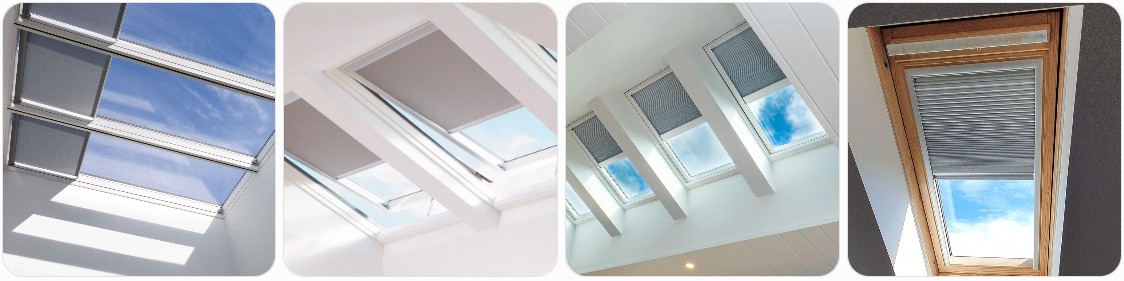
Skylight blinds are one of the most practical upgrades for roof windows, loft rooms, sunrooms, attic bedrooms, extensions, and any space where overhead sunlight becomes too bright, too hot, or too exposed. This guide covers what skylight blinds are, how they work, their pros and cons, expected cost, where to buy them online, how to find local stores, and what to check before ordering.
- Table of Contents:
- Skylight Blinds At a Glance
- What Are Skylight Blinds? How Skylight Blinds Work?
- Skylight Blinds Pros and Cons
- Skylight Blinds Cost
- Where to Buy Skylight Blinds Online
- How to Find Skylight Blinds Stores Near You
- What to Check Before Buying Skylight Blinds
- Skylight Blinds Installation Options
- FAQ About Skylight Blinds
Skylight Blinds At a Glance
- Best for: Roof windows, skylights, attic rooms, loft conversions, sunrooms, conservatories, extensions, and bright overhead window areas.
- Main purpose: Reduce glare, block harsh sunlight, improve privacy, control room temperature, and make overhead windows more usable.
- Common styles: Blackout skylight blinds, light-filtering skylight blinds, pleated skylight blinds, cellular skylight blinds, solar skylight blinds, manual skylight blinds, and motorized skylight blinds.
- Typical operation: They run inside side rails or guide channels so the fabric stays in place on angled or horizontal roof windows.
- Best rooms: Bedrooms, nurseries, home offices, bathrooms, lofts, kitchens, stairwells, and rooms that overheat from direct roof sunlight.
- Price range: Basic manual options may start around $40–$100 per blind, while custom blackout, cellular, solar, or motorized skylight blinds can range from about $100–$500+ each.
- Installation difficulty: Easy to moderate for standard skylight models, but custom skylights, high ceilings, electrical wiring, and motorized systems may need professional fitting.
- Biggest buying mistake: Ordering by rough window size instead of using the skylight brand, model code, glass size, frame measurement, or exact inside dimensions.
What Are Skylight Blinds? How Skylight Blinds Work?
What Are Skylight Blinds?
Skylight blinds are specially designed blinds made for windows installed in the roof or ceiling rather than standard vertical wall windows. Unlike regular blinds, they are built to work on angled, sloped, or horizontal glass where gravity would normally make a standard blind sag, hang awkwardly, or fail to stay in position.
A Skylight Blind usually includes a fabric panel, side rails, brackets, cassette housing, tension system, and a control method. The side rails are especially important because they keep the blind tight against the skylight frame, stop light from leaking around the edges, and help the blind move smoothly even when the window is installed at an angle.
These blinds are popular in rooms where sunlight enters directly from above. A skylight can make a room feel bright and open, but it can also create problems such as glare on screens, faded furniture, excessive heat, early morning light in bedrooms, and reduced privacy from nearby upper floors or buildings. Skylight blinds solve those problems without covering the skylight permanently.
Skylight blinds are available in several fabric types. Blackout skylight blinds are designed to block as much light as possible, making them useful for bedrooms, nurseries, and media rooms. Light-filtering skylight blinds soften sunlight while keeping the room bright. Solar skylight blinds reduce glare and heat while still allowing some daylight. Cellular or honeycomb skylight blinds add insulation, which can help rooms feel cooler in summer and warmer in winter.
Some skylight blinds are made for specific skylight brands and model numbers. For example, many roof window blinds are sold by matching the blind to the model code printed on the skylight frame. Others are sold by exact measurements. This is why skylight blinds require more careful buying than standard roller blinds or Venetian blinds.
How Skylight Blinds Work?
Skylight blinds work by using a guided system that holds the fabric close to the skylight frame. Most models use side channels or tension cords so the blind can slide up and down without drooping. The fabric is usually stored inside a top cassette or slim headrail when open, then pulled across the glass when closed.
Manual skylight blinds may be operated by a handle, telescopic pole, wand, side rail slider, or cord system depending on how high the skylight is. If the skylight is within arm’s reach, a simple handle may be enough. If the skylight is above a stairwell, vaulted ceiling, or tall loft space, a long operating pole may be needed.
Motorized skylight blinds use a small built-in motor to move the blind. They may be controlled by a remote, wall switch, smartphone app, timer, or smart home system. Some models are battery powered, some are hardwired, and some are solar powered. Solar-powered skylight blinds are especially useful when wiring is difficult because a small solar panel can help keep the battery charged using daylight.
When closed, the blind fabric covers the skylight glass to reduce incoming light, heat, and glare. When opened, the fabric retracts into the cassette or stacks neatly at one end of the window. Because the blind is supported by rails or tension, it can stay in any chosen position on many models, allowing partial coverage rather than only fully open or fully closed operation.
The most important thing to understand is that skylight blinds are not just standard blinds turned sideways. They are purpose-built for overhead windows, which means the frame fit, side rail design, control type, and fabric tension all matter.

MiLin Blackout White Skylight Blinds Cordless Cellular Shades for Windows

Petaholic 100% Blackout Curtains for Bedroom, Portable DIY Window Blinds, No Drill Window Shades & Blackout Blinds with Stickers & Tabs for Travel, Dorm Room, Media Room (118" x 57")

MiLin Skylight Shades & Blinds Blackout Cordless Cellular Blinds for Window Shades Suitable for Roof Inclined Plane Room Windows - Custom Cut to Size (100% Blackout White)
Skylight Blinds Pros and Cons
Pros of Skylight Blinds
- Excellent glare control: Helpful for TVs, laptops, home offices, reading areas, and bright living spaces.
- Better temperature control: Reduces direct overhead sunlight that can make lofts, attics, and sunrooms feel too hot.
- Improved sleep: Blackout skylight blinds can make attic bedrooms and loft bedrooms darker in the morning.
- More privacy: Useful when nearby homes, apartments, or taller buildings can look down into roof windows.
- Cleaner look than temporary covers: A fitted skylight blind looks neater than film, cardboard, fabric, or temporary shade solutions.
- Made for angled windows: Side rails and tension systems help prevent sagging on sloped glass.
- Available in manual or motorized options: You can choose a simple hand-operated blind or a remote-controlled model for hard-to-reach skylights.
- Can protect interiors: Helps reduce sun fading on flooring, furniture, bedding, rugs, and upholstery.
- Good custom-fit options: Many skylight blinds are made to match specific skylight brands, sizes, and model codes.
- Energy comfort benefits: Cellular and blackout styles may help rooms feel more comfortable by reducing heat gain and heat loss.
Cons of Skylight Blinds
- More expensive than standard blinds: Skylight blinds often cost more because they need special rails, tension systems, and precise sizing.
- Measurement mistakes can be costly: A small sizing error can prevent the blind from fitting correctly.
- Installation can be awkward: Roof windows are often high, angled, or difficult to reach safely.
- Limited universal fit: Some skylight blinds only fit certain skylight brands or model numbers.
- Motorized versions cost more: Remote, smart, battery, hardwired, or solar-powered models can raise the total price quickly.
- Repairs may be more specialized: Side rails, motors, tension cords, and cassette systems may need brand-specific parts.
- May reduce natural daylight: Blackout and darker fabrics can make the room feel less bright when closed.
- Not every blind suits every skylight: Venting skylights, unusual frames, dome skylights, or very old skylights may require special solutions.
Skylight Blinds Cost: What Price Should You Expect?
Skylight blinds usually cost more than basic window blinds because they are designed for angled or overhead installation. The final price depends on the skylight size, fabric type, control system, brand, whether it is ready-made or custom-made, and whether you install it yourself or hire a professional.
As a general guide, simple manual skylight blinds may cost around $40 to $100 for smaller or basic models. Mid-range skylight blinds, including better fabrics, blackout options, pleated styles, or brand-matched roof window blinds, often cost around $100 to $250 each. Premium custom skylight blinds, cellular insulating blinds, solar shades, and motorized skylight blinds can cost around $250 to $500+ per window.
Installation can add another $75 to $250+ depending on ceiling height, access difficulty, location, and whether electrical wiring is needed. If the skylight is easy to reach and the blind is made for your exact skylight model, DIY installation may be realistic. If the skylight is high, large, motorized, or installed over stairs, professional installation is often safer.
For a rough budget before ordering, you can use a blind cost estimator to compare how size, blind type, quantity, upgrades, and installation can affect the total price.
Here is a practical price breakdown:
- Basic manual skylight blind: Around $40–$100 each.
- Manual blackout skylight blind: Around $75–$200 each.
- Pleated or light-filtering skylight blind: Around $80–$220 each.
- Cellular or insulating skylight blind: Around $120–$300 each.
- Solar skylight blind: Around $150–$350 each.
- Motorized skylight blind: Around $250–$500+ each.
- Professional fitting: Around $75–$250+ per blind depending on access and complexity.
The cheapest option is usually a simple manual blind for a standard skylight size. The most expensive option is usually a custom motorized or solar-powered blackout blind for a large, high, or hard-to-reach skylight.
Where to Buy Skylight Blinds Online
Amazon can be a useful place to start when comparing skylight blinds because you can quickly see different styles, price ranges, sizes, control types, and customer reviews in one place. When shopping on Amazon, pay close attention to whether the blind is truly made for skylights or roof windows. Some products may be labeled as blackout shades or window shades but may not include the side rails or tension system needed for sloped glass.
For skylight windows, check the product listing for exact size compatibility, mounting method, frame depth requirements, fabric type, and whether the blind is manual, cordless, pole-operated, battery powered, or motorized. If your skylight is from a major roof window brand, look for model-code compatibility rather than only width and height. Also read reviews from buyers who used the product on actual skylights, not just regular windows.
You can also compare related products such as skylight blackout blinds, roof window skylight shades, and motorized skylight blinds if you want to compare manual and powered options.
Find Skylight Blinds from Amazon »
MiLin Blackout White Skylight Blinds Cordless Cellular Shades for Windows
Petaholic 100% Blackout Curtains for Bedroom, Portable DIY Window Blinds, No Drill Window Shades & Blackout Blinds with Stickers & Tabs for Travel, Dorm Room, Media Room (118" x 57")
MiLin Skylight Shades & Blinds Blackout Cordless Cellular Blinds for Window Shades Suitable for Roof Inclined Plane Room Windows - Custom Cut to Size (100% Blackout White)
eBay is another useful option, especially if you are looking for replacement skylight blinds, discontinued models, open-box roof window blinds, brand-specific skylight blind kits, or spare parts. This can be helpful when your skylight is older and the exact blind model is no longer easy to find from regular retailers.
When buying from eBay, check the condition carefully. For used or open-box skylight blinds, confirm that the side rails, brackets, screws, cassette, handle, remote control, and instructions are included. If the blind is motorized, ask whether the motor, battery, charger, solar panel, remote, or wall switch is included and working. For brand-specific skylight blinds, match the model code exactly before ordering.
Find Skylight Blinds from eBay »
- The Home Depot – Good for skylight shades, roof window coverings, solar shades, and installation-related products.
- Lowe’s – Useful for comparing skylight blinds, blackout shades, roof window coverings, and DIY installation supplies.
- Blinds.com – A strong option for made-to-measure blinds and custom shade solutions.
- VELUX – Best to check if your skylight is a VELUX roof window and you want a brand-matched blind or shade.
How to Find Skylight Blinds Stores Near You
Finding skylight blinds locally can be a smart idea if you are unsure about measurements, brand compatibility, installation, or whether your skylight needs a custom-made solution. Local blind shops, home improvement stores, window treatment specialists, and skylight installers may be able to measure the window, recommend the correct blind type, and install it safely.
Start by searching for terms like “skylight blinds near me,” “roof window blinds near me,” “custom skylight shades near me,” “VELUX blinds installer near me,” or “window treatment store near me.” You can also use a local window blinds buying guide to compare places to shop online and nearby before deciding where to order.
When contacting a local store, ask whether they work with roof windows specifically. Not every blinds store has experience with skylights. A store that only sells standard window blinds may not be familiar with side rails, skylight model codes, high-ceiling installation, solar-powered controls, or blackout systems for angled glass.
Before visiting a store, take photos of your skylight from different angles. If possible, write down the skylight brand, model code, glass size, frame size, and approximate ceiling height. Many skylight windows have a data plate or identification code on the frame. This code can make it much easier for a store to find the correct matching blind.
You can also check with local roofers, skylight installers, and window replacement companies. They may not sell every type of blind, but they often know which blinds fit common skylight brands and whether your skylight frame can accept a standard blind kit.
What to Check Before Buying Skylight Blinds
- Skylight brand and model code: Check the skylight frame for a label, plate, or printed code. Brand-matched blinds often require this information.
- Exact size: Measure carefully if you are not buying by model code. Check width, height, glass area, frame depth, and mounting space.
- Window angle: Make sure the blind is made for sloped or overhead use, not only regular vertical windows.
- Side rail system: Look for guide rails or tension systems that keep the fabric in place against the skylight.
- Fabric type: Choose blackout for bedrooms, light-filtering for softer daylight, solar fabric for glare and heat reduction, or cellular fabric for insulation.
- Room purpose: A bedroom may need blackout coverage, while a kitchen or living room may only need glare reduction.
- Heat control: If the room overheats, consider solar, reflective, blackout, or cellular skylight blinds.
- Privacy needs: Choose denser fabric if nearby buildings can see into the skylight.
- Control method: Decide between handle, pole, wand, cordless, remote control, app control, solar powered, or hardwired operation.
- Reach and ceiling height: If the skylight is high or above stairs, manual operation may be inconvenient unless a pole is included.
- Motor power type: For motorized blinds, check whether they are battery powered, solar powered, plug-in, or hardwired.
- Compatibility with venting skylights: If your skylight opens, make sure the blind does not block the opening mechanism.
- Moisture resistance: For bathrooms or kitchens, choose materials that can handle humidity better.
- Installation hardware: Confirm that brackets, screws, side rails, handles, remotes, and instructions are included.
- Return policy: Custom skylight blinds may not be returnable, so double-check sizing before ordering.
- Warranty: Check coverage for fabric, rails, motor, battery, remote, and operating mechanisms.
- Color from outside: Some skylight blinds are visible from outside, so consider the exterior-facing fabric color if appearance matters.
- Cleaning access: Make sure you can dust, vacuum, or wipe the blind safely after installation.
Skylight Blinds Installation Options: DIY vs Professional Fitting

Cutelec 2pcs Box Mounting Bracket for Low Profile Horizontal Blinds with 1-3/4" x 2 1/2" Headrail - White Color

Jetec 6 Pieces Mini Blind Brackets for Window Blinds,1.18x1.18 Inch
Skylight blinds can be installed as a DIY project or fitted by a professional. The right option depends on the skylight height, blind type, your comfort with tools, and whether the blind is manual or motorized.
DIY installation is usually realistic when the skylight is easy to reach, the blind is made for your exact skylight model, and the kit includes clear instructions. Many brand-specific skylight blinds are designed to screw or clip into pre-marked positions on the skylight frame. If you are installing a simple manual blind on a reachable skylight, you may only need a screwdriver, drill, measuring tape, pencil, level, and step ladder.
DIY fitting can save money, but accuracy matters. Side rails must be aligned properly or the fabric may wrinkle, bind, or leave uneven light gaps. Brackets must also be secure because the blind is mounted overhead. If the skylight is above a bed or seating area, poor installation can be both annoying and unsafe.
Professional installation is better when the skylight is high, difficult to access, oversized, unusually shaped, or located above stairs. It is also a smart choice for motorized skylight blinds, especially if wiring, pairing remotes, setting limits, or integrating with smart home systems is required.
A professional installer can also help confirm whether the blind fits before drilling. This is useful for older skylights, unusual frames, or custom blinds. If you are ordering multiple skylight blinds, professional measuring and installation may reduce the risk of expensive ordering mistakes.
In simple terms, choose DIY if the window is reachable, the blind is model-matched, and the kit is straightforward. Choose professional fitting if access is unsafe, the blind is expensive, the skylight is unusual, or the blind uses a motorized or solar-powered system.
Before installing any skylight blind, always check that the window opens and closes correctly, the frame is clean and dry, the brackets line up properly, and the side rails sit straight. If you need a ladder, place it on a stable surface and avoid working alone on high or awkward installations.
FAQ About Skylight Blinds
Are skylight blinds different from regular window blinds?
Yes. Skylight blinds are designed for roof windows and angled glass. They usually use side rails, tension systems, or fitted frames so the fabric stays close to the skylight instead of hanging down like a regular blind.
What type of skylight blind is best for bedrooms?
Blackout skylight blinds are usually best for bedrooms because they block the most light. They are especially useful in attic bedrooms, loft rooms, nurseries, and any room where early morning sunlight comes through the roof window.
Do skylight blinds help reduce heat?
Yes. Solar, blackout, reflective, and cellular skylight blinds can help reduce heat from direct overhead sunlight. They will not replace air conditioning or insulation, but they can make a bright room feel more comfortable.
Can I install skylight blinds myself?
You can install many skylight blinds yourself if the window is easy to reach and the blind is made for your skylight model. High ceilings, stairwells, large skylights, and motorized blinds are often better handled by a professional installer.
How do I measure for skylight blinds?
First check whether your skylight has a brand and model code on the frame. If it does, use that code when ordering brand-specific blinds. If not, measure the inside width, inside height, glass area, frame depth, and available mounting space carefully.
Are motorized skylight blinds worth it?
Motorized skylight blinds are worth it when the skylight is hard to reach or when you want remote, app, timer, or smart-home control. They cost more than manual blinds, but they are much more convenient for high roof windows.
Can skylight blinds fit any skylight?
No. Some skylight blinds only fit specific brands, model numbers, and frame types. Unusual skylights, dome skylights, older skylights, or non-standard roof windows may need custom blinds or a specialist installer.
What is the cheapest skylight blind option?
The cheapest option is usually a basic manual skylight blind or light-filtering roof window shade in a standard size. Custom blackout, cellular, solar, and motorized skylight blinds usually cost more.
Do skylight blinds block all light?
Blackout skylight blinds can block most light, especially when fitted with side rails, but tiny edge gaps may still appear depending on the frame and product design. Light-filtering and solar skylight blinds reduce brightness but do not fully darken the room.
Can skylight blinds be used on opening skylights?
Yes, many skylight blinds are made for opening roof windows, but compatibility matters. The blind must not interfere with the skylight handle, vent, hinge, or opening mechanism.
Are solar-powered skylight blinds a good idea?
Solar-powered skylight blinds can be a good option when wiring is difficult. They are especially useful for high roof windows because they can operate by remote without needing a hardwired electrical connection.
How long do skylight blinds last?
Good-quality skylight blinds can last several years with normal use. Lifespan depends on fabric quality, sun exposure, humidity, motor quality, installation accuracy, and how often the blind is operated.
Summary
Skylight blinds are made for roof windows and overhead glass where regular blinds do not work well. They help control glare, heat, privacy, and light, making them especially useful in lofts, attic bedrooms, sunrooms, bathrooms, kitchens, and bright extensions. The best option depends on your skylight size, brand, model code, room use, fabric preference, and whether you want manual or motorized control.
For bedrooms, blackout skylight blinds are usually the most practical choice. For hot rooms, solar or cellular skylight blinds may be better. For high or hard-to-reach skylights, motorized or solar-powered blinds can be worth the extra cost. Before buying, always confirm the skylight model, measurements, control method, installation requirements, and return policy. A properly fitted skylight blind can make a bright roof window much easier to live with every day.

60 PCS Vertical Blind Repair Tabs Kit Clear Fixer Verticle Blinds Snap in Replacement Slats Parts Panels

Vertical Blind Repair Vane Savers, 16PCS Metal Vertical Blind Repair Tabs, Vertical Blinds Repair Kit for Vertical Blinds Replacement Slats
