
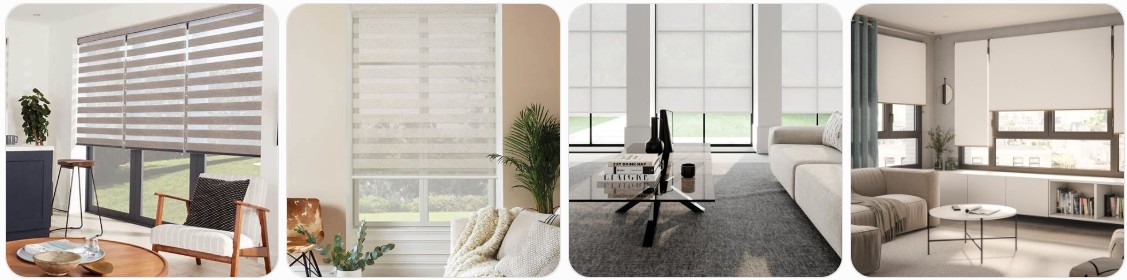
Vision blinds are a stylish choice for homeowners who want the soft look of fabric blinds with adjustable privacy and light control. This guide explains how vision blinds work, what they cost, where to buy them online, how to find local stores, and what to check before ordering.
- Table of Contents:
- Vision Blinds At a Glance
- What Are Vision Blinds? How Vision Blinds Work?
- Vision Blinds Pros and Cons
- Vision Blinds Cost
- Where to Buy Vision Blinds Online
- How to Find Vision Blinds Stores Near You
- What to Check Before Buying Vision Blinds
- Vision Blinds Installation Options
- FAQ About Vision Blinds
Vision Blinds At a Glance
- Best for: Living rooms, bedrooms, dining rooms, offices, street-facing windows, and rooms where you want flexible privacy without fully blocking daylight.
- Also known as: Zebra blinds, day and night blinds, dual sheer blinds, striped roller blinds, or double-layer fabric blinds.
- How they work: Two layers of striped fabric move past each other. When the sheer and opaque stripes line up, light comes through. When the opaque stripes overlap the sheer sections, privacy increases.
- Main advantage: They offer more light-control flexibility than a basic roller blind while keeping a clean, modern look.
- Main drawback: They are not usually the best choice if you need complete blackout, unless you choose a room-darkening version and pair it with curtains or side channels.
- Typical price range: Around $25 to $90 for ready-made small to medium sizes, $80 to $250+ for custom sizes, and $200 to $500+ for motorized or premium options.
- Installation difficulty: Moderate DIY for standard windows; professional fitting is better for wide windows, bay windows, multiple rooms, or motorized setups.
- Good shopping tip: Measure carefully, check fabric opacity, confirm inside/outside mount options, and compare whether the blind includes brackets, screws, chain safety clips, or cordless controls.
What Are Vision Blinds? How Vision Blinds Work?
What Are Vision Blinds?
Vision blinds are modern fabric blinds made with alternating sheer and opaque horizontal stripes. They are closely related to Vision Blinds, zebra blinds, day and night blinds, and dual sheer blinds because they use layered fabric instead of fixed slats. The main purpose is to give you a smooth way to switch between filtered light, partial privacy, and stronger privacy without fully raising the blind.
Unlike a standard roller blind, which is usually either up, down, or partly raised, vision blinds let you adjust the fabric alignment while the blind is lowered. This makes them useful for homes where you want daylight during the day but still want to reduce outside visibility. They are especially popular on living room windows, front-facing rooms, apartments, home offices, and bedrooms where a clean contemporary style matters.
The look is one of the biggest reasons people choose vision blinds. From a distance, they have a neat striped appearance that feels softer than Venetian blinds and more decorative than a plain roller shade. Many options are available in neutral colors like white, cream, grey, beige, charcoal, and black, but you can also find textured fabrics, metallic finishes, and bolder designer colors.
How Vision Blinds Work?
Vision blinds work by using a continuous loop of double-layered fabric. The fabric has alternating transparent or sheer bands and solid or opaque bands. When you pull the control chain or use the cordless mechanism, the front and back layers move against each other. If the sheer bands line up with each other, more light passes through. If the solid bands overlap the sheer areas, the blind gives more privacy and blocks more light.
You can use vision blinds in several positions. During the day, you can align the sheer stripes to brighten the room while softening glare. When you want privacy, you can shift the opaque stripes so the fabric looks more closed. If you want a full open view, you can raise the entire blind like a roller blind. This makes vision blinds more flexible than simple roller blinds, although they are still fabric blinds and do not tilt like Venetian slats.
Most vision blinds use a cassette or headrail at the top. The fabric rolls into the cassette as the blind is raised. Some models have a decorative fascia that hides the roller tube and gives the blind a more finished look. Cheaper versions may have a simple exposed roll, while premium versions may include a matching cassette, cordless control, child-safe chain tensioner, or motorized remote operation.
If you are comparing options online, it can help to search for vision blinds on Amazon, zebra roller shades, day and night blinds, and dual-layer sheer shades because sellers may use different names for the same general product style.

Blind Vision

EpixCare Color Blind Glasses for Men Women

Blind Vision: The Neuroscience of Visual Impairment
Vision Blinds Pros and Cons
Pros of Vision Blinds
- Flexible light control: The striped fabric lets you switch between filtered daylight and stronger privacy.
- Modern appearance: Vision blinds have a clean, stylish look that works well in contemporary rooms.
- Better privacy than sheer curtains: You can close the opaque bands when you need more coverage.
- Softer look than slatted blinds: Fabric gives a warmer finish than aluminium, vinyl, or wood slats.
- Good for street-facing windows: They let in daylight while reducing direct views from outside.
- Easy daily operation: Most models use a simple chain, cordless lift, or remote motor system.
- Available in many colors: White, grey, beige, black, and textured finishes are common.
- Works with inside or outside mount: Many models can be fitted inside the recess or mounted above the frame.
- Can look more premium: Cassette headrails and matching bottom bars give a cleaner custom look.
- Useful for glare control: They help soften bright sun on screens, TVs, and work areas.
Cons of Vision Blinds
- Not true blackout: Most vision blinds filter or darken light but do not fully block it.
- Less privacy at night if open: When interior lights are on and the sheer bands are aligned, people outside may see in.
- More fabric to clean: The double-layer fabric can collect dust compared with simple roller shades.
- Can cost more than basic roller blinds: The layered fabric and cassette options usually raise the price.
- Not ideal for very damp areas: Bathrooms and kitchens need moisture-resistant fabric and good ventilation.
- Side gaps may remain: Inside-mounted blinds can leave small light gaps at the edges.
- Cheap models may fray: Low-quality fabric edges can wear faster with frequent use.
- Pattern alignment matters: Poorly made blinds may not align the stripes neatly when adjusted.
- May not suit traditional rooms: The striped design is more modern than classic fabric Roman blinds.
- Wide windows may need multiple blinds: Very large openings can be harder to cover with one single vision blind.
Vision Blinds Cost: What Price Should You Expect?
Vision blinds usually cost more than basic roller blinds but less than many premium Roman, wood, or fully motorized blind systems. The final price depends on size, fabric quality, cassette style, brand, control type, and whether the blind is ready-made or custom-made. A small ready-made vision blind may cost around $25 to $60, while a medium-size blind may cost around $40 to $120. Larger sizes, wider windows, textured fabrics, and better headrails can push the price higher.
For custom vision blinds, expect a wider range. A made-to-measure vision blind can cost around $80 to $250+ per window depending on the width, drop, fabric collection, and finish. Premium or motorized vision blinds may cost around $200 to $500+ per window, especially if they include remote control, rechargeable motors, smart-home compatibility, or professional installation.
Installation can also affect the total. DIY installation may only require basic tools, while professional fitting may add around $50 to $150+ per blind depending on your area, window size, and how many blinds you are installing. If you are pricing several rooms, use a blind cost estimator to compare size, quantity, installation, and upgrade costs before ordering.
As a rough guide, budget buyers can look for ready-made zebra or vision blinds online. Mid-range buyers should compare cordless or cassette models. Premium buyers should look for made-to-measure vision blinds with better fabric, smoother controls, and optional motorization.
Where to Buy Vision Blinds Online
Amazon is a useful place to compare vision blinds because many sellers list them under different names, including vision blinds, zebra blinds, day and night blinds, dual-layer roller shades, and sheer horizontal shades. When shopping on Amazon, pay close attention to the width and height, whether the size listed is fabric width or total bracket width, and whether the product supports inside mount, outside mount, or both.
For vision blinds, the most important details to compare on Amazon are fabric opacity, chain side, color, cassette design, mounting hardware, and return policy. Some products are ready-made in common sizes, while others allow custom sizing. If you want a cleaner look, choose a version with a matching cassette or valance. If you have children or pets, look for cordless options or products that include a chain safety tensioner.
You can also search for related products like zebra blinds, day and night blinds, and dual sheer roller shades if you want more options than the exact “vision blinds” search term.
Find Vision Blinds from Amazon »
Blind Vision
EpixCare Color Blind Glasses for Men Women
Blind Vision: The Neuroscience of Visual Impairment
eBay can be useful if you want discounted, clearance, overstock, open-box, or custom-made vision blinds from different sellers. It is also a good place to compare replacement parts, brackets, chain controls, bottom bars, and fittings if you already own a vision blind and need to repair it instead of replacing the full blind.
When buying vision blinds from eBay, check the item condition carefully. New, made-to-measure, and open-box products can look similar in search results, so read the full listing before ordering. Confirm the exact size, fabric color, dispatch time, seller rating, and whether returns are accepted. For custom blinds, double-check your measurements before purchasing because made-to-measure orders are often harder to return.
Find Vision Blinds from eBay »
- Blinds.com – Good for comparing custom blinds, shades, fabric options, and professional-looking window treatments.
- SelectBlinds – Useful for made-to-measure blind options, frequent promotions, and different light-filtering or room-darkening styles.
- Blinds 2go – A popular option for made-to-measure blinds in the UK, including day and night style blinds similar to vision blinds.
- 247 Blinds – Offers a wide selection of made-to-measure blinds, including modern day and night styles.
How to Find Vision Blinds Stores Near You
The easiest way to find vision blinds locally is to search for blind shops, window treatment stores, curtain and blind showrooms, or home improvement stores in your area. Use search terms like “vision blinds near me,” “zebra blinds near me,” “day and night blinds near me,” “custom blinds near me,” or “window blinds store near me.” Because vision blinds are sometimes sold under different names, searching only one term may miss local suppliers.
Local stores can be helpful because you can see the fabric in person before buying. This matters with vision blinds because online photos do not always show the exact opacity, stripe width, texture, or color tone. A grey fabric may look warm, cool, light, or dark depending on room lighting. Seeing samples in person can help you avoid ordering a blind that looks different from what you expected.
You can also use a window blinds buying directory such as where to buy window blinds to compare online and local buying options. This is useful if you want to check different store types, including large home improvement retailers, specialist blind shops, custom blind companies, and online suppliers.
When contacting a local store, ask if they carry vision blinds, zebra blinds, or day and night blinds. Also ask whether they offer measuring, installation, fabric samples, custom sizes, motorized options, and repair services. If you have unusual windows, bring your measurements and photos. A good shop should be able to tell you whether an inside mount or outside mount will look better.
What to Check Before Buying Vision Blinds
- Exact window measurements: Measure width and height carefully in multiple places. For inside mount, measure inside the recess. For outside mount, decide how much overlap you want on each side.
- Inside mount vs outside mount: Inside mount looks clean and built-in, but outside mount can reduce side gaps and improve privacy.
- Fabric opacity: Check whether the blind is light-filtering, room-darkening, or closer to blackout. Most vision blinds are not fully blackout.
- Stripe alignment: Good-quality vision blinds should align smoothly between open and closed positions.
- Color in real lighting: Order samples if possible because fabric color can look different online.
- Cassette or exposed roll: A cassette headrail looks cleaner and hides the roller tube, but it may cost more.
- Control side: Confirm whether the chain or control will be on the left or right side.
- Child safety: Look for cordless designs, chain tensioners, or safety-compliant controls if children or pets are in the home.
- Mounting hardware: Check if brackets, screws, wall plugs, safety clips, and installation instructions are included.
- Cleaning needs: Vision blinds are fabric-based, so they usually need dusting or gentle vacuuming rather than heavy washing.
- Room suitability: Avoid delicate fabric in high-moisture rooms unless the product is suitable for bathrooms or kitchens.
- Return policy: Ready-made blinds may be returnable, but custom vision blinds often have limited returns.
- Motorized compatibility: If you want smart-home control later, check whether the blind can be ordered with motorization or upgraded.
- Window handles and obstructions: Make sure the blind will clear handles, locks, vents, tiles, trim, and inward-opening windows.
- Multiple window matching: If buying several blinds, order from the same fabric batch if possible so the color and stripe pattern match.
Vision Blinds Installation Options: DIY vs Professional Fitting

Cutelec 2pcs Box Mounting Bracket for Low Profile Horizontal Blinds with 1-3/4" x 2 1/2" Headrail - White Color

Jetec 6 Pieces Mini Blind Brackets for Window Blinds,1.18x1.18 Inch
Vision blinds can often be installed as a DIY project if you are comfortable measuring, drilling, leveling brackets, and following product instructions. Most standard models install like roller blinds, with brackets fixed to the wall, ceiling, or inside the window recess. Once the brackets are secure, the blind cassette or roller headrail clips into place.
DIY installation is usually the cheaper option. It works best for standard windows, lightweight ready-made blinds, and simple inside or outside mounts. You will usually need a tape measure, pencil, drill, screwdriver, level, screws, wall plugs, and sometimes a step ladder. If your wall surface is concrete, tile, plasterboard, or brick, make sure you use the correct anchors.
Professional fitting is a better choice if you are ordering custom vision blinds for several rooms, covering very wide windows, installing blinds above patio doors, fitting into bay windows, or choosing motorized blinds. A professional installer can measure more accurately, account for uneven window frames, reduce light gaps, and make sure the controls operate smoothly.
For inside mount installation, the blind sits inside the window recess. This gives a neat, built-in look but may leave small side gaps. For outside mount installation, the blind is fitted above and beyond the window frame. This can improve privacy, reduce light leakage, and make windows appear larger, but it takes up more wall space.
If you are installing vision blinds yourself, test the blind before fully tightening everything. Make sure the fabric rolls evenly, the stripes align properly, and the bottom bar sits level. If the blind pulls to one side or the fabric wrinkles, stop and adjust the brackets before continued use causes fraying or uneven rolling.
FAQ About Vision Blinds
Are vision blinds the same as zebra blinds?
Yes, vision blinds are very similar to zebra blinds. Both use alternating sheer and opaque fabric stripes to adjust light and privacy. The name used often depends on the retailer or country.
Are vision blinds good for privacy?
Vision blinds are good for adjustable privacy, especially during the day. For the most privacy, align the opaque stripes so the fabric looks closed. At night, avoid leaving the sheer sections open when indoor lights are on.
Do vision blinds block out light completely?
Most vision blinds do not block light completely. They are usually light-filtering or room-darkening. If you need full darkness for a bedroom or media room, consider blackout blinds, curtains, or a blackout-lined alternative.
Are vision blinds suitable for bedrooms?
Vision blinds can work well in bedrooms if you want soft light control and daytime privacy. However, if you are sensitive to light while sleeping, choose a room-darkening version or pair them with blackout curtains.
Can vision blinds be fitted inside the window recess?
Yes, many vision blinds can be fitted inside the recess if there is enough depth for the brackets or cassette. Always check the product’s minimum recess depth before ordering.
Can vision blinds be fitted outside the window frame?
Yes, outside mount is common for vision blinds. It can reduce side gaps, improve privacy, and make the window look larger. Make sure you add enough overlap to the width and height when measuring.
Are vision blinds expensive?
Vision blinds are usually more expensive than basic roller blinds but often cheaper than premium Roman or motorized blind systems. Ready-made options may start around $25 to $60, while custom and motorized versions can cost much more.
Are vision blinds easy to clean?
Vision blinds are fairly easy to maintain with regular dusting, a soft cloth, or gentle vacuuming with a brush attachment. Avoid soaking the fabric unless the manufacturer says it is washable.
Are vision blinds safe for homes with children?
They can be safe if you choose cordless models or install the supplied chain safety tensioner correctly. Loose looped chains can be dangerous, so always follow child-safety instructions.
Can vision blinds be motorized?
Yes, many custom vision blinds are available with motorized controls. Motorized options are useful for wide windows, hard-to-reach windows, smart homes, and rooms where you want remote or app control.
Do vision blinds work in kitchens and bathrooms?
They can work in kitchens and bathrooms if the fabric is suitable for moisture and the room has good ventilation. For very damp areas, choose moisture-resistant blinds or ask the seller if the fabric is bathroom-safe.
What color vision blinds are best?
White and cream vision blinds make rooms feel brighter, grey gives a modern neutral look, beige adds warmth, and darker colors improve contrast and privacy. The best color depends on your wall color, flooring, furniture, and how much light you want.
Summary
Vision blinds are a good choice if you want a modern fabric blind with adjustable light and privacy. They work by moving sheer and opaque fabric stripes past each other, giving you more control than a basic roller blind while keeping a softer look than slatted blinds. They are ideal for living rooms, bedrooms, offices, and street-facing windows, but they are not usually the best option for complete blackout.
Before buying vision blinds, measure carefully, compare fabric opacity, check whether you need inside or outside mount, and confirm the control type. Ready-made options are usually more affordable, while custom vision blinds offer better fit, more fabric choices, and cleaner finishes. For the best results, compare Amazon, eBay, specialist blind retailers, and local stores before ordering.

60 PCS Vertical Blind Repair Tabs Kit Clear Fixer Verticle Blinds Snap in Replacement Slats Parts Panels

Vertical Blind Repair Vane Savers, 16PCS Metal Vertical Blind Repair Tabs, Vertical Blinds Repair Kit for Vertical Blinds Replacement Slats
