
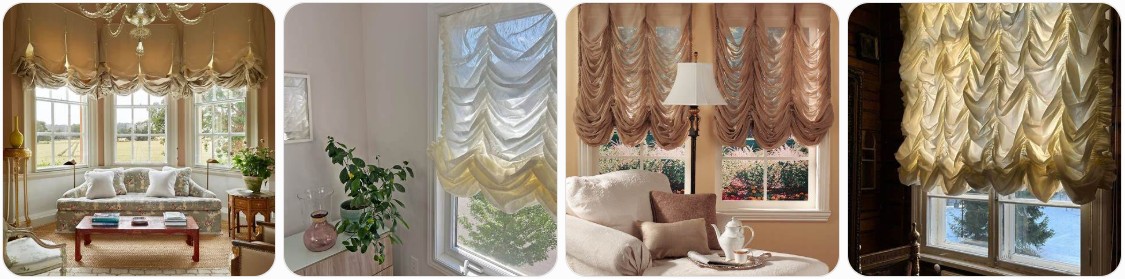
Austrian blinds are elegant fabric window treatments known for their gathered scalloped folds, soft drape, and decorative look. This buying guide explains how Austrian blinds work, what they cost, where to buy them online, how to compare custom options, and what to check before ordering them for your home.
- Table of Contents:
- Austrian Blinds At a Glance
- What Are Austrian Blinds? How Austrian Blinds Work?
- Austrian Blinds Pros and Cons
- Austrian Blinds Cost
- Where to Buy Austrian Blinds Online
- How to Find Austrian Blinds Stores Near You
- What to Check Before Buying Austrian Blinds
- Austrian Blinds Installation Options
- FAQ About Austrian Blinds
Austrian Blinds At a Glance
- Best for: Formal living rooms, dining rooms, bedrooms, bay windows, period homes, boutique interiors, and decorative feature windows.
- Main look: Soft gathered fabric with scalloped folds that create a luxurious curtain-like appearance.
- Operation: Usually raised and lowered with lift cords, rings, tapes, pulleys, or a cord lock system hidden behind the fabric.
- Light control: Best for soft light filtering, privacy, and decoration; blackout lining may be added for bedrooms.
- Price level: Usually mid-range to premium because they require more fabric, sewing, lining, and careful fitting than simple roller blinds.
- Ready-made availability: Less common than roller, Roman, or Venetian blinds; many Austrian blinds are custom-made or made-to-measure.
- Maintenance: More delicate than slatted blinds because the folds collect dust and the fabric may need careful cleaning.
- Installation difficulty: Medium to advanced for DIY, especially on wide windows or heavy lined fabrics.
- Similar styles: Balloon blinds, London blinds, relaxed Roman blinds, and hobbled Roman blinds.
- Biggest buying tip: Confirm the fabric fullness, lining, control side, finished drop, and mounting depth before ordering.
What Are Austrian Blinds? How Austrian Blinds Work?
What Are Austrian Blinds?
Austrian blinds are soft fabric blinds that gather into full scalloped swags across the width of the window. Unlike flat Roman blinds that fold into clean horizontal pleats, Austrian blinds keep a ruched, gathered, and decorative appearance even when lowered. They are often chosen when the window treatment is meant to be a design feature, not just a practical privacy covering.
The style is closely related to formal drapery and traditional soft furnishings. An Austrian blind usually uses generous fabric fullness, vertical rows of rings or tapes, and a lifting system that pulls the fabric upward into rounded folds. This creates a romantic, layered look that works especially well with voile, sheer fabric, lightweight cotton, linen blends, silk-style fabrics, and lined decorative textiles.
If you are comparing fabric blind styles, Austrian blinds sit in the decorative fabric blind category. You can learn more from the related Austrian Blinds category, which covers Austrian blind guides, parts, repairs, and removal topics.
Austrian blinds are not usually the best choice for a very minimalist room, a high-moisture bathroom, or a place where you need quick wipe-clean maintenance. However, they can be an excellent choice for bedrooms, sitting rooms, dining rooms, nurseries, home offices, and formal spaces where softness and style matter.
How Austrian Blinds Work?
Austrian blinds work by lifting fabric through a cord-and-ring system. On the back of the blind, vertical rows of rings are attached to the fabric or to sewn tapes. Lift cords run through those rings from the bottom of the blind up toward the headrail or mounting board. When you pull the control cord, the lift cords shorten and draw the fabric upward. Because the fabric is gathered across the width, the blind forms soft scalloped folds as it rises.
The amount of gathering depends on the fabric fullness. A lightly gathered Austrian blind may look closer to a soft Roman blind, while a fuller Austrian blind creates deeper swags and a more dramatic decorative effect. Sheer fabrics often create a light, floaty look, while lined fabrics look fuller and heavier.
Most Austrian blinds are fitted to a headrail, wooden batten, track, or mounting board. The control system may be a traditional cord lock, cord cleat, pulley system, side chain mechanism, or sometimes a motorized lift system on custom blinds. The finished result depends heavily on accurate measuring, even cord spacing, proper fabric selection, and careful installation.
When shopping online, it helps to compare related terms such as Austrian blinds, Austrian shades, balloon window shades, and fabric Roman shades, because some sellers use similar names for gathered fabric window treatments.

Calyx Interiors 2" Faux Wood Blind w/Valance, 22.5" W x 48" H, Pure White

Briny River Sidewinder Gear Pulley with 1M Metal Chain for Roman Blinds Austrian Flower Blinds
Austrian Blinds Pros and Cons
Pros of Austrian Blinds
- Very decorative: Adds a soft, elegant, and high-end look to the room.
- Great for formal interiors: Works well in dining rooms, living rooms, bedrooms, and classic-style homes.
- Softens hard windows: Makes plain windows look warmer, fuller, and more finished.
- Good fabric flexibility: Can be made with sheer, semi-sheer, light-filtering, lined, or blackout fabrics.
- Custom look: Often made-to-measure, so they can look more tailored than basic ready-made blinds.
- Works with curtains: Can be layered behind side panels or drapes for a luxurious window treatment.
- Beautiful when raised: The gathered folds create a decorative valance-like effect at the top of the window.
- Good for feature windows: Ideal when you want the blind to be part of the room design.
Cons of Austrian Blinds
- Usually more expensive: Requires more fabric, lining, sewing, and labor than simple blinds.
- Not the easiest to clean: The folds can hold dust and may need careful vacuuming or professional cleaning.
- Less modern-looking: May feel too traditional for very minimalist interiors.
- Not ideal for damp rooms: Fabric folds are not the best choice for bathrooms, wet kitchens, or laundry rooms.
- Needs accurate measuring: Poor sizing can make the folds look uneven or bulky.
- Can block more window space: When raised, the gathered fabric stack may cover part of the glass.
- More complex mechanism: Cords, rings, tapes, and pulleys can wear out or need adjustment over time.
- Limited ready-made options: You may need a custom maker if you want the correct size, fabric, and lining.
Austrian Blinds Cost: What Price Should You Expect?
Austrian blinds usually cost more than basic roller blinds and many standard Roman blinds because they use more fabric and require more detailed construction. A small ready-made or simple fabric Austrian-style shade may start around $40 to $100, but true made-to-measure Austrian blinds usually cost more.
For a custom Austrian blind, a realistic price range is often around $150 to $500+ per window, depending on size, fabric, lining, fullness, hardware, and installation. Large windows, premium fabrics, blackout lining, interlining, decorative trims, and professional fitting can push the price above $600 to $1,000+ for a single wide or luxury window treatment.
The biggest cost factors are fabric quantity, labor, lining, the lift mechanism, and whether the blind is professionally measured and installed. Austrian blinds need extra fabric to create the gathered swags, so the same window size can cost more than a flat Roman shade. If you are comparing quotes, use a blind cost estimator to get a rough budget before ordering custom fabric or booking installation.
- Budget Austrian-style shade: Around $40 to $100 for small ready-made or simple online options.
- Basic custom Austrian blind: Around $150 to $300 for a smaller window with standard fabric.
- Mid-range made-to-measure blind: Around $300 to $600 with better fabric, lining, and a cleaner lift system.
- Premium Austrian blind: Around $600 to $1,000+ for large sizes, luxury fabric, interlining, trims, or professional fitting.
- Installation cost: Often around $50 to $150+ per blind, depending on location, window height, and installer minimum fees.
Where to Buy Austrian Blinds Online
Amazon can be useful when you want to compare Austrian-style shades, balloon shades, gathered fabric shades, sheer fabric blinds, and related soft window treatments. Because true Austrian blinds are often custom-made, Amazon results may include similar products under names such as Austrian shade, balloon shade, ruched shade, gathered Roman shade, or decorative fabric window shade.
When using Amazon, look closely at the product photos, finished size, mounting style, fabric type, and whether the product actually raises and lowers or is mainly decorative. Some products are designed as fixed balloon valances, while others function as adjustable shades. Also check whether hardware is included, whether the shade is washable, and whether it uses ties, cords, rings, or a rod-pocket style.
Find Austrian Blinds from Amazon »
Calyx Interiors 2" Faux Wood Blind w/Valance, 22.5" W x 48" H, Pure White
Briny River Sidewinder Gear Pulley with 1M Metal Chain for Roman Blinds Austrian Flower Blinds
eBay is another place to check for Austrian blinds, especially if you are looking for vintage fabric shades, discontinued patterns, custom drapery work, second-hand window treatments, or decorative gathered blinds. Since Austrian blinds are more niche than roller or Venetian blinds, eBay listings may vary a lot. Search using multiple terms such as Austrian blind, Austrian shade, balloon blind, ruched blind, and fabric gathered shade.
Before buying on eBay, ask the seller for the exact finished width and drop, the top mounting method, the condition of the fabric, and whether the lift cords, rings, tapes, and headrail are included. For used Austrian blinds, also check for sun fading, stains, damaged lining, broken cords, missing rings, and uneven folds.
Find Austrian Blinds from eBay »
- Etsy – Good for handmade Austrian blinds, custom fabric shades, vintage-inspired gathered blinds, and sellers who may offer made-to-measure work.
- Amazon – Useful for comparing Austrian-style shades, balloon shades, sheer shades, and related fabric window coverings.
- eBay – Worth checking for used, vintage, custom, or discontinued Austrian blinds and soft fabric shades.
- Blinds.com – Better for comparing custom blind categories and fabric shade alternatives if you cannot find true Austrian blinds.
- SelectBlinds – Useful for Roman shade alternatives, fabric shade options, and custom window covering comparisons.
How to Find Austrian Blinds Stores Near You
Finding Austrian blinds locally can be harder than finding roller, Venetian, vertical, or cellular blinds because Austrian blinds are often treated as a custom soft furnishing instead of a standard retail blind. The best local places to check are custom curtain shops, drapery workrooms, interior design studios, upholstery shops, and made-to-measure blind retailers.
Start by searching for terms like “custom Austrian blinds near me,” “Austrian shades near me,” “custom drapery workroom,” “made to measure fabric blinds,” and “balloon shades near me.” If you only search for “blinds near me,” you may mostly find companies selling roller blinds, faux wood blinds, vertical blinds, and shutters. For Austrian blinds, you need a seller who understands fabric fullness, lining, lift cords, and decorative window treatments.
You can also use a window covering directory or buying guide to compare places to buy blinds near you before contacting local shops. When calling a store, ask directly whether they make Austrian blinds or whether they can recommend a drapery workroom that does.
- Call custom drapery shops: Ask if they make Austrian blinds, balloon shades, or gathered fabric shades.
- Visit fabric stores: Many fabric shops know local seamstresses or workrooms that make soft window treatments.
- Ask blind retailers about custom options: Some blind companies can supply Roman shades but may refer Austrian blinds to a specialist.
- Check interior designers: Designers often work with local workrooms that create decorative blinds and curtains.
- Bring photos: Austrian blinds are niche, so showing a reference image helps avoid confusion with Roman blinds or balloon valances.
- Request measuring help: Custom Austrian blinds need accurate width, drop, mounting position, and stack allowance.
What to Check Before Buying Austrian Blinds
- Confirm the exact style: Make sure you are buying a working Austrian blind, not just a balloon valance or decorative curtain panel.
- Check fabric fullness: Austrian blinds need enough fabric to create gathered swags. Too little fullness can look flat and uneven.
- Choose the right fabric weight: Lightweight fabrics gather more softly, while heavy fabrics may look rich but can be harder to lift.
- Decide on lining: Unlined fabric gives a softer look, privacy lining improves coverage, and blackout lining helps darken bedrooms.
- Measure width carefully: Decide whether the blind will sit inside the recess, outside the recess, or on a wall-mounted board.
- Measure the finished drop: Austrian blinds may need extra fabric allowance for the gathered lower section.
- Check the raised stack: When raised, the folds may cover part of the window glass, so allow for the stack height.
- Review the lift system: Ask whether it uses cords, rings, tapes, pulleys, side chain, cord lock, cleat, or motorized controls.
- Check child-safety features: Long exposed cords should be secured with cleats or safety devices, especially in homes with children or pets.
- Confirm the control side: Choose left or right operation based on furniture placement and window access.
- Look at the back of the blind: The rear construction should have neat ring spacing and secure stitching.
- Ask about cleaning: Some fabrics can be vacuumed gently, while others may need professional cleaning.
- Check return rules: Custom Austrian blinds may not be returnable if you measure incorrectly.
- Request fabric samples: Color, texture, and opacity can look very different in natural light.
- Compare quotes: A low price may not include lining, hardware, measuring, installation, or enough fabric fullness.
Austrian Blinds Installation Options: DIY vs Professional Fitting

Austrian blinds can be installed DIY if the blind is small, lightweight, and supplied with clear mounting hardware. However, they are more difficult to fit than basic roller blinds because the fabric needs to hang evenly, the cords need to lift smoothly, and the folds need to sit correctly across the width of the window.
For DIY installation, you usually need a tape measure, pencil, drill, screwdriver, level, wall plugs, screws, brackets, and sometimes a cleat for securing the cord. The blind may mount to a headrail, batten, board, or track depending on the design. Before drilling, hold the blind in position and check that the fabric clears handles, radiators, window locks, and trim.
Professional fitting is usually the better option for expensive custom Austrian blinds, wide windows, tall windows, bay windows, delicate fabrics, lined blinds, or heavy treatments. A fitter can make sure the mounting board is secure, the blind is level, the cords run properly, and the folds are dressed evenly. This matters because an Austrian blind that is slightly crooked can look much more obvious than a simple roller blind.
- DIY fitting is best when: The blind is small, lightweight, ready-made, and comes with simple mounting instructions.
- Professional fitting is best when: The blind is custom, expensive, wide, heavy, lined, or installed in a formal room where appearance matters.
- Inside mount: Gives a neat recessed look but requires enough depth and very accurate measuring.
- Outside mount: Can make the window look larger and may hide more light gaps, but needs careful positioning above and beside the frame.
- Board-mounted fitting: Common for traditional Austrian blinds and gives a secure base for fabric and lift hardware.
- Track or headrail fitting: May be used on more modern versions or custom-made shades.
If you install Austrian blinds yourself, test the lift system several times before finishing. Raise the blind slowly and check whether each section gathers evenly. If one side lifts faster than another, the cords may need adjusting. After installation, dress the folds by hand so the scallops sit evenly across the front.
FAQ About Austrian Blinds
Are Austrian blinds the same as Roman blinds?
No. Austrian blinds and Roman blinds are both fabric blinds, but they look and operate differently. Roman blinds usually fold into flatter horizontal pleats, while Austrian blinds gather into soft scalloped swags with a fuller, more decorative appearance.
Are Austrian blinds the same as balloon blinds?
They are similar, but not always identical. Balloon blinds usually create rounded poufs or balloon-like sections, while Austrian blinds often have more continuous gathered scallops across the width. Many sellers use the terms loosely, so always check photos and construction details.
Are Austrian blinds good for bedrooms?
Yes, Austrian blinds can work very well in bedrooms if you want a soft decorative look. For better darkness and privacy, choose privacy lining or blackout lining. Keep in mind that the gathered folds may allow some light gaps unless the blind is carefully made and fitted.
Can Austrian blinds be blackout?
Yes, Austrian blinds can be made with blackout lining, but they may not block light as tightly as a cassette blackout roller blind. The fabric folds, side gaps, and mounting style can still allow some light to enter around the edges.
Are Austrian blinds expensive?
They are usually more expensive than simple roller blinds because they need more fabric, sewing, lining, rings, cords, and careful fitting. Custom Austrian blinds can range from about $150 to $500+ per window, with luxury options costing more.
Can I buy ready-made Austrian blinds?
Sometimes, but ready-made Austrian blinds are less common than ready-made roller or Roman blinds. You may find Austrian-style shades, balloon shades, or gathered fabric shades online, but true Austrian blinds are often custom-made.
What fabric is best for Austrian blinds?
Lightweight to medium-weight fabrics usually work best because they gather nicely. Sheer fabric gives a soft airy look, cotton and linen blends create a casual classic look, and lined decorative fabric creates a fuller formal style.
Are Austrian blinds hard to clean?
They can be harder to clean than flat blinds because the folds collect dust. Regular gentle vacuuming with an upholstery brush can help. Delicate, lined, or expensive fabrics may need professional cleaning.
Can Austrian blinds be motorized?
Yes, some custom Austrian blinds can be motorized, but it depends on the weight, lift system, and workroom. Motorization usually increases the cost and is best handled by a professional supplier or installer.
Do Austrian blinds work in kitchens?
They can work in a dry decorative kitchen area, but they are not ideal near sinks, cooktops, grease, or steam. Fabric folds can absorb odors and collect dust, so a wipe-clean blind is usually more practical for busy kitchens.
Do Austrian blinds work in bathrooms?
Usually they are not the best choice for bathrooms because moisture can affect the fabric, lining, stitching, and cords. If used in a bathroom, they should be kept away from direct moisture and made from suitable fabric.
How do you measure for Austrian blinds?
Measure the exact width and drop of the area you want to cover, then decide whether the blind will sit inside or outside the window recess. For custom blinds, ask the maker how much extra fabric and mounting allowance they need for the gathered style.
Can Austrian blinds be repaired?
Yes. Common repairs involve broken lift cords, loose rings, damaged tapes, worn pulleys, faulty cord locks, or uneven lifting. Fabric damage may be harder to repair, especially if the material is faded, stained, or discontinued.
Do Austrian blinds give privacy?
Yes, Austrian blinds can provide privacy, especially when made with lined or opaque fabric. Sheer Austrian blinds soften the view but may not provide full nighttime privacy when lights are on inside.
Are Austrian blinds still in style?
Austrian blinds are not as common in minimalist interiors, but they are still stylish in traditional, romantic, vintage, cottage, luxury, and formal room designs. They work best when the room already has soft furnishings, decorative fabric, or classic details.
Summary
Austrian blinds are a beautiful choice if you want a soft, gathered, decorative window treatment with a more luxurious look than standard roller or Roman blinds. They are best suited to bedrooms, living rooms, dining rooms, and formal spaces where fabric, texture, and elegance matter. The main downsides are higher cost, more detailed measuring, harder cleaning, and more complex installation.
For the best result, compare ready-made and custom options, check the fabric fullness, choose the right lining, confirm the lift system, and decide whether DIY or professional fitting makes more sense. If you want a truly tailored look, a custom Austrian blind from a drapery workroom or soft-furnishing specialist is usually the strongest option.

60 PCS Vertical Blind Repair Tabs Kit Clear Fixer Verticle Blinds Snap in Replacement Slats Parts Panels

30 Sets (60 Pcs) Vertical Blinds Replacement Slats Panels, Vertical Blind Repair Tabs Kit, Clear Apartment Blinds Replacement Fixers, Horizontal Blinds Replacement Parts
