
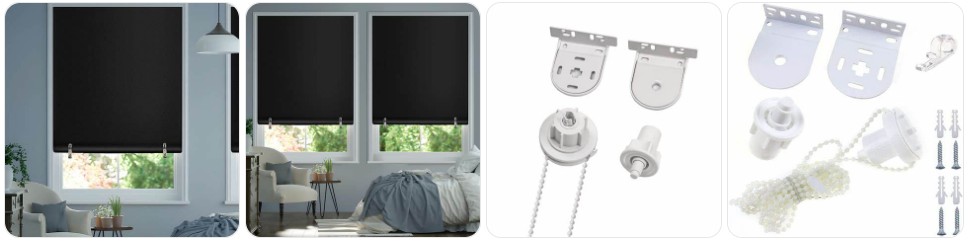
Blackout Blinds are designed to block as much outside light as possible, so repairs often involve roller mechanisms, side channels, cassette parts, spring systems, bottom bars, control chains, or blackout fabric edges rather than decorative slat components. The quick answer is that a broken blackout blind can often be repaired for much less than a full replacement if the fabric is still in good condition and the main issue is limited to the operating hardware. In many cases, the fix comes down to replacing a worn clutch, changing a broken chain, refitting loose brackets, repairing side-channel alignment, or replacing a damaged bottom bar before the blind starts rolling unevenly or leaking more light than it should. If you want to compare useful products while troubleshooting, it helps to browse Blackout blind repair kits, roller shade clutch replacements, and blackout roller blind parts.
Fix Common Blackout Blind Problems & Repair Cost
The blackout blind will not roll up or down smoothly: This is one of the most common blackout blind problems and usually points to a worn clutch, a damaged spring mechanism, a rough chain path, or a tube that is no longer turning evenly inside the brackets. Because blackout blinds often use slightly heavier fabric than standard light-filtering blinds, even a small hardware fault can make the blind feel jerky, noisy, or much harder to control. In many cases, the repair involves replacing the clutch or chain rather than replacing the whole blind. Minor repairs are often in the range of about $8 to $25 in parts, while a broader repair involving brackets, clutch hardware, and chain parts can run around $20 to $50 depending on the blind size and hardware style. It helps to compare Blackout blind repair kits and roller shade clutch replacements. Do not keep forcing a sticking blackout blind, because that can damage the heavier fabric edge as well as the mechanism.
The blind rolls unevenly and light leaks appear along one side: On a blackout blind, uneven rolling often means the tube has shifted, one bracket is loose, the fabric has started telescoping on the roller, or the side channels are no longer guiding the blind evenly. Because blackout blinds are meant to reduce light leakage, even a small alignment issue becomes much more noticeable than it would on a basic roller shade. Depending on the cause, the repair may be as simple as realigning the tube, tightening the brackets, or adjusting the guide position. If the fabric has creased badly or the edge has started curling, the repair can be more involved than a simple hardware adjustment.
The chain is broken, slipping, or hard to pull: If the chain loop has snapped, skips, or feels rough, the problem may be limited to the chain itself or the clutch teeth it engages with. Blackout blinds are used frequently in bedrooms and media rooms, so chain wear is common over time. Replacing the chain is usually one of the simplest repairs, and the part itself is often inexpensive. Search terms such as roller blind bead chain replacement and roller shade clutch replacement can help if the blind still looks good otherwise.
The side channels or cassette no longer sit correctly: This is common on blackout blinds that rely on close-fitting side guides or a cassette to improve room darkening. If a side channel has loosened, warped, or shifted, the blind may stop traveling cleanly and light leakage may increase around the edges. If the channel and blind are still straight, refitting the channel or replacing a bracket or clip is often worth doing.
The bottom bar is loose, bent, or no longer hangs straight: Blackout blinds rely on an even weighted bottom bar to keep the fabric hanging neatly and rolling back up in a straight line. If the bar is bent, detached, or pulling the fabric unevenly, the blind may twist, track badly, or develop edge wear. Replacing or refitting the bottom bar can often restore the blind’s appearance and improve how smoothly it rolls.
Blackout Blind Repair Kit
A blackout blind repair kit is most useful when the problem is in the roller mechanism, control chain, side guides, or bottom bar hardware rather than in the front blackout fabric itself. Because blackout blinds often use heavier material and tighter-fitting side hardware than standard roller blinds, the parts that fail are usually small but important for both movement and light blocking. A good blackout blind repair kit may include chain loops, clutch parts, brackets, end plugs, guide fittings, screws, and small mounting pieces that help restore smooth rolling and better edge control without replacing the whole blind.
It is worth checking the kit contents carefully because some products are sold under broader roller shade repair terms even when they are suitable for blackout blinds. If the fault is limited to one obvious issue, such as a snapped chain or one worn bracket, buying that single part may be the cheaper option. But if the blind is already rolling unevenly, slipping downward, and showing wear around the clutch or side guide area, a broader Blackout blind repair kit or a set of blackout roller blind parts can make the repair much more consistent. For blackout blinds, keeping the fabric square on the roller matters just as much as replacing the hardware itself.

60 PCS Vertical Blind Repair Tabs Kit Clear Fixer Verticle Blinds Snap in Replacement Slats Parts Panels

ZNBSIXP 60 PCS Vertical Blind Repair Tabs Kit, Clear Strong Adhesive PVC Fixers & Vertical Blinds Replacement Slats, Blind Fixer Tabs Invisible Snap in Repair Patches, Easy DIY Fix No Tools Needed

Roller Shade Clutch Repair Kit for 38 mm/1.5" Tube, Replacement Parts Set with Metal Brackets, Plastic Bead Chain and End Caps, Fits Roller Window Shades and Blackout Blinds, Easy Install
Signs Your Blackout Blind Need Repair
- The blind no longer rolls up evenly: This usually points to a worn clutch, loose bracket, or a tube that is tracking badly. Checking roller shade clutch replacements is often a smart first step.
- More light is leaking around the sides than before: On a blackout blind, growing edge gaps usually mean the side guides, cassette position, or fabric alignment are no longer working properly.
- The chain feels rough, skips, or has snapped: If the control chain is no longer moving smoothly, compare roller blind bead chain replacements before assuming the whole blind is worn out.
- The blind drops on its own after you stop pulling: This often means the clutch is wearing out, especially on heavier blackout fabrics where the mechanism is under more constant load.
- The bottom bar hangs crooked or twists: Blackout blinds depend on even weight distribution, so a bent or loose bottom bar can quickly affect how the blind rolls and how well it blocks light.
- The fabric still looks good, but the operating system feels unreliable: This is often the best time to repair a blackout blind, because the problem is still mainly mechanical rather than decorative.
- The cassette, brackets, or side channels feel loose: If those parts start moving, the blind may become noisier, less stable, and less effective at room darkening.
- The blind rubs or scrapes when moving: Sometimes the visible issue is not the fabric itself, but a guide, bracket, or bottom bar that has shifted and is no longer keeping the blind straight.
Tools You May Need to Repair Blackout Blind
- Measuring tape: A measuring tape helps you check blind width, drop, chain length, bracket spacing, and replacement part sizes before ordering anything.
- Needle-nose pliers: A pair of needle-nose pliers helps with small chain connectors, tight brackets, and compact control hardware without damaging them.
- Replacement chain loop: If the blind is hard to control or the chain has snapped, matching roller blind bead chain replacement parts is often one of the most useful repair items to have on hand.
- Clutch mechanism: Worn clutches are a common cause of slipping or rough movement. Comparing roller shade clutch replacements is useful if the blind no longer holds or rolls properly.
- Mounting brackets: If the blind sits loose or crooked, a set of roller shade mounting brackets may be the part you need.
- Small screwdriver set: A precision screwdriver set is useful if the cassette needs to be opened or a bracket, clutch, or side-guide component has to be replaced.
- Clean work surface and soft cloth: Blackout blinds often need to be laid flat for repair, so it helps to protect the fabric while you inspect the side channels, bottom bar, and roller mechanism.
- Level: A small spirit level can help you check whether the brackets or side channels are sitting square before you reinstall the blind.
Should You Repair or Replace Your Broken Blackout Blind?
Repairing a broken blackout blind usually makes sense when the fabric still looks good and the problem is clearly limited to the chain, clutch, brackets, side guides, or bottom bar. Because blackout blinds are often chosen for bedrooms, nurseries, and media rooms where light control really matters, it is often worth fixing a blind that still blocks light well but has one mechanical fault. In that situation, replacing the failed hardware is usually much cheaper than replacing the whole blind, especially if all you need is a Blackout blind repair kit, a new chain, or a replacement clutch.
Replacement becomes the better option when the blackout fabric has torn, curled badly at the edges, delaminated, or lost its shape so badly that it no longer rolls straight. It may also make sense to replace the whole blind if the cassette, side channels, and roller hardware are all wearing out at the same time or if the blind was a low-cost ready-made model to begin with. A quick comparison between Blackout blind options and the parts you need can help you decide. In many cases, though, Blackout blinds are worth repairing when the problem is in the operating system rather than the blackout fabric itself.
LazBlinds 100% Blackout Roller Shades, 36"x72", Black | No tools No Drill Cordless Blinds for Windows, Thermal Insulated UV Protection Privacy Window Shades

Petaholic 100% Blackout Curtains for Bedroom, Portable DIY Window Blinds, No Drill Window Shades & Blackout Blinds with Stickers & Tabs for Travel, Dorm Room, Media Room (118" x 57")

Window Blinds Cordless No Drill Cut to Size Stick On Temporary Paper Shades | Non-Woven, Blackout, Easy Install, Self Adhesive, Pleated Window Cover for Indoor Windows Doors Bedroom Kitchen Bathroom
Tips to Make Your Blackout Blind Last Longer
- Raise and lower the blind smoothly: Sudden pulling puts more strain on the clutch, chain, and brackets than controlled movement.
- Do not keep using the blind if it starts rolling unevenly: Continuing to operate a misaligned blackout blind can crease the fabric edges and wear out the control side much faster.
- Check the brackets and side guides occasionally: Blackout blinds rely on close alignment for good light blocking, so small shifts can quickly turn into bigger performance problems.
- Keep the chain untangled and clean: Dust and friction can shorten the life of the control loop and clutch over time.
- Support the fabric during cleaning: Blackout blinds look simple, but the heavier fabric and bottom bar can be stressed if the blind is handled roughly during cleaning or removal.
- Do not ignore a slipping clutch: Replacing a worn clutch early is far easier than dealing with a blind that repeatedly drops and strains the rest of the mechanism.
- Store removed blackout blinds flat or loosely rolled and protected: If the blind has to come down for repair, protect both the blackout coating and the roller hardware so it can be reinstalled without new damage.
- Replace small worn parts early: A fresh chain, clutch, or set of mounting brackets is much cheaper than rebuilding a heavily worn blind later.
Blackout Blind Repairs FAQ
What usually breaks on a blackout blind?
The parts that fail most often are control chains, clutches, brackets, side guides, bottom bars, and other small roller-hardware components. On blackout blinds, the operating system usually wears out before the fabric does.
Can I fix a blackout blind that rolls unevenly?
Yes, in many cases. The most common causes are a loose bracket, worn clutch, shifted tube, or a fabric wrap that has started tracking to one side. Correcting those parts is often enough to solve the problem.
Is a blackout blind repair kit worth buying?
It can be, especially when the blind has more than one small hardware issue. A Blackout blind repair kit is often easier than sourcing chains, clutch parts, and brackets separately.
Why is my blackout blind leaking more light around the edges?
This usually means the blind is no longer sitting square in its brackets or side guides, or the fabric has started rolling unevenly. Because blackout blinds are designed to reduce light leakage, small alignment problems show up quickly.
Can I replace just the chain or clutch on a blackout blind?
Yes, if those are the only clearly worn parts and the rest of the blind still works properly. Replacing them early can also prevent extra strain on the remaining mechanism.
How much does it usually cost to repair a blackout blind?
Minor repairs such as a chain, clutch, or bracket are often relatively inexpensive, usually around $8 to $25 in parts. Larger repairs involving several hardware pieces or side-guide adjustments may cost more, but they are still often cheaper than replacing the full blind.
Should I repair or replace a blackout blind with repeated rolling problems?
If the fabric is still in good condition and the issue is clearly coming from the operating hardware, repair still makes sense. If the blind keeps rolling badly even after hardware fixes or the blackout fabric is also damaged, replacement may be the better long-term option.
Can blackout blind parts be hard to match?
Sometimes, yes. Tube sizes, clutch shapes, cassette styles, and bracket profiles can vary by brand and blind design, so it helps to compare measurements and product photos before ordering replacement parts.
60 PCS Vertical Blind Repair Tabs Kit Clear Fixer Verticle Blinds Snap in Replacement Slats Parts Panels

Vertical Blinds Replacement Stem and Gear Used for Headrail, Carrier Stem Vertical Blinds Curtain Accessories(12 Sets)