
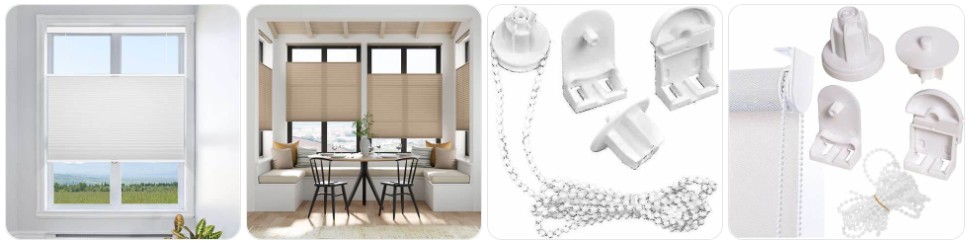
Top-Down Blinds are designed to lower from the top so you can bring in daylight while keeping the lower part of the window covered, which means repairs often focus on the dual-position lift system, internal cords, rails, tension hardware, cord locks, handles, or support brackets rather than on standard one-direction blind parts. The quick answer is that a broken top-down blind can often be repaired for much less than a full replacement if the fabric or main blind body is still in good shape and the problem is limited to the operating system. In many cases, the fix comes down to restringing the blind, replacing a cord lock, repairing a handle or rail connection, rebalancing uneven tension, or replacing a small internal part that affects how the blind moves from the top. If you want to compare useful supplies while troubleshooting, it helps to browse top-down blind repair kits, cellular shade repair kits, and shade cord repair kits.
Fix Common Top-Down Blind Problems & Repair Cost
The top rail will not lower evenly: This is one of the most common top-down blind problems because the blind may still look fine when fully closed, but one side of the upper rail hangs lower or moves more slowly than the other when you try to open it from the top. The usual causes are stretched internal cords, uneven tension, a slipping lock, or a guide path that is binding inside the headrail. In many cases, the repair involves restringing the blind, resetting cord tension, or replacing a worn lock or handle connection rather than replacing the whole blind. Minor repairs such as new cord, small hardware, or a basic adjustment are often in the range of about $5 to $25 in supplies, while a more involved repair using several new internal parts can run around $15 to $50 depending on the blind size and construction. Comparing shade cord repair kits, cellular shade string repair kits, and shade cord lock replacements can help you narrow down the fix. Do not keep forcing a top-down blind that is already moving unevenly, because that can pull the blind out of square and make the internal cords wear faster.
The blind slips down after you position it: If the top rail drops after you set it, the cord lock, tension mechanism, or internal support system may no longer be holding properly. This is usually a hardware issue rather than a fabric problem and is often much cheaper to repair than to replace the whole blind.
The blind opens from the top, but will not return smoothly: Top-down blinds depend on balanced movement, so when the rail becomes stiff, jerky, or refuses to move back into place smoothly, the cause is often tangled cords, a worn guide path, or a damaged internal part that affects the dual-direction movement.
The top rail is crooked or one side hangs lower: This usually means one internal cord has stretched, slipped, or broken, or a support point inside the blind is no longer holding the rail evenly. Because top-down blinds are judged by how straight that upper opening looks, even a small imbalance becomes very noticeable.
The handle or lower operating point feels loose: Many top-down blinds rely on handle-guided movement or compact control hardware. If the handle loosens or the connection between the rail and the moving mechanism weakens, the blind may feel harder to control even though the fabric itself is still usable.
Top-Down Blind Repair Kit
A top-down blind repair kit is most useful when the problem is in the lifting system or internal control hardware rather than in the visible blind material. Because top-down blinds rely on balanced internal cords, support rails, locks, and sometimes small handle-guided components to move the blind downward from the top, the parts that fail are often small, inexpensive, and repairable if the blind fabric is still in good condition. A good top-down blind repair kit may include replacement cord, cord locks, small support parts, handle-related pieces, or other shade hardware that helps restore even movement and reliable positioning.
It is worth checking kit contents carefully because many top-down-blind-compatible parts are sold under broader categories such as cellular shade, pleated shade, or fabric shade repair hardware rather than under the exact phrase “top-down blind.” If the issue is limited to one obvious fault, such as a slipping lock or worn cord, buying the single part may be cheaper. But if the blind is already moving unevenly, slipping after adjustment, and hanging crooked at the top rail, a broader top-down blind repair kit or cellular shade repair kit can make the repair much more consistent. For top-down blinds, the key is restoring even rail movement and reliable holding tension at the same time.

Yaiouio 40 Pcs Vertical Blind Repair Tabs, Transparent Stickers to Fix Broken Vertical Blind Slats, 1.18 Inch Invisible Blinds Fixers, Reinforce Top of Smooth Vinyl or Plastic Slat

60 PCS Vertical Blind Repair Tabs Kit Clear Fixer Verticle Blinds Snap in Replacement Slats Parts Panels

Vertical Blind Repair Vane Savers, 16PCS Metal Vertical Blind Repair Tabs, Vertical Blinds Repair Kit for Vertical Blinds Replacement Slats
Signs Your Top-Down Blind Need Repair
- The top rail lowers unevenly and hangs crooked: This usually means the internal cords are no longer moving evenly or one side of the support system has failed. Checking shade cord repair kits can be a useful first step.
- The blind slips down after you set the opening: If it keeps dropping after adjustment, the cord lock or support system is no longer holding properly and needs attention before the internal parts wear further.
- The blind feels jerky when opening from the top: Top-down blinds should move smoothly. If the motion becomes rough, one of the guide paths or internal support points may be under strain.
- The upper opening looks uneven across the window: This is one of the clearest top-down-blind warning signs because the blind may still cover the window while the movement system is already starting to fail.
- The cords look frayed or rub roughly near the headrail: Frayed cords are a strong sign that the blind needs restringing before a full movement failure happens.
- The handle or moving rail connection feels loose: When the blind suddenly needs more effort to position, the handle-guided hardware or rail connection may be part of the real problem.
- The blind will open from the top but will not close back smoothly: That often means the internal movement has gone out of balance rather than the fabric itself being the issue.
- One side of the blind stays higher than the other: This usually points to uneven tension or a slipped cord path, which affects both function and appearance.
Tools You May Need to Repair Top-Down Blind
- Measuring tape: A measuring tape helps you check blind width, drop, cord length, rail position, and replacement part sizing before ordering anything.
- Small screwdriver set: A precision screwdriver set is useful for removing the blind, opening end caps, adjusting small hardware, or replacing locks and mounting screws.
- Needle-nose pliers: A pair of needle-nose pliers helps with gripping tiny hardware, guiding cords, or handling compact internal parts carefully.
- Replacement lift cord: If the blind is hanging unevenly or the movement feels rough, comparing shade cord repair kits is often essential.
- Cord lock or support hardware: If the blind slips after you position it, a shade cord lock replacement or other small control component may be the real fix.
- Cellular or pleated shade repair parts: Many top-down blinds share small components with fabric shade systems, so looking at cellular shade repair kits can help if the blind uses that style of internal mechanism.
- Soft cloth or work surface: A clean padded surface helps protect the blind while you remove rails, inspect cords, or open the headrail for repair.
- Fabric-safe scissors: A pair of fabric scissors can be helpful if you need to trim replacement cord or tidy loose thread without damaging the blind material.
Should You Repair or Replace Your Broken Top-Down Blind?
Repairing a broken top-down blind usually makes sense when the visible blind material still looks attractive and the problem is clearly limited to the cords, locks, handle hardware, rails, or internal support system. Because top-down blinds are chosen for their specific light-and-privacy balance, it is often worth repairing one that has a movement issue if the blind itself still suits the room and the fabric or structure is still presentable. In that situation, replacing the failed part is usually much cheaper than replacing the whole blind, especially if all you need is a top-down blind repair kit, new cord, or replacement lock.
Replacement becomes the better option when the blind material is damaged, the rails are bent, the internal system has multiple failures, or the blind has lost so much alignment that the top opening never looks straight even after adjustment. It may also make sense to replace the full blind if the design is very inexpensive and the combined cost of parts and time starts to approach the cost of a new blind. A quick comparison between top-down blind options and the parts you need can help you decide. In many cases, though, top-down blinds are worth repairing when the problem is in the movement system and the blind body still has life left in it.

Lazblinds No Drill TDBU Cellular Shades, 34" W x 64" H, White | Light Filtering Upgraded No Tools Easy Install Cordless Top Down Bottom Up Honeycomb Blinds for Windows

SUNFREE Top Down Bottom Up Cellular Shades 22" W x 36" H, White | Cordless Honeycomb Shades for Windows, Thermal Insulation Noise Reduction UV Protection TDBU Light Filtering

SUNFREE Top Down Bottom Up Cellular Shades 34" W x 64" H, White(Blackout) | Cordless Honeycomb Shades for Windows, Thermal Insulation Noise Reduction UV Protection TDBU
Tips to Make Your Top-Down Blind Last Longer
- Move the blind gently and evenly: Top-down blinds depend on balanced internal movement, so rough handling puts more strain on the cords and support points than on a simpler one-direction blind.
- Do not ignore early uneven movement: Small alignment problems are often the first sign that one side of the system is starting to fail. Fixing them early is usually much easier than waiting for the top rail to become obviously crooked.
- Keep the blind operating path clear: If the rail catches or rubs, stop and inspect it rather than forcing it further. Extra pressure can make the internal parts wear faster.
- Check cords and support points periodically: Because the blind’s top-down function depends on balanced tension, visible wear should be repaired before it turns into a full movement failure.
- Support the blind evenly when cleaning or removing it: Top-down blinds can go out of square if handled roughly while off the window.
- Clean the blind carefully: Aggressive cleaning or pulling on the moving rail can strain the same parts that control the top-down opening.
- Replace worn hardware before it damages the full system: A new lock, cord, or small internal part is much cheaper than trying to fix a blind that has been repeatedly forced while out of balance.
- Store removed blinds flat and protected: If the blind comes down for repair, protect the rails and cord system so it can be reinstalled without fresh damage.
Top-Down Blind Repairs FAQ
What usually breaks on a top-down blind?
The parts that fail most often are lift cords, cord locks, rail connections, small internal support hardware, and sometimes the handle or moving-rail attachment. On top-down blinds, the system that keeps the upper rail level is usually the first thing to wear out.
Can I fix a top-down blind that no longer lowers evenly from the top?
Yes, in many cases. If the blind material still looks good, the usual causes are stretched cords, uneven tension, or a slipping lock. Fixing that hardware is often enough to restore the proper top-down movement.
Is a top-down blind repair kit worth buying?
It can be, especially when the blind has more than one small movement or support issue. A top-down blind repair kit is often easier than sourcing several small parts one at a time.
Why does my top-down blind keep hanging crooked?
This usually means the support cords, tension balance, or internal movement points are failing. Because top-down blinds rely on a straight upper opening for both function and appearance, even a small imbalance becomes very noticeable.
Can I replace just the cords or lock on a top-down blind?
Yes, if those are the only clearly failed parts and the rest of the blind is still sound. Replacing them early can also prevent additional strain on the rest of the movement system.
How much does it usually cost to repair a top-down blind?
Minor repairs such as cord, lock, or small control-part replacement are often relatively inexpensive, usually around $5 to $25 in parts. Larger repairs involving several internal components can cost more, but they are still often cheaper than replacing the full blind.
Should I repair or replace a top-down blind with visible blind-body damage?
If the damage is minor and the main issue is still mechanical, repair can still be worthwhile. If the blind body is badly damaged, bent, or permanently misshapen, replacement may be the better long-term option.
Can top-down blind parts be hard to match?
Sometimes, yes. Many compatible parts are sold under cellular shade, pleated shade, or general fabric-shade hardware rather than under the exact top-down-blind label, so it helps to compare measurements, product photos, and the movement setup before ordering.
60 PCS Vertical Blind Repair Tabs Kit Clear Fixer Verticle Blinds Snap in Replacement Slats Parts Panels

Vertical Blinds Replacement Stem and Gear Used for Headrail, Carrier Stem Vertical Blinds Curtain Accessories(12 Sets)
